This Missouri collective builds ‘parallel systems’ to support unhoused neighbors through mutual aid and anarchist principles
CoMo Mobile Aid Collective provides food, access to doctors appointments and medication, and other services to locals experiencing homelessness
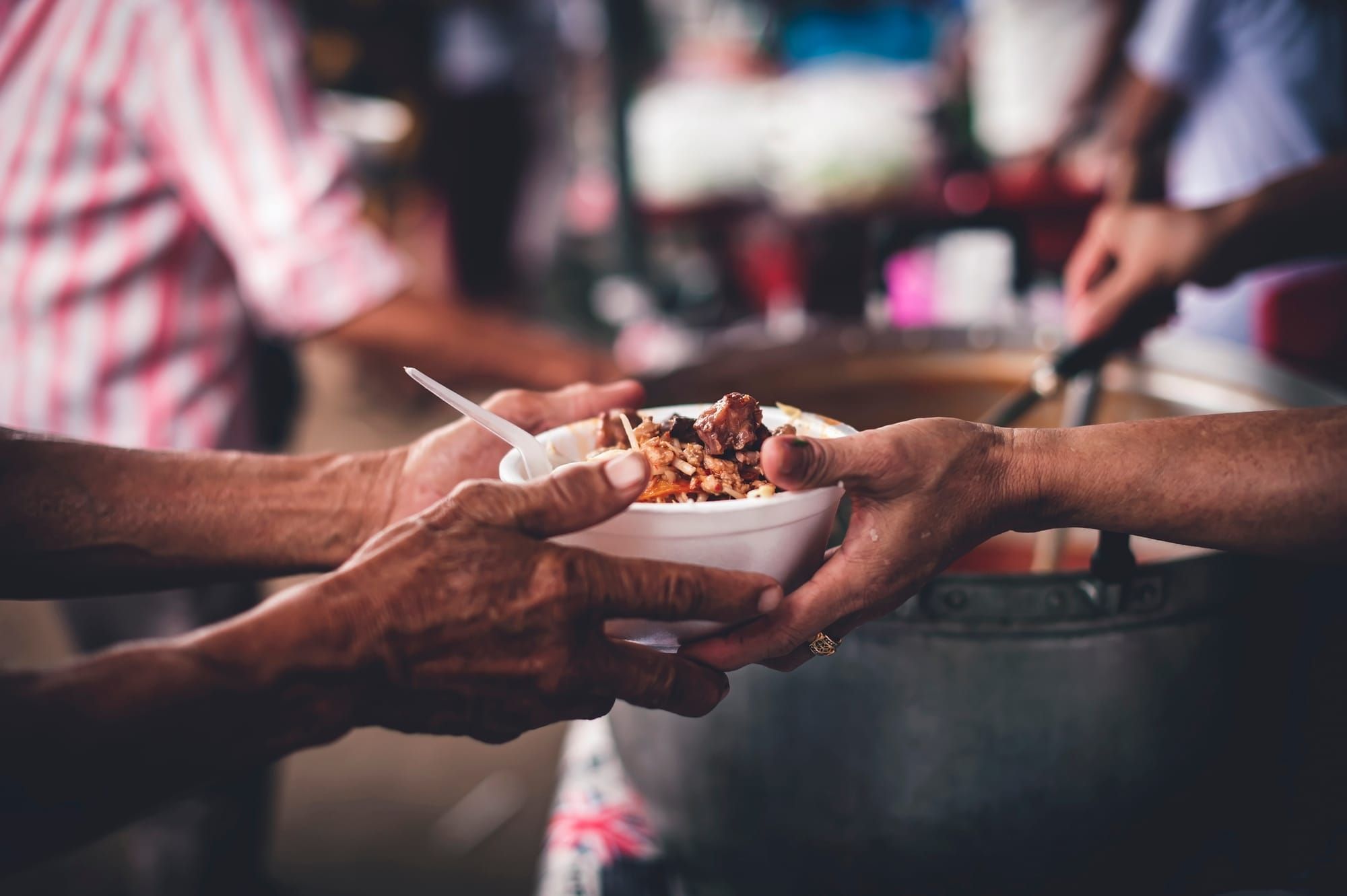
On a cold February evening, Stephanie Yoakum drives around her small Midwestern city looking for people living outside. She has a sticker featuring the abolitionist John Brown on the back of her car, which is packed with winter gear, snacks in crates, a carafe, and cocoa mix.
“Do you want any hot cocoa?” she calls in a silly voice, propping herself over a fence to see a tent on the other side.
Yoakum is a core member of CoMo Mobile Aid Collective (CoMAC) in Columbia, Missouri. Tonight, she’s working a “Winter Warriors” shift, which entails checking on people experiencing unsheltered homelessness and offering a warm drink, supplies, and a ride to a place they can get inside. Members of the aid collective go out as Winter Warriors each night the weather dips below 35 or 45 degrees, depending on precipitation.
By taking the needs of their unhoused neighbors into their hands, the CoMAC is now a major part of homelessness services in its city of about 130,000. Beginning in 2022, the collective transitioned into an official nonprofit organization serving hundreds each week with meal routes, twice-weekly nursing clinics, and supportive services. Still, the group operates with a mutual aid framework, anarchist principles, and consensus-based decision-making.
In the collective’s four years of existence, it has shown remarkable adaptability, as organizers have updated tactics to meet greater demands, build local coalitions, and face rising criminalization of poverty, along with right-wing harassment.
Homelessness is growing around the country and has become more visible as shelter systems have failed to keep up and encampments have grown. In turn, state and local governments continue to pass policies that punish people for camping or sleeping outside, loitering, and panhandling. These trends may continue as President Donald Trump embraces “law and order” approaches to visible poverty, while also threatening funding for affordable housing and services that prevent homelessness.
As conditions worsen for people living on the street, Yoakum told Prism that the collective is building community power by creating systems for neighbors to care for each other.
Scaling up
In 2018, Dirk Burhans started what would become the CoMAC as part of a local solidarity group named after John Brown. After working with a chapter of Food Not Bombs in the Northwest, Burhans said he realized how easy it is to take food to people who need it.
Burhans started by going to encampments he had learned about from people he met while volunteering at a local soup kitchen. He knew the need was high, and he had enough flexibility with his job to make runs three times a week. Eventually, others joined him and helped supply food.
In February 2021, a bitter cold snap hit Columbia. Cat Armbrust and another friend Burhans met from Black Lives Matter protests joined him. They started splitting routes with Burhans and decided to keep the mobile kitchen going into the spring.
Armbrust also brought supplies to the city’s emergency nighttime warming center, where she met Yoakum. When nurse Gayle Link joined them with a first aid backpack, treating frostbite and burns, they decided to create a more regular clinic.
By the end of 2022, the group called itself the CoMo Mobile Aid Collective and gained nonprofit status. They served at least 80 meals with each lunch service, offered a biweekly med clinic outside a local soup kitchen, and helped folks on the street access doctors appointments and medication. With the agility of a grassroots collective, CoMAC meets different needs as they arise: bringing veterinary care to camp pets, visiting people in the hospital, and helping people get furniture when they get housing.
CoMAC applied to use a share of the city’s funds through the American Rescue Plan Act (ARPA) for their outreach. Signed into law by former President Joe Biden, ARPA provides COVID-19 relief and economic recovery funds to states, and in 2024, CoMAC won a three-figure contract.
As a nonprofit, the collective has a board of directors and a volunteer email list of about 200 people. However, they’ve deliberately kept power over operations in the hands of the consensus-based core team, about 14 of CoMAC’s most involved members.
Shifting approaches
On a Monday in mid-February, an unexpected snowfall covers the ground, and temperatures hover below freezing. These kinds of conditions are when CoMAC is most needed. As of this year, the group provides about 120 meals at each service, and it sees about 70 people at each med clinic, organizers said.
Armbrust is driving her mobile soup kitchen route. She texts back and forth with campers and circles the back of a big box store, looking for a friend in the distance. When she sees figures moving down the road parallel to the loading docks, she stops and squints to see them.
Before long, her friends Tina and Daylene find her. Their dog, Radio, is with them and approaches with excitement. Tina and Darlene, who only wanted to use their first names for this story, have a cart made from a milk crate and a walker, with a radio playing Top 40 hits. Armbrust fills the crate with food while talking to the women about how they’ve been and where other camp members live. At one point, Radio climbs through the trunk to the driver’s seat.
Daylene and her son, Dalton, have known Armbrust and other core CoMAC members since the beginning, referring to themselves as some of the “originals.” Daylene also said hers was one of the first to be evicted in 2023 when the city’s largest encampments were swept.
Before spring 2023, core members would visit encampments in the woods as part of the mobile soup kitchen. Armbrust loved spending time outdoors and seeing people in their living spaces. She could help people with environmental problems and see how they decorated and made encampments home.
I think it’s really important in this relationship-building to actually lay eyes on people, see how they’re doing, talk about their dreams and their needs or issues.
Cat Armbrust, CoMo Mobile Aid Collective
“I think it’s really important in this relationship-building to actually lay eyes on people, see how they’re doing, talk about their dreams and their needs or issues,” Armbrust said. “Also [to] find out what’s going on with other people that maybe you’re not seeing as much.”
CoMAC started using drop-off points in 2022 when Armbrust had a case of sciatica that made it difficult to hike to less accessible camps. In the next year, she had encounters with police and land owners who threatened her with trespassing charges. By May 2023, the city of Columbia and private property owners worked together to clear about six encampments, including the largest in the city. The last encampment swept—which received the most media attention—was on city property near Hinkson Creek.
The sweeps changed how CoMAC ran the mobile soup kitchen. Encampment residents were traumatized, and CoMAC lost contact with some of its people. Since then, Armbrust and Yoakum said encampments are smaller, move around more, and get pushed to the outskirts of town. People also seem more sensitive about attracting attention to their settlements, so they meet the mobile soup kitchen at a trailhead or parking lot.
“There were times [Armbrust] wouldn’t see us for three weeks because we couldn’t keep up,” Daylene said. “There’s times we depended on that, and thank God she’ll travel around looking for you a bit.”
Political pressure
The clearing of the city’s major encampments reflects both local and national efforts to criminalize and harass people experiencing visible poverty and homelessness.
The year before the encampments were cleared in Columbia, Missouri’s legislature passed a law banning camping on state property. The Missouri Supreme Court struck down the law in 2023, though similar policies are on the rise nationally. Fanning these flames, a 2024 U.S. Supreme Court decision ruled that cities can criminalize sleeping outside—even when there aren’t enough adequate shelter beds. The court ruled that this does not qualify as cruel or unusual punishment under the Eighth Amendment.
Locally, the harassment of unhoused people is growing.
An anonymous Facebook page called The Real Columbia Missouri was created in May 2023, weeks after the Hinkson Creek encampment was cleared. The page gathered a following with posts mocking unhoused people, cheering encampment clearings, and ridiculing the liberal mayor of the city. The page’s bio claims its original account with over 15,000 followers was shut down. As of March 2025, it has over 8,000 followers.
The Real Columbia Missouri account supplies an almost daily stream of photos showing unhoused people and encampments in compromising positions, while also soliciting followers to take images and submit them. Private citizens directing their frustration toward unhoused people—rather than the structures that create poverty—impacts the Columbia community.
The largest 2023 camp sweep appears to have been triggered by a complaint from an anonymous caller who reported the encampment, according to an incident report obtained by Prism from the Missouri Department of Natural Resources. According to reporting from the Columbia Missourian, the city of Columbia cited these complaints as the motivation behind the sweeps.
In internal communications obtained in a records request, city officials overseeing encampment clearing circulated a complaint asking when the encampment near Hinkson Creek would be cleared.
“It is horrible having to drive by this ‘eye-sore’ every evening on my way home,” the complaint reads.
Before the sweep, CoMAC released a statement arguing that waste and trash near the creek are real concerns that the city needs to find a humane solution for while inflicting “as little trauma as possible.” The group suggested building a trash disposal system for people in encampments or creating a sanctioned camp so unhoused people can exist without constant displacement.
Robert Dunbar Jr., an unhoused man who uses CoMAC’s services each week, is very familiar with the rise in criminalization. The police previously charged him with trespassing, and he told Prism that he was recently fined for being in a park one minute before it was scheduled to open.
Dunbar said he wants to see unhoused people band together and advocate for themselves at the state capitol. He’d also like to see politicians survive the conditions he’s subjected to.
“The governor, the chief of police, all of them—stay outside for a while,” Dunbar said. “When you got a nice little tent and stuff, let us come around and take it away from you like they’ve been doing us.”
The harassment has also translated to violence and intimidation, which escalated in the months leading up to the 2024 presidential election. In August, CoMAC took to social media to report that unhoused friends had been assaulted with pellet guns, Tasers, and pepper spray.
Armbrust was standing near a bus station doing outreach in October when she felt the sting of what she believes was a pellet gun. She didn’t see the person who shot at her, but she suspects she was targeted for her work.
“It was obvious that I was there talking to someone who was literally sitting on the street covered in a blanket,” Armbrust said. “So that person was obviously unhoused, and I was obviously there talking to them and holding supplies.”
The bus station previously hosted the city’s emergency warming center and is known locally as a place that unhoused people frequent. As such, it’s also part of CoMAC’s mobile soup kitchen route. Armbrust was holding a cup of soup when the pellet hit her.
“I knew this had happened to other folks on the street,” she said. “I knew that it happened to other campers and that it was happening a lot downtown.”
Weeks earlier, Armbrust said she spoke to a police officer about what friends on the street were experiencing, and the officer told her that it was a TikTok prank. The officer said victims should report it. When it happened to her, Armbrust didn’t plan to file a police report until people in her community urged her to. Victims of these assaults who live on the street were scared to go to the police, so Armbrust decided to make sure there was a record. She found the suggestion ridiculous that unhoused victims should simply “come forward.”
“These are people experiencing homelessness who get harassed all the time, and they don’t have good relationships with the police,” Armbrust explained. “So why do you think they’re going to come forward and be laughed at by the system?”
“Building parallel systems”
When it comes to CoMo Mobile Aid Collective’s approach to direct action, Burhans referenced a quote from anthropologist David Graeber: “Protest is like begging the powers that be to dig a well. Direct action is digging the well and daring them to stop you.”
To Yoakum, CoMAC’s role in the fight against America’s right-wing shift is in building parallel structures to meet needs that the state fails or refuses to address. She said this is a core tenet of CoMAC’s anarchist roots.
“Building that parallel system alongside these systems that are failing creates, in my opinion, a lot of power,” Yoakum said, noting that when people work together to build their own systems, it can produce direct and immediate results.
As one example, CoMAC and a local church mobilized volunteers to operate an overnight warming center when the city-funded warming center and winter shelter failed to open in November 2022 in time for freezing temperatures. According to reporting by the Columbia Missourian, CoMAC urged the city to ready its winter-weather resources earlier in the fall, to no avail. The collective and Columbia’s Wilkes Boulevard United Methodist Church used donated bedding and volunteer labor to help get people out of the cold.
The people behind CoMAC are not the only ones organizing to meet their community’s needs. Around the world, independent chapters of Food Not Bombs serve free meals and deliver groceries to people’s homes. In the Midwest, CoMAC is joined by groups like Street Medicine St. Louis, Kansas City’s Care Beyond the Boulevard, and Tulsa, Oklahoma’s Be Heard Movement. Each group provides mobile services to reach people experiencing homelessness and tells origin stories of community members taking to the streets to help their neighbors.
While CoMAC may not fit some strict definitions of mutual aid, they center mutual relationships and community-building in their work. Friends on the street sometimes help them set up for clinic, knit hats for the group to share, and provide peer support after getting out of homelessness.
CoMAC describes its work as “radical hospitality.” In contrast to some charitable homelessness services, they set no expectations of sobriety, employment, or religious affiliation. No one is required to prove need. CoMAC members also offer hospitality to people who have been convicted of violent and abusive crimes. No one can be banned from service, but core members do communicate about clients that volunteers should stay alert around. Armbrust added that people who’ve been convicted of felonies have a harder time accessing traditional aid, making CoMAC’s support necessary.
Volunteers undergo deescalation training at least once a year, and prospective volunteers are screened with application questions for the safety of the group and unhoused folks.
For anyone who may want to start an aid collective in their community, Armbrust advised setting parameters so as not to spread yourself too thin. She also suggested building relationships in places where unhoused people gather, like a library, instead of going directly to camps.
“If you just walk into the woods, it’s a little bit of a crapshoot as to whether people are gonna be happy to see you or not,” she said.
Yoakum said that when approaching people on the street, don’t focus on questions about their situation.
“‘You want some hot cocoa? Do you want some water? Can I get you some water? Do you want some electrolytes?’” Yoakum said. “You just start with that instead.”
Those who want to start a group should also find like-minded people and discuss consensus-based parameters around services, workload, and personal safety and finances, said Armbrust. In the realm of medical aid, the Street Medicine Institute offers a membership community, grants and best-practices guides for groups like CoMAC, including open access resources.
Individuals supporting their unhoused neighbors can also find ways to contribute from the National Coalition for the Homeless. The coalition’s “Get Involved” page offers suggestions like joining the Housing Not Handcuffs campaign to fight criminalization, offering professional skills for job training, or volunteering at shelters.
Burhans and Yoakum both had experience volunteering with other homelessness services that helped them build relationships in the community. The National Coalition for the Homeless notes that these services run on unseen work like “filing, sorting clothes, cutting vegetables, etc.” Mutual aid collectives like CoMAC are no different.
Yoakum noted that CoMAC has a core group of “hardcore” members, but building strong parallel systems uses the work of someone “showing up at 4:30 on a cold clinic day to sort through underwear” or committing to seasonal outreach once a week.
“If that volunteer gets committed to just that one little slot, that is what’s sustainable on a societal level,” Yoakum said.
Editorial Team:
Tina Vasquez, Lead Editor
Carolyn Copeland, Top Editor
Rashmee Kumar, Copy Editor
Author

Hope Davis is an award-winning journalist based in Missouri. Her writing focuses on issues involving housing, homelessness, and collective action.
Sign up for Prism newsletters.
Stay up to date with curated collection of our top stories.