Not long after thousands of students nationwide were arrested for participating in pro-Palestine protests, the Supreme Court ruled on a case in June that could overturn the convictions of hundreds of people who participated in the Capitol insurrection.
During the June 27 presidential debate, former President Donald Trump referred to President Joe Biden as “a very bad Palestinian,” alleging that Biden—who has aided and abetted Israel’s genocide of Palestinians—did not want to help Israel “finish the job.” In preceding months, Trump also lambasted Biden for not doing enough to crack down on antisemitism on college campuses, drawing messy comparisons between the Palestine solidarity protests at Columbia University and the 2017 Unite the Right Rally in Charlottesville, Virginia. Trump falsely claimed that the hate on display at the white nationalist rally was “peanuts” compared to the hatred spewed at the Gaza protests.
These recent events fit a dangerous trend—one in which influential right-wing forces weaponize a “crackdown” on antisemitism for their own agendas while at the same time ignoring the real antisemitism in their ranks.
Hate speech enters the mainstream
Ever since Jews first started settling in Israel in the late 19th century, anti-Zionist activists have been careful to distinguish between antisemitism and anti-Zionism.
Antisemitism is a hatred of Jews—the kind manifested in the Holocaust and that has resulted in sweeping generalizations and stereotypes about Jews, leading to more recent acts of violence such as the 2018 Pittsburgh Tree of Life synagogue shooting.
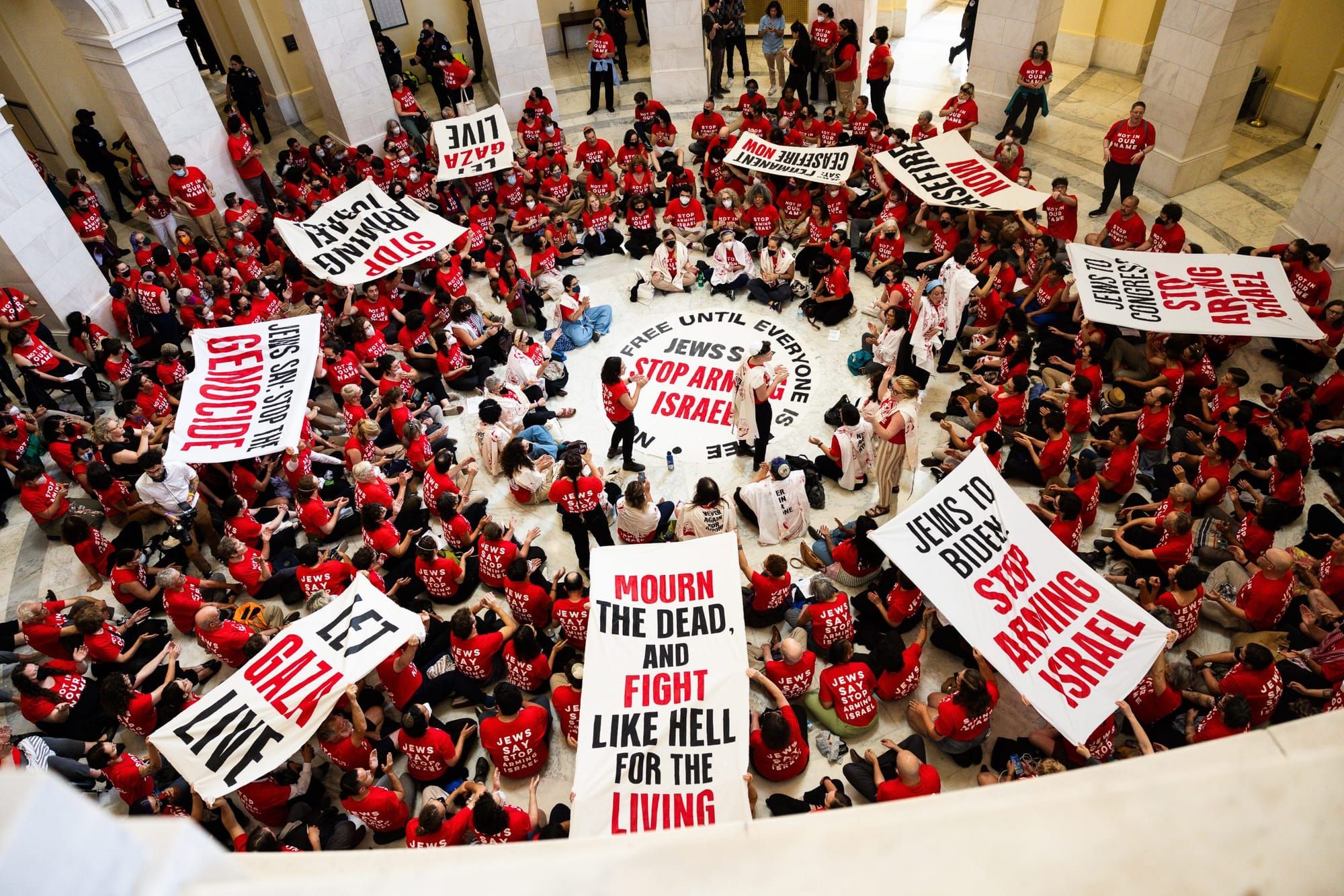
Anti-Zionism centers on criticism of the state of Israel and, specifically, the expansion of the state of Israel into Palestinian land. Many of the most vocal anti-Zionist groups, such as Jewish Voice For Peace and If Not Now, have mostly Jewish membership, using “not in our name” as a rallying cry to stand against the subjugation of Palestinian people and the occupation of Palestinian land.
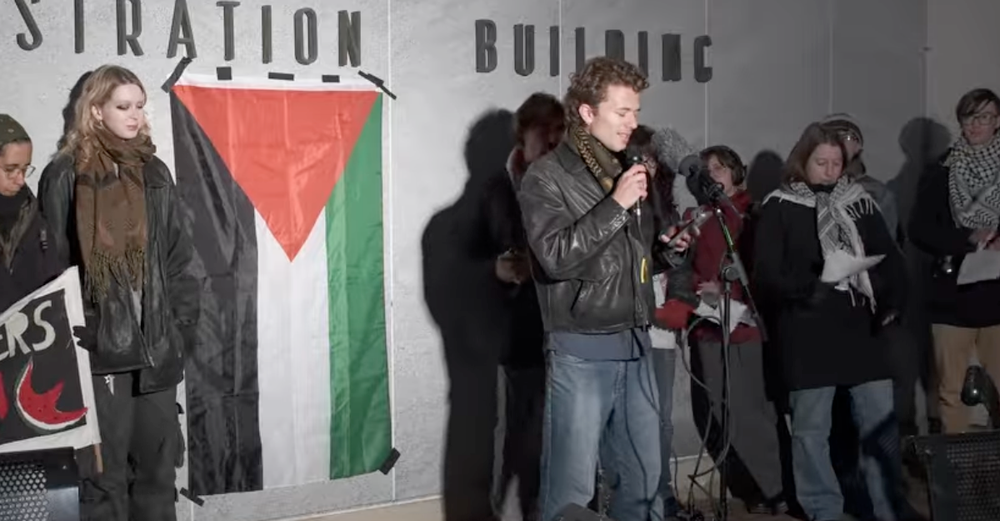
However, organizations such as the International Holocaust Remembrance Alliance (IHRA) have sought to conflate these two ideas—pushing for a definition of antisemitism that includes “denying the Jewish people their right to self-determination.” The organization casts criticism of Israel—and, in some cases, advocacy for Palestine and Palestinians—as antisemitic. Since Oct. 7, this incorrect definition of antisemitism has been leveraged to delegitimize critiques of Israel’s genocide in Gaza and justify actions such as unleashing riot police on student protesters and dismissing pro-Palestine academics who, in many cases, also defended their anti-Zionist students’ right to free speech.
“The U.S. was ultimately primed for a moment like this,” said the Southern Poverty Law Center’s Hannah Gais. According to the senior research analyst, Trump’s presidency—and the right-wing figures that galvanized his ascent to power—has brought both antisemitism and the need to crack down on it into the mainstream.
“It has helped drive antisemitism into the public conversation but also opened it up for [white nationalists] to be able to manipulate the terms,” Gais said. Antisemitic toxic narratives—such as the “great replacement theory,” which espouses Jews are “replacing” gentiles—used to only exist on the fringes of far-right message boards like 4chan, Gais explained. Under Trump, these narratives catapulted into the mainstream through the Unite the Right, for example, and later with the Jan. 6 insurrection. While some of these messages have maintained their antisemitic tenor, others have morphed into anti-immigrant sentiment, using ideas like the “great replacement theory” to scapegoat immigrants and fearmonger to white Americans.
“Mainstream Republicans are becoming increasingly emboldened,” said Ben Lorber, a senior research analyst at the social justice think tank Political Research Associates. Lorber also recently co-authored the book, “Safety Through Solidarity: A Radical Guide To Fighting Antisemitism.”
“When I started looking at these spaces in 2018 and 2019, the only place I would hear something like ‘America should be a Christian nation’ … or that there’s a conspiracy to replace white people with immigrants would be somewhere like 4chan,” he said. “Today, it’s being repeated by the GOP and conservative media.”
Nowhere was this dynamic more clear than at the Conservative Political Action Conference (CPAC) in February, where known white nationalists hosted a Twitter space called the “Humanitarian Hitler.” Participants included Ryan Sánchez, a former member of the neo-Nazi fight club Rise Above Movement, and self-professed white supremacist Bryan Betancur, who was sentenced to four months of prison for his participation in the Capitol insurrection. While CPAC organizer Matt Schlapp denied that Nazi sympathizers were in attendance, there is video footage of Sánchez giving a Nazi salute to journalist Amanda Moore, who was banned from covering the event due to her critical coverage of far-right movements.
Israel’s ongoing genocide in Gaza has only further highlighted the hypocrisy of the Republican Party, which often ignores antisemitism within its ranks. In February, Arizona Republican Rep. Andy Biggs participated in the annual Second Amendment Rally, which was co-sponsored by the Proud Boys and other white supremacist groups. Last year, the Texas Republican Party rejected a pro-Israel resolution that included a proposed ban on associating with Nazi sympathizers and Holocaust deniers. Republican lawmakers alleged it would create a “slippery slope” that allowed for the ban of other forms of free speech and association.
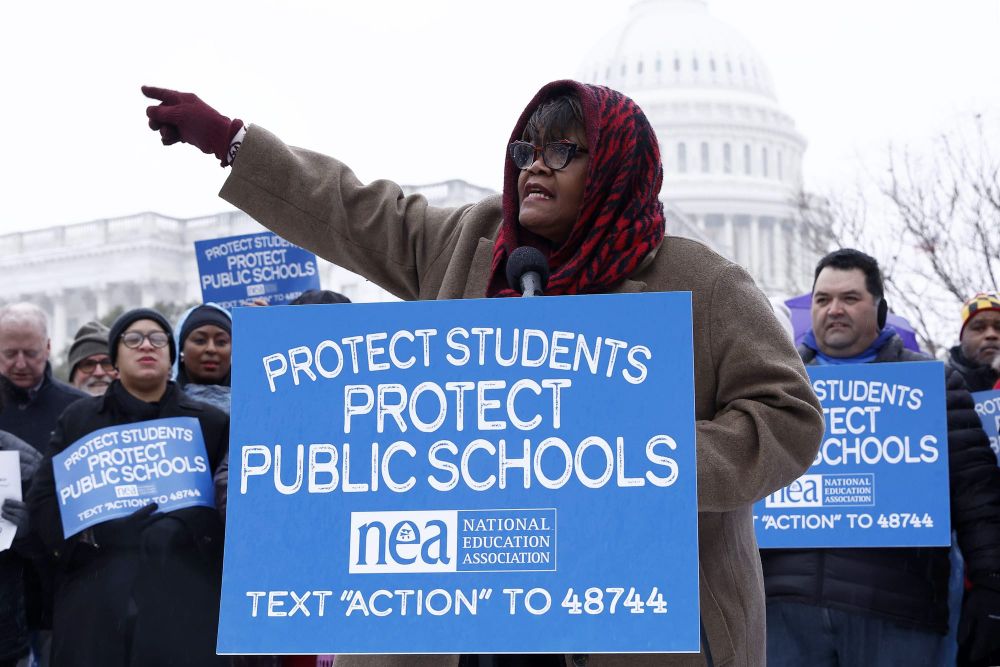
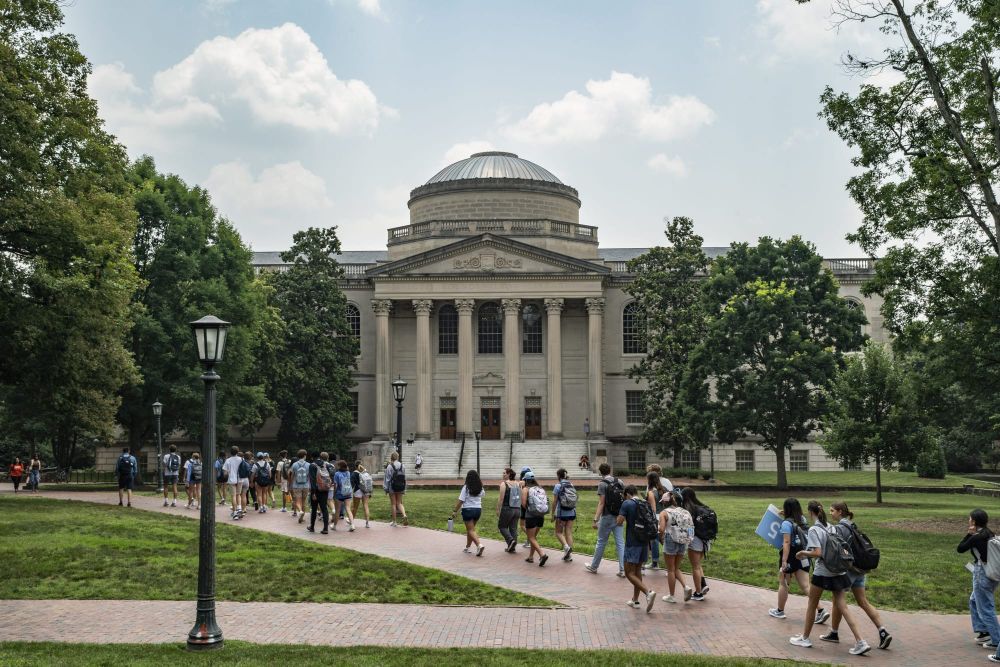
This concern for freedom of speech and association does not extend to students and faculty members showing solidarity with Palestine, many of whom have been violently arrested and accused of making campuses “unsafe” for Jewish students. Now, Congress is pushing forward a bill that would redefine antisemitism to include criticism of Israel, allowing the Department of Education to use anti-discrimination laws against anti-Zionist students.
“It uses a flawed definition of antisemitism to limit any criticism of Israel,” Lorber said, noting the serious implications the bill has for freedom of speech. Throughout the spring, campus administrators used concerns over safety as justification to call in riot police, clear encampments, and shut down peaceful protests that smeared pro-Palestine protesters as “antisemitic” in the media.
“It makes it harder to identify and fight real antisemitism,” according to Lorber, who said these efforts create a “boy who cried wolf” effect that makes it easier to pretend that antisemitism is no longer a problem.
“No one wants to believe that antisemitism exists or is worth being taken seriously if all they ever hear about are these bad definitions that are being used to suppress valid criticisms of a genocide,” Lorber said.
Further fueling right-wing movements
Actual antisemitism runs rampant in the Republican Party and other right-wing movements. During the Trump administration, there was a marked spike in antisemitic hate speech on social media and hate crimes against Jewish Americans, primarily perpetrated by white supremacists. While many of Trump’s Evangelical supporters fervently support Israel, it is not because they believe in a homeland for the Jewish people. Rather, it is because they believe it’s “important for fulfilling end-times prophecy” and will bring about the rapture, or the second coming of Jesus Christ. Meanwhile, Republican members of Congress such as Marjorie Taylor Greene and Matt Gaetz opposed the recent antisemitism bill because it would restrict their ability to say that Jews killed Jesus—one of the oldest and most pervasive antisemitic conspiracy theories.
“I think it’s worth highlighting that white nationalist and neo-Nazi groups, as well as more mainstream right-wing figures, have used the post-Oct. 7 moment as an opportunity to thrust anti-Muslim and anti-immigrant rhetoric and conspiracy theories into the conversation as well,” Gais said.
Along with making life more difficult for many Jewish Americans, accusations of antisemitism are now channeled into anti-Arab, anti-Muslim, and anti-Palestinian hatred, resulting in a spike in hate crimes reminiscent of the one that occurred in the aftermath of the 9/11 attacks. Gais said the trend is worrying for many reasons, namely because the proliferation and allowance of anti-immigrant and anti-Muslim rhetoric only further fuels and emboldens far-right movements.
President Biden campaigned on the promise that he would not be his predecessor, but he’s actually embraced some of the Trump administration’s policies while also helping to perpetuate a genocide in Gaza. Biden has lost the trust of Arab and Muslim voters in crucial battleground states like Michigan, and before announcing this month that he would not seek reelection, he promised nothing of substantive value.
Meanwhile, Trump and his very real entourage of Evangelical and white supremacist supporters wait in the wings.
While many states have introduced legislation that conflates anti-Zionism with antisemitism or otherwise paints pro-Palestine protests as support for “terrorism,” there has been far less conversation about what to do about actual hate speech—and the dangerous, real-life consequences it wreaks.
Author

Anna Lekas Miller is a writer and journalist who covers stories of the ways that conflict and migration shape the lives of people around the world. She is the author of the book Love Across Borders, a
Sign up for Prism newsletters.
Stay up to date with curated collection of our top stories.