In the midst of grief, chaos, and multiple killings by Trump’s deportation forces, Minnesota workers take a stand
An estimated 50,000 people participated in Minneapolis’ citywide shutdown, co-organized by a broad coalition of labor unions and faith leaders

Real journalists wrote and edited this (not AI)—independent, community-driven journalism survives because you back it. Donate to sustain Prism’s mission and the humans behind it.
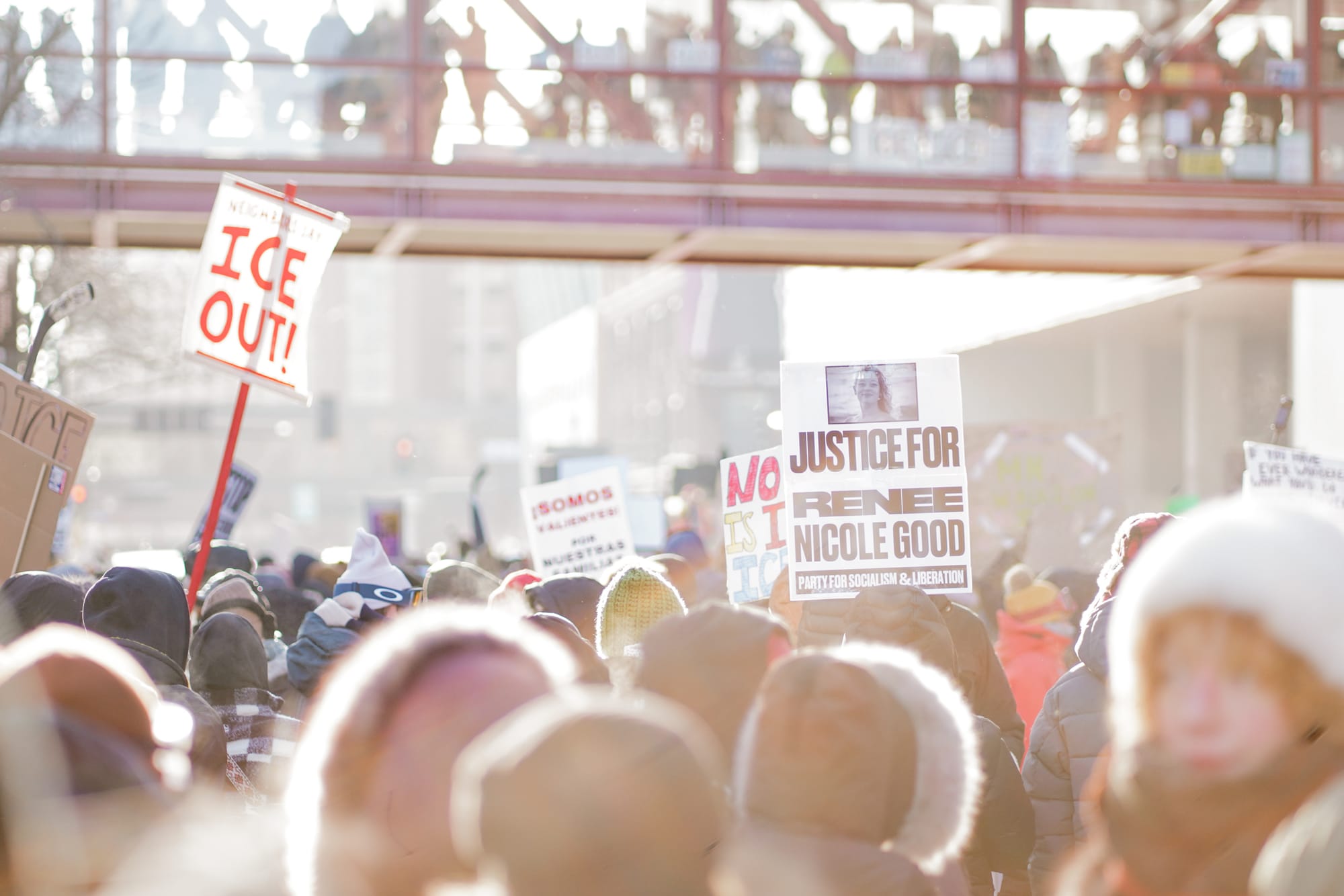
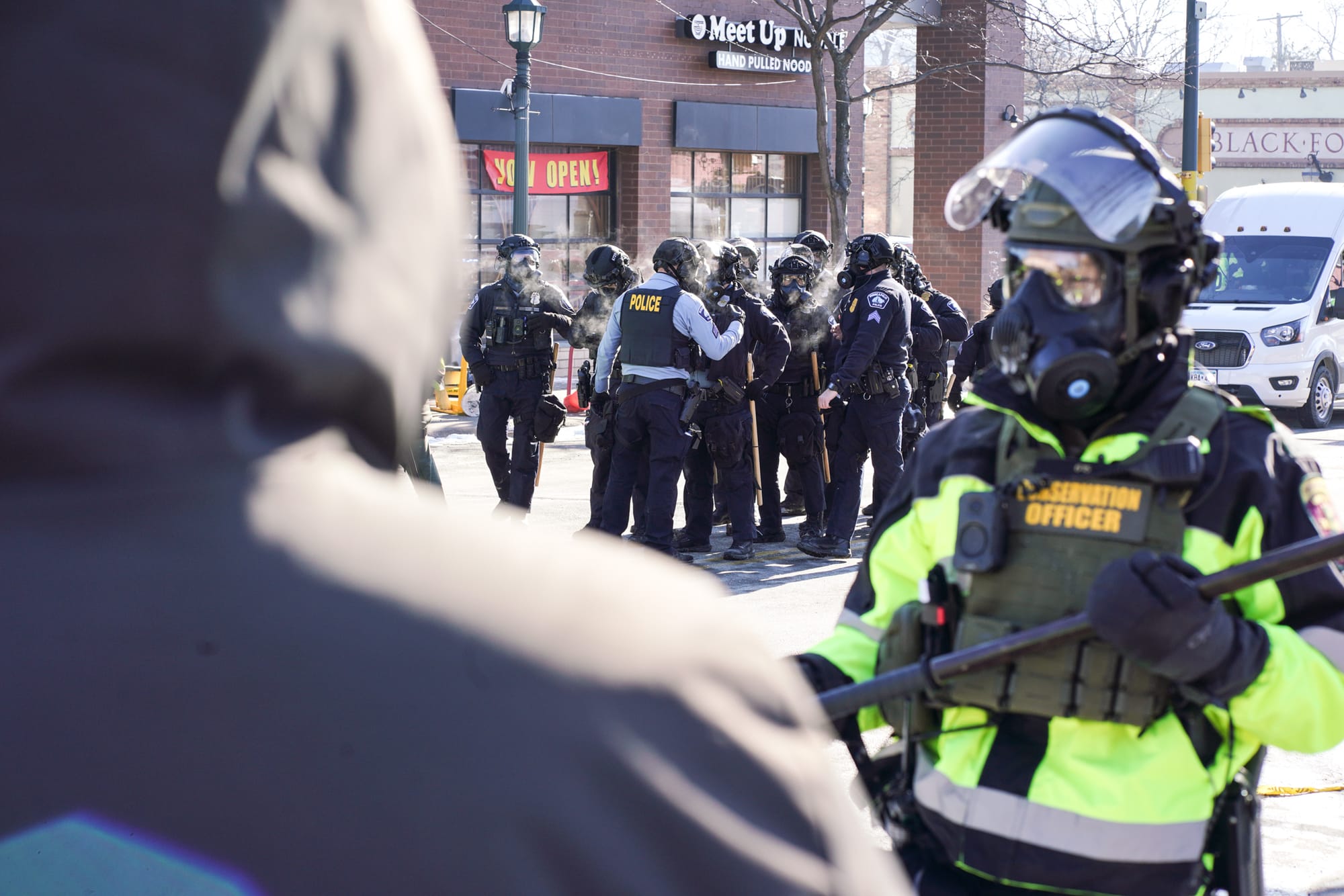
There was a haze in the air over Minneapolis, the collective breath of an estimated 50,000 people who gathered downtown in Commons Park on Jan. 23 for a citywide shutdown. The primary demand behind the action was for federal immigration forces to depart the city, where the Trump administration has funneled thousands of masked agents who have wreaked havoc on local communities, including Immigration and Customs Enforcement’s (ICE) deadly Jan. 7 shooting of Minneapolis resident Renee Good.
Despite temperatures falling 20 degrees below zero, large crowds gathered Friday chanting, “ICE out of Minnesota,” a state that has become a flashpoint in the Trump administration’s campaign of state terror. By Sunday morning, the air was heavy with grief after Border Patrol agents killed protester Alex Pretti, a local intensive care nurse with the Veterans Association and a member of the American Federation of Government Employees (AFGE) union. According to a statement posted online from AFGE, it is possible that the agents involved in Pretti’s killing may be members of the same union.
After the federal agents responsible for Pretti’s killing fled the scene, Minnesota Gov. Tim Walz activated the state National Guard, and local law enforcement used teargas against protesters. Over the weekend, protests erupted nationwide in solidarity with Minneapolis.
“This is all very specifically targeted towards a community that’s trying to protect itself,” said a street medic who requested anonymity for safety reasons, referring to the Trump administration’s siege of Minneapolis. The medic was present near the scene of Pretti’s killing. “They saw us all show up … and now they murdered another one of us,” they said.
Workers heed the call
The call for Friday’s shutdown, known as the “Day of Truth and Freedom,” was originally issued on Jan. 13 by a coalition of labor unions and faith leaders, who have taken bold action to speak out against the Trump administration’s deportation force. After Good’s killing, activist and ordained pastor Nekima Levy Armstrong was arrested with two others for staging a protest inside the Minnesota-Wisconsin Baptist Convention, where one of the church’s pastors, David Easterwood, leads the local ICE field office, CBS News reported.
Within days of announcing the shutdown, over 700 local and immigrant-run businesses vowed to close for the day, including Somali-owned businesses in Minneapolis’ Karmel Mall and Hmong-owned businesses in the state capital of St. Paul. An interfaith group of religious leaders also called for their congregations to participate; the morning of the shutdown, over 100 faith leaders were arrested at the Minneapolis–Saint Paul International Airport, where deportation flights occur.
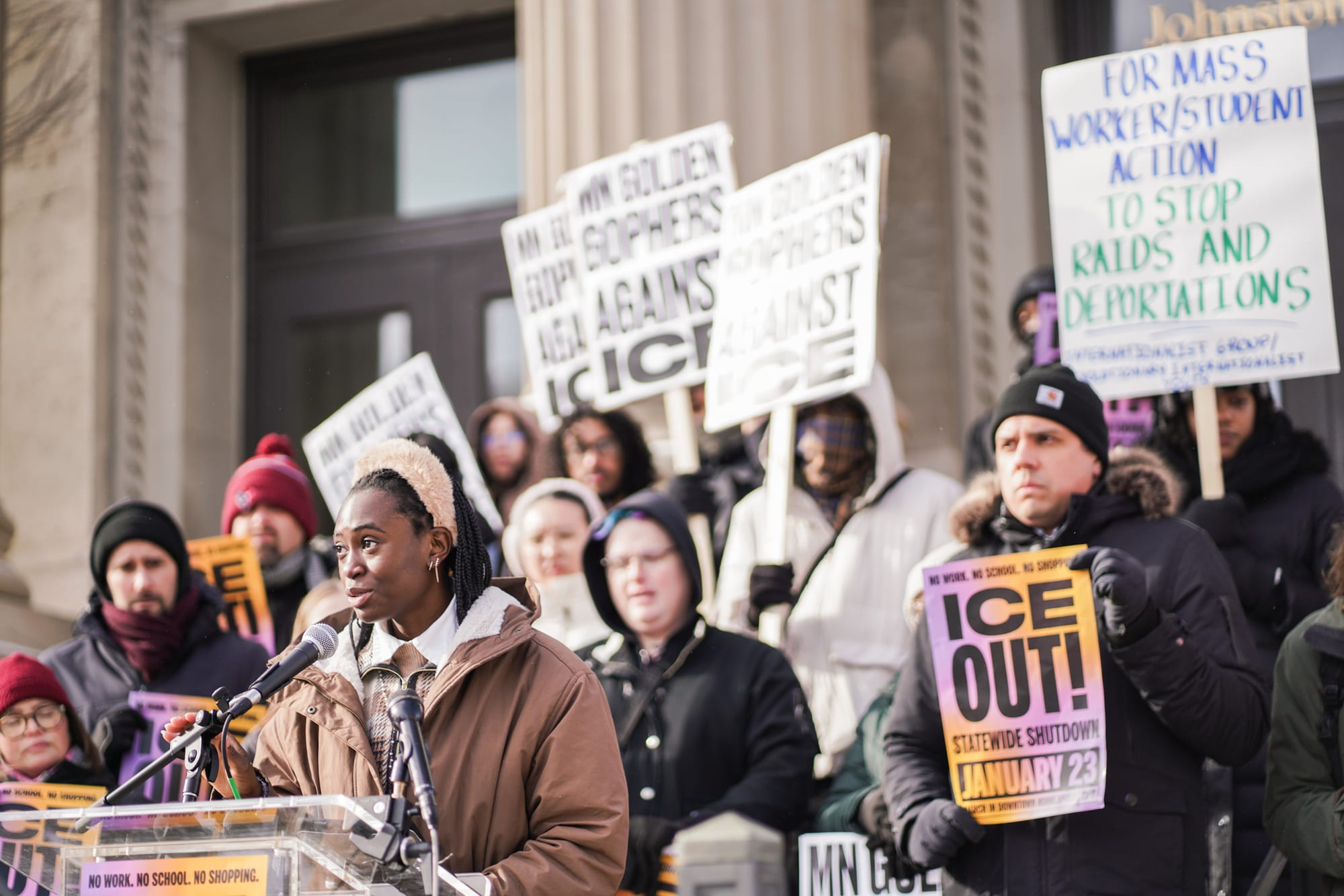
Students, faculty, and workers at the University of Minnesota also participated in the shutdown, successfully pushing the campus to officially close for the day. The day of action was also supported by the Minneapolis City Council.
These widespread actions, taken by everyday people across the region, are part of a larger organic movement that has emerged in response to the violence that deportation forces have rained down on Minnesota.
After ICE agent Jonathan Ross killed Good, calling her a “fucking bitch” after shooting her in the face, additional immigration agents descended upon the city. At the height of “Operation Midway Blitz” in Chicago, where ICE fatally shot Mexican immigrant and father Silverio Villegas González on Sept. 12, there were about 500 federal immigration agents in the region. Minneapolis currently has 3,000 agents in a land area about a quarter of the size of Chicago.
In the days before the Minneapolis shutdown, immigration agents dragged a Hmong naturalized citizen from his home in his robe and underwear. They teargassed a family who was in their car, sending a young child to the hospital. A few days later, federal agents detained a 5-year-old boy, using him as bait to lure his father.
Tired of seeing their neighbors terrorized by masked immigration agents, thousands of Minneapolis residents mobilized for what many referred to as a “general strike.” Calls for similar actions have proliferated on social media since Trump took office for his second term, though often without the backing of major unions or workers on the ground.
Labor historian Peter Rachleff told MPR News that general strikes address a “shared set of concerns that affects workers in different industries, workers with different kinds of employers, workers who might not even be in unions,” and that they represent “an unusual and interesting intersection of community members and union members acting together with one voice.” A national general strike has not happened in the U.S. in decades, but these actions are regular occurrences in other regions of the world.
Many of the unions that called for the shutdown in Minneapolis avoided characterizing the day of action as “a strike,” citing clauses in their contracts that prohibit work stoppages before their collective bargaining agreements expire. In a press conference first announcing the shutdown, pastor and faith-based organizer JaNaé Bates Imari of Camphor Memorial United Methodist Church in St. Paul, said that despite the nuances, a strike “is what this will feel like.”
The coordinated efforts of Minneapolis-based labor, faith, student, and business groups are unprecedented, even in the wake of the Trump administration’s deployment of deportation forces to Democrat-run cities. In Los Angeles, Chicago, and Charlotte, North Carolina, ICE watch and rapid response teams formed within neighborhoods. But in Minneapolis, labor unions have played an outsized role.
Leading up to the shutdown, unions across the city organized against ICE as their members became targets of immigration raids. Members of Service Employees International Union (SEIU) Local 26, a union of about 8,000 janitors, security officers, and airport workers in the state, reported that 20 of their members were taken by ICE. Unite Here Local 17, a labor union with more than 6,000 members working in the hotel, food service, airport, and sports complex industries, reported that 16 of their members were detained. In recent weeks, Local 17 also launched a mutual aid program, delivering groceries and meals to workers afraid of leaving their homes and being detained.
Teachers union members have formed patrols at school buildings and fought for immigration protections in a collective bargaining agreement that was ratified in November. Postal workers with the National Association of Letter Carriers held a rally on Jan. 18, demanding that ICE stop using postal property for operations. Health care workers held rallies, press conferences, and spoke at board meetings demanding that Minneapolis’ Hennepin County Medical Center do more to protect patients from ICE. Members of the worker center Centro De Trabajadores Unidos En La Lucha held a sit-in at the offices of D.R. Horton, one of the largest homebuilders in Minnesota, to push the company to do more to protect the migrant workers it depends on.
These actions build off organizing that began after the police murder of George Floyd and decades of work between local unions and community coalitions across the city, where groups work together on multifaceted organizing efforts that go beyond traditional labor fights.
Unions across the region spent years aligning the expiration dates of their contracts to end around the same time, allowing for common bargaining demands across industries. In 2024, this alignment enabled the coalition to coordinate powerful workplace and neighborhood actions along their mutual interests, according to a piece by In These Times.
According to Dan Troccoli, a middle school teacher and member of the Minneapolis Federation of Educators and the Democratic Socialists of America, this previous organizing work “paved the path” for Friday’s citywide shutdown.
The organizing tactic in Minneapolis, in which unions aligned their contract expirations, is one that workers nationwide are beginning to utilize, creating potential in the future for a nationwide general strike.
“Abolish ICE”
Since June, when deportation forces descended on LA, kickstarting a nationwide surge of state violence from federal immigration agents, unions and employers at farms, factories, restaurants, and other job sites across the U.S. have taken action to protect immigrant employees from raids. It is also immigrants themselves who are often leading these efforts.
Feben Ghilagaber, an immigrant from Eritrea and a union steward for Unite Here Local 17 who has worked at the Minneapolis airport for more than 20 years, has spent the past few weeks dropping off groceries to families.
“Every time they open the door, and I see their face, it hurts me,” she told Prism.
Ghilagaber became a naturalized citizen in 2008, though she said she is also scared of going to work each day, given the Trump administration’s use of racial profiling that has led agents to detain hundreds of U.S. citizens nationwide. She said many of her coworkers have stopped coming to work because federal immigration agents patrol the airport.
“I’m not comfortable walking without my passport anywhere in the airport,” Ghilagaber explained.
Still, Ghilagaber joined the more than 50,000 Minnesotans in the freezing temperatures for the citywide shutdown on Jan. 23. “People from Minnesota are amazing. … It gives me the motivation to be out there,” she said.
Pretti was also marching on the streets of Minneapolis that day, his neighbor told CNN: “He was a worker like myself. He was part of the fabric of my community, along with immigrants and many other people who represent our neighborhood.”
After Pretti’s public killing by Border Patrol, AFGE National President Everett Kelley said in a statement that the union was “heartbroken.”
“Accountability will come, and AFGE will not be silent about the policies and decisions that led us here,” the statement said.
After Pretti was killed, locals gathered near the site of his shooting, chanting, “Abolish ICE,” before federal agents fled the chaotic scene. Their grief was palpable, a stark contrast to the optimism and empowerment that Minnesotans exhibited during the citywide shutdown just a day earlier.
Once viewed as a radical stance, after the killing of Good, there is now growing support to abolish ICE, an agency that has only existed since 2003. Polling earlier this month from YouGov and The Economist found that for the first time, more Americans support than oppose abolishing the federal immigration agency. Indeed, little more than a year into Trump’s second term, Americans across the political spectrum are expressing their concerns over ICE’s increasingly violent tactics. Even Senate Republicans are divided, which may trigger another government shutdown at the end of the month when lawmakers are expected to vote on additional funding for the agency.
Back in Minnesota, locals are reeling from the recent shootings.
“I don’t feel good right now for the state of the country,” said Ahmed Warsame, a lifelong Minnesota resident who lingered near the scene of Pretti’s fatal shooting with other protesters the morning after.
Troccoli, the local middle school teacher and union member, told Prism that locals’ rapid response to the shootings and broader immigration raids are “very important,” but that these efforts can’t be “the end all” of how the city fights mass deportations and state violence from the Trump administration.
“The community needs to have longer discussions and planning for what to do next,” he said. “And that’s where this labor shutdown is really important. It raises the question of: Can it be done again, how frequently, and for how long?”
Editorial Team:
Tina Vasquez, Lead Editor
Carolyn Copeland, Top Editor
Rashmee Kumar, Copy Editor
Author

Ankur Singh is a Cicero-based, Chicago-adjacent freelance journalist and organizer
Sign up for Prism newsletters.
Stay up to date with curated collection of our top stories.