The National Park Service is proposing to designate 200,000 acres of Big Cypress National Preserve as wilderness. The designation would sever Indigenous tribes’, namely the Miccosukee’s, access to the area, which has been their ancestral lands for centuries—much like what happened when most of Everglades National Park was declared a protected area in 1978. Now, Miccosukee leaders and more than 71,000 allies have signed a petition advocating to block the designation.
The Miccosukee Tribe, deeply rooted in the Everglades and Big Cypress areas of South Florida, faces potential challenges to their traditional way of life if the wilderness designation moves forward. Secretary William “Popeye” Osceola of the Miccosukee Tribe emphasized that the tribe had not been adequately consulted in the decision-making process despite the significant impact it would have on their community.
“It’s always been an ongoing concern from the tribe, the whole concept of government encroachment,” Popeye said. “Wilderness is just another aspect in the long line of taking tribal lands or dispossessing us of those lands that we have always been on.”
Popeye says the tribe has always been taught to be cautious of “wilderness” designations after learning from the creation of Everglades National Park. When the designation occurred, according to the tribal petition, it “resulted in the forced removal of Miccosukee and Seminole traditional villages and the stealing of their 99,200-acre reservation.”
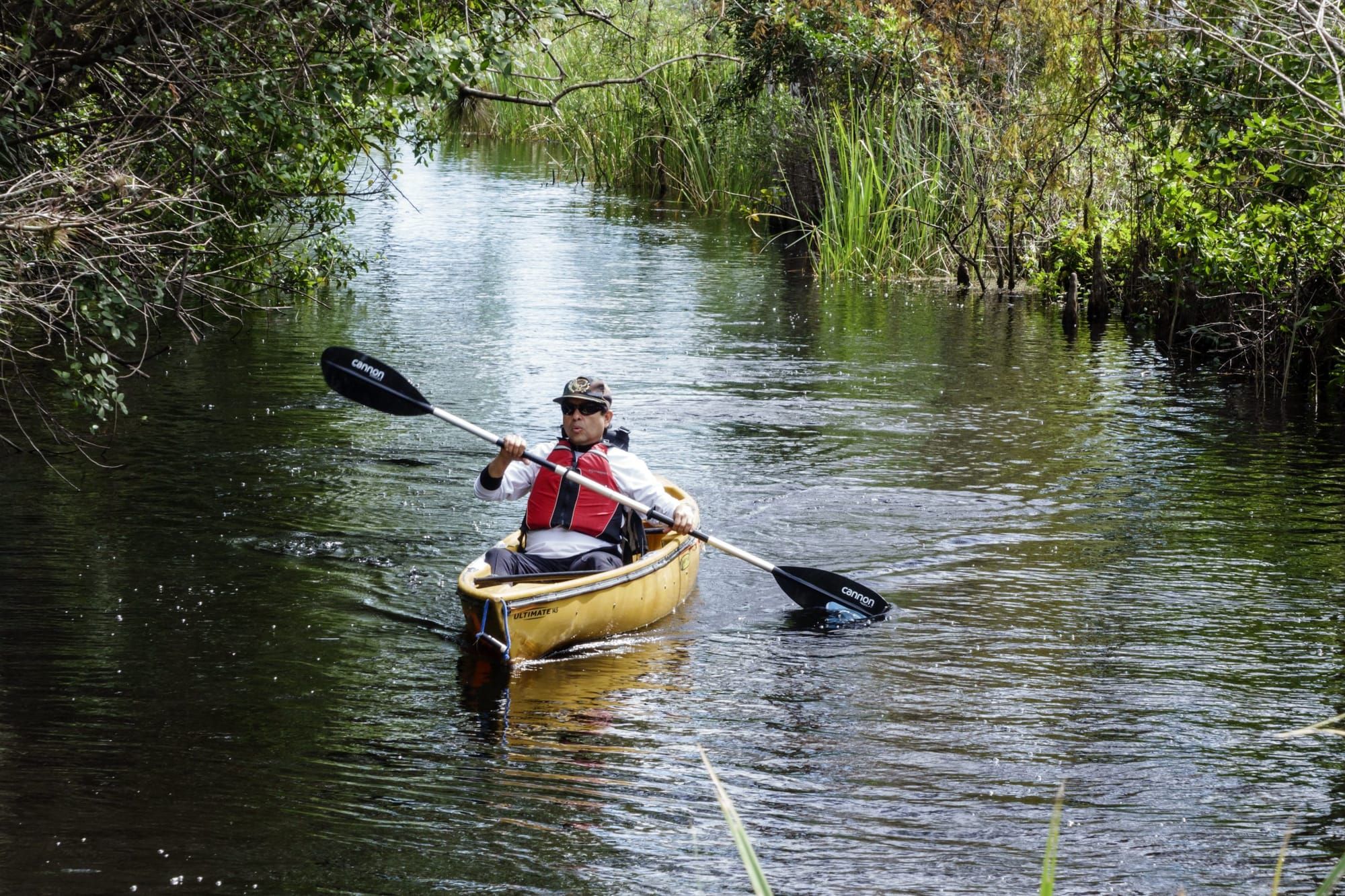
Now, the Miccosukee need permission from Everglades National Park to access the park’s wilderness areas, where they still have some ceremonial locations. A wilderness designation for Big Cypress National Preserve would render the land similarly inaccessible. Today, the Miccosukee hunt, use airboats, and hold ceremonies on the land, which is a vital part of the greater Everglades ecosystem and known for its five unique habitats, including hardwood hammocks, pinelands, and cypress swamps that are home to the illusive ghost orchid and sunbathing alligators. But concerns extend beyond ceremonial practices; Popeye pointed out potential bureaucratic hurdles that could affect elderly tribal members, like Popeye’s grandmother in her late 90s who lives in a traditional Big Cypress camp.
“It’s just going to add another layer of bureaucracy just to live our life the way we’ve always been living it,” Popeye said. “It’s just another way to make our existence more complicated than it needs to be.”
The National Park Service did not respond to Prism’s request for comment.
Betty Osceola, a tribal elder who resides within the preserve, expressed deep reservations about the potential impacts on her community’s traditional rights and way of life.
“The areas that they have where they’re proposing that designation, annually, we hold our traditional Green Corn Ceremonies out there in two different locations,” said Osceola. “Eventually, the tribal people wouldn’t be able to hold their ceremonies out in the Big Cypress. They would be forcing the tribe to look elsewhere to move their ceremonies. But why should we have to do that?”
Osceola highlighted that the designation could severely limit access to hunting, gathering medicinal plants, and conducting important cultural events. Osceola also noted broader environmental concerns, including the management of invasive species like the Burmese python, which have devastated the region’s local mammal, bird, and reptile populations and, in turn, triggered a broader deterioration of the ecosystem’s fragile cycles. Additionally, she raised issues about potential future impacts on water quality and the preserve’s overall ecosystem management.
“Here we are again,” said Osceola, referring to the history of being removed from Everglades National Park. “Where the Miccosukees are being faced with eviction from their ancestral lands.”
The proposed designation, supported by the National Parks Conservation Association to deter oil drilling, has sparked bipartisan support against its implementation. In May, Rep. Scott Franklin filed a bill in the House to ensure that Big Cypress National Preserve may not be designated as wilderness or as a component of the National Wilderness Preservation System. The bill was heard in the Natural Resources Subcommittee on Federal Lands on June 27, where Miccosukee leaders spoke.
The National Parks Conservation Association wrote a statement opposing the bill, which was sent out to subcommittee members prior to the hearing. The statement details its support for the wilderness designation.
“[We are opposed to the bill] to protect Big Cypress National Preserve’s one-of-a-kind ecosystems from damage and decline while ensuring the cultural and traditional uses of these lands can continue by the Miccosukee Tribe of Indians of Florida and the Seminole Tribe of Florida,” it says. “NPCA acknowledges the connection and cultural identity between this land and the Tribes and is eager for a solution that protects Big Cypress in perpetuity and simultaneously honors tribal interests.”
But Popeye said a wilderness designation isn’t the only way to protect the land. He highlighted the tribe’s unique constitutional duty to conserve its lands and resources for future generations, emphasizing its role as a steward of the environment.
“I would like to see actual meaningful consultation with tribes before these types of objectives are pursued,” said Popeye, noting the tribe’s efforts in collaborating with various state agencies and environmental groups to oppose the designation. “There are other ways of conservation.”
According to Popeye, the tribe’s own Department of Sustainability incorporates scientists who work alongside tribal elders who use their traditional knowledge to find the best way forward.
“I think people need to understand that we’re not just here trying to be like, ‘Oh, we have a completely perfect, harmonious, symbiotic relationship with the environment. Aren’t we so magical?’” said Popeye. “No, we’re using historical knowledge, our experience and scientific data to make the best decisions without any economic factor being the main point of it. It’s just trying to protect what protected us.”
As the Biden administration prepares to decide on the designation by November, Osceola and other community members remain hopeful that their voices will be heard. They advocate for legislative measures to safeguard their rights and prevent further encroachment on their ancestral lands.
“The uncertainty is the most frightening part of it,” said Popeye. “We’ve seen in the past what people are willing to do to us or what they think is fine, so we just prefer not to leave those doors open.”
Author
Alexandra is a Cuban-American writer based in Miami, with an interest in immigration, the economy, gender justice, and the environment. Her work has appeared in CNN, Vice, and Catapult Magazine, among
Sign up for Prism newsletters.
Stay up to date with curated collection of our top stories.