An Obama-era border policy paved the way for Trump’s asylum shutdown
Some asylum-seekers who joined a lawsuit to stop “metering” practices at ports of entry have built lives in the U.S. despite setbacks
Alberto fled Cuba to save his life, not once but twice.
That’s because the first time he tried to request asylum in the United States in 2019, a judge didn’t allow him to present his case due to a policy change that happened between the day he arrived at the border and the day he crossed it. He was soon deported to Cuba, but immediately left the country again in search of safety.
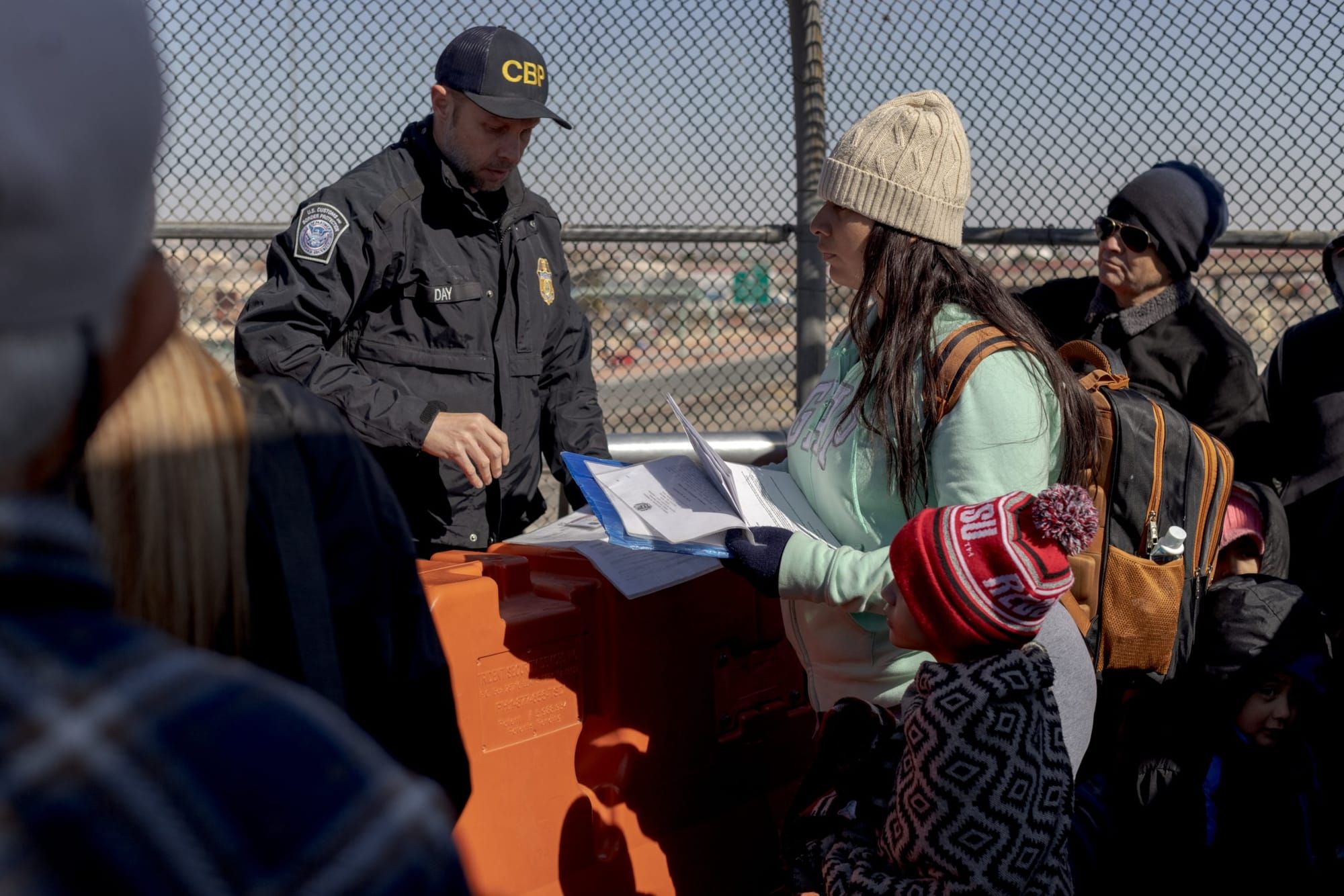
Alberto, who is using a pseudonym for safety reasons, was among thousands of asylum-seekers who faced long waits at the U.S.-Mexico border during the first Trump administration due to a policy known as “metering.” Under the practice, Customs and Border Protection (CBP) officers turned away asylum-seekers at ports of entry before they reached U.S. soil instead of taking them inside for processing.
“People were put in really, really dangerous positions,” said Neela Chakravartula, the associate director of litigation at the Center for Gender and Refugee Studies and a lawyer involved in a case challenging the policy. “Metering is subjecting people to extraordinary levels of instability and exposure to violence.”
Migrants like Alberto generally have to be physically present on U.S. soil to request asylum. The asylum screening process is the way the U.S. has tried to comply with its international obligations to determine whether migrants arriving at its border qualify as refugees.
Metering started at least as early as 2016 under President Barack Obama, but it became the de facto operation at the border for all asylum-seekers during President Donald Trump’s first term.
At the time, CBP often said that it took as many asylum-seekers for processing as it could and that its officers turned people away when holding cells at the port of entry were full. The government argued that if migrants weren’t actually on U.S. soil yet, domestic and international obligations didn’t apply. As the metering policy progressed, officials built additional infrastructure around the port of entry, adding gates on the line where U.S. soil began and stationing guards where pedestrians and cars crossed over that line.
Legal services nonprofit Al Otro Lado and several asylum-seekers sued the U.S. government over the practice in 2017 in what would become a class-action case. Testimony from a whistleblower and documents related to the case showed that immigration officials frequently lied on days when they said they didn’t have the capacity to take in anyone else, according to Nicole Elizabeth Ramos, an attorney who since 2015 has accompanied asylum-seekers to ports of entry in Tijuana, Mexico.
All the times they said, ‘There’s no room at the inn,’ they had capacity. When they say they don’t have capacity, it’s because they want to create a spectacle.”
Nicole Ramos, Al Otro Lado’s border rights project director
“All the times they said, ‘There’s no room at the inn,’ they had capacity,” said Ramos, the director of the Border Rights Project at Al Otro Lado. “When they say they don’t have capacity, it’s because they want to create a spectacle.”
Al Otro Lado and the asylum-seeker plaintiffs have won so far in court, with judges finding that turning away asylum-seekers is illegal. But the case is still winding its way through the appeal process.
Meanwhile, border policies have changed, building on the precedent that metering set to keep asylum-seekers out of the U.S.
But for class members like Alberto, the case has meant a new opportunity at life.
Many plaintiffs are now working in the U.S., and at least two have started their own businesses, according to Melissa Crow, an attorney who has been on the Al Otro Lado case since it began and is now director of litigation at the Center for Gender and Refugee Studies. She said many were granted asylum and are now busy raising families.
Just a few months into the second Trump term, human and civil rights lawyers have launched more lawsuits against the administration’s ongoing restrictionist efforts. While those play out over potentially years of litigation, the plaintiffs who spark them will have to figure out their own paths forward, just as Alberto did.
Escaping twice
By the time Alberto fled persecution in Cuba—flying first to Nicaragua before traveling up through Central America to the U.S.-Mexico border—metering was standard practice, and the Al Otro Lado lawsuit was already well underway.
Alberto didn’t know any of this.
In April 2019, he reached the border city of Ciudad Juárez across from El Paso, Texas, and learned that he would have to put his name on a list and receive a corresponding number to be placed in line to request asylum at the port of entry.
He said he didn’t want to cross illegally, so he waited. His number was finally called in October of that year.
Meanwhile, in July 2019, the Trump administration issued another asylum-related policy known as the transit ban. The policy states that anyone who passes through another country between leaving their home country and arriving in the U.S. must first request protection in that third country. The failure to do so would render the person ineligible for asylum in the U.S.
Alberto arrived at the border before the policy went into effect, but because of metering, he entered after the new policy was implemented.
“People who had already been metered were told to wait, and then suddenly the law changed on them when they were outside the country, and because they waited and complied with that, they were suddenly ineligible for asylum,” Chakravartula said.
When Alberto finally came in, officers chained him at the wrists, waist, and ankles. He said he felt like he was in prison.
“I was afraid. Those three months, I lost a lot of weight,” Alberto said in Spanish, recalling his time in U.S. immigration custody. “Psychologically, mentally, it was a very hard physical wearing-down.”
In a video conference, he saw a judge who told him that because he crossed through other countries, he couldn’t apply for asylum and would be deported. Alberto never even got to turn in an official asylum application.
About a month later, he said, a deportation flight took him to Cuba. After he landed, officials with the Cuban government interrogated and threatened him at the airport.
“They told me I wouldn’t be able to have a life in Cuba,” Alberto said. “I wouldn’t be able to work. I wouldn’t be able to socialize. They were going to be surveilling me all the time.”
Alberto didn’t even leave the airport. He quickly made his way to another flight and left again for Nicaragua.
He later learned that people deported with him who tried to leave weeks or months later were blocked by the Cuban government from leaving the country. Alberto assumed that the only reason he was able to make it out was because the system had not fully processed his arrival.
“It was a miracle that I was able to get out of Cuba,” he said.
He retraced the path through Central America, even more scared this time because he knew the risks that lay in store.
He slept in forests that gangs were known to frequent. He recalled lying on the ground in silence as ants and other creatures crawled all over him so that gang members wouldn’t find him.
A second chance
Alberto went back to Ciudad Juárez, where he made a few friends during his metering experience. He got a job working in a clothing store at a mall and rented a room in the same place he lived before.
But he said he still didn’t feel safe.
During his first time in Ciudad Juárez, he experienced kidnapping attempts and extortion. When he went back to live there again, he only spent time at home or at work.
“Even though it was a dangerous city, it was the only city I knew in Mexico,” he said.
One day, someone from Chakravartula’s team called him about the Al Otro Lado case. The lawyers representing the class asked the judge to block the U.S. government from applying the transit ban to anyone who was metered before the day it went into effect, and the judge agreed.
This meant that Alberto could return to the U.S. to try again for asylum.
At first, Alberto wasn’t sure whether to trust the attorneys, but he decided to try.
“I feel fortunate,” Alberto said. “And I value the people who are trying to change the lives of people like me because they really changed my life.”
He went to stay with family in Miami, but after struggling to find work, a friend in Austin convinced him to move with the promise of a job at the fast food chain Whataburger. Alberto said he never intended to live in Texas because the state didn’t seem welcoming to immigrants like him, but Austin surprised him.
“Rent is manageable, more so than Miami,” he said. “There’s work. It’s a peaceful city. I feel comfortable.”
After a few months, he switched from the job at Whataburger to driving for Uber and Lyft. He drives about 12 hours a day, the maximum the companies allow without rest.
He’s taking English classes at a community college and is now in the process of getting his green card.
“I feel grateful to God and to the attorneys from Al Otro Lado who gave me this opportunity for a new start because really they opened for me the door to my freedom, to my personal development,” he said.
Eventually, Alberto wants to study psychology and become a therapist.
“I had a difficult time,” he said. “Now I feel a sensation of peace, a lot of peace I found. I lived through a lot of difficult, dangerous experiences. I had to cross Central America twice to get to Mexico, and now, having gotten here, I can say it was worth it—everything I went through, the suffering, the trauma. Here, I found peace, safety, and tranquility.”
The asylum-seeker said he hopes that others like him will be given the same opportunity if they are turned away by metering or similar policies.
“People who deserve to be here—they were returned unjustly without being heard,” he said.
Meaningful change
While Alberto was living in Ciudad Juárez for the second time, a federal judge in San Diego ruled in 2021 that the U.S. government unlawfully turned away asylum-seekers who were approaching the border to request protection.
But a Supreme Court ruling in another case left the judge unable to order a specific remedy. And by then, the Trump administration replaced metering with a policy known as Title 42, which instructed border officials to expel people who crossed without documentation, regardless of their asylum claims. That policy completely shut down asylum processing at ports of entry. The metering waitlists closed.
Last fall, soon after Alberto moved to Austin, the 9th Circuit Court of Appeals upheld the San Diego judge’s ruling, agreeing that U.S. law requires officials to take in asylum-seekers who approach ports of entry to screen them for refugee status.
But that’s still not happening at the border.
In 2023, the Biden administration replaced Title 42 with a policy that also limited asylum-seekers’ access to U.S. soil by requiring most to use a phone application called CBP One to make appointments to go to ports of entry.
That policy is still in place, though Trump got rid of CBP One’s appointment system at the beginning of his second term, essentially leaving asylum-seekers without a way to request protection at ports of entry.
“It’s really appalling to see the way that we’re just throttling the ability of people to come into the country and seek asylum,” Chakravartula said. “The core issue remains that people aren’t being afforded that opportunity.”
Despite the setbacks to real change for newly arriving asylum-seekers, Crow, one of the Al Otro Lado case attorneys, said she sees other victories that have come through the case, including movement building.
“Litigation is about a lot more than what happens in the courtroom,” Crow said.
It’s also about finding ways to empower the people who are most directly affected, she said. The team used Zoom to help class members on the other side of the border attend hearings virtually, and it hired translators so that members could understand the proceedings. After a hearing, a lawyer from the team explained what the proceedings meant.
When class members came into the United States, Crow said, they had the opportunity to train in advocacy work.
“We’ve got to fight in court just because we can’t let this stuff go unchallenged,” Crow said. “But I think it’s going to take a much broader movement to really change things on the ground.”
For Ramos, the attorney who first alerted the legal community that metering was happening, the case is a step toward change.
“I take immense pleasure that two federal courts have told the federal government that they are wrong and we are right—and that we are right on principle,” Ramos said. “Social change takes decades to have meaningful change. I think it starts with at least being told that you’re right on principle.”
The effort is also worth it for the clients who have built lives inside the U.S. Occasionally, they reach out to share photos of a wedding, a new baby, or a new job.
In the meantime, Ramos said she worries that the U.S. is missing an opportunity. The people who made it through their arduous journeys to find protection here would likely be its staunchest patriots—if they were treated well when they arrived.
Editorial Team:
Tina Vasquez, Lead Editor
Carolyn Copeland, Top Editor
Rashmee Kumar, Copy Editor
Author
Kate Morrissey has been a journalist covering immigration issues at the San Diego-Tijuana border since 2016, and she writes a newsletter called Beyond the Border.
Sign up for Prism newsletters.
Stay up to date with curated collection of our top stories.