Mental health calls to police can be deadly, but alternatives remain underfunded
The death of Aaron Rainey, shot and killed by Philadelphia police in March, has renewed calls for reliable, 24/7 non-police crisis and emergency response teams
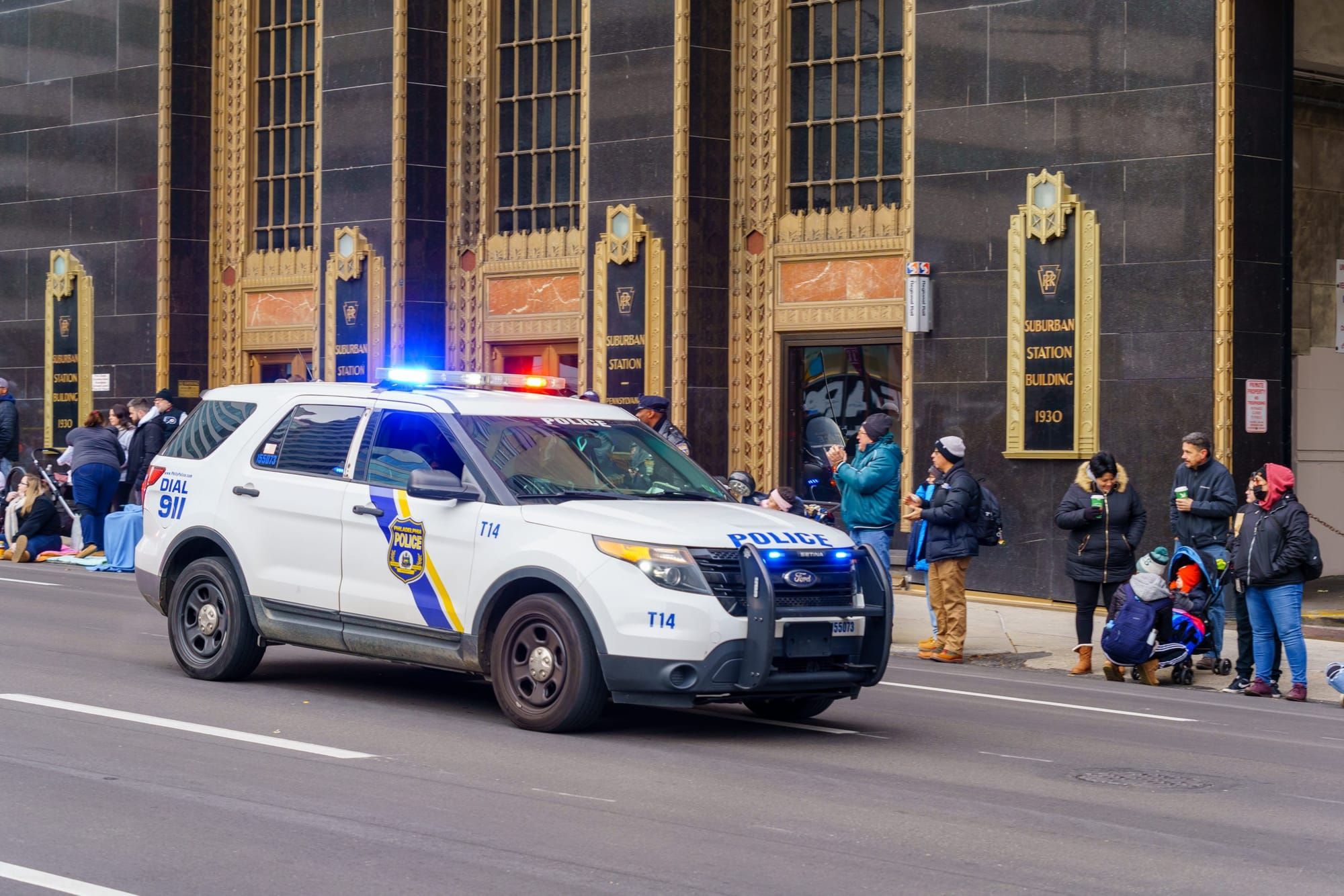
On the morning of March 20, Tonya Kersey left for a doctor’s appointment and told her 36-year-old son, Aaron Rainey, that she’d be back in a couple of hours. She remembers him sitting on the couch in her North Philadelphia row house, where he often hung out during the day.
Around 11 a.m., a neighbor called Kersey to say Rainey was in the middle of a nearby street with no clothes on, yelling. The neighbor gave him a blanket. Then the police showed up.
Two Philadelphia police officers drove Rainey, who was diagnosed with bipolar disorder, to the nearby Friends Hospital, upon his request. When they arrived, something happened—a tussle or an escalation—that ended with one of the officers, Thomas Thompson, shooting and killing Rainey and also shooting his own partner in the vest. Only one of the two officers was wearing a body camera, and that footage has not been released.
Police initially lied and said it was Rainey who somehow got the gun and shot the other officer; after police updated their story, local news still described it as a “shootout” and Rainey as a “suspect.”
“They killed my son in 30 minutes,” Kersey said in an interview the day after Mother’s Day. “All he was trying to do was get himself together and get help, that’s all.”
Rainey’s death is another in a long line of police murders that began with a mental health call or a person in crisis. While Philadelphia has a non-police mobile crisis response option to deal with mental health calls, his death exposed the system’s limitations due to lack of appropriate funding.
As Philadelphia leaders prepare to vote on the city’s annual budget on June 12, local advocates are pushing to double the current funding level for mobile crisis response teams to about $20 million. This additional funding, organizers said, could address chronic issues with the program, including understaffing and low wages, that are contributing to police still showing up for mental health and other crisis calls. The proposed budget currently includes no increase for mobile crisis response, but Rainey’s death has reinvigorated activists’ demands.
“It’s pretty clear that if a mobile crisis team had shown up that day, he would have just been brought in for treatment, entered into the hospital, and been home by now,” said Nikki Grant, co-executive director of Amistad Law Project, which aims to end mass incarceration in Pennsylvania. “I really want our city leaders to take accountability for what happened to Aaron Rainey, and I want them to be blatantly, intentionally, wholeheartedly investing in mobile crisis so that this doesn’t happen again.”
Non-police response teams
For years now, organizers across the country have been pushing for a simple solution to the endemic police shootings of people in crisis: non-police emergency responder teams who can be dispatched with the speed and efficiency of other emergency responders. These teams can include peer support specialists, EMTs, and trained mental health professionals who are able to de-escalate and support people in crisis without bringing guns or the threat of arrest onto the scene.
“When cops are involved, we can expect escalation, we can expect an increased likelihood of incarceration or arrest, and we can anticipate injury and death,” said Jess Joseph, a psychologist and mobile crisis organizer with Philadelphia Treatment Not Trauma. Black people, particularly Black men and trans women, are disproportionately targeted by police violence, and an estimated 1 in 4 people killed by police are in a mental health crisis.
In 2021, Philadelphia advocates convinced the city to pass a $7.2 million pilot program for mobile crisis response teams that would go out without police. The program got off the ground in 2022 as part of the city’s Department of Behavioral Health and Intellectual disAbility Services (DBHIDS).
The non-police services are now available around the clock, but Grant and other advocates say it is still confusing for residents, many of whom don’t know that an unarmed, non-police response is an option at all. Calls to 911, 988, and a third local number can still result in “co-responders” (mental health professionals who show up with police), bringing the same risks of escalation and violence.
There is nothing controversial about the idea of non-police emergency responders from a treatment perspective: The federal Substance Abuse and Mental Health Services Administration has recommended non-police responses to mental health emergencies for years, recognizing this as a “best practice” in agency literature. That is part of the rationale behind the national suicide and crisis line that has been reachable by calling 988 since 2022. But a call to 988 can still end with police coming to your home, even against your will.
Treatment Not Trauma coalition and Amistad Law Project are behind the push to increase mobile crisis funding to approximately $20 million, up from the current $10 million. That would still be a fraction of Philadelphia police funding, which last year was $856 million, an increase of $67.8 million over the previous year.
As funding lags, advocates say, understaffed contractors hired by the city can take more than an hour to dispatch mobile crisis units. (The city has celebrated a 50-minute average response time as a success.) Staff are also paid less than industry standards for difficult and sometimes traumatizing work, advocates say. DBHIDS staff have asked for a funding increase, saying that the Philadelphia crisis line now handles about 6,000 calls per month.
A national trend toward mobile crisis units
Across the country, the same effort to stand up non-police alternatives has continued even as the movement to defund the police and invest in community safety has faded from national news. Since 2020, new programs have been rolled out in cities including Washington, D.C.; Portland, Oregon; Atlanta; Albuquerque, New Mexico; Cambridge, Massachusetts; and dozens of others, with a total of at least 100 U.S. cities now offering non-police alternatives to their residents through a variety of means. Raleigh, North Carolina, will pilot its program this coming summer.
“The issues haven’t gone away just because it’s out of the mainstream media,” said Dara Bayer, former co-director of a non-police crisis response effort in Cambridge called Holistic Emergency Alternative Response Team (HEART).
Cambridge HEART was established after years of activism to secure the city’s funding for police-free emergency responders. Bayer stated that the process was unwieldy and political, which led the Black leaders who had been advocating for this alternative to create HEART independently in 2021.
But then, in early 2023, 20-year-old Sayed Faisal, who was having a mental health crisis, was murdered by Cambridge police.
“I think that created a crisis moment for the city,” Bayer said. “Just like this person who was murdered in Philly—what would have been different if someone without a gun had shown up?”
At that point, she said the city of Cambridge moved more quickly to create a non-police crisis response. But instead of funding the existing HEART program, city leadership created its own program called CARE (Community Assistance Response and Engagement). Now, similar to Philadelphia, the options in Cambridge remain a hodgepodge of possibilities that include calling 988 and potentially being referred to CARE; calling 911 and potentially having police show up with or without a mental health co-responder; or calling HEART, where you can speak to someone for support but still can’t get in-person service due to an ongoing lack of funds for this independent organization.
“I would not call what’s happening in Cambridge on the city level some kind of model,” Bayer said.
Durham offers a model, seeks more funds
In Durham, North Carolina, activists and the city have worked more closely together. The city’s Department of Community Safety, founded in 2022 after many years of advocacy by local abolitionist group Durham Beyond Policing, has been operating a program called Holistic Empathetic Assistance Response Team (HEART) and carefully tracking calls, locations, and response times.
Representatives of the city’s Department of Community Safety did not respond to Prism’s requests for an interview. But publicly available data from the city shows promising results.
Since 2022, the city has dispatched over 30,000 HEART teams, with an average response time of under six minutes. The largest percentage of calls has been for trespassing, but the teams also frequently respond to mental health crises, wellness checks, and follow-ups from previous calls. They have also responded to nearly 500 calls related to domestic violence.
Stories from these calls show the HEART teams responding to a wide diversity of concerns, from homelessness to elders being abandoned by caretakers to suicidal ideation. One in 5 HEART calls ends in connecting someone to other immediate care.
“HEART has offered a model, showing what they’re actually doing, and what is happening as a result,” said Nhawndie Smith, an organizer with Durham Beyond Policing. They said that police are not responsible for showing and tracking their results in the same way.
But the program is still not available overnight. Durham Beyond Policing and the Have a Heart Coalition are advocating for the Community Safety Department to receive $4 million in additional funds in the upcoming budget, set for a vote on June 16. They’re also working to get the surrounding county and the school district (which is a combined city/county district) to work together to dispatch calls to HEART as well.
Community Safety Department Director Ryan Smith told Durham’s Indy Week that the department is currently only able to respond to 50% to 55% of eligible calls. In Durham, as in Philadelphia and elsewhere, each of these calls presents an opportunity to avoid the known risks of armed police officers showing up to a scene where someone is in crisis.
In the meantime, Kersey mourns the son police officers took away from her. Now, her own mental health is low.
“It’s hard for me to get out of bed sometimes,” she said. “I am never going to be the same.”
Editorial Team:
Sahar Fatima, Lead Editor
Carolyn Copeland, Top Editor
Stephanie Harris, Copy Editor
Author

Lewis Raven Wallace is a journalist based in Durham, North Carolina, the author of The View from Somewhere:Undoing the Myth of Journalistic Objectivity, and a co-founder of Press On, a southern moveme
Sign up for Prism newsletters.
Stay up to date with curated collection of our top stories.