Israel’s national water company sets its sights on Argentina
Known for water apartheid in Palestine, Mekorot is growing its global footprint across the U.S. and Latin America—including in Argentina, where the company aims to privatize water

Real journalists wrote and edited this (not AI)—independent, community-driven journalism survives because you back it. Donate to sustain Prism’s mission and the humans behind it.
Over a lookout facing the bed of Argentina’s Potrerillos reservoir, fed by the Mendoza River and now at one of its lowest levels in decades, Federico Soria, 55, explained how the water distribution and irrigation system works.
The system was designed in colonial times, long before the country’s independence, and helped transform Mendoza—a desert province at the foot of the Andes Mountains—into a verdant landscape, with land patches of green oasis and centuries-old trees. The region is known for its spectacular scenery and prized Malbec wines.
Winter snow and nonpermanent glaciers melt in summer, feeding the streams, springs, aquifers, and rivers born in the Andes. These waters are diverted through a network of open canals that run through towns, cities, and farmland across the province. The canals, in turn, keep the tree lines irrigated, providing essential shade in urban areas and replenishing groundwater. The canals also soften the human impact of diverting the rivers.
But all of this will soon change.
In September 2022, the Mendoza provincial government entered into an agreement with Israel’s national water company, Mekorot, and presented the province with a new water code, alongside a master water plan in early 2025. The plan, which is now underway, was made without public consultation, nor public tender—and it’s not the first time this has happened. Since 2022, Mekorot has managed more than half of Argentina’s water.
Better known for water apartheid, the Israeli company controls water distribution in the occupied Palestinian territories and operates wells in the West Bank that are used to supply water to illegal Israeli settlements. Now, the company is also developing a reputation for its murky and exploitative practices in Latin America.
Soria told Prism that he and other locals are particularly concerned that the Mekorot’s agreement with Mendoza would grant mining companies a water quota, and give provincial authorities the power and discretion to reallocate water from one sector to another.
Mekorot did not respond to Prism’s request for comment.
The existing water law that the agreement with Mekorot seeks to alter has been in place for more than 140 years.
“The water law … is completely part of our identity, shaping the layout of our fields and cities,” he said. “Water, its purity, and what we do with it are part of who we are in this province.”
Mekorot approaches water very differently; it is a commodity to be controlled at any cost. According to the company’s leadership, Mekorot is undergoing a “technological revolution,” allowing it to actively expand its presence in the U.S., where it appears that the company will also play an increasing role in major infrastructure projects—and business is booming.
So what does the company’s growing power and influence mean for Argentina?
Waiving the right
Soria is a mild-mannered man who spent decades working for Argentina’s National Parks administration. That is, until he was dismissed from his role by President Javier Milei’s administration.
He now earns a meager living publishing guides on Andean flora and fauna, but he is perhaps best known for his environmental activism. He is one of the most visible members of the self-organized Uspallata Neighbors Assembly, a group formed to oppose the arrival of the San Jorge mining project, a large-scale mining operation in Uspallata, a small town of about 5,700 people at the foot of the Andes.
Soria is simply defending the waterways of his home, but this work has come with major consequences. Provincial authorities have effectively labeled him an eco-terrorist. Last year, authorities opened a criminal case against Soria and another local environmental activist, Mauricio Cornejo, that included a request for an Interpol international arrest warrant. Soria spent several days in jail, while Cornejo, who owns a small gift shop, was detained for more than a month.
Criminalizing water protectors and land defenders is a tactic employed by governments globally and has especially taken root in settler-colonial countries like the U.S., which disproportionately targets Indigenous activists for their environmental activism. But in recent years, environmental activists have developed global solidarity and found strength in each other, while also making common cause through the Boycott, Divestment, Sanctions (BDS) movement that works to end international support for Israel’s oppression of Palestinians.
Mekorot is of particular concern to the BDS movement. As the company expands its operations internationally, it exports the knowledge and technology it gained through water apartheid in Palestine, facilitating the privatization of water in countries like Argentina.
But activists in Argentina are fighting back.
Take, for example, the Fuera Mekorot campaign, a BDS movement activist initiative. The group uncovered the terms of the contracts between the Israeli company, 12 Argentine provinces, and the state-owned utility Agua y Saneamientos Argentinos, Argentina’s largest provider of household water.
“In a span of two years, half the country has signed contracts with Mekorot directly and without a public tender [and] with clauses that are private, reports and resulting plans that are private, and a cost far higher than what it would have cost to draw up these plans with the state’s own agencies,” said Silvia Ferreyra, a spokesperson for Fuera Mekorot. “This is not happening only in Argentina. Mekorot has signed agreements and contracts in Mexico, Morocco, India, Chile, and is seeking to establish itself in the United States. Presenting themselves as experts in managing this resource is part of Israel’s soft power.”
Fuera Mekorot has obtained access to two contracts in Argentina, where, among other controversial clauses, the provinces waived the right to resolve potential disputes with Mekorot in Argentina. Instead, the provinces agreed to submit to British courts. Argentina has a longstanding dispute with the United Kingdom over the Malvinas/Falklands Islands, for which both countries went to war in 1982. This dispute includes a longstanding technology and military embargo between the U.K. and Argentina.
While choosing U.K. courts is a standard corporate practice for dispute resolution, U.K.-Argentine relations makes Mekorot’s contract provision a deeply controversial and potentially coercive clause that pits standard commercial practice against national sovereignty and historical grievance.
The contracts also state that Mekorot will retain the intellectual property of the master plans, along with their results, and that this information would only be shared with provincial authorities.
According to Ferreyra, there is a pattern among the dozen, multimillion-dollar contracts Mekorot has obtained in Argentina. The most significant pattern, she said, is that 10 of the provinces are in the Andes and have “significant” mineral resources. The contracts’ clause about intellectual property also gives her pause.
“The renunciation of the intellectual property of the master plans and studies has an inevitable colonial underlining that is simply unheard of,” Ferreyra said.
Both fracking and large-scale mining require extraordinary amounts of water. Activists suspect that Mekorot’s agreements in Argentina allow provinces to provide the legal guarantees needed to divert water to those industries—even if it comes at the expense of local communities.
Diego Berger, Mekorot’s international special projects coordinator, has repeatedly made public comments that Argentines must pay more for their water. Ferreyra said this makes it clear “which sector they want to privilege and which is the one they want to reduce access to.”
“Slow and invisible death”
Among the more than 200 mining exploration permits granted by Mendoza Province, the most advanced project—and the one at the center of the most controversy—is the San Jorge mine, located about 20 miles from Uspallata. The town has a small military outpost, a handful of shops, and survives mostly off tourism and the income generated by being a mandatory stop on one of the busiest international crossings in the Southern Cone, the southernmost part of South America.
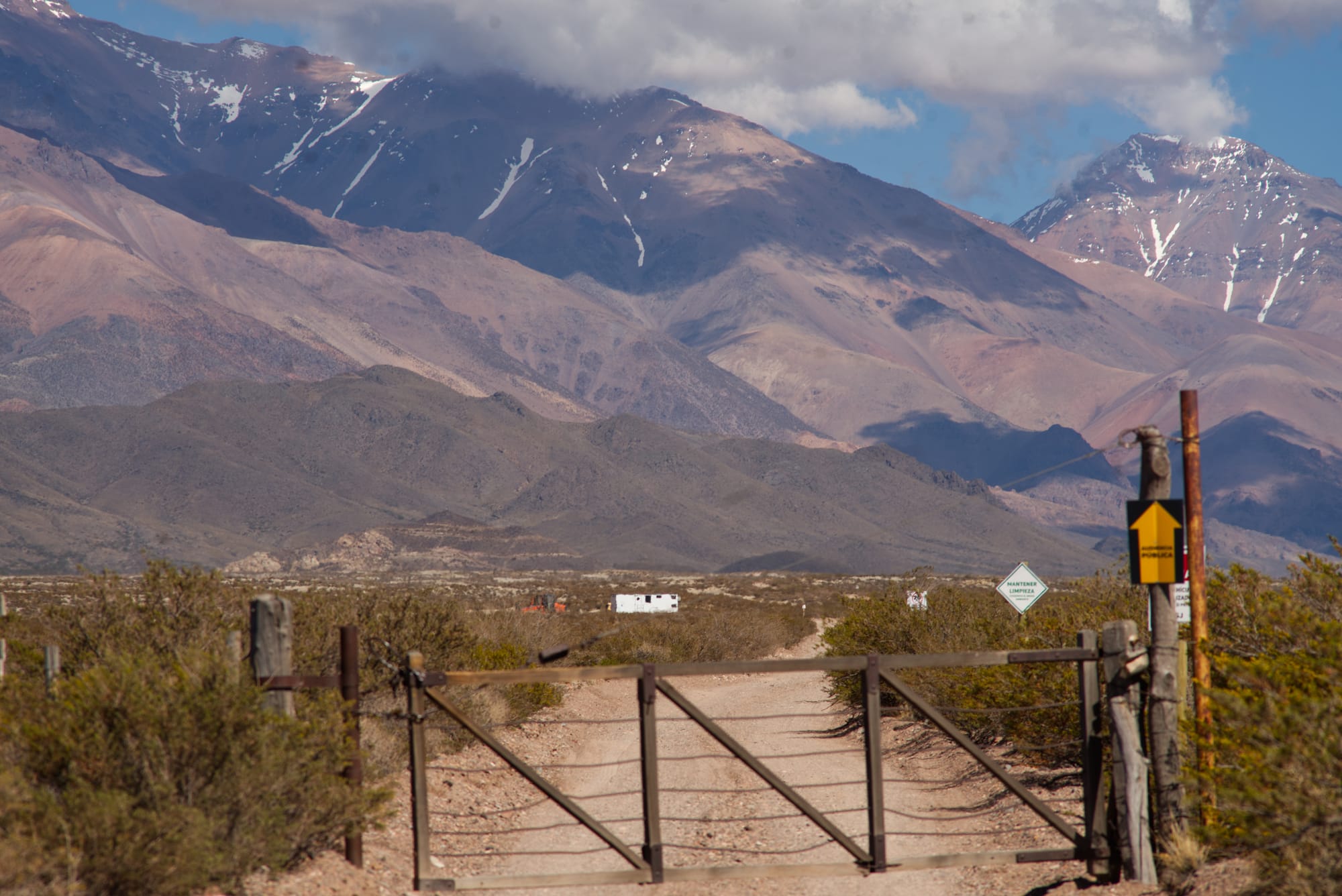
As San Jorge overcomes the legal obstacles that have long prevented the mine’s operation, it will pave the way for large-scale mining across Mendoza.
Early last year, the National Supreme Court ruled in favor of the San Jorge mine, allowing the operation to use unregulated chemicals. Following the ruling, the provincial government fast-tracked the process surrounding the mine’s environmental impact assessment, which was approved by the Chamber of Senators in December.
The approval served as a final green light for the mine, spurring outrage. Thousands took to the streets of the city of Mendoza, the provincial capital, including hundreds who walked more than 80 miles from Uspallata where protests lasted more than 12 hours. Locals are still hoping to stop the mining operation from decimating their region, which entirely depends on the careful management of its water resources.
Historically, local activists have proven to be a powerful opposition. Over the past 20 years, there have been five attempts from different provincial administrations to launch the mining project, but all have faced local resistance that prevented the project from moving forward. This includes the largest protest in the province’s history in 2019, when the local legislature first approved the project and the provincial government was forced to suspend it due to pressure and activism across Mendoza.
The reasons locals reject the project are clear. The mine sits on the Uspallata watershed, one of the water systems that feeds the Mendoza River. Three out of four residents of the province depend on the river, which amounts to about 1.5 million people.
Is this really a democracy, when what happens to our town, water, and environment is shoved down our faces without our consent?
Mauricio Cornejo, Argentine environmental activist
“It’s not that we choose to be against progress or jobs, as the authorities want to portray it. This type of mining is not sustainable, it’s polluting, it’s slow and invisible death. And for what? For a few jobs?” said Cornejo, one of the activists being persecuted by the state. “Is this really a democracy, when what happens to our town, water, and environment is shoved down our faces without our consent?”
Fears regarding pollution are not unfounded. Mining spills are frequent in Argentina’s mega-mining sector. In November alone, there were two instances of water contamination: one involving the Glencore mining project “Agua Rica” and the Andalgalá River in Catamarca, and another involving the Barrick Mining Corporation and the Cuesta del Viento reservoir in San Juan, where thousands of dead fish appeared due to alarming levels of mercury in the water, local activists reported.
But since the far-right President Donald Trump admirer Milei took office in 2023, advancing large-scale mining in Mendoza has become a priority. Like the U.S. president, Milei is a climate change denialist and his administration has destroyed environmental protections in favor of extractive policies that harm the land. Argentina’s president has expressed explicit and repeated support of the San Jorge project, which authorities plan to transition into a much larger mining complex.
Soria told Prism that the “entire consultation process” around the mine has been “full of irregularities.” This includes Mendoza’s legal process by which locals are supposed to be consulted.
“The consultation, which must be free, prior, and informed, was none of those three things,” Soria explained. “It was not free because there is pressure on the population from political authorities to get a private project approved. It was not prior because the company is already active in the mountains, and it is not informed because citizens’ questions about the project have never been answered.”
After the project was effectively approved in December, Manuel Adorni, Argentina’s chief of cabinet, announced a legislative session while Congress was in recess. The goal? To modify the country’s Glacier Protection Law, which bans mining activity in glacial lands. Argentina has over 16,000 glaciers that serve as a primary source of water for millions of people.
Around the same time as the surprise legislative session, there was a press conference in Mendoza sponsored by the local government. Present was Berger, Mekorot’s international projects coordinator. At the press conference, Berger again commented on the water use of locals and claimed that “mining can have a responsible use.”
More recently, the San Jorge project was rebranded as PSJ Cobre Mendocino, a joint venture to be overseen by Argentine company Alberdi Energy and Switzerland’s Zonda Metals, whose director sits on the board of the Solway Investment Group, the company that once owned the mine.
In a statement to Prism, a representative from Solway said the company has not owned the mine for more than two years and that it “does not currently hold any ownership or operational control over PSJ Cobre Mendocino.”
Solway is a Swiss-based Russian enterprise that faced U.S. sanctions in 2022 due to its human rights abuses and exploitation of mines in Guatemala; a representative from the company told Prism that this characterization is “misleading.” According to the company spokesperson, Solway’s Guatemalan subsidiaries were designated by the U.S. Treasury in 2022 and were removed from the sanctions list in January 2024.
“No findings of human rights abuses by Solway were made by U.S. authorities. Following their removal, the subsidiaries were cleared to resume operations. Since that period, Solway has significantly strengthened its governance, compliance, and human rights frameworks,” the company spokesperson said in an email.
But security forces and subsidiaries of the company have been linked to surveilling, harassing, and making violent threats against Indigenous activists and journalists in Guatemala. Solway told Prism that the company “categorically rejects this allegation.”
Given the seriousness of the conditions facing locals subject to companies’ harmful and extractive policies, activists such as Cornejo said they are not being hyperbolic when they express that they fear for their futures.
“This is the devil coming to try to knock down our door, the same one we see committing a genocide in Gaza every day and in real time,” said Cornejo, “with Mekorot controlling and managing our water and with Solway coming to destroy our mountains and poison our lives to take our resources, to feed its war machine.”
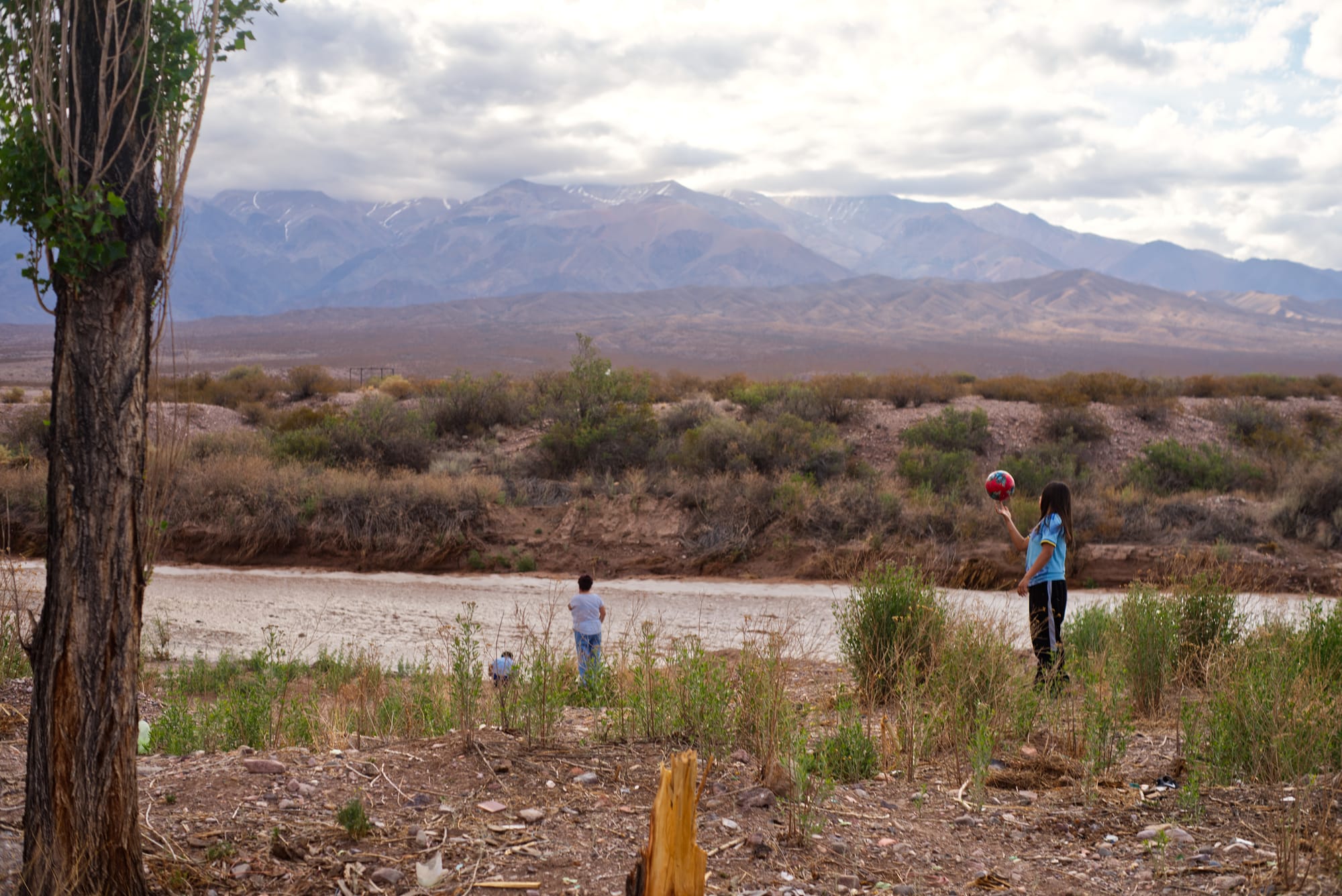
Locals are not giving up their fight against the “machine.” Since December, protests have continued in Mendoza almost every day and in every corner of the province, even in the face of severe police repression and under the threat of imprisonment. Dozens of environmentalists and protesters have been detained.
“We are going to resist in the streets, in the courts, wherever it’s needed,” Soria said. “This is resistance for survival, of our health and our environment. We have no other choice.”
Editorial Team:
Tina Vasquez, Lead Editor
Lara Witt, Top Editor
Rashmee Kumar, Copy Editor
Author

Ignacio Conese is an independent journalist and photographer based in Argentina, specializing in the social and environmental consequences of extractive activities. His work has been published in Span
Sign up for Prism newsletters.
Stay up to date with curated collection of our top stories.