Proposed federal Medicaid cuts will ‘devastate’ millions
An estimated 16 million would lose insurance in the next decade if the federal bill passes the Senate, disproportionately hurting the most vulnerable, advocates say
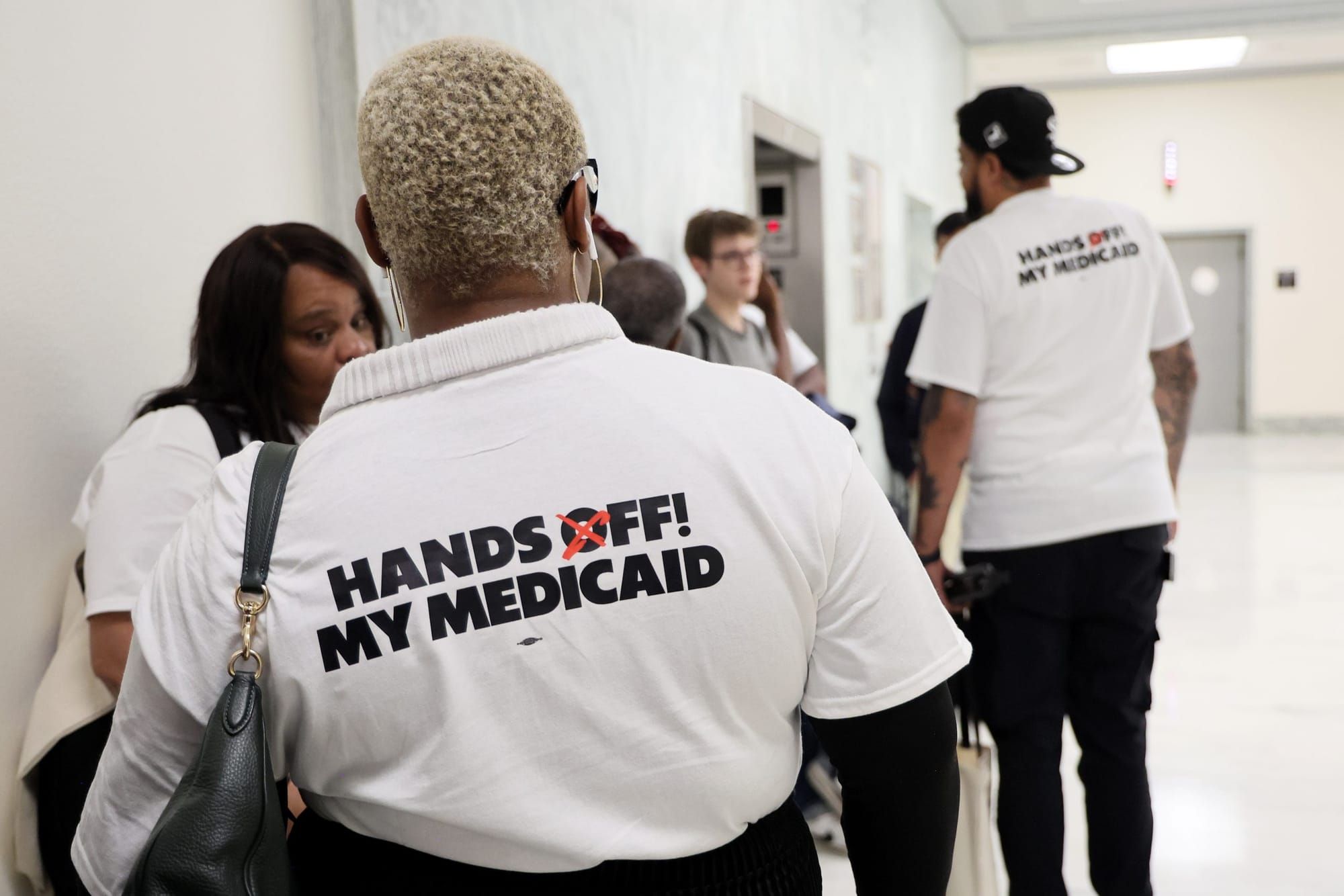
“People will die.”
That’s how Nancy Hagans, the president of National Nurses United, the largest union of registered nurses in the U.S., summed up the impact of the Trump administration’s massive proposed cuts to Medicaid and the Affordable Care Act (ACA). The cuts, a part of President Donald Trump’s budget proposal bill, would lead an estimated 16 million people to lose health insurance by 2034, according to the Congressional Budget Office (CBO). Medicaid is the largest insurer in the country, relied on by about 71 million low-income and disabled Americans.
After passing in the House of Representatives on May 22, the bill is now in the Senate, where the president and Senate Majority Leader John Thune have said they aim to pass it by July 4. On June 16, the Senate released its version of the bill, which proposes even deeper cuts to Medicaid.
“We cannot put a Band-Aid on these cuts,” Hagans told Prism. “It’s unacceptable.”
The nonpartisan CBO estimated that 10.9 million would lose health coverage due to Trump’s bill, while an additional 5.1 million would be unable to remain on ACA plans due to the expiration of premium tax credits and a new rule for health insurance marketplaces at the end of the year. These credits help defray often unaffordable premium rates on exchange plans.
The Medicaid cuts would kick millions off their critical health care coverage by imposing work requirements for eligibility, increasing administrative burdens for enrollment and continued coverage, disincentivizing Medicaid expansion by lowering federal contributions, slashing funding for long-term care, and prohibiting certain provider taxes. The bill would also penalize states for offering Medicaid to immigrants, including those with legal status. It would also further the administration’s discriminatory agenda by banning Planned Parenthood from accepting Medicaid and blocking Medicaid from covering gender-affirming care. States would also face devastating losses to health care funding.
These threats come amid a broader, unprecedented dismantling of public health and anti-vaccine policy under the leadership of Health and Human Services Secretary Robert F. Kennedy Jr., during a historic outbreak of measles and the ongoing threats of viruses like bird flu and COVID-19.
With more people lacking access to affordable preventable care, these policies could result in more hospitalizations, hospital overcrowding, and understaffing, said Hagans. It would also increase medical debt and could result in tens of thousands of preventable deaths. This would affect the large majority of people living in the U.S., but would hit low-income people, people of color, and disabled people hardest, as they rely on Medicaid at higher rates, as well as immigrants, who the cuts target directly.
Cutting Medicaid is one of the most inefficient and cruel ways to try to save money.
Dr. Tem Woldeyesus, Stanford Medicine clinical assistant professor
The cuts are deeply unpopular, especially among people identifying as Democrats or independents. But a large share of Republicans and people who identify with MAGA don’t like them either, according to research from KFF Health. Many Republican lawmakers promised not to touch Medicaid, but still voted for the bill. If passed, the restrictions would kick in on Dec. 31, 2026, meaning that constituents wouldn’t yet feel the impacts of the bill when they decide who to vote for in the midterm elections.
“Cutting Medicaid is one of the most inefficient and cruel ways to try to save money,” said Dr. Tem Woldeyesus, a clinical assistant professor at Stanford Medicine who also works as a primary care provider at Roots Community Health Center in Oakland.
Work requirements
One way that lawmakers are attempting to cut Medicaid is by adding work requirements for most adults ages 19 to 64. These would require Medicaid recipients to work at least 80 hours a month, with some exemptions. The Senate version of the bill narrows those exemptions, including parents with children ages 14 and older in the work requirement.
The vast majority of Medicaid recipients do work, according to KFF: 64% have formal employment, while 12% are caregivers, 7% are students, and 10% do not work due to illness or disability.
Work requirements at the state level in both Arkansas and Georgia have not been effective. In addition to their racist roots, such restrictions just make it harder for eligible people to stay enrolled in health coverage through increased red tape.
Celia Valdez, director of outreach and education at Maternal and Child Health Access, a Los Angeles-based nonprofit, said the onerous reporting requirements are “set up to kick people off,” despite the fact that the vast majority of her clients work. “People often get kicked off of eligibility for just erroneous situations and mistakes,” she said.
Work requirements would greatly increase administrative burdens, while ending a new rule passed under the Biden administration to streamline Medicaid and the Children’s Health Insurance Program enrollment.
“We’re going to see a lot of folks lose care—not because they’re ineligible, but just because they can’t navigate the system,” Woldeyesus said.
For example, Valdez said, wait times to get through to the office of LA County Medi-Cal, California’s version of Medicaid, average an hour or more. “So for a working population that has a 30-minute break, they won’t even have the capability to figure this stuff out,” she said.
Work requirements not only won’t be effective, said Valdez, but they could backfire, leading to an increase in unemployment if hospitals and home care get less funding to pay health care workers.
Widespread ripple effects
The bill would reverse much of the progress of the Affordable Care Act, added Woldeyesus. “To see folks experience preventative care and having that stripped from them is just devastating,” he said. Rather than moving toward a more equitable health care system, the Trump agenda is shifting backward, he said.
Without access to preventative care, many patients could wind up relying on emergency departments, leading to hospital overcrowding and understaffing, and even put some hospitals out of business, advocates say, especially in rural areas. “People’s health will deteriorate, and they will need more care,” Valdez said.
This would have widespread ripple effects, Woldeyesus added. “These cuts affect everyone, not [just] those that are eligible for Medicaid, but also everyone that utilizes emergency care services.”
The cuts could “strain existing resources to a breaking point,” Woldeyesus said. They could also lead to worse or delayed care and death for critical patients who have to be transferred to other hospitals with more resources, according to Hagans.
The cuts could also mean more people would go into medical debt, which already impacts 1 in 12 people in the U.S. “It’s a no-win situation,” Valdez said.
The Trump administration’s attacks on immigrants extend into the bill’s provisions. For the 14 states that make undocumented immigrants eligible for Medicaid, the bill proposes to cut the federal match rate it pays out to Medicaid expansion states, making the programs more expensive to operate and likely forcing them to discontinue. The bill would also discontinue premium tax credits that allow many legally residing immigrants, including asylum-seekers, access to health care in the first five years of residence in the U.S.
Valdez, who works with a large immigrant population, said that her immigrant clients have often been hesitant about applying for government benefits. Now, they are also afraid their information will be shared with the Department of Homeland Security (DHS) or Immigration and Customs Enforcement. It’s a valid concern, as the Trump administration has shared Medicaid data with DHS in the past. As a result, Valdez said that Maternal and Child Health Access has received about 30 percent fewer calls per month compared to last year.
“People are just terrified,” she said, “because you’re hearing about all these things about birthright citizenship and all these threats to individuals who are [legal permanent residents] and not U.S. citizens. So we’re seeing the fear from everyone, it’s not just the undocumented.”
Valdez added that community organizations like her own are also “hanging by a thread.”
Hagans encouraged constituents to call lawmakers to urge them not to support the bill. “We live in the richest country in the world. There is no reason for this. There is no excuse,” she said.
Editorial Team:
Sahar Fatima, Lead Editor
Carolyn Copeland, Top Editor
Rashmee Kumar, Copy Editor
Author

Laura Weiss (she/her) is a freelance writer and editor from Berkeley, California, focusing on social justice issues. She previously worked on the digital team at The New Republic and as managing edito
Sign up for Prism newsletters.
Stay up to date with curated collection of our top stories.