Massachusetts plans for antisemitism education spark backlash over Anti-Defamation League’s influence
State recommendations for combating antisemitism in schools are facing pushback from educators and advocates who warn that the ADL’s influence may limit academic freedom and distort historical perspective
The Massachusetts Special Commission on Combating Antisemitism recently approved a set of recommendations aimed at combating antisemitism in schools, but educators and advocates worry that it will harm students, teachers, and education throughout the state.
On Aug. 7, the commission unanimously approved a set of recommended K-12 education plans to improve Holocaust and antisemitism education, train teachers and staff to recognize and address antisemitism, and include Jewish history and culture in curricula and heritage month programs. The recommendations were proposed after the commission said it found a rise in antisemitism in Massachusetts schools following Hamas’ Operation Al-Aqsa Flood on Oct. 7, 2023. The state’s Department of Elementary and Secondary Education (DESE) Commissioner Pedro Martinez told the commission in early August that his department would support the implementation of the recommendations.
But in a combined statement by the nonprofits Concerned Jewish Faculty and Staff (CJFS) and Together for an Inclusive Massachusetts, educators and advocates cautioned that this move would likely ineffectively address antisemitism and could instead undermine safe learning and working environments for students and teachers.
“The Commission is rushing through recommendations that call for Massachusetts schools to employ a contentious and widely criticized definition of antisemitism that, where it is already in use, creates a chilling effect, undermines opportunities for critical thinking and opens the door to punish students and educators who engage in legitimate discourse about Israel/Palestine,” the statement read.
The commission used the International Holocaust Remembrance Alliance definition of antisemitism, which advocates argued conflates anti-Zionism and criticism of Israel with antisemitism. This definition was also proposed to be codified into state anti-discrimination law and is the same definition used by other organizations such as the Anti-Defamation League (ADL).
“Not only does this dynamic threaten academic freedom and critical inquiry on our campuses and communities, it also compromises our collective ability to prevent actual acts of antisemitism and to counter the dangerous ideologies on which they rest,” CJFS wrote in a July 15 letter to the Massachusetts Joint Committee on the Judiciary to reject codifying the definition.
National trends
The pushback against the commission’s recommendations is reflective of a national concern about certain organizations’ influence in educational spaces, especially surrounding conversations about Israel’s occupation of Palestine, the genocide in Gaza, and pro-Palestine activism in the U.S. Central to the debate is the influence of organizations like the ADL, whose educational materials and definitions of antisemitism have played a significant role in shaping state guidelines, though not without controversy.
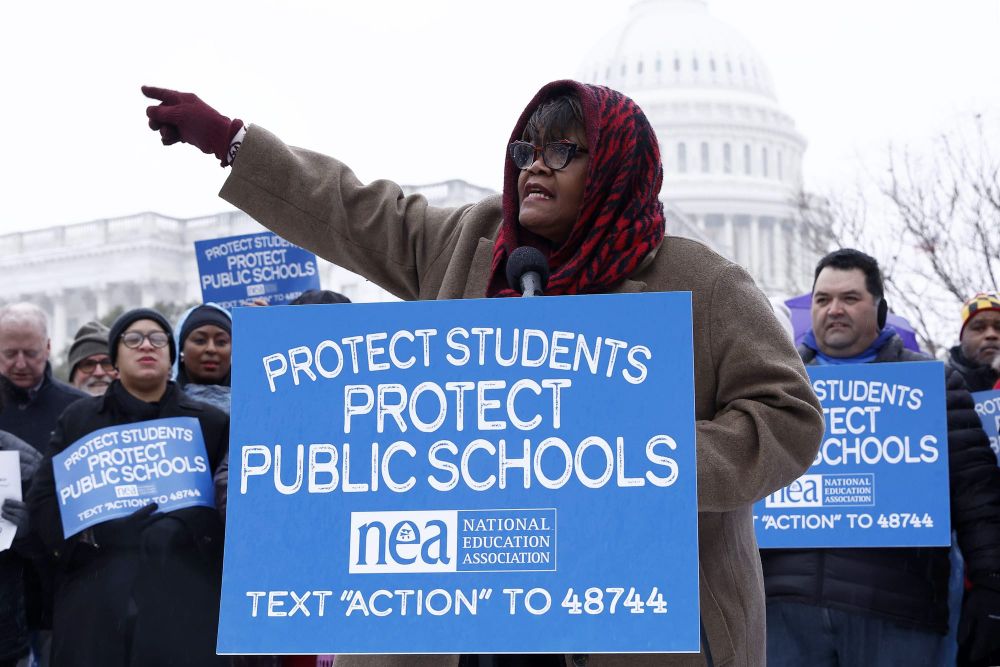
The Massachusetts Special Commission on Combating Antisemitism recommendations come a month after the National Education Association (NEA), the largest educators’ union in the country, voted to cut ties with the ADL, a prominent organization known for its significant influence on educational policies and social justice initiatives in schools. The NEA decided that the organization is “not the social justice educational partner it claims to be.”
In the July vote, the NEA Representative Assembly put forward a recommendation to stop using ADL material on antisemitism and Holocaust education or promoting ADL statistics and programs, but the vote was overturned.
For 40 years, the self-proclaimed anti-bias organization has pushed curriculum, direct programming, and teacher training into K-12 schools and universities despite rejections in recent years from educators who claim that the ADL has abandoned its mission. One of the major criticisms has been its pattern of conflating criticisms of Israel, especially regarding its oppression of Palestinians, with antisemitism. The ADL also included pro-Palestine protests in its statistics on antisemitic incidents, which critics say is the result of its conflation between antisemitism and anti-Zionism.
We’ve broken the facade of the ADL being a civil rights organization, and now our work ahead is to help people … see that the ADL does their work in service to support the state of Israel.
Merrie Najimy, Massachusetts public school educator
“This is the beginning of an education campaign. There’s no going backwards,” said Merrie Najimy, a Massachusetts public school educator who runs an elementary STEM lab. “We’ve broken the facade of the ADL being a civil rights organization, and now our work ahead is to help people learn the history of ADL surveillance and help them see that the ADL does their work in service to support the state of Israel.”
Najimy added that once this is done, a critical analysis of the ADL’s curriculum can be conducted, and there can be a shift away from using the ADL as an exclusive source of information.
The ADL’s grasp on public education
While the ADL doesn’t have any mandates for public school curricula, the organization still has a strong grasp on public education. DESE sets the curriculum standards and frameworks for Massachusetts schools, but it’s up to the school districts to decide how to implement the frameworks, Najimy explained, adding that some districts use a combination of pre-published curriculum and curriculum written by their educators.
“Why the ADL has such popularity is because their resources are free,” Najimy said, “and in an age where schools are living under austerity budgets and there isn’t always a lot of money to buy new curriculum or to pay teachers to write curriculum, it’s attractive to use the ADL’s curriculum.”
Ramsey Kurdi, a high school teacher in Springfield, Massachusetts, who is active in Educators for Palestine, remembers a time when the ADL was about liberation. But in recent years, the organization has abandoned its values and become a “mouthpiece of conservative interests,” he told Prism.
The ADL has been criticized nationwide for centering pro-Israel narratives and censoring Palestinian perspectives, often targeting teachers of color through reputational slander.
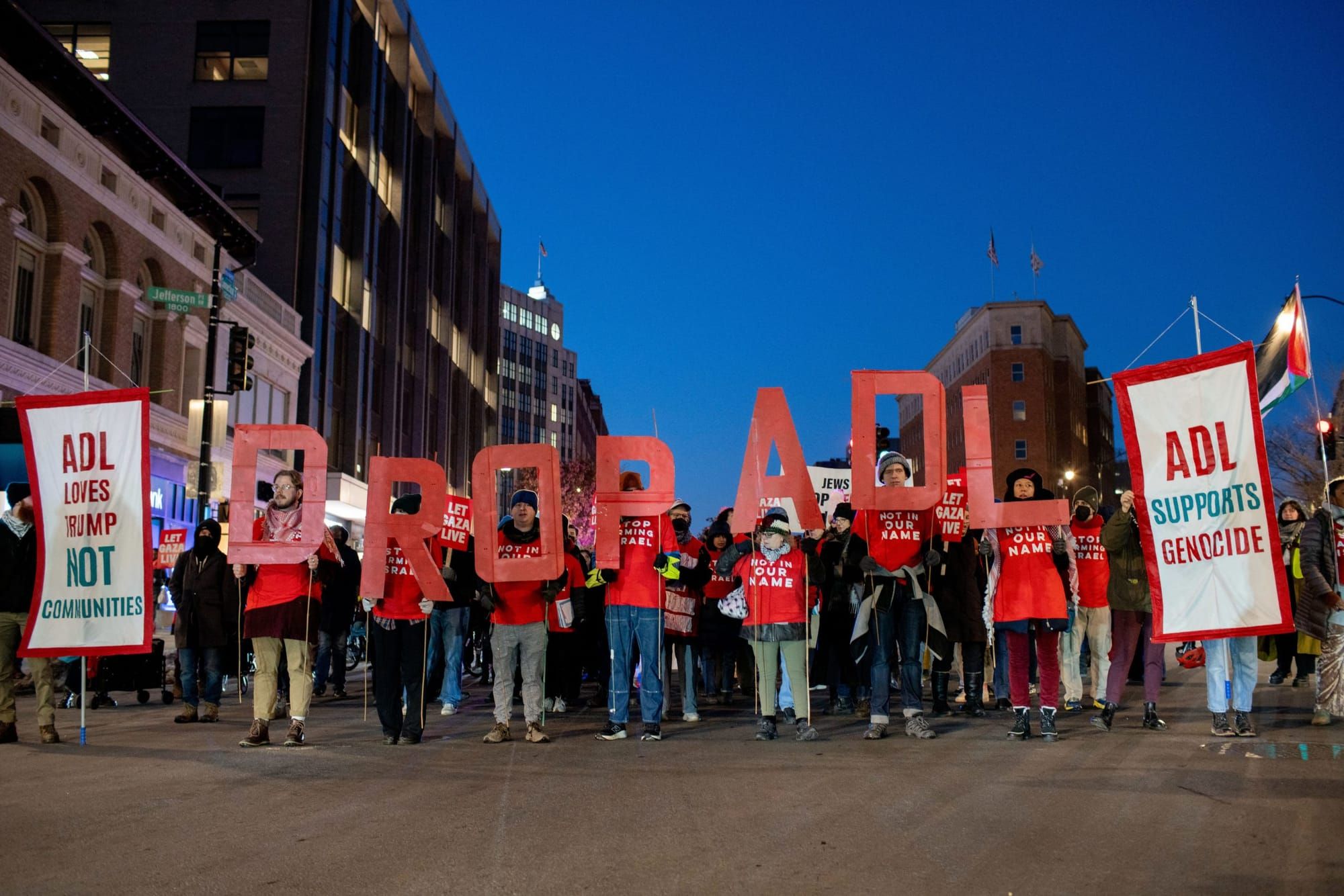
“When people step out of line and they bring in a Palestinian perspective, or a Palestinian book, or a person who is known to support Palestinians as human beings, then they get in trouble because they broke the unspoken consensus around normalized unconditional support for the state of Israel,” said Nora Lester Murad, a member of the core organizing team of the Drop the ADL From Schools campaign, adding that the ADL also uses lawfare tactics by weaponizing civil rights law and using it to censor support for Palestinians or criticism of Israel.
Teachers face backlash for supporting Palestinians
Between the ADL’s hold on public education and Massachusetts’ efforts to assert more control over what content is taught in schools, educators have faced some backlash for choosing to incorporate course material about Palestinian liberation and marginalized perspectives.
Kurdi, who is a Lebanese Arab, wears a keffiyeh to school and said he has faced some pushback from other educators.
“I had educators tell me that my wearing the keffiyeh—my advocacy against genocide by definition—means I want Israelis to die. And nothing could be further from the truth,” he said. “I want life for everyone. I want a healthy, safe society for everyone. It’s one of many examples of the manipulation of symbols to propagate fear.”
Kurdi emphasized that other educators have it much worse off than him, pointing out that several have been doxxed for voicing their support for Palestinians and against genocide.
“There seems to be a disproportionate attack on Black Muslim and teachers of color in general, and those reputational attacks can lead to mental health problems, family issues, social issues, and also threaten their careers, and in some cases, teachers lose their jobs,” Lester Murad said.
Many Massachusetts educators have emphasized the importance of teaching about genocide and anti-Palestinian racism in schools. Leading up to the NEA’s move to cut ties with the ADL, the Massachusetts Teachers Association (MTA) released curated resources on the history of Palestine for students and teachers on a members-only website. Some pro-Israel members shared the information publicly, “cherrypicking” some of the resources, Lester Murad said, such as links to the Palestine Poster Project, and accusing the MTA of promoting antisemitic content. The ADL chimed in on the criticism, claiming that the union was fostering antisemitism in schools.
“Ultimately, I am not so concerned about the hardships that I face. They pale in comparison to what Palestinians—all of them—experience every day under illegal occupation,” Kurdi said. “Academic freedom in Massachusetts is absolutely important, and all around the country and world, but I want to tackle the beast of imperialism anyway.”
Editorial Team:
Carolyn Copeland, Lead Editor
Lara Witt, Top Editor
Rashmee Kumar, Copy Editor
Author

Shruti Rajkumar is a freelance journalist with a focus on disability reporting. Previously, they were a breaking news reporter at HuffPost. Rajkumar earned a Bachelor's degree from Emerson College and
Sign up for Prism newsletters.
Stay up to date with curated collection of our top stories.