Activists protest Israeli AI accelerator opening in Massachusetts
Organizers warn of the harms of Israeli AI technology in campaign against partnership between Massachusetts and Sheba Medical Center

Real journalists wrote and edited this (not AI)—independent, community-driven journalism survives because you back it. Donate to sustain Prism’s mission and the humans behind it.
Boston-area organizers are raising concerns and demanding answers amid confusion over a new startup accelerator spearheaded by Israel’s largest hospital, Sheba Medical Center, in partnership with the state of Massachusetts. The ARC accelerator in Boston is meant to function similarly to the research center in Israel, with a focus on AI-driven health technology. Sheba officials have also called it a “soft landing pad” for Israeli AI and health startups to enter the U.S. market. The facility was initially set to open in January, but it does not appear to be running yet, and no information about its location is available.
Sheba officials and Massachusetts Gov. Maura Healey’s press office did not respond to Prism’s inquiries about an updated launch date or the facility’s location. The state’s Office of International Trade and Investment, which has coordinated with Sheba, also did not respond to Prism.
The Sheba Out of MA coalition, which includes groups such as Healthcare Workers for Palestine, Jewish Voice for Peace, and the Alliance for Water Justice in Palestine, began organizing against Healey’s decision when she first announced the partnership on May 6.
The Accelerate, Redesign, Collaborate (ARC) accelerator, named after the research incubator located within the medical center in Israel, has been heavily praised and promoted by Healey, and the state has discussed potential tax incentives of up to $5 million for Sheba-affiliated companies in communications with Sheba ARC, according to documents obtained and published by activists.
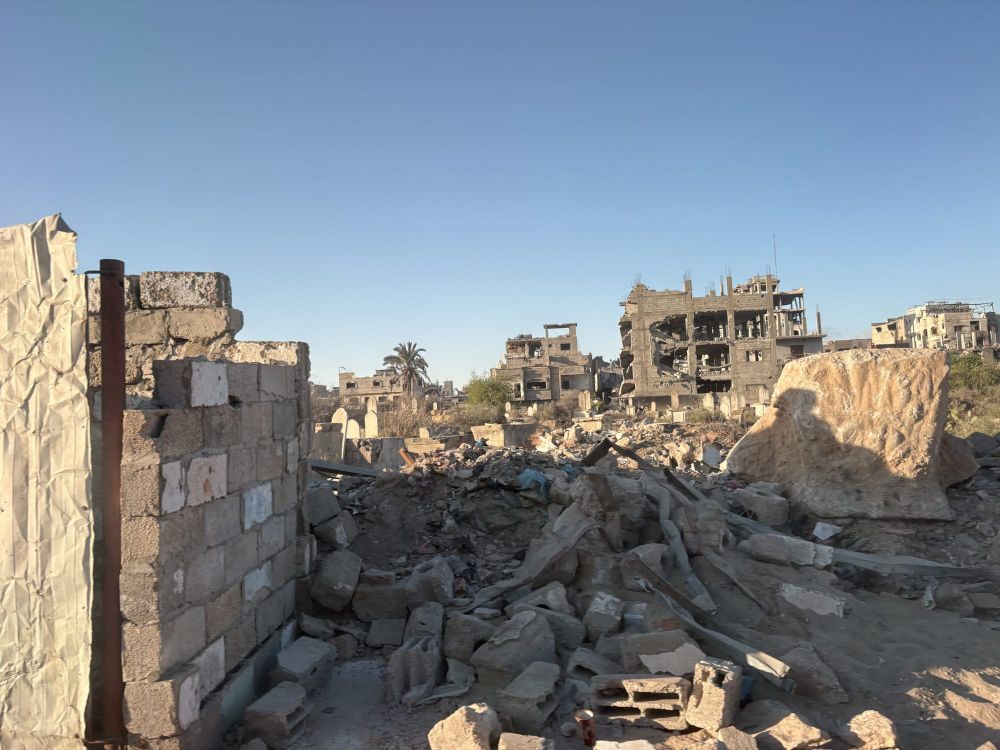
Sheba is tightly integrated with the Israeli military, and its director general was previously a chief medical officer within the Israeli forces. Organizers have pointed out the hypocrisy between Sheba flaunting innovation while Israel’s genocidal campaign against Palestinians has included strategically destroying medical infrastructure across Gaza and the occupied West Bank.
“ It is just such an incredible example of egregious partnership between Massachusetts and Israel … that sends a disturbing message about the values we are upholding as a state,” said Dr. Jordana Laks, a physician in Boston. “[Organizing against Sheba] is a very tangible, meaningful way to cut away at our state’s complicity in genocide and the significant investment that Massachusetts has in Israel’s economy.”
Massachusetts, like many other U.S. states, has several longstanding multimillion-dollar partnerships with Israel that extend into the business and tech sectors. Laks said organizers initially raised awareness about the accelerator and wrote a public letter to Healey in September opposing it. After receiving no response, organizers tried to meet with Healey to discuss the decision, but their request was denied in early January.
“While Sheba Medical Center boasts of bringing innovative health care startups to Boston, it is directly supporting the Israeli occupation forces that have bombed hospitals, deliberately killed medical workers, and decimated the Palestinian health care system in Gaza,” Laks said. “In our campaign, we are highlighting that reality to urge Governor Healey’s administration, health care institutions, and any other possible collaborators not to work with Sheba.”
Advertising the innovation of Sheba Medical Center has also been a part of a larger scheme to create the illusion that it is what Sheba’s Director General Yitshak Kreiss calls a “hospital of peace.” Kreiss also told State House News Service that the Boston accelerator could help fight antisemitism by showing “the beautiful face of the State of Israel and the beautiful face of how things can happen if we work together.”
Contrast with health care in Palestine
Meanwhile, Palestinians, who are legally obligated under international law to receive health care from the occupying Israeli authorities, are often stuck on evacuation lists that take several months. A resident of Nablus, who asked to remain anonymous to protect her safety, spoke to Prism about the realities of medical infrastructure in the occupied West Bank and monitoring strategies imposed on it.
“There are plenty of other hospitals in the Middle East that are just as good, just as talented, but in Palestine, they suffer from a lack of resources,” she said. “So we could have all of this if [the Israeli occupation] weren’t restricting the medical devices that come in, or the ability to bring in experts.”
On the morning of Jan. 11, she said she woke up to the sound of a helicopter in a military excursion that lasted for a few hours. “It’s just the insane amount of threats of physical violence [daily], and it’s these same doctors and soldiers that are being trained by [Sheba] that are inflicting harm and pain on everybody.”
Fears surrounding Israeli AI
Palestinians and Palestine advocates also raised alarm to Prism about more U.S. investment in Israeli AI technology, which has been used to inflict harm and surveil Palestinians.
The Palestinian woman said that at every checkpoint she passes through, leaving or returning to Nablus, the camera footage taken of residents is then cross-referenced with thousands of other photos of people Israel has determined to be a threat. First reported in 2021, Israeli authorities began using facial recognition at checkpoints through an experimental AI program called Red Wolf to further control the movement of Palestinians. It has also been reported that Israeli soldiers were initially instructed to photograph any Palestinian and their ID, with prizes given to those who took the most.
“ Soldiers will use leaderboards to see how many pictures of Palestinians they can take and feed into their AI database,” she said. “All of this surveillance is using AI and through the military. In the same sense that [Sheba] works directly with the military, and is now trying to bring health care to the U.S., I can’t possibly fathom what information they’re using to help them in their own health care system.”
An organizer who works for Adalah Justice Project, a U.S.-based, Palestinian-led advocacy organization, also spoke to Prism about Israel’s tactical uses of AI and its relationship with the U.S., based on research he and his colleagues have conducted.
“ Many of us within the movement [for a free Palestine] have been interested in learning who the players are behind the genocide, who’s making money off the occupation,” said the organizer, who did not want his name published due to fear of retaliation. The organizer said that through their research into the Gaza Humanitarian Foundation, an Israeli- and U.S.-backed food distribution operation that was often referred to as an “aid death trap,” they discovered that it was composed of big tech billionaires trying to build their own “tech haven” in Gaza, similar to how tech companies and weapons manufacturers have profited off the ongoing genocide.
This “tech haven” has been compared to a high-tech concentration camp that would monitor and facilitate the displacement of Palestinians without their consent, which human rights experts say egregiously violates several international laws. In 2021, while living in Palestine, the Adalah organizer said he had already begun noticing biometrics being used to police and contain Palestinians.
“All of us who are actively resisting and fighting against state violence and imperialism, what we have to understand is that [authoritative powers] are shifting underneath us. They’re shifting their tactics, they’re shifting their ways,” he said. “We need to come together and really lay out a strategy of how we’re gonna fight this.”
Editorial Team:
Sahar Fatima, Lead Editor
Carolyn Copeland, Top Editor
Rashmee Kumar, Copy Editor
Author
Neha Madhira is an award-winning gender, health and politics reporter with a focus in South Asia and the Middle East. Previously, she was a breaking news reporter in Austin, Texas, where she broke the
Sign up for Prism newsletters.
Stay up to date with curated collection of our top stories.