Gone without explanation: Charlotte man’s family seeks answers in his mysterious death
Mario Kaiser Jr. was found dead near his apartment with a noose around his neck. His family says police have not clearly explained what happened

The 988 Suicide and Crisis Lifeline offers 24-hour support and nonjudgmental listening. Those experiencing difficulties can dial 988.
Janasia Gillings and her boyfriend, Mario Kaiser Jr., spoke on the phone for the last time the night of Monday, April 28. The couple was planning to see each other the following Friday—Kaiser lived in Charlotte, North Carolina, while Gillings was in South Carolina.
But those plans never happened. On Tuesday, April 29, Kaiser, a 30-year-old owner of a trucking business, was found dead 50 feet from his apartment complex with a noose around his neck, according to Kaiser’s mother Alicia Moore.
The case seemed eerily similar to the death of Javion MaGee, a 21-year-old truck driver from the Chicago area found dead under a tree with a noose around his neck last September in Henderson, North Carolina. MaGee’s death was ruled a suicide by the state medical examiner in May, but his family suspected foul play.
In Kaiser’s case, the initial incident report from the Charlotte Mecklenburg Police Department (CMPD) as well as the death certificate issued by North Carolina’s medical examiner’s office, obtained by Prism, both classified his death as a suicide. No autopsy was performed, according to the death certificate. But that determination does not sit right with Kaiser’s family. Months later, they continue to seek information and flag inconsistencies surrounding the police investigation into the death of their beloved son, brother, nephew, and boyfriend.
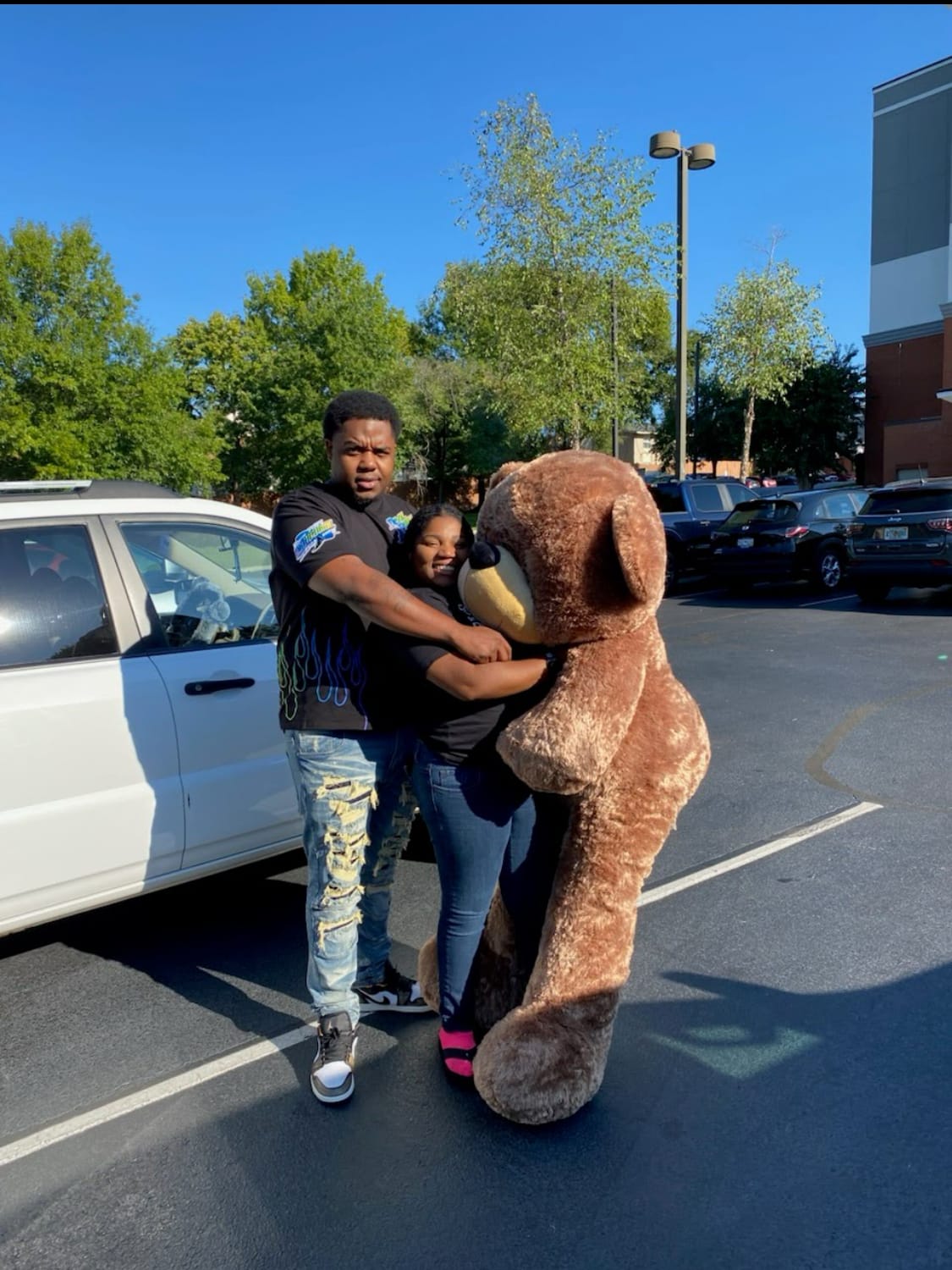
“This man was my world, and I loved him very much,” Gillings told Prism in a text message. “He was a strong man and outgoing person who loved everyone and was a motivator … and a hard working man.”
The CMPD did not respond to emails, phone calls, or voicemail messages.
Gillings and Kaiser’s other family members told Prism that there were multiple discrepancies and inaccuracies while speaking to police about Kaiser’s death and reviewing related documents. For one, Gillings said police didn’t appear to have clarity on when Kaiser’s death occurred.
Gillings showed Prism a screenshot of her last phone call with Kaiser, at 11:38 p.m. on April 28. But that conversation does not align with what a CMPD police detective told Moore. Moore told Prism over text messages that Detective Patrick Moore (no relation) said that security camera footage from Kaiser’s apartment showed him leaving the building around 10 or 10:30 p.m.
On June 17, Kaiser’s mother received the incident report and death certificate from the CMPD. She was shocked to see multiple errors on the incident report, along with omissions of crucial information. Moore pointed out that her son’s middle name was written as “Lamont” instead of “Lamar.” Certain items crucial to the investigation were not included in the report, such as the black stool that Patrick Moore had told Kaiser’s mother he used to end his life. The police report only mentions where and when the incident took place, but it is standard procedure to include more details about the crime scene, including all items present.
“They didn’t do an autopsy to see if anything was in his system,” Moore told Prism in a phone interview. “I feel like they just put this paperwork together, because it ain’t true. I can feel it in my heart he didn’t hang himself.”
Moore remained convinced that Kaiser, whose body she said evoked a lynching, could have been killed. She and Kaiser’s other loved ones also remain unconvinced that the police conducted a thorough investigation.
Moore told Prism that police never questioned her or allowed her to provide a statement about her son. She said she has been unable to speak to the chiropractor whose practice was near Kaiser’s apartment and who allegedly found her son’s body after 5 a.m. She also said she was barred from seeing Kaiser’s body unless she agreed to first embalm him, due to “a risk of spreading germs.”
Gillings, Kaiser’s girlfriend, told Prism, “I feel like [the police] are just brushing it off like nothing really happened … like he didn’t have people he loved.”
With little mainstream news coverage of Kaiser’s case, Black content creators and independent journalists have played a central role in bringing attention to his story. Richard Taylor Publishing on YouTube and @bodiedbybrosia on TikTok have shared details, asked critical questions, and helped build a public conversation around the circumstances of Kaiser’s death.
In an interview with Taylor, Moore described being perturbed by the behavior of the police detective investigating the case. When Moore first received a call from Patrick Moore informing her of Kaiser’s death, she said that she and other family members immediately drove from Illinois, where Kaiser is originally from, to Charlotte.
“When we got there, we went to the police station and Detective Moore said, ‘Oh, I can’t believe you got here that quick,’” Moore said in the YouTube interview. “The whole time we’re talking, he has a smirk look on his face.”
Kaiser’s uncle Lorenzo Johnson backed up that claim in a text message to Prism: “I was there at the police station with his mother and other family members, trying to get to the bottom of what happened to him. Anytime they talked about my nephew [Patrick Moore] smiled and laughed. When we asked about the chair police left at the crime scene and asked shouldn’t that have been in evidence, he went back and got it. I think the whole thing was suspicious.”
Other family members also refuse to accept that Kaiser died by suicide.
“He had too much to live for to take his own life. He would never hurt his mother or family that way,” Rose Marie Sims, Moore’s mother-in-law, wrote in a letter to Prism.
Veronica Lovett, Kaiser’s aunt, agreed, writing in a statement to Prism, “He did not commit suicide. He had too much to live for, he was a happy, outgoing person, there’s no way he did this to himself, and these hangings [are] still going on in North Carolina.”
In 2017, the Equal Justice Initiative published a report that counted 123 lynchings of African Americans in North Carolina between the years 1877 and 1950. Underreported stories such as Kaiser’s and MaGee’s have sparked fears among some Black residents that the lynchings haven’t stopped.
Underreporting also remains a major issue surrounding hate crimes. One study estimated that only 14% of actual hate crimes are captured in official data, with about 80% of agencies reporting zero hate crimes, according to the Leadership Conference of Civil and Human Rights.
Kaiser’s family has alleged racial bias behind why they believe his death hasn’t been investigated thoroughly, a common accusation against police departments across the country. For instance, in North Carolina, Black people are 1.9 times more likely to be killed by police than white people, according to Mapping Police Violence.
For now, Kaiser’s family continues to grapple with the aftermath of his death. Moore said Kaiser’s apartment management has not allowed her to collect her son’s belongings without the approval of the police, who, in turn, tell Moore it’s up to the apartment complex.
The family wants Kaiser to be remembered for being a hard-working, kind, and compassionate man who was unjustly taken from his loved ones. They have created a GoFundMe account to “bring Mario back home to Alton, Illinois” and help with funeral expenses.
A friend who asked to remain anonymous said, “Losing my best friend is the biggest heartbreak this year. … It has been a month and a half and nothing has been done about Mario. It’s very traumatizing knowing how cruel the world can be.”
Kaiser’s brother, James Mike Jr., wrote in a text message to Prism, “My brother comes from a loving family. My mother raised us both to be stand up men so this situation has left all of us lost. We just [want to know] the truth, no matter what it is.” He added, “Right now we feel like the [North Carolina] police and the detective on the case really don’t care because he’s black. All we’re asking for is understanding. We can never get him back, but my mom will be able to sleep a little better at night with proper closure.”
Editorial Team:
Sahar Fatima, Lead Editor
Lara Witt, Top Editor
Rashmee Kumar, Copy Editor
Author
Misha Torian is an independent journalist who reports the stories of people from marginalized communities, giving voices to underrepresented people. Misha has written for The Triangle Tribune as well
Sign up for Prism newsletters.
Stay up to date with curated collection of our top stories.