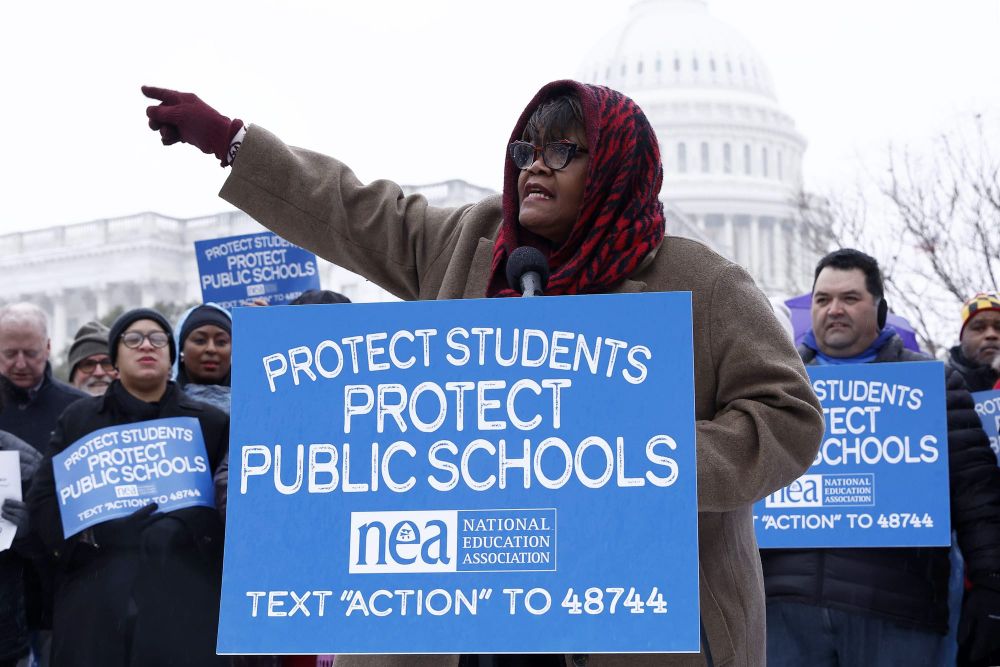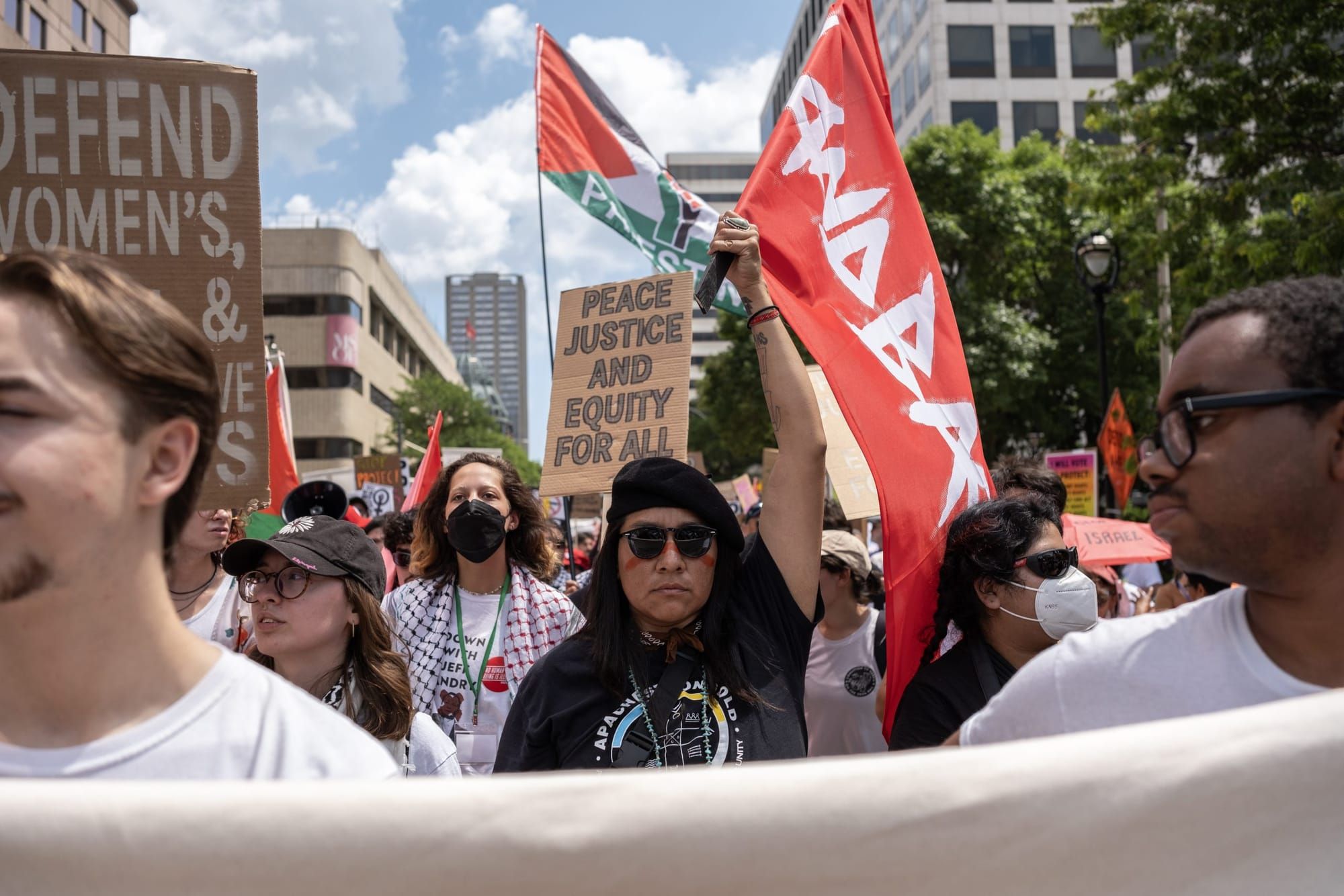
Chicago organizers expect thousands of protesters from across the city and the country to show up to march at the Democratic National Convention between Aug. 19 and 22. The convention will officially nominate the Democratic candidate for president. The protesters include groups calling for the Democrats to take action on reproductive justice, racist policing, and poverty.
Most prominently and urgently, protesters plan to demand an end to U.S. military aid to Israel—aid that has helped Israel kill at least 40,000 people, including 16,000 children. Researchers believe this may be an undercount, and the death toll could reach as high as 186,000. Pro-Palestinian protesters called for an Israeli ceasefire on college campuses across the country this spring. The DNC protests will reiterate and expand on those demands.
Hatem Abudayyeh, the national chair of the United States Palestinian Community Network and a spokesperson for the Coalition to March on the DNC, told Prism that the biggest day of protests will likely be the first.
Abudayyeh said organizers expect participants from across the country and that the event speakers will touch on topics like Palestinian liberation, immigrant rights, Black liberation, police violence, reproductive rights, women’s rights, and LGBTQIA+ rights.
Abuddayeh attended the protests at the Republican National Convention in Milwaukee in July to protest “the racist and reactionary Republican and Trump political agenda.” Thousands of people marched at the RNC, but Abudayyeh said he expects an even bigger turnout at the DNC because a Democratic administration is currently in power.
“I think that everybody recognizes that Palestine is the central issue in the world today,” Abudayyeh said. “And [Joe] Biden knows he has the control to stop Israel in its tracks whenever he wants. And if he’s not going to do it, then he’s complicit. And he’s responsible for the genocide. And everybody in the world recognizes it.”
The expected size of the protests has exacerbated a struggle over permitting and routes. Andy Thayer, an organizer with Bodies Outside of Unjust Laws, told Prism that while Chicago politicians had offered the protesters “nice rhetoric,” the city initially rejected virtually all protest applications. Bodies Outside of Unjust Laws finally obtained a permit in late June after months of waiting to protest on the eve of the convention. The one other exception as of Aug. 13 was a permit for the Poor People’s Army (PPA), a Philadelphia-based group. The city failed to respond to the protest request in a timely manner as required by its own regulations, which means the PPA received a permit to march in front of the United Center where the DNC is being held.
After protesters with Bodies Outside of Unjust Laws filed lawsuits, the city agreed to a route that allows people to march on Michigan Avenue to Grant Park, and to get within sight and sound of the convention center.
The city, however, refused to agree to protesters’ demands for a longer route that would march down Washington Boulevard rather than side streets to accommodate the large crowds of protesters. A federal judge ruled against protesters and accepted the city’s proposed route on Aug. 13. In a statement, Abudayyeh said he was “disappointed in the decision” but said that while the ruling complicated the marchers’ plans, “it is our moral duty to march on the war makers, and that’s what we’ll do!”
For Thayer, whose coalition prioritizes reproductive justice, queer freedom, and ending the genocide in Gaza, Mayor Brandon Johnson’s progressive rhetoric and obstructionist actions underline the need to hold Democratic politicians accountable through protest.
“The Democrats are very big on making promises and not coming through on them,” he said.
Thayer pointed to longstanding demands that Democrats repeal the Hyde Amendment, which has banned the use of federal funds for abortion since 1977.
“It’s the failure of the left to protest against the Democrats—especially when they’re overtly awful, such as on the issue of Palestine, but also on the issues where they say they support us—that has led to official politics in this country moving to the right over and over again,” Thayer said.
Biden announced in July that he would not run for reelection, and the Democratic Party has coalesced around Vice President Kamala Harris as the nominee. Harris has generated substantial enthusiasm, reportedly raised more than $310 million in July, and has polled much better than Biden. She’s also spoken more empathetically about the suffering of Palestinians in Gaza.
Harris has taken various approaches to protesters at rallies. She reportedly met briefly with members of the “uncommitted” movement that challenged Biden in the primary elections. But later when anti-genocide protesters disrupted her speaking during a Detroit rally, Harris told them, “If you want Donald Trump to win, then say that. Otherwise, I am speaking.” That response was much criticized, and when pro-Palestinian demonstrators interrupted her rally in Glendale, Arizona, she took a less confrontational tone, telling the protesters, “I respect your voices,” and calling for a ceasefire.
The Abandon Biden coalition in a press release condemned Harris for showing a “disdain for citizens of this country who are pleading for an end to a genocide.”
“We have repeatedly expressed our concerns about platitudes of promise in place of any and all action regarding the Israeli genocide in Gaza and U.S. funding of it,” the coalition stated. “Without explicit plans and policies, there is no reason for any Americans of good moral conscience to believe a Harris-Walz administration will do anything to end this genocide.”
The coalition is planning to hold its own convention featuring Justice for All Party candidate Cornel West and Green Party candidate Jill Stein in Chicago on Aug. 18 and 19.
For March on DNC organizers, the change at the top of the ticket has not altered plans for the march. Like Biden, Harris has repeatedly asserted Israel’s “right to defend itself,” and she strongly condemned those who marched against Israeli Prime Minister Benjamin Netanyahu’s address to Congress in Washington, D.C.
“[We] are not going to be fooled by this. [Protesters] are very consciously following the news and know what Harris’ previous record is,” Thayer said.
The Coalition to March on the DNC’s press release on Harris’ candidacy states, “When it comes to the genocide in Gaza there is no difference between Biden, Harris, or any of the likely candidates for the nomination. They are all complicit.”
The prospect of large-scale protests at the DNC has inevitably led to comparisons with 1968 when police violently repressed anti-war protests at the Democratic convention. The divided Democrats were soundly defeated by Republican Richard Nixon. Historians, however, have been skeptical of the parallels.
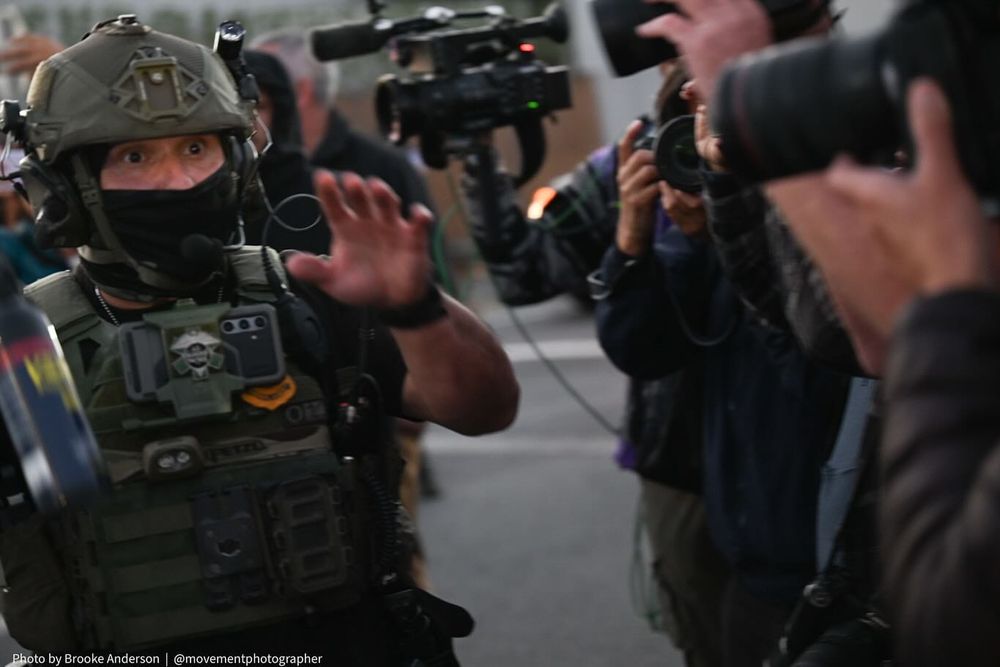
David Phelps, an organizer with Bodies Outside of Unjust Laws, also doubts there will be a repeat of ’68. “They were predicting a lot of violence at the RNC,” he told Prism, “and it was sort of just like a regular protest except there was a lot more media taking photos … The police didn’t attack protesters or anything like that.” Out-of-state officers at the convention shot one man they said was wielding knives. But there was nothing like the chaos of 1968 in Chicago.
The protest does not need to replicate 1968 to be important, though.
“The movement for Palestinian rights and labor is probably the most expansive, the largest mobilizations we’ve ever seen for Palestinian rights specifically in the history of our movement for national liberation,” Abudayyeh said.
Protesters hope that the actions at the DNC will show Democrats, Republicans, and the news media that U.S. support for Israeli war crimes is unpopular, unacceptable, and must end.
Author

Noah Berlatsky is a freelance writer in Chicago. You can follow his writing at Everything Is Horrible (noahberlatsky.substack.com).
Sign up for Prism newsletters.
Stay up to date with curated collection of our top stories.