After anti-trans sports vote, Manhattan activists mobilize to defend LGBTQIA+ students
In Manhattan’s District 2, which encompasses neighborhoods famous for queer and trans history, the Coalition of Aunties & Friends for Liberation organize against an anti-trans resolution

“Yes, amazing organizers, yes! Yes, affirming trans kids, yes!”
A group of organizers chanted on a warm February night outside a Manhattan elementary school after leaving a chaotic, hourslong education council meeting. Gathered in support of trans and nonbinary students, they are the Coalition of Aunties & Friends for Liberation, also referred to as Aunties & Friends: activists, parents, educators, students, and allies—many of them queer and transgender.
Before dispersing for the night, one organizer reminded the crowd, “Our strategy is not to change their minds. It’s to build our community.”
The coalition has rallied support since early 2024 to effect change in the Community Education Council of District 2, Manhattan’s largest and wealthiest school district that spans much of the lower two-thirds of Manhattan. In March 2024, the education council passed a resolution against transgender children in sports. Since then, Aunties & Friends has built a powerful movement to combat the transphobia and other conservative measures unfolding in District 2.
Resolution 248 asks for the city’s Department of Education to review its “guidelines on gender” that allow transgender and gender-expansive kids in grades K-8 to play on sports teams that align with their gender identity. The Williams Institute, a research center on sexual orientation and gender identity law and public policy, estimates that 3% of New York youth ages 13 to 17 are transgender, amounting to over 27,000 public school students.
The 12 volunteers, mostly parents, who make up the education council can exert influence on other districts, the city’s education officials, and the more than 50,000 students who attend schools in District 2, though their resolutions aren’t binding.
Proponents of Resolution 248 say they are only asking for a conversation about the gender guidelines and trans kids’ inclusion in sports. Those opposing the resolution see it as a made-up issue to target trans students.
“We know that the true intent of Resolution 248 is to challenge the right of transgender students to exist as their authentic selves in our public schools,” said Gavin Healy, a parent on the education council.
Christen Clifford is a mom of two trans kids, including one who attends a District 2 school. She has attended every monthly meeting since November to protest Resolution 248, which she said is designed to bully and intimidate trans children.
“Any anti-trans legislation makes trans kids feel dehumanized,” Clifford said. “When kids see one person, one group, being allowed to be dehumanized, that’s harmful for everyone.”
Activist Shannon Peitzer, who works on the Aunties & Friends safety team, said she questioned her gender as early as preschool. She said the resolution sends a negative message to trans children: “You should not be open about who you are because this can get worse.”
The fight in District 2 reflects a national trend. According to the Trans Legislation Tracker, more than 800 local measures in states across the U.S. have sought to restrict the rights of transgender people in educational institutions, health care, and other arenas, and 83 have passed so far this year.
On President Donald Trump’s first day in office, he signed executive orders to end diversity programs and make it U.S. policy to omit gender identity and only “recognize two sexes, male and female,” denying the identities of 1.6 million Americans. Experts and scientists say gender is a spectrum that includes transgender and nonbinary identities. During his first month in office, Trump signed a flurry of executive orders further dismantling protections for trans people.
Alaina Daniels, a lead organizer with Aunties & Friends, told Prism that rescinding the council’s resolution is crucial because District 2 can set a precedent for other districts.
“It’s a really cool and powerful issue, because it’s both hyperlocal and has a massive influence across the city and really across the country, and you could argue across the world,” said Daniels. “Both because of where it is—New York is the cultural capital—and because New York has 1.1 million students.”
Daniels said some states that previously passed bills barring trans kids from sports are now voting on more wide-reaching anti-trans bills, such as those criminalizing teachers, nurses, and even parents who provide support to transgender children.
“The goal is to make it so the public finds it OK to disparage and dislike and scapegoat and target trans people—and then push it further and further right,” Daniels said.
Clifford sees a clear connection between the District 2 resolution and the restrictions on transgender freedoms at the national level. “People think, ‘Oh, this is this tiny thing, Resolution 248,” she said. “From the smallest thing to the biggest thing, 248 is directly related to the bathroom laws in the capital.”
Clifford, whose children have struggled with mental health issues, has passionately testified to the education council numerous times over the last year, sometimes breaking into tears.
“I feel like I am continually trying to talk to the board about, like, ‘Do you really not understand that this is people’s lives at stake? Do you really not understand that a trans teenager in District 2 committed suicide last year?’” she said. “‘Why do we have to keep trying to convince you of the humanity of our children?’”
Manufactured chaos
Since March 2024, opponents of Resolution 248 have regularly attended monthly council meetings to testify about the importance of affirming trans students in schools. Many learned of the resolution when American Civil Liberties Union lawyer and trans advocate Chase Strangio posted about it on his Instagram account and attended the June meeting. Strangio gained national prominence for arguing a case on gender-affirming care before the Supreme Court last year.
Maud Maron is the parent and local politician who first introduced Resolution 248. She has spoken at numerous events organized by Moms for Liberty, considered an extremist hate group by the Southern Poverty Law Center. In multiple states, Moms for Liberty has advanced anti-trans legislation, book bans, and attacks on critical race theory.
Maron was removed from the education council in June and instructed by then-New York City Schools Chancellor David Banks to “cease engaging in conduct involving derogatory or offensive comments about [students],” reported the New York Times. However, she successfully sued to be reinstated.
Parent volunteers in the District 2 council have a mix of political leanings. However, more than half of the 12 council members were endorsed by Parent Leaders for Accelerated Curriculum and Education (PLACE), a conservative group co-founded by Maron. Members of the PLACE cohort have introduced anti-trans resolutions, advocated to ban books about the history of race and justice, and pushed to maintain only merit-based testing for acceptance into the city’s best schools, which are highly segregated.
The greatness of New York City is that all of these different flavors come together, to not be eradicated and standardized and homogenized, but to create a stew.
Shannon Peitzer, activist
Healy, a progressive parent on the education council, has consistently voted to rescind Resolution 248. He said trans kids playing sports were never an issue before March 2024.
“We never had a community complaint that came in, that I ever saw,” he said. “And so it’s something that I think was cooked up with [Maron] and Moms for Liberty.”
Healy believes that Maron, who is running for Manhattan district attorney this year, introduced the resolution as a way to gain political clout for her campaign.
“Obviously if I wanted to get myself far ahead in the political world in deep-blue New York, I wouldn’t have said things like, ‘Meritocracy matters and trans people need to stop this destructive attack on female sports,’ because there’s nothing about any of those positions that has helped a political career,” said Maron, who was profiled by the New York Times in December.
The chaos Maron has created at meetings has made it difficult for the education council to focus on necessary topics, such as services for kids with disabilities and student mental health. Some council members have missed multiple meetings in a row or left early, which has prevented the council from voting on new resolutions.
Some Aunties & Friends members said the chronic absences are intentional on the part of PLACE-endorsed members. Notably, three members of the council who originally voted yes to pass Resolution 248 have abstained from voting each month to rescind it, keeping the resolution from getting overturned.
Daniels, the organizer of Aunties & Friends, said the long-term solution to this logjam is to elect more progressive parents to the education council, who she said would better reflect the district’s community as a whole.
“Rescinding 248 is just the beginning,” Daniels said. “The goal is to get Moms for Liberty off the school boards.”
“Something more positive for the community”
Since last fall, Aunties & Friends has focused on bringing attention to the biennial education council elections. Voting is currently open until May 13. In the 2023 elections, only 2% of parents voted citywide, allowing some council members to win seats with less than 10 votes.
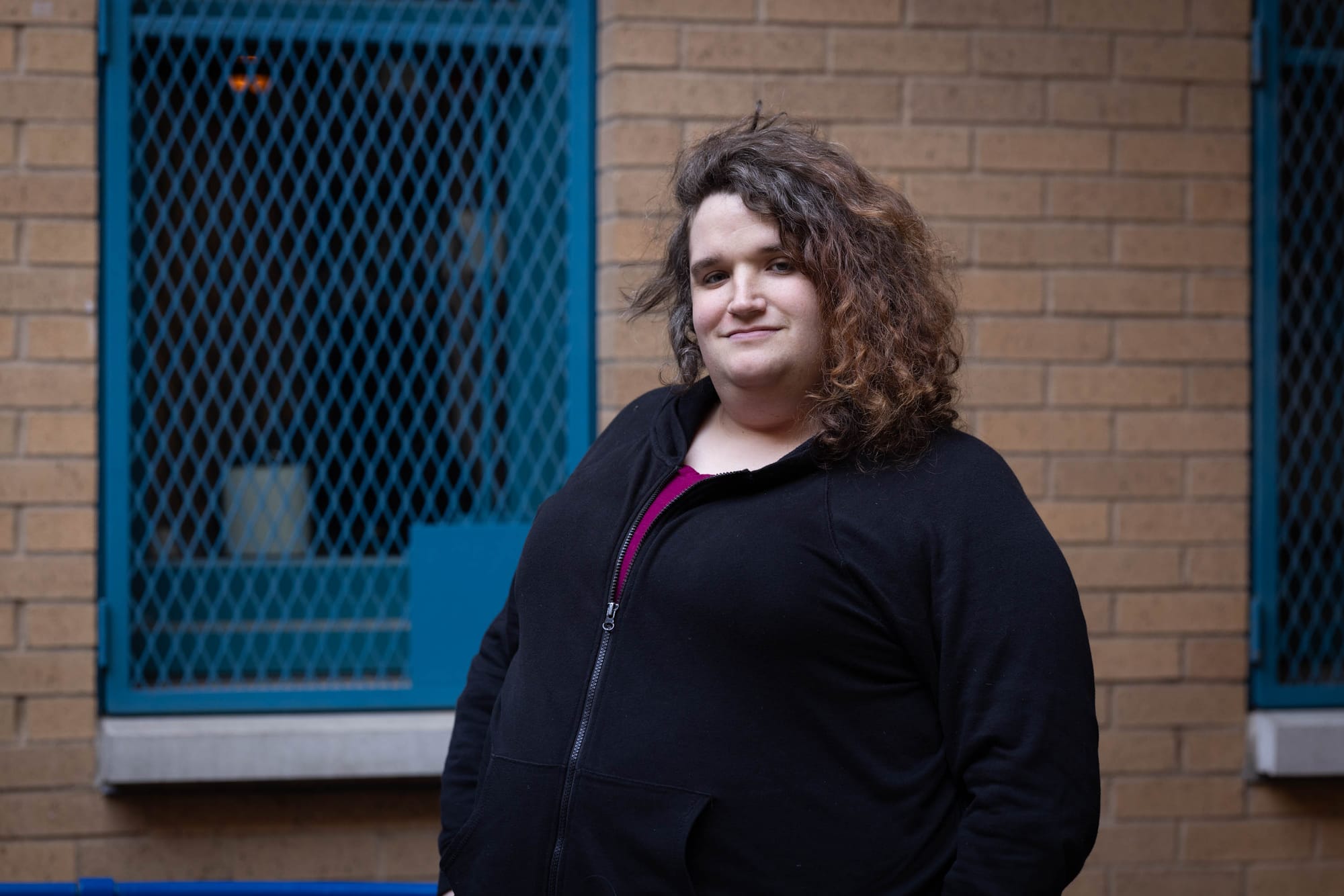
Hannah Westerman has been pivotal in coordinating parent involvement in elections and working to get out the vote. The 32-year-old is transgender and grew up attending District 2 schools. They told Prism that New Yorkers aren’t aware of the battle going on in District 2. “Literally everyone I talk to is shocked. … They’re like, ‘Oh, those sorts of things are happening in other states,’” Westerman said. “They don’t realize it’s happening here.”
The Manhattan neighborhoods of Chelsea, Hell’s Kitchen, and the West Village are famous for their queer and trans history, and they fall within District 2—another reason the passage of the anti-trans resolution in this district is remarkable. “It’s so antagonistic to the core of those neighborhoods,” Westerman said.
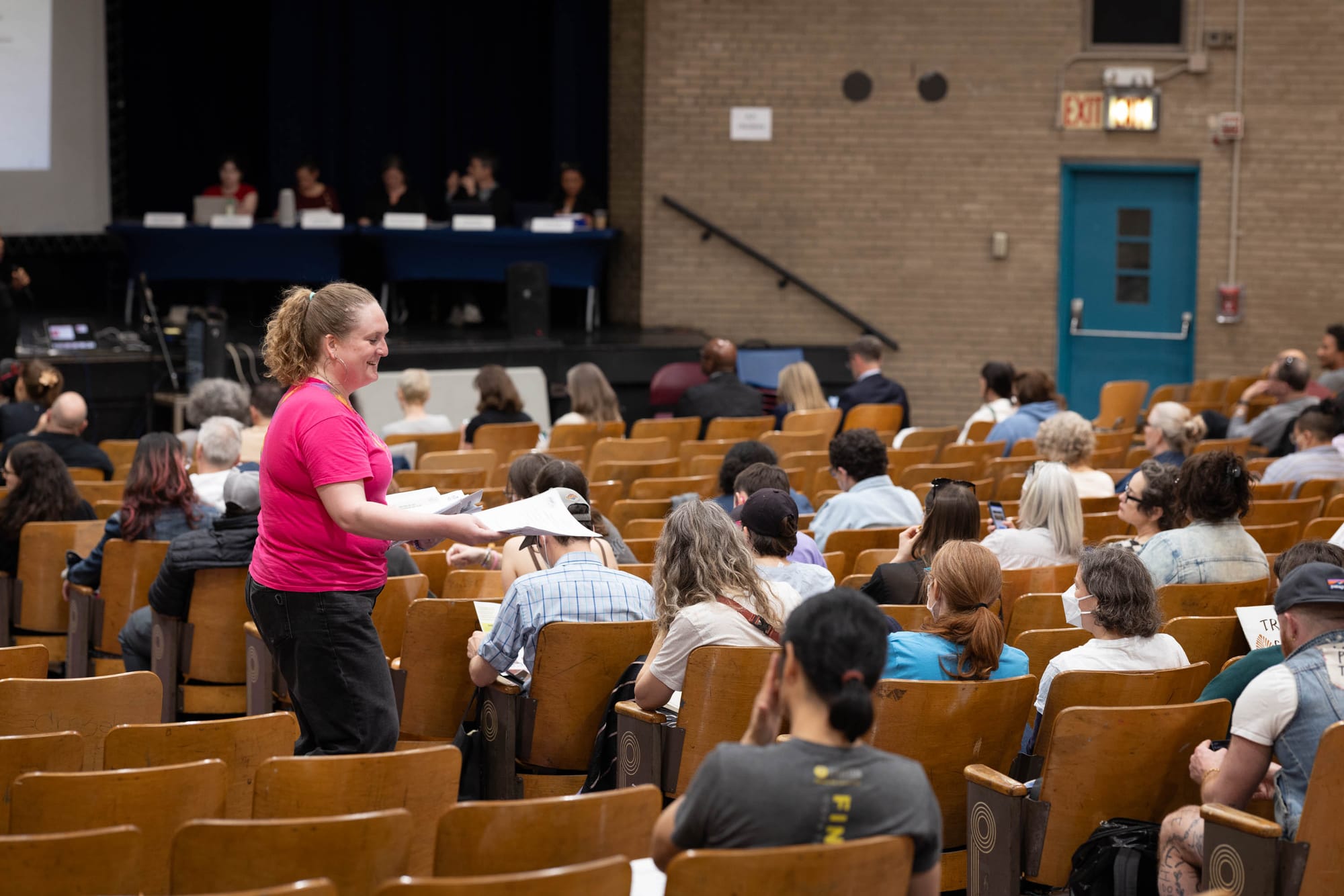
Organizer and educator Megan Madison said Aunties & Friends sustained energy throughout the year, with more than 80 allies at most meetings, by hosting strategy-planning sessions and check-ins after every council meeting.
They also bring snacks and offer them to all attendees, including counterprotesters in “Make America Great Again” gear. “Joy is powerful,” said Peitzer, who leads Aunties & Friends’ safety team. “We show up with bubbles and dance, and our opposition hates that we’re happy.”
Earlier organizing efforts weren’t so upbeat. “People felt like shit after the meetings,” Madison said. “We weren’t winning at the beginning.” Then the group began working with a facilitator from Theater of the Oppressed, which uses theater techniques for social change.
Now, when people testify in support of Resolution 248—testimonies that sometimes include graphic descriptions of mutilated genitalia and disparaging statements about trans identity—members of Aunties & Friends silently dance, doing the “Macarena” or the “Hokey Pokey” to wait out the harmful speech.
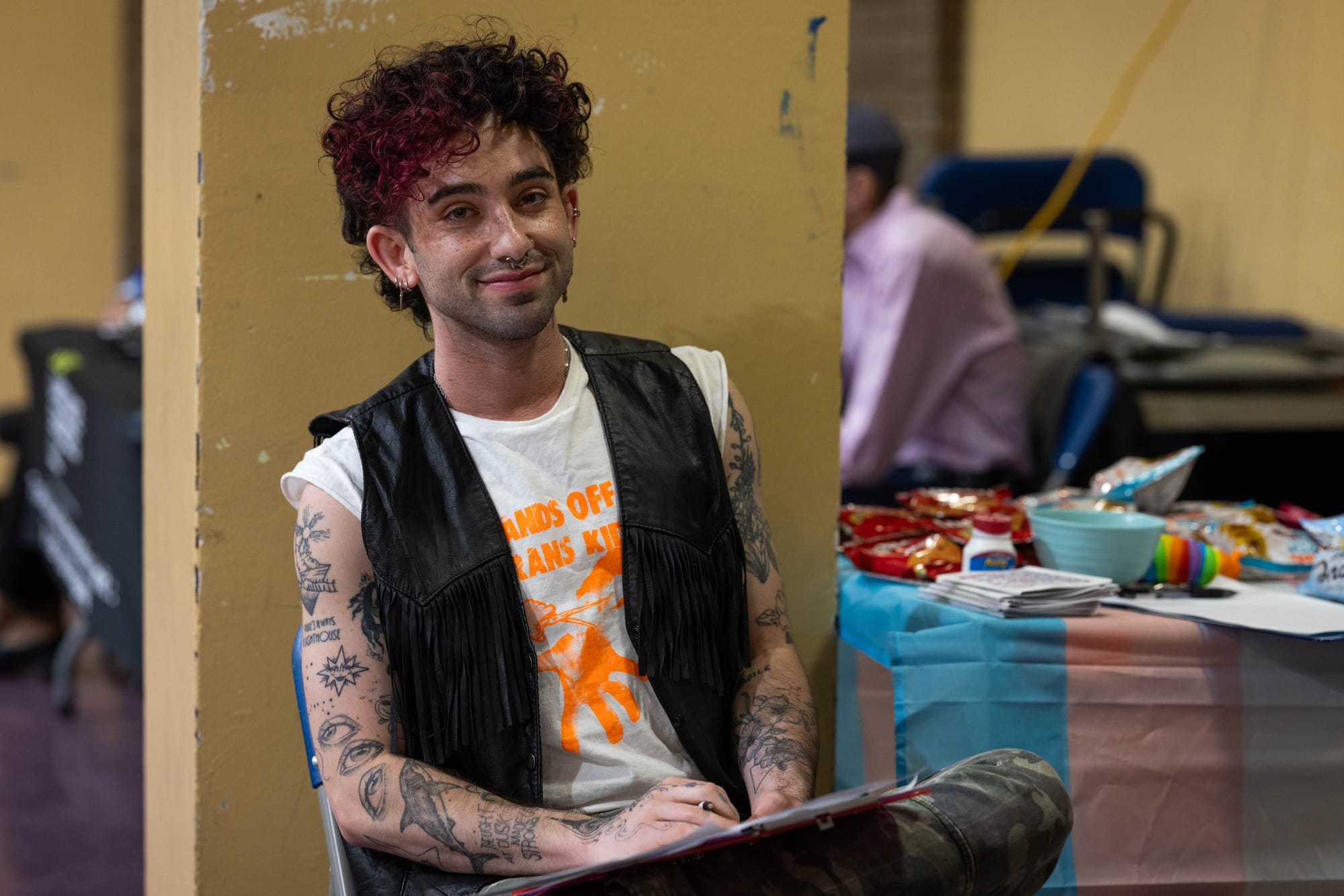
“These meetings made us feel horrible,” said Auggie Enzer, an activist with Aunties & Friends. “We wanted to change the meetings from being an extension of bullying and of rage and negativity to something more positive for the community.”
Standing up for trans kids has helped many organizers stay grounded during a tumultuous year. “I feel like this has been one of the most healing organizing experiences that I’ve had in terms of meeting the … supportive parents that I wish that I had, like the heroes that I wish that I had when I was a trans kid,” Enzer said.
For Peitzer, it’s imperative that New York City remain a welcoming place for diversity, including trans people.
“The greatness of New York City is that all of these different flavors come together, to not be eradicated and standardized and homogenized, but to create a stew,” she said. “For these radical right ideas to come in and say, ‘Well, no, New York should be more homogenized and you must behave like this’—it stands against everything New York City is. And to attack the very beacon where the Statue of Liberty sits? I think not.”
As the fight continues, Aunties & Friends remains focused. Daniels, the organizer, said that the April meeting was the 15th consecutive meeting she attended. She closed her two-minute testimony with an ask to the audience: “There’s a sheet going around, please sign up, come canvas,” she said. “Let’s get out the vote.”
Editorial Team:
Tina Vasquez, Lead Editor
Carolyn Copeland, Top Editor
Stephanie Harris, Copy Editor
Author

Adrian Connor is a freelance journalist and documentary filmmaker whose work focuses on social movements, LGBTQ+ issues and immigration. They attend the Craig Newmark School of Journalism at CUNY.
Sign up for Prism newsletters.
Stay up to date with curated collection of our top stories.