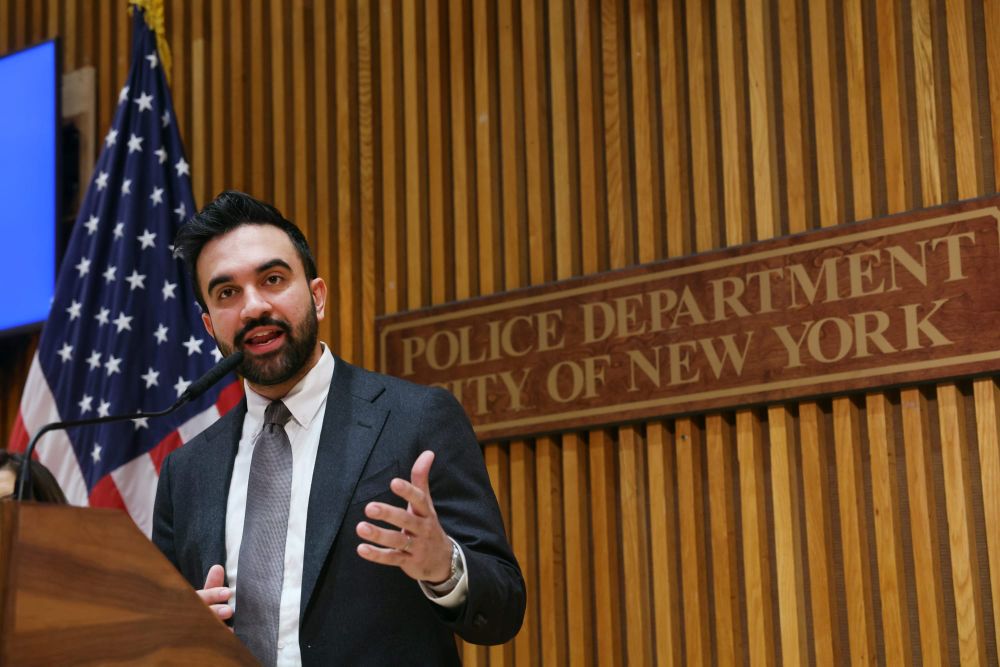
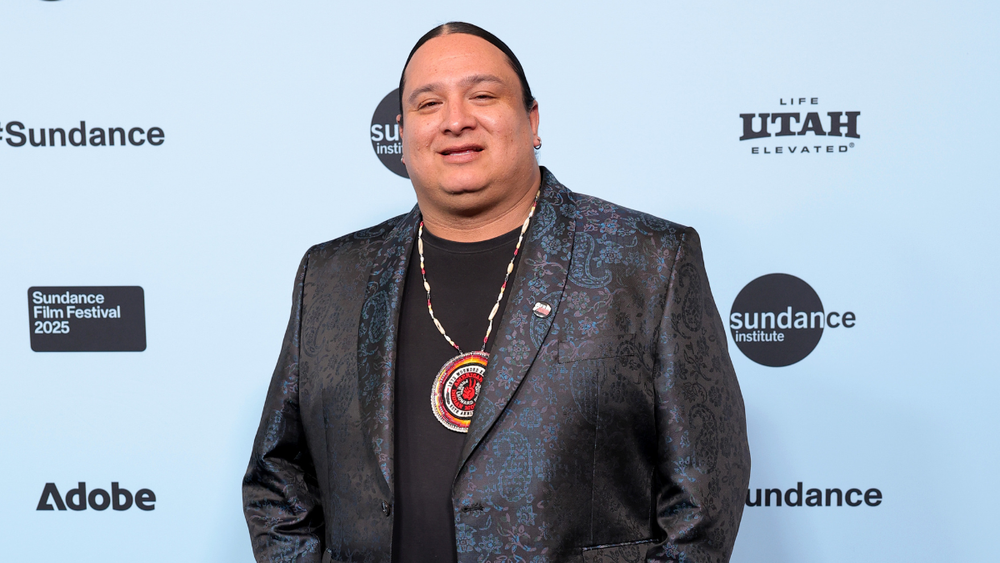
A man tasked with overseeing Seattle police is developing a plan with Target to boost police ‘legitimacy’
Federal monitor Antonio Oftelie sought extensive input from police chiefs, but with no clear evidence of authentic community input, advocates worry about the plan’s true motivations

Behind closed doors, within a seminar hall at Harvard University, a man appointed to be an impartial observer of Seattle police is teaming up with a powerful corporation to develop a new reform plan to boost the trust and legitimacy of American police.
Antonio Oftelie was appointed in 2020 as the Seattle Police Department’s (SPD) federal monitor to ensure the department abides by a 2012 agreement with the U.S. Department of Justice (DOJ). That “consent decree” outlines specific requirements for Seattle, such as implementing reforms to force police to comply with the U.S. Constitution.
Oftelie, the executive director of the consulting firm Leadership for a Networked World, has developed robust connections with police chiefs and sheriffs from across the country and was tapped to deliver a 2023 report on public safety reforms for the city of Minneapolis, where George Floyd was murdered by a police officer in 2020.
Now, according to documents obtained by Prism through public records requests, Oftelie is spearheading the development of a plan dubbed the “Community-Centric Service and Culture Framework,” funded through a program under the DOJ in partnership with Target Corporation, which has its own controversial history of supporting policing and surveillance. A draft of the plan outlines a vision to “achieve an entirely new level of value, legitimacy, and trust” in American police organizations. Documents about the plan state that it is informed by “progressive current and former police leaders” and represents a “significant stride” toward “equitable public safety.”
But despite its name, the plan is being developed in the halls of police power with no clear evidence of authentic community input, raising concerns from organizers and experts across the country about its true motivations.
Roxana Pardo Garcia, a Seattle community organizer to whom Prism provided the draft document to review, said the plan doesn’t offer a community-centric framework.
“There is no recognition of the tense relationships and a lack of race equity framing,” said Pardo Garcia, who served as the Seattle Community Police Commission’s first community engagement director. The plan’s development comes after “police killed more people in 2023 than any year in more than a decade,” according to the nonprofit Mapping Police Violence.
“The lack of healing and justice framing is very telling that this is an academic paper and that it is not centered in any of the lived experience of people who are most harmed by policing in this country,” Pardo Garcia said.
Oftelie declined to answer questions about the plan, telling Prism, “The initiative is at the request of, managed by, and solely funded by the United States Bureau of Justice Assistance [BJA]. All inquiries should be directed to the BJA.”
The BJA administers numerous law enforcement grants and programs from the municipal to federal level and falls under the Justice Department’s Office of Justice Programs (OJP). Billions of taxpayer dollars have been directed through the BJA to private companies, consultants, nonprofits, and law enforcement. In some cases, BJA-funded programs, such as the Los Angeles Police Department’s Operation LASER, have been linked to community harm.
An OJP spokesperson declined to respond to some questions because Prism submitted a parallel Freedom of Information Act (FOIA) request about the policing plan, saying, “we will respond accordingly to the FOIA request instead of the media request.” Target did not respond to requests for comment.
“They’re trying to shield themselves from visibility and accountability,” said Orisanmi Burton, an assistant professor at American University in Washington, D.C., who teaches courses on race and racism, as well as knowledge, secrecy, and conspiracy, and with whom Prism shared Oftelie’s plan.
Seattle’s consent decree agreement, which aims to install an impartial and independent federal police monitor, states that “the Monitor will not enter into any contract with DoJ or the City while serving as a Monitor.” While Oftelie declined to share his current contract for the plan with Prism, he has indicated that his company is working through the consulting firm ICF, which appears to have a contract with the DOJ, whose BJA is ultimately financing the plan’s development.
Prism contacted attorneys for the DOJ and City of Seattle who represent both parties of Seattle’s consent decree. Both said in their view that Oftelie’s work with the BJA “does not violate the consent decree.”
Oftelie and Target’s New Plan
A draft of the new plan says the BJA, LNW, and Target developed it.
While in Minneapolis in November 2023, Oftelie split time between meetings with police and city officials and “all-day meetings at Target Corp,” according to emails he exchanged with city staff that were obtained by Prism. Since at least December 2023, Oftelie has been working with the BJA to develop the nebulous new policing plan through his personal company, Leadership for a Networked World (LNW), according to an email Oftelie sent to Los Angeles Police Department chief Michel Moore.
A draft of the plan claims to help police leaders assess the “capacity” of their departments. “This capacity—the set of organizational capabilities and competencies that enable service delivery…forms the bedrock and building blocks for new outcomes, value, and downstream legitimacy.”
The plan lays out three “frontiers of transformation” law enforcement agencies would experience: leveraging and extending existing capabilities, implementing new policies and practices, and becoming “fully community-centered” in how they deliver services. The draft notes that a cultural shift is required to “understand and empathize with the historical impact of policing on marginalized communities.”
Ultimately, LNW’s draft Framework Plan centers on the potential benefits to police departments, mentioning “better investigative outcomes” and “improved personal safety to greater organizational support.”
“A primary result will be improved employee wellbeing and commitment,” the plan states. “Studies show that when police exhibit key aspects of procedural justice, such as deeper community engagement, people trust and cooperate more fully with law enforcement.”
The plan has not yet been publicly released, and it’s unclear if any police departments across the country have utilized it within their jurisdictions.
Despite how often the word “community” comes up, the apparent absence of community input in this plan is glaring for Pardo Garcia.
In her previous role with the Seattle Community Police Commission, Pardo Garcia noted that she was always careful to acknowledge the history and the identities of people impacted by police violence before jumping into policy recommendations. “Why do we even have to create a community-centric model? Why isn’t it a thing that already exists?”
Burton said, “The whole project is explicitly focused on legitimacy.”
“It’s about reshaping how the police are perceived, without in any way questioning what the police actually do to produce that perception,” he said.
Police reformers explicitly pushed for increasing the trust and legitimacy of police following the 2014 Ferguson Police killing of teenager Michael Brown. Ten years later, LNW and Target’s plan appears to use almost identical language as the Obama-era blueprint for 21st Century Policing.
When asked how victims of police violence have been incorporated into the development of this “community-centric” plan, Oftelie declined to comment. An OJP spokesperson noted that Oftelie’s firm, LNW, attended a single listening session with “civil rights advocates” and “impacted persons,” but the spokesperson declined to name who they were or provide any details.
Burton told Prism that the lack of transparency around who is being consulted follows a common pattern.
“In the 1960’s ‘community policing’ was articulated as a response to demands for community control of the police. ‘Community-policing’ became a way to shift that language into something else that incorporated carefully selected actors within specific communities,” he said. “So they do consult communities, but the question is who, and who are those people accountable to?”
Police chiefs help workshop ‘community-centric’ plan
Meanwhile, law enforcement officials from agencies with extensive histories of bias and violence have been active participants in developing the plan. In April, Oftelie invited police chiefs and sheriffs from across the country to LNW’s 2024 annual Public Safety Summit at Harvard University to be “in the room where it happens,” invoking the famous Hamilton musical quote, according to an email sent to summit participants.
The summit was sponsored by police tech company Mark43 and included Los Angeles County Sheriff Robert Luna, former Seattle Police Chief Adrian Diaz, Albuquerque Police Chief Harold Medina, and Minneapolis Police Chief Brian O’Hara, among roughly 70 other police executives and police reform consultants, according to photographs of the event reviewed by Prism.
Gary Smith, Target’s senior director in assets protection, talked about Target and LNW’s plan, according to a post he shared on LinkedIn. Smith did not respond to repeated requests for comment.
After Smith and Oftelie presented the plan at the summit, Charlotte-Mecklenburg Police Department Chief Jonny Jennings and Sacramento Police Department Chief Katherine Lester headlined a panel discussion where they offered “strategies to engage naysayers,” according to a follow-up email obtained by Prism from an LNW staffer after the summit.
Summit attendees were then asked to provide feedback on the plan.
More recently, Target and Oftelie took their plan on the road to the 2024 National Organization of Black Law Enforcement Executives conference in New Orleans, where they emphasized the need for “unwavering legitimacy” of police. Smith presented the plan alongside Oftelie and Waco, Texas, police Chief Sheryl Victorian and Madison, Wisconsin, police Chief Shon Barnes, whose department received a $100,000 gift from Target shortly before the conference in June.
A thank-you email from LNW to Barnes and Victorian, obtained by Prism through a public records request, indicated their remarks touched on the role “community can play as a force multiplier,” a possible reference to a military concept defined as anything that will help a frontline soldier get more done with less time or expense.
Oftelie also personally contacted former Los Angeles Police Department (LAPD) chief Michel Moore, who couldn’t attend the Harvard summit in person, to “gain some ideas on the BJA research,” according to emails obtained by Prism through a public records request.
A history of secrecy
Oftelie’s leadership on a new public safety plan has alarmed community advocates due to his history of opaque operations and working in secret with police.
In Seattle, a Cascade PBS op-ed attributed to Oftelie was taken down last year after a report by Real Change found that then-top SPD executive Chris Fisher secretly played a role in its production. Other outlets, such as The Stranger and South Seattle Emerald, have reported that Oftelie appeared to belittle community calls for accountability in a private group chat with Fisher and seemed to ignore a potential evidence source establishing proof of sexual violence by SPD officers.
Fisher also appeared to believe he had a strong police ally in Oftelie. When discussing a proposal police leadership did not support, Fisher wrote, “The monitor can put a stop to that,” in a text message to SPD’s top lawyer, Rebecca Boatright, who later paid Oftelie for a “Drink + tip. Fun Time!” according to her public Venmo account.
Concerns about Oftelie’s relationship with police cropped up in Minneapolis, too. There, Oftelie was selected by Mayor Jacob Frey in 2021 to facilitate the city’s Community Safety Work Group (CSWG), developed in the wake of a Minneapolis Police officer’s murder of George Floyd. According to reporting by the Minnesota Reformer and meeting minutes and emails obtained by Prism, the group developed internal policies explicitly designed to keep its meetings and communications secret from the public. At the group’s inaugural meeting, Oftelie talked about legitimizing police, according to meeting notes obtained through a public records request from the city of Minneapolis. After the second meeting, Minneapolis organizer Sheila Nezhad quit the CSWG.
Nezhad, a prominent abolitionist community organizer and a top challenger to Mayor Frey in the 2021 Minneapolis mayoral election, told Prism her first impression was that Oftelie “was coming in with a very pro-police agenda.” Community-led violence prevention workgroups, recommendations, and plans that Nezhad and others had been working on since 2016 were suddenly sidelined, she said. Nezhad now works at the movement-building resource organization Interrupting Criminalization and told Prism that she felt Oftelie was brought in because he “would have the legitimacy of an expert and manufacture a plan that didn’t require the mayor to really change anything and protected the power of the police.”
Prior to facilitating the workgroup, Oftelie’s company, LNW, was contracted to produce the Minneapolis Safe and Thriving Communities Report, funded by $400,000 in private money from prominent foundations, according to the city’s website. There was no open competitive bid process for Oftelie’s work, which was initiated after Oftelie personally approached the city to offer “advisory services,” according to City of Minneapolis spokesperson Jess Olstad, who told Prism in an email that Oftelie’s role as monitor of the SPD was experience that “would benefit the City and its residents.”
Since Oftelie became monitor in Seattle, LNW has raked in $536,560.56 in monitoring fees paid out by Seattle taxpayers, according to the U.S. district court docket.
Oftelie told Prism that his firm’s involvement in developing the new policing plan with Target came about via a Request for Proposal issued by the multinational consulting firm ICF. ICF did not respond to Prism’s request to comment.
It’s unclear how much money has been exchanged between Oftelie and the DOJ, through contracts with ICF. The only contract identified within the U.S. Federal Procurement Data System between ICF and the BJA was awarded in 2021 and has been modified to exceed over $4 million as of August.
Oftelie’s work with the BJA appeared to begin after Seattle police loaned Chris Fisher to the OJP as an employee. At the time Oftelie was appointed the police monitor, Fisher was the police department’s executive director of strategic initiatives and had been working behind the scenes with Oftelie to promote SPD talking points in the media. Fisher’s contract with the OJP included work with the BJA, in addition to developing and maintaining relationships with executives of “private sector organizations.” While at the OJP, Fisher’s annual salary and benefits package ballooned to $309,937, according to his contract. When Prism questioned an OJP spokesperson about Fisher’s potential involvement in facilitating Oftelie’s contract or work with the BJA, the OJP spokesperson declined to answer.
Burton, the American University professor, felt that the pathways for how the policing plan with Target is being funded could be equated to how shell companies work. “They run the money through all of these different institutional bureaucracies that are extremely opaque and hard to pin down,” he said. “These folks are totally unaccountable to the public because of how they are concealing where their interests lie and where their money is coming from.”
Target’s connections with police
Target’s security work and connections to American policing run as deep as the corporation has backed police foundations, sponsored police events, and developed plans such as its “Safe City Program,” which, according to Bloomberg, “poured money into police and sheriff’s departments to install neighborhood surveillance systems and fund equipment” across the country. In Los Angeles, Target has made major financial contributions to the LAPD, including sponsoring the agency’s Regional Crime Center, and contributing $200,000 to purchase the invasive spy technology Palantir for the department.
More recently, Target has spent at least $1 million in support of California’s statewide ballot measure Proposition 36, according to data published by the California Secretary of State, which recalls an earlier ballot measure that reclassified some minor felonies, including shoplifting, to misdemeanors. Prop 36 will, according to the ACLU of Northern California, “make California less safe.”
In 2020, Target established a “Racial Equity Action and Change” program, including “finding new ways to support Black communities across the country.”
In Minneapolis, however, according to reporting by Bloomberg, “Target worked with the [Minneapolis] City Attorney’s Office to have petty criminals banished from the downtown business district through what are called geographic restriction orders.” According to Bloomberg’s analysis of city data, eight out of 10 people expelled were Black or American Indian.
At their stores across the country, Target has faced numerous lawsuits and allegations of racially profiling Black shoppers. In Illinois, a recent lawsuit has accused Target of collecting shoppers’ biometric information without their consent.
When Prism asked about these concerns surrounding his partner in the new policing plan, Oftelie declined to respond.
Lucrative connections
Following LAPD officers beating Rodney King in 1991, the DOJ’s Civil Rights Division has opened investigations into systemic constitutional and civil rights violations by police departments across the U.S. at least 69 times. Monitors who report on the resulting consent decrees that emerge from these investigations are at the forefront of reform. For Oftelie, and many other police reform consultants, the job can be personally lucrative and have questionable results for the public.
BJ Last, an organizer with equitable budget advocacy coalition Seattle Solidarity Budget, told Prism that Seattle’s consent decree has “taken power away from community” and that it has been “incredibly antidemocratic.” Other organizers produced a detailed report of Seattle’s consent decree in 2023, calling it “wasteful, ineffectual and harmful.”
“We want this consent decree out of here,” Last said, adding that Oftelie “has definitely delivered [SPD] exactly what they’ve wanted and they’ve gotten their money’s worth out of him as their monitor.”
Nezhad, the Minneapolis abolitionist, called Oftelie “a very skilled political operative.”
“He was really good at strategic communications. He was really good at manufacturing consent and shaping the narrative,” Nezhad said. But in her mind, she said, “He did not have the best interest of the people of Minneapolis in mind.”
Author

Glen Stellmacher is a licensed architect. He is a graduate and former lecturer at the University of Washington. His work can be found around Seattle and in print within Advancing Wood Architecture: A
Sign up for Prism newsletters.
Stay up to date with curated collection of our top stories.