Louisiana organizers fight against fossil fuel injustice
In southwestern Louisiana, organizers fight petrochemical projects amid a legacy of exploitation
In 2020, two disastrous hurricanes struck southwest Louisiana in the span of just five weeks. Hurricane Laura made landfall in late August. Eighteen feet of storm surge hammered coastal communities as 130 mile-per-hour winds whipped inland Lake Charles, a gulf city of 80,000 near the Texas border. At the time, state officials described Laura—a Category 4—as the most powerful storm to hit Louisiana’s shoreline since 1856, nearly a century before the U.S. began naming hurricanes. Hurricane Delta arrived in early October. Although Delta’s landfall was recorded as a milder Category 2, already damaged homes across the region were pelted with more than 12 inches of rainfall.
Thousands of Southwest Louisianans were displaced by the storms. Many learned that they no longer had livable homes to return to. The hurricanes damaged or destroyed about half of Lake Charles’ affordable rental units, eliminating much-needed housing in a community where 1 in 5 residents lives below the federal poverty line. Roishetta Sibley Ozane’s home was among the hundreds damaged by the storms. Ozane is a single mother of six who has called Lake Charles home for more than two decades. In August 2020, her local TV meteorologist announced that he planned to leave ahead of Laura’s landfall. Ozane packed up her children, and they evacuated to her grandmother’s home in Mississippi, compounding the emotional and economic stress of the COVID-19 pandemic.
When the Ozanes returned to Lake Charles to check on their house, they found that a tree had fallen through the roof, and the backdoor was ripped off its hinges, likely due to Laura’s winds. Nearly everything inside was destroyed. In that moment, Ozane realized her family of seven was homeless, becoming a part of the region’s long history of environmental injustices.
Overwhelmed by the loss, Ozane turned to her faith and prayed for direction. Her family attends a local nondenominational Church of Christ, a modest, red brick building on Lake Charles’ Mill Street. On Sunday mornings, white pillars greet worshippers as they walk through a white double-door entrance to sit in long, wooden pews. It resembles most small churches, including those of Ozane’s Mississippi upbringing. Faith, along with memories of her grandmother marching for public services—including federal Head Start programs that provide services to children from low-income families—shaped 39-year-old Ozane into the activist she has become.
As Ozane navigated her own post-storm fallout, those same convictions led her to post on local social media groups, asking if neighbors required assistance. She understood their grief.
“As I entered southwest Louisiana, I immediately saw destruction,” Ozane said in September 2022 testimony delivered to a congressional committee in Washington, D.C. “I was in tears and so were my children.”
Grassroots response to crisis
In 2020, Lake Charles experienced the nation’s largest population exodus, according to U.S. Postal Service end-of-year data. Seven percent of residents were either forced or opted to permanently uproot before or after the storms. Outward migration was exacerbated during the same time period by three additional natural disasters occurring between January and May 2021, in the months after Laura and Delta: a tropical storm, a flash flood, and Winter Storm Uri. It was a devastating blow for a region still recovering from past natural disasters, including 2005’s Hurricane Rita.
Amid this disaster fallout, Ozane helped fill gaps in local recovery and social services. She expanded her work the next year by founding the mutual aid and environmental justice organization Vessel Project of Louisiana, which fundraises and provides direct community aid, such as assisting locals in gaining shelter, clothing, food, and water. Through online crowdfunding, Ozane said that Vessel Project placed more than 300 vulnerable locals in hotels ahead of Uri’s historic freeze. It was crucial work; in neighboring Texas, Uri killed at least 210 people, the Texas Department of State Health Services later reported. Crowdfunding remains the Vessel Project’s primary funding source.
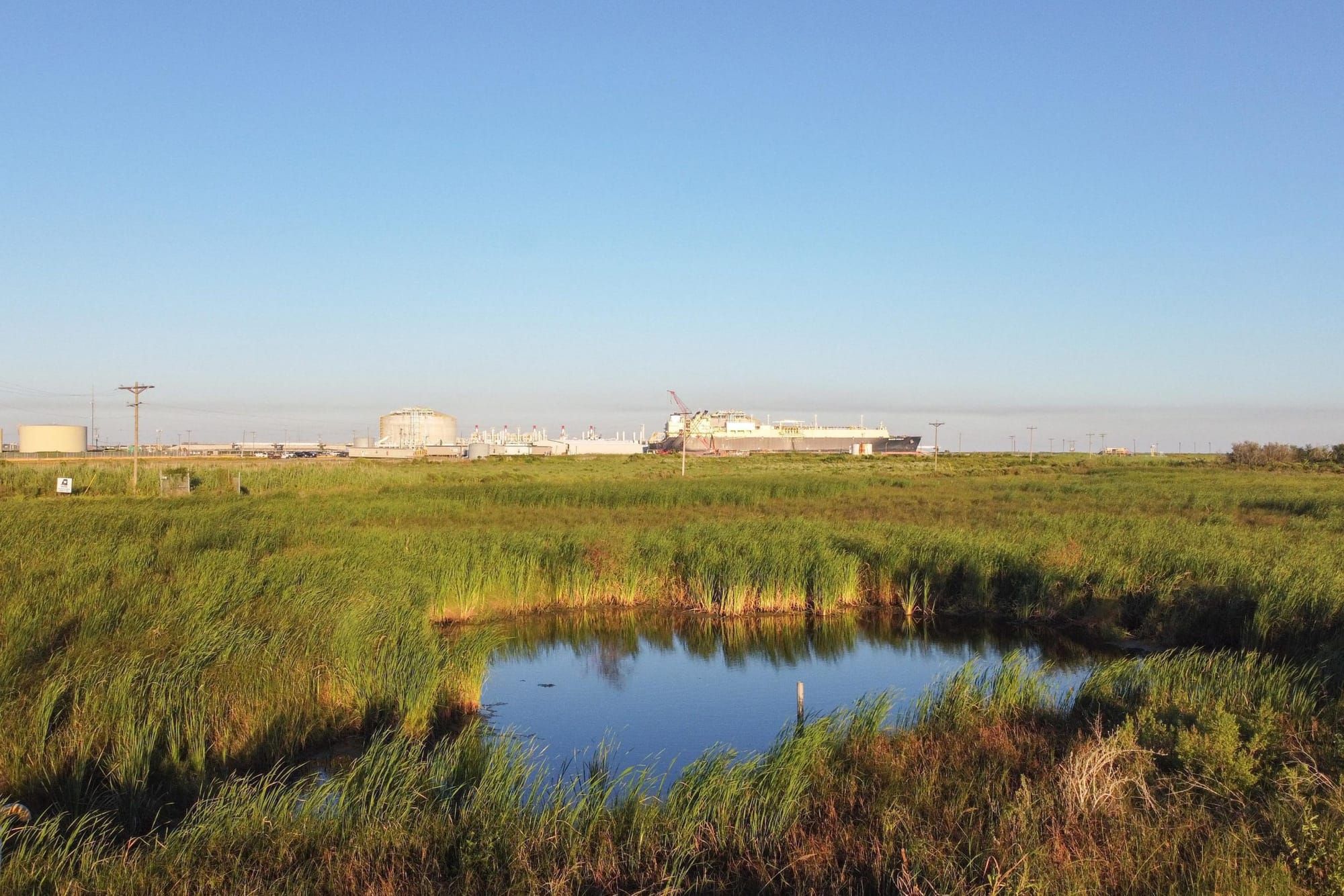
Alongside national allies, the grassroots group also organizes against local petrochemical projects. They are working to limit local impacts and stave off the worst effects of climate change, as petrochemical facilities across the region add to annual carbon emissions that gradually warm the atmosphere and fuel increasingly devastating natural disasters. The group is currently organizing to prevent the company Venture Global from building what is expected to be the largest liquified natural gas (LNG) terminal in the Gulf: Calcasieu Pass 2, better known as CP2. (Venture Global rarely gives interviews to the media and did not respond to requests for comment.)
I’m going to keep going until my last breath.
roishetta sibley Ozane, founder of the Vessel Project of Louisiana
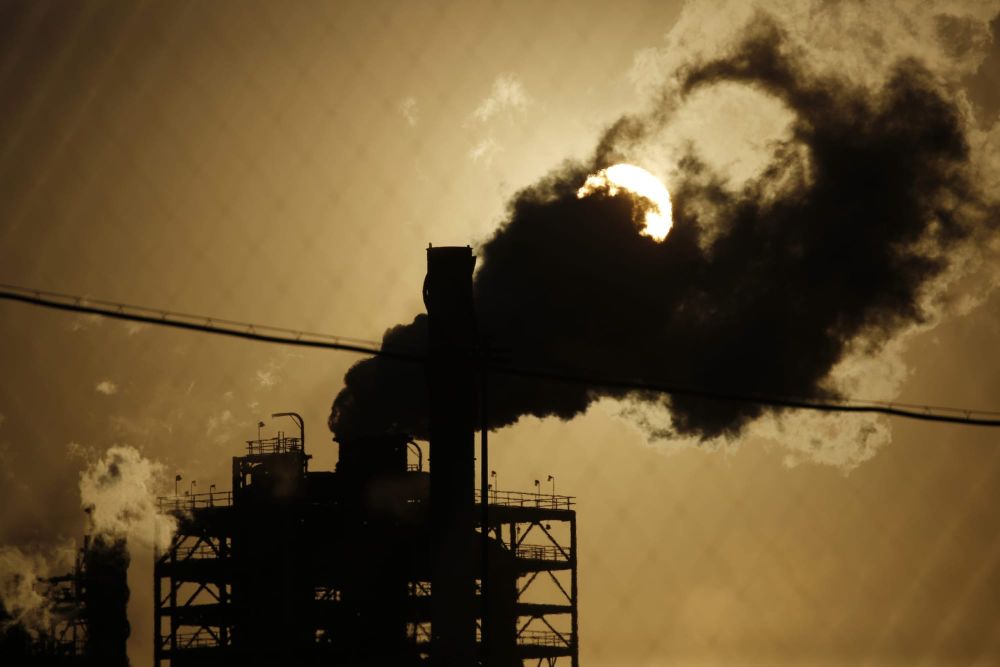
Four out of the nation’s eight operating LNG terminals are within a short drive of Ozane, as are Citgo’s local petroleum refinery—one of the U.S.’s largest such facilities—and dozens of other oil and gas operations.
Oil and gas industry infrastructure is a defining aspect of southwest Louisiana’s economy and coastal landscape. But their proximity and associated health risks make it personal, local organizers say. They are fighting for improved air and water quality and the curtailing of petrochemical development in the Gulf, already the country’s largest petrochemical refinery corridor. They hope to end the destruction of disappearing marshland, the pollution of fisheries, and threats of chemical explosions, and to prevent the petrochemical industry’s sprawl from someday consuming their homes.
“I’m going to keep going until my last breath, until I can’t fight anymore on this side of life, until I’m an ancestor, and my children, grandchildren, and great-grandchildren carry the torch for me,” Ozane told Prism and Earth Island Journal in October.
In Southwest Louisiana today, most residents see themselves as living in a national “sacrifice zone” that has been polluted and exploited for a greater economic good for generations.
For millennia before the arrival of European colonizers, the Ishak people were stewards of southwest Louisiana’s land. Their territory stretched from Vermillion Bay in modern Iberia Parish’s southwestern corner to Galveston Bay, Texas.
Europeans wouldn’t reach the Gulf’s western portion until the 16th century. Spanish conquistador Alonso Álvarez de Pineda’s 1519 expedition witnessed pre-colonial Louisiana first, landing nearly 200 miles away at the mouth of the Mississippi River. Next, in 1528, arrived Spanish explorer Álvar Núñez Cabeza de Vaca, who historians believe was rescued by Ishaks when he and his crew were shipwrecked that year. Before they walked back to Mexico City, Cabeza de Vaca made field notes on American Indigenous groups’ distinct cultures, including their tolerance of transgender people and non-heterosexual unions. Later, in the ensuing centuries, Southwest Louisiana’s remaining Ishak integrated with local formerly enslaved communities; their children became Louisiana’s Creole ethnicity. These “Creole Indians,” as they’re widely known, developed their own traditions, including the distinct zydeco style of country and western music.
Europeans began colonizing Ishak land in 1682. In 1762, France’s King Louis XV ceded Louisiana, west of the Mississippi River, to Spain. But in other parts of the territory, France and Spain disputed each other’s claims. For the next 60 years, Southwest Louisiana became a “no man’s land,” as historians have described it, known as the Louisiana Neutral Strip. More European colonizers arrived in 1781, when Martin LeBleu and his wife Dela Marion left their home in Bordeaux, France, and became the first recorded arrivals to the LeBleu Settlement. Their daughter, Catherine, later married fellow colonizer Charles Sallier, and the couple built a home on the shores of what became known as “Charlie’s Lake,” or Lake Charles.
Lake Charles’ website claims that early settlers in the area lived in “peaceful coexistence with several tribes of Indians,” but tribal members contest that claim. The region’s surviving Ishaks took shelter in southwestern Louisiana’s pine forests and swamps or migrating to Texas, according to former tribal council Mary Leblanc. They welcomed the protection of black bears, snakes, and alligators as layers of defense against the European settlers.
With neither French nor Spanish government representation, the Louisiana Neutral Strip became a refuge for the socially persecuted. First came Baptists and Pentecostals hoping to escape France’s Code Noir laws, which banned any religious practice other than Catholicism. They were followed by formerly enslaved people who were freed or had escaped and hoped to disappear into the landscape, as the Ishaks had.
“There was a brief moment where the real value of the place was to be isolated or alone,” Keagan LeJeune, the interim dean at McNeese State University’s College of Liberal Arts in Lake Charles, explained last year. In 2016, he published the book “Legendary Louisiana Outlaws,” which chronicles Louisiana history. While the Louisiana Neutral Strip’s historical records are lacking, LeJeune described the free state as a series of small-pocket communities, much as the largely rural area remains today.
Ozane and her fellow anti-LNG terminal organizers are fighting to keep the region’s little-known history alive so that there are people to record its history going forward. As Ozane said, there’s a “whole history of injustice we’re facing in our community.”
Devastation and displacement
In less than a century, roughly 2,000 square miles of Louisiana shoreline—nearly twice the size of Rhode Island—has eroded away due to rising seas. In fact, Louisiana’s “boot” has disintegrated so much that, in 2013, the National Oceanic and Atmospheric Administration removed the names of 31 formerly recognized bodies of water, like Yellow Cotton Bay and Dry Cypress Bayou. Rural coastal communities, like those within Lake Charles’ Calcasieu Parish and neighboring Cameron Parish, are at risk of disappearing with the rising tides. Climate change is driving coastal Louisiana’s ongoing erosion crisis—and the oil and gas industry is driving the climate crisis.
Torbjörn Törnqvist, a geology professor at Tulane University, describes coastal Southwest Louisiana as an area that he and other scientists expect to be among the hardest hit as the Earth warms. “If you have to pick one county in the U.S. that’s more vulnerable to climate change, or that’s most vulnerable to sea-level rise, it would be Cameron Parish,” he said.
Historically, Louisiana has played a pivotal role in the oil and gas industry’s global growth. Oil in Louisiana was first struck in a rice patch in the southwestern region’s Mamou Prairie, in 1901. The discovery came only months after a gusher’s unleashing in neighboring Spindletop, Texas, near modern-day Beaumont. These discoveries helped lay the foundations for the Gulf’s modern massive petrochemical corridor.
Facing future challenges
Today, fossil fuels command Louisiana’s economy, and the petroleum industry employs an estimated 13% of the state’s workforce. Fossil fuels also play an outsized role in polluting the state. Louisiana is the only state that claims refining as its top source of CO2 emissions, rather than from transportation and energy generation. Refining produces about two-thirds of Louisiana’s annual emissions. Its southwestern region is its second-largest emitter in the state, according to Louisiana State University’s 2021 greenhouse gas inventory, which was developed by former Gov. John Bel Edwards’s Climate Task Force, with the aim of reaching net-zero carbon emissions by 2050.
To do so, the state would need to reduce refinery emissions and take a new approach to natural gas, which is mainly composed of the potent greenhouse gas methane. Natural gas is frequently converted to a liquified state for transportation: LNG takes up 1/600th of the volume of natural gas and can be converted back to gas and used to produce electricity. But its use comes at a cost. United Nations scientists estimate that methane released by humans is responsible for more than 25% of greenhouse gas’s effects felt today.
The U.S. is the global leader in LNG production. Much of it is refined along a 55-mile strip of Gulf coastal land between Texas and Louisiana, where three out of the nation’s eight operating LNG facilities are located, according to the Federal Energy Regulatory Commission (FERC). This is also where at least seven additional LNG facilities have been proposed or are in the planning phase.
In 2023, the U.S. also led the globe in LNG exports, and last year, nearly two-thirds of the nation’s LNG exports were shipped out of Louisiana, according to the U.S. Energy Information Administration. Meanwhile, the state contributed 11.4% of total U.S. natural gas production, behind only Texas (25.8%) and Pennsylvania (19.8% ).
President-elect Donald Trump is likely to boost fossil fuel development and has promised to green-light LNG terminals; many of the stalled projects are in Louisiana. However, some experts argue that the state’s economy cannot be tethered to LNG for prosperity, especially amid falling global demand for oil and gas as the world confronts the climate crisis.
Louisiana’s unprecedented rise as the country’s top LNG refinery hasn’t gone unnoticed. In part a result of local activism, President Joe Biden’s administration issued a temporary pause on
LNG exports in January. Then in June, the Biden-appointed FERC approved Venture Global’s CP2 project. Also approved was the construction of an 85-mile natural gas pipeline transporting highly flammable LNG through east Texas’ neighboring pinewoods to the CP2 facility and then overseas, with most U.S. LNG destined for Europe and Asia. FERC’s 2-1 decision came despite research from grassroots organization Louisiana Bucket Brigade that found that Venture Global’s Calcasieu Pass LNG export terminal violated the federal Clean Air Act 286 times in its first 343 days in operation.
“We were shocked, but not very surprised, to see the number of permit deviations they’d listed,” said Shreyas Vasudevan, a researcher who contributed to Louisiana Bucket Brigade’s findings shortly after the release of its report on the Calcasieu Pass facility in 2023.
Research by the Sierra Club estimated that CP2 would produce as much greenhouse gas emissions as roughly 42 million cars each year. Environmentalists also warn that construction of Venture Global’s facility will kill coastal wetlands that protect against storms and aid in bonding the land disappearing from Louisiana’s shores.
In late November, in a win for the Sierra Club and other environmental groups, FERC temporarily withdrew approval of the project, pending further study of the cumulative impacts of its emissions. As Floodlight reported, Venture Global has already filed a schedule for the study and still expects the commission to approve the project. Venture Global also awaits the Department of Energy’s response to its license application for CP2.
In his latest book “Finding Myself Lost in Louisiana,” LeJeune explores the consequences of such dramatic changes to Louisiana’s landscape from both a physical and cultural point of view. He said he walked away from the project better understanding the ways in which local culture can be changed, or even erased entirely, as a result of similar or more dramatic outside interventions. He said that oil and gas construction is a modern example of such outside intervention.
I still think there’s a desire to decide one’s own fate here.
Keagan LeJeune, interim dean at McNeese State University’s College of Liberal Arts
“When people see the chenier plain of Cameron Parish—when they see that world— they see it as this place that’s wasted, like you can’t do much here,” LeJeune said of his home region. He described how the metal of petrochemical facilities has a way of shimmering across the region’s industrial surroundings and how, on some evenings, refineries’ flaring of excess gases ignites the sky’s colors.
“The Neutral Strip was a place that was intentionally used as a buffer, where the history there was supposed to be kind of off the record,” LeJeune said, referring to how colonial inhabitants sought the region out as a place of religious refuge. Despite the industry’s exorbitant growth locally, LeJeune said, “I still think there’s a desire to decide one’s own fate here.”
Today, it falls on organizers to take care of Southwest Louisiana’s natural features. In accordance with her faith, Ozane describes organizing, in part, as God’s work. “God, as men and women, gave us dominion over animals, and over the land, and over the sea,” Ozane said. “But that doesn’t mean we mistreat it. We have to take care of it and make sure it’s replenished and that it can give us what we need to survive and thrive.”
Ozane and her organizer peers’ main goal is to ensure that families and communities can stay together after future natural disasters. But they are also committed to ensuring that their health and the region’s environmental health are no longer impacted by petrochemical refining. She also wants to ensure that the local government better supports her and her neighbors the next time a powerful storm inevitably hits.
Louisiana has one of the highest cancer rates in the U.S. A 2021 study by Tulane University’s Environmental Law Clinic also found correlations between cancer rates and areas in the state that have high rates of industrial pollution, like Lake Charles. Locals mention health concerns regularly. Ozane’s sister worked at a local petrochemical plant and was diagnosed with cancer at age 30. Among Ozane’s six children, three have eczema, and two have asthma. One of her sons was recently diagnosed with epilepsy; now 18, he has had seizures since he was 17. People who live near such plants regularly report headaches, nosebleeds, itchy and watery eyes, and burning or itching sensations in their throats.
Ozane has built a life here, though she often thinks about her early life in Ruleville, Mississippi, home of the late civil rights pioneer Fannie Lou Hamer. In Mississippi, her surroundings consisted of farmers’ cotton fields, greens, beans, rice, and catfish farms, with ponds neatly aligned across parts of the landscape. In Lake Charles, dozens of petrochemical facilities surround her instead, a thicket built of steel.
Ozane has built a reputation here. She’s organized marches locally and on New York’s Wall Street to protest the role of major banks in funding environmental injustice. She’s testified before Congress, bending the ear of the nation’s powerful officials. In 2022, she became a member of Earth Island Institute’s Women’s Earth Alliance and its U.S. Grassroots Accelerator for Women Environmental Leaders, which advocates for environmental activism across the globe.
It’s now been some four years since Southwest Louisiana experienced five natural disasters in 10 months. Some of the region’s displaced residents have returned. Even so, recovery drags on, as evidenced by an increase in the number of locally abandoned, dilapidated properties. And even as working-class municipalities like Lake Charles work to bounce back, the prospect of future storms looms large. A 2021 study by the nonprofit First Street Foundation focused on climate risk data estimated that roughly 40% of Lake Charles’ residential properties and half of the city’s infrastructure are at risk of future flooding.
Since 2020, Ozane and her organizing peers have developed a message to continue fighting, and in recent years, it’s begun traveling farther across the globe. Ozane has become one of the local faces of the movement. “I know I was given this task for a reason,” she said, “and I’m still here, still fighting.”
Author

Xander Peters is a writer living in his native East Texas. His work has appeared in The New York Times, National Geographic, Smithsonian Magazine, Texas Monthly, and others.
Sign up for Prism newsletters.
Stay up to date with curated collection of our top stories.