Louisiana is ground zero for an emerging horror: geological landfills
Carbon capture and sequestration, the technology of capturing carbon and storing it underground forever, is unproven and dangerous. Louisiana and other Gulf Coast states may soon house almost 40% of the country’s sequestered carbon dioxide
Real journalists wrote and edited this (not AI)—independent, community-driven journalism survives because you back it. Donate to sustain Prism’s mission and the humans behind it.
Oddist Lambrecht has lived in Louisiana his whole life. At 76, the elder of the Four Winds Tribe Louisiana Cherokee Confederation is now on the front lines of a fight to protect Louisiana from what he characterizes as an existential threat to the future of his state.
The threat has a name: carbon capture, a process by which carbon dioxide is captured, pumped into pipelines, and injected thousands of feet underground. Marketed by the government and fossil fuel industry as a way to mitigate planet-warming emissions, carbon capture and storage has drawn criticism for subsidizing an industry that continues to produce high emissions. But rather than force corporations to lower polluting emissions, critics, including environmental groups, say that state and federal government subsidies actually encourage the production of emissions.
The problem, as Lambrecht sees it, is that carbon capture doesn’t account for impacts to landowners and residents in Louisiana. The industry is moving so fast in the state that residents aren’t alerted when a project is planned for their neighborhood, and many residents say they aren’t given adequate time to even understand the potential consequences of these projects.
That worries Lambrecht, who knows how vulnerable residents are to carbon dioxide leaks. Carbon dioxide plays an important role in a healthy and functional environment, but at high concentration levels, carbon dioxide acts as an asphyxiant. By reducing ambient oxygen, the gas can cause people to suffocate, lose consciousness, and die.
“It’s a serious danger to most of the population of the state,” Lambrecht said. “It’s very serious, and these politicians could care less.”
The Satartia incident
When it comes to capturing and sequestering carbon dioxide, another situation like what happened in Satartia is always a risk.
On Feb. 22, 2020, a pipeline burst in Satartia, Mississippi, releasing 31,407 barrels of liquid carbon dioxide into the atmosphere.
The town in Yazoo County is home to just 42 people, and on the February evening when Satartia residents heard an explosion—comparable to the sound of a jet engine—some assumed it was the nearby pipeline. But most didn’t know what the pipeline was carrying.
It was later learned that heavy rains led to a landslide, leading to a “girth weld failure,” or buildup in pressure. First responders to the area described finding residents doubled over in cars that had stalled, due to their engines requiring oxygen to operate. People foamed at the mouth, others wandered around in a daze. Some were unconscious and soiled themselves. First responders who spoke to HuffPost described the scene as something out of “a zombie movie.”
Denbury Inc., the pipeline company that owned and operated the pipeline, didn’t alert the National Command Center of the rupture until two hours after the explosion. Local emergency medical technicians couldn’t reach many of the victims because their ambulances stalled if they approached the heart of the carbon dioxide plume. Witnesses described the staff at the county hospital as both unprepared and apathetic. Two of the men who had soiled their clothing were left in a hospital hallway without a change of clothes. Denbury paid for the initial hospital fees, but six years later, many still live with the consequences of that day.
The federal government did not file civil or criminal charges against the company or its employees. Other than a failure investigation report by the Pipeline and Hazardous Materials Safety Administration, no local or federal agency has implemented new measures to prevent another incident.
In fact, the U.S. has taken a markedly different route. A federal subsidy known as 45Q pays for polluting corporations to collect their carbon pollution and dump it deep underground into what are effectively geological landfills.
As part of the domestic policy bill, President Donald Trump increased the tax breaks for carbon capture projects while slashing climate provisions.
“They crossed the line”
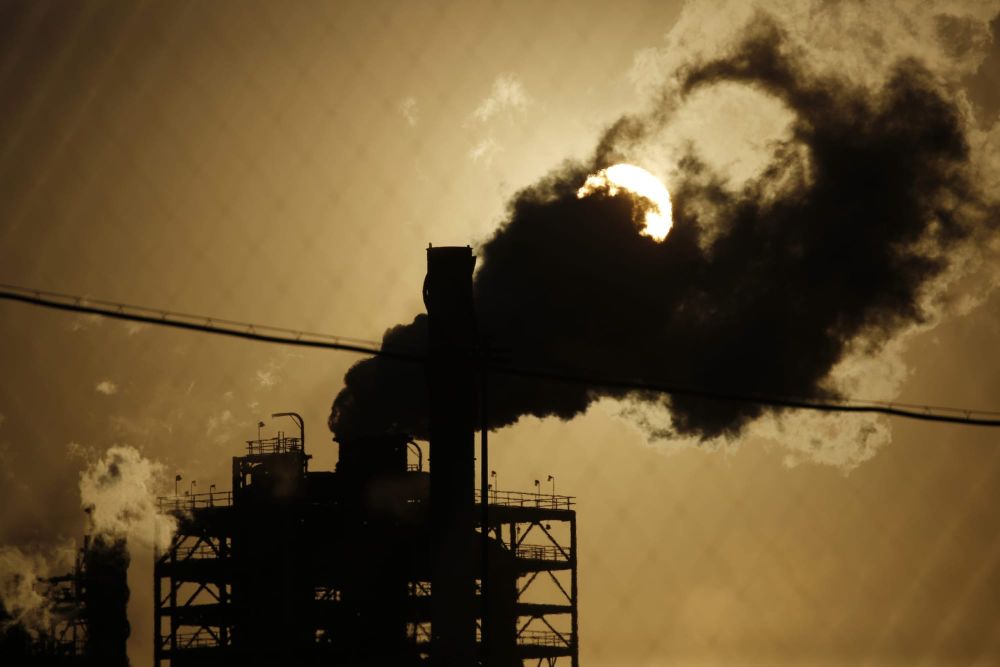
Carbon capture and sequestration (CCS) is composed of three parts. The “capture” part of the technology is extremely expensive and requires attaching individualized apparatuses to the stacks of industrial facilities, typically those that produce hydrogen, steel, or coal-generated power. Then there are the pipelines that transport the captured carbon, and lastly, there are the injection sites, so-called wells, where the liquid carbon is forced thousands of feet deep underground with the hope that it doesn’t come up for air.
Louisiana has become ground zero for CCS projects, as one of the top producers and processors of fossil fuels in the country. The state also has two out of four of the country’s strategic oil reserves, the nation’s only deepwater oil port, and its location adjacent to the Gulf of Mexico allows Louisiana to facilitate the export of 61% of U.S. liquified methane.
But it’s what’s underground that has the gas and oil industries so excited. Carbon injection works best when liquified carbon dioxide is stored in porous rock such as sandstone, dolostone, or limestone, which are covered by a layer of impermeable caprock that can prevent liquid from flowing through it—exactly the kind of formation found in Louisiana. Add to that a state leadership that is extremely sympathetic toward the oil and gas industry, and you get ideal conditions for carbon injection.
From 2018 to 2024, Louisiana greenlit 22 CCS projects. By 2025, that number jumped to 65. Taxpayer funding for the projects, which began in earnest during the Biden administration and is now expanding under Trump’s second term, has created a project windfall for corporations.
But the risk is immense for residents. The technology—of capturing carbon and subsequently storing it underground forever—is unproven. According to Logan Burke, the executive director of the Louisiana-based environmental justice organization Alliance for Affordable Energy, corporations’ plans for Louisiana have “never happened successfully on the planet.”
Projects awaiting permits in Louisiana would collectively inject 36 metric tons of liquified carbon dioxide per year, according to Burke—with the Gulf Coast states accounting for about 38% of the country’s planned sequestered carbon dioxide Experts don’t actually know how this will play out, but with more injection comes greater risk of seepage, geological shifts, and even earthquakes. These consequences are more likely in the U.S. because there are no regulations around injection rates or how far apart injection sites must be from each other. Burke told Prism that current regulations simply urge facilities to consider not placing injection sites near existing oil and gas extraction wells.
Critics argue that it’s not a matter of if a component of the carbon capture technology breaks down, but when and how bad the breakdown will be. Pipeline incidents occur daily in the U.S., a breakdown in mechanics so routine that it’s treated by the Pipeline and Hazardous Materials Safety Administration and the National Transportation Safety Board as the cost of doing business. Environmental damages are investigated by the Environmental Protection Agency (EPA), but there’s no guarantee of fines or fees large enough to dissuade companies from doing business.
Few are as aware of these implications as residents of Louisiana. In a few generations, the oil and gas industries have become central to the state economy, and many residents have worked for the sector. Now, the state government’s push for carbon injection prioritizes industry over residents’ well-being, with limited accountability in case of leaks. Companies are set to receive billions of dollars in public money. Meanwhile, the public receives few direct benefits.
“With the oil and gas industry, the public is getting a value,” said Roland Hollins, a Louisiana resident and chair of the Louisiana CO2 Alliance, a citizen action group that pushes for accountability and transparency around CCS proposals. “We drive up and down the road, we cook, we heat houses,” Hollins said “There’s a public purpose. But this CO2 injection—there is no public purpose other than corporations becoming richer.”
Since the 1990s, Hollins has worked off and on in the oil fields of Louisiana. He said that in 2023, after the EPA gave the state the authority to approve permits for injection wells, project approvals snowballed. The state used eminent domain to obtain the rights to the “pore space” of landowners’ properties in order to force carbon injection onto their land. Pore space, or everything below ground, belongs to landowners in Louisiana, as opposed to in other states where landowners retain rights to what’s on top of the land, which allows pipeline operators to channel through underground space. Groups such as Louisiana CO2 Alliance and Save My Louisiana, which also advocates for transparency around CCS projects, object to how the state government capitulated to industry.
It endangers your family, it takes away your land rights, and it endangers your sole water source. The three most important things to people, this stuff threatens.
Roland Hollins, chair of the Louisiana CO2 Alliance
“It endangers your family, it takes away your land rights, and it endangers your sole water source,” said Hollins. “The three most important things to people, this stuff threatens. That’s why you’re seeing people [in Louisiana] rise up for the first time against the government and industry.”
In November, Save My Louisiana and other groups sued to stop the state’s approvals of injection wells.
Some in the industry have tried to paint Hollins as hostile to their work, but he told Prism that couldn’t be further from the truth. He said he simply wants citizens to have a seat at the table and have their property rights respected.
“I’m an oil and gas guy,” he said, “but I believe that they crossed the line.”
An extremely costly and ineffective solution
Critics note that no other sector receives incentives for capturing its own emissions. What CCS amounts to is rewarding oil and gas corporations for producing toxic waste and then incentivizing them to dispose of it, said Victoria Tejada, a senior attorney at the nonprofit the Center for Biological Diversity that works to protect endangered species.
Tejada told Prism that this dynamic “creates this perverse incentive where the more pollution a facility generates and can stick underground, the more money they get.”
Under the framework of a “climate solution,” the scheme seems even more egregious, Tejada said, given that the companies responsible for the climate crisis are now the ones raking in taxpayer dollars to mitigate the harm.
Ironically, the CCS technology now billed as a climate solution originated as a tool for further extraction. Carbon injection started as a method for what the industry called “enhanced oil recovery,” in which CO2 is pumped underground, almost like a fracking fluid to push more oil up. It was only in 2010 that the federal government finalized regulations for CCS to be used for storage in addition to extraction, Tejada explained.
Industry analysis shows that even today, most CCS pipelines and projects are built to support oil excavation, rather than to mitigate the heat-trapping gas.
Tejada explained that CCS wouldn’t be possible without public funding to support it; the technology is prohibitively expensive to build. With tax dollars, these facilities are often sited in the South, the region of the country with the highest population of Black residents. Black residents in oil-producing states such as Louisiana face the highest health burdens from air pollution, with an estimated 91,000 premature deaths attributable to industry operations, according to a journal article published in Science.
“It’s becoming so popular now [because] even though oil and gas prices are declining, they’re looking at CCS as a new revenue source,” Tejada said. Companies get a tax credit of $85 per ton of stored carbon. That amounts to billions of dollars over the lifetime of a project. Notably, the countries most eager to trial CCS are also the most fervent extractors of fossil fuels.
According to the Institute for Energy Economics and Financial Analysis (IEEFA), the public is set to foot the bill for 142 CCS projects that amount to $835 billion over 18 years. That’s an average of nearly $6 billion per project. According to further research by IEEFA, this is an extraordinarily high price to pay, considering that “not one single CCS project has ever reached its target CO2 capture rate.” In fact, most CCS projects vastly underperform their capacity, with the earliest projects failing to reach their potential by up to 50%.
As a climate solution, CCS wells will only account for 2.4% of carbon mitigation by 2030, amid concerns over cost and limited impact on a problem that’s slated to go off the rails as the world breaches the threshold of limiting average global warming to 1.5 degrees Celsius.
“I don’t see it as a climate solution,” Tejada said of CCS. “I see it as another way to line the pockets of fossil fuel companies.”
According to Abel Russ, a senior attorney at the nonprofit Environmental Integrity Project, it would be much more prudent to spend public money on renewable resources, such as solar fields, wind turbines, and battery storage. The energy transition that the country requires isn’t a matter of feasibility, but political will, he said.
“We had a Manhattan Project, we had a moonshot program,” Russ said. “We’ve accomplished big things as a country in the past when we set our minds to it, and that just isn’t happening.”
Editorial Team:
Tina Vasquez, Lead Editor
Carolyn Copeland, Top Editor
Rashmee Kumar, Copy Editor
Author

ray levy uyeda is a staff reporter at Prism, focusing on environmental and climate justice.
Sign up for Prism newsletters.
Stay up to date with curated collection of our top stories.