Red flags in the air: Louisiana communities take on pollution
Federal and state laws are making it more challenging for communities to protect themselves against life-threatening toxins
Real journalists wrote and edited this (not AI)—independent, community-driven journalism survives because you back it. Donate to sustain Prism’s mission and the humans behind it.
In Sulphur, Louisiana, Cynthia Robertson checks the air before she starts her day.
Outside her home, small sensors measure fine particulate matter and toxic pollutants drifting in from nearby petrochemical facilities.
Years ago, Robertson began translating those readings into color-coded flags on her porch—green when the air is safe, yellow for caution, red when it isn’t safe—so her neighbors would also be informed.
Robertson is the founder and executive director of Micah 6:8 Mission, a community-based grassroots nonprofit serving Southwest Louisiana.
She has learned to trust both the numbers and her body.
“I get headaches. I get sore throats,” she said of the bad air quality days. “It would burn your nose sometimes; it was not pleasant. Other folks told me that they experienced the same things.”
According to the World Health Organization, particles smaller than a strand of hair can penetrate and lodge deep inside the lungs, causing irritation, inflammation and damaging the lining of the respiratory tract. Smaller particles can penetrate the lung barrier and enter the blood system, affecting all major organs of the body.
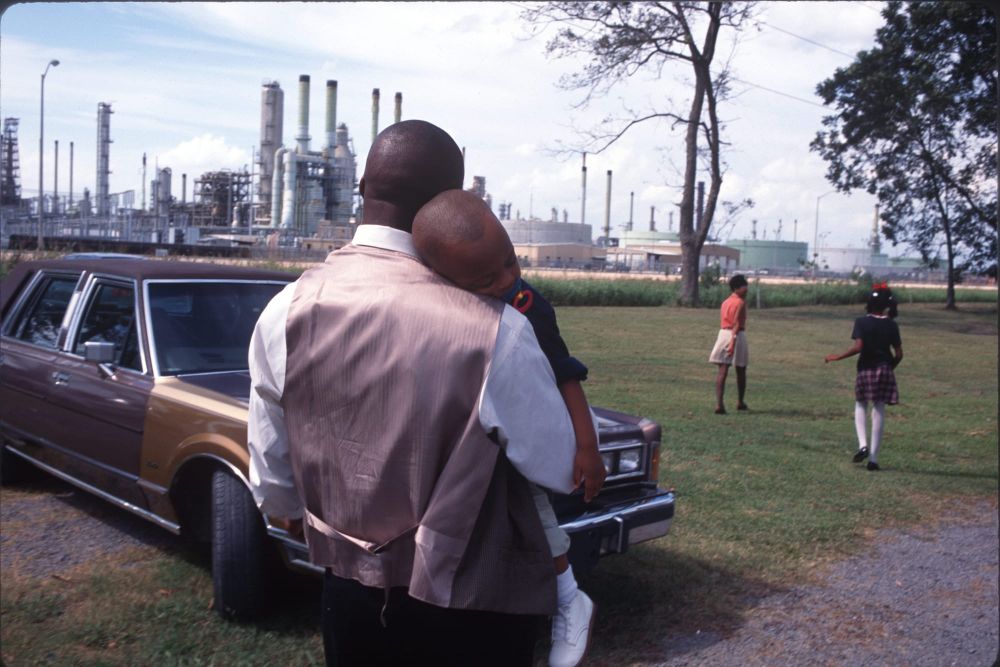
Louisiana is home to more than 300 manufacturing facilities, 150 petrochemical plants and 15 refineries, many clustered near residential neighborhoods. Across Louisiana’s industrial corridors, particularly in low-income and historically Black communities, residents have increasingly turned to grassroots air monitoring to document pollution and protect their health.
State and local policies have allowed industrial facilities to cluster in communities already facing environmental and economic challenges, placing the burden of monitoring largely on residents. Grassroots monitoring has filled longstanding gaps in official oversight and is one of the main ways that residents can protect themselves against toxic pollution. But now, community advocates say the very tools that allowed residents to monitor their health are being restricted.
Louisiana’s official ambient air monitoring network, maintained by the Louisiana Department of Environmental Quality, collects data on major pollutants, including ozone, sulfur dioxide and particulate matter to track compliance with federal air quality standards. Industrial facilities release volatile organic compounds (VOCs), airborne chemicals that can irritate lungs and affect other organs even at low levels.
However, the statewide network includes a limited number of stationary monitors and does not necessarily capture neighborhood-level pollution variations, leaving gaps for communities living next to industrial facilities.
Robertson said that there’s one air monitor for Calcasieu Parish that tracks VOCs in her area. But even then, she said, “It only does it when there’s been a release—when it detects a release of more than 10 seconds.”
Regulators allow oil and gas companies to vent, flare, or release natural gas during extreme weather events under specific “emergency” or “upset” clauses, which prioritize safety and equipment protection over emission limits. During these authorized events, companies classify the releases as “unavoidably lost” or “permitted deviations” rather than illegal pollution.
Last year, Micah 6:8 Mission joined a lawsuit challenging Louisiana’s Community Air Monitoring Reliability Act (CAMRA), which limits who can conduct air monitoring and how that data can be shared publicly. Louisiana Gov. Jeff Landry signed the act into law in May 2024.
Plaintiffs argue that the law is an attack on First Amendment rights, shields polluters from accountability, and places disproportionate burdens on communities already overexposed to toxic emissions.
“This new law is a blatant violation of the free speech rights of community members to use their own independent air pollution monitoring to raise alarms about deadly chemicals being released into their own homes and schools,” said David Bookbinder, director of law and policy at the Environmental Integrity Project.
“I’m not sure how regulating community air monitoring programs ‘violates their constitutional rights’,” Louisiana Attorney General Liz Murrill countered in a written statement to the Associated Press.
CAMRA requires community air monitoring data to come from state-approved equipment that can cost more than $60,000 per unit and mandates technical verification processes beyond the reach of most grassroots groups. Violations can result in civil penalties of up to $32,500 per day, plus $1 million for intentional violations, for disseminating what the state deems “unverified” data.
Together, CAMRA and the Environmental Protection Agency (EPA)’s pullback from collecting and valuing public health data left frontline communities with fewer tools to document pollution and fewer avenues to hold regulators or industry accountable.
Community’s firsthand observations
Micah 6:8 Mission began air monitoring several years ago after residents repeatedly reported visible plumes and strong chemical odors moving through their neighborhoods.
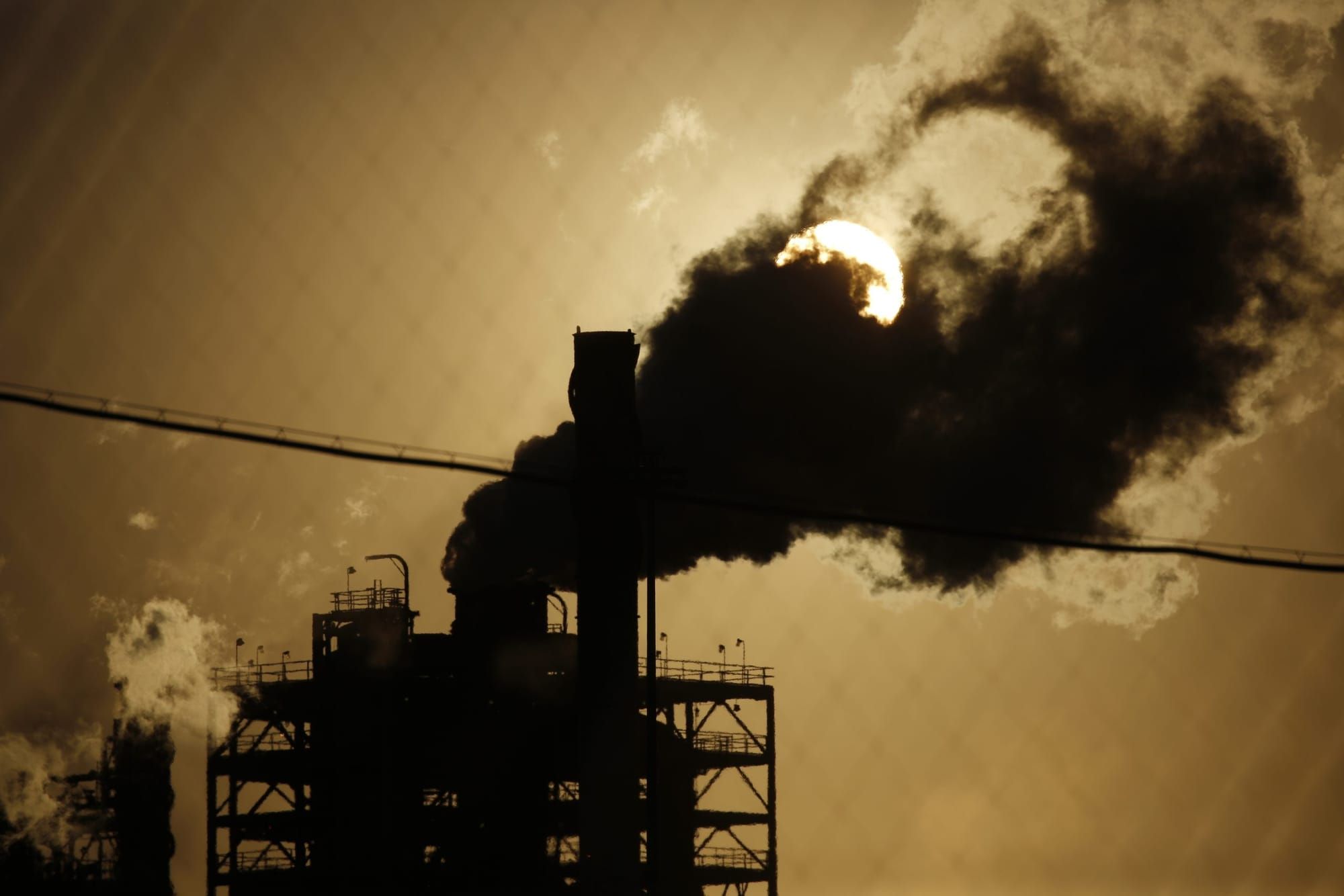
“Seeing these big black clouds go through the neighborhoods and smelling the nastiness—we decided we needed to do something,” Robertson said. Robertson purchased PurpleAir monitors, available online for $200 to $300, and distributed them to the community.
With the PurpleAir monitors, the organization tracked PM2.5 levels and shared daily updates on social media. Using Robertson’s color-coded system of green, yellow, and red, they communicated air quality risks by posting the flags on Facebook to help the community understand the readings in an accessible way.
In 2023, Micah 6:8 Mission received a grant from the EPA to install an AQSync monitor, a low-cost air quality monitor that measures fine particulate matter, primarily PM2.5, and also nitrogen oxides, sulfur oxides, and VOCs.
But after CAMRA took effect in May 2024, Robertson said the organization stopped publicly posting air quality updates.
“We were afraid. … We don’t have $33,000 a day,” she said.
Health burdens and cancer clusters
Cancer incidence maps from the Louisiana Tumor Registry show Calcasieu Parish as a hotspot, with rates second to those documented in an 85-mile stretch along the Mississippi River, often referred to as “Cancer Alley,” due to elevated cancer rates.
Industries that rely on the Mississippi River for transportation and processing—including petrochemical plants and refineries—cluster along the corridor, where predominantly Black and low-income communities have lived for generations.
Cancer risk from airborne toxic chemicals in Louisiana parishes is significantly higher in low-income and predominantly Black communities compared with wealthier or majority-white areas, reflecting longstanding environmental justice concerns.
Studies have consistently linked long-term exposure to industrial air toxics with elevated cancer risk, respiratory illness and cardiovascular disease, but community members say long-term exposure does not affect everyone equally and often worsens preexisting conditions.
“If you have something that would make you vulnerable to cancer, chronic obstructive pulmonary disease, asthma, or heart disease, living in this area exacerbates it immensely,” Robertson said.
Whether officials are making these connections is another question.
Sanaa Antwine, a college student from Alexandria, Louisiana, volunteered with a nonprofit working in Cancer Alley through the Sustain Our Future Foundation.
During her time volunteering, Antwine immediately noticed environmental conditions that residents had long described. She said the air felt “sticky, the water appeared dirty, and the humidity felt heavier than usual.”
Some residents spoke openly about their health concerns, Antwine said, while others appeared less alarmed—an uneven awareness she found troubling.
“Many people are suffering and don’t realize they are suffering,” she said. “Seeing the elders suffer was all I needed to see for it to feel real.”
The experience also reshaped how Antwine understands power and credibility in environmental advocacy. She said race often determines whose knowledge about pollution institutions consider legitimate—even when community members have years of lived experience.
“As a volunteer, I saw a racial factor in who gets to produce knowledge on pollution,” Antwine said. “Even when I was there with community members who are well-known, some people only believe a certain race should do that type of work.”
Antwine attended public hearings while volunteering and watched residents react with frustration when officials dismissed their concerns. She said those encounters help explain why some community members stop showing up altogether.
“Residents were very upset when their concerns were dismissed,” she said. “That also shows why other residents don’t speak out or attend.”
“I wish more people—especially policymakers—would actually put their feet on the ground in Cancer Alley,” Antwine said. “The people there are courageous, and they believe in unity.”
Disaster as a turning point
Robertson’s work took on new urgency after Hurricane Laura struck in 2020, which left Calcasieu Parish with widespread damage. Through the Disaster Justice Network, a volunteer network of disaster recovery specialists, Robertson began connecting climate change, industrial pollution, and worsening storms.
As residents contend with these challenges, the EPA’s retreat from protecting public health leaves them shouldering the burden alone.
Earlier this month, the EPA proposed narrowing how it considers public health benefits—such as lives saved and health care cost reductions—when evaluating air pollution regulations.
“That’s criminal,” Robertson said. “They monetize everything else, so why don’t they monetize the environmental damages and the health damages that occur to us, the folks in the frontline communities that are disenfranchised, that are at risk from higher health problems?”
She described a regulatory framework that prioritizes industry cost saving while shifting the long-term burden—medical care, disability, lost income—onto taxpayers and families.
“People living on $600 a month in [Supplemental Security Income] are having to pay for prescriptions,” she said. “We have mutual aid fund money, and we’re going to have to find more because people are going to get sicker quicker and have higher expenses.”
Researchers involved in the Collaborative Data Analysis (CoDA) Environmental Health Study say recent changes to the EPA’s regulatory framework make it harder to connect pollution data to real-world health impacts, particularly in heavily industrialized regions like Louisiana.
Austin Banks, a project manager for CoDA and coordinator of its community focus groups, said in a written statement to Prism that by ending the practice of assigning monetary value to public health benefits such as avoided illness and premature death, the EPA is narrowing how environmental risk is assessed.
“From a community monitoring perspective, this shift limits the ability to contextualize reported emissions within a broader public health impact framework,” Banks said.
CoDA research relies on EPA self-reported emissions data—the only standardized, facility-level dataset available at scale—and integrates it with health and demographic data at the ZIP code level.
Banks said populations living within roughly five miles of petrochemical facilities show higher reported exposure levels and a greater prevalence of certain health conditions—including Type 2 diabetes, learning disabilities in children, and adverse maternal outcomes such as preeclampsia and eclampsia—than those living farther away.
Community data, community power
Despite restrictions, Robertson said community monitoring has already changed the balance of power.
“People are more informed,” she said, “and because they’re informed, they show up.”
Residents now attend permit hearings, Louisiana Department of Environmental Quality meetings and parish council sessions in growing numbers—often citing data collected by neighbors.
Advocates warn that if CAMRA stands, it could embolden other states to limit grassroots monitoring—particularly as federal oversight weakens.
Still, Robertson remains resolute.
“We have power if we come together,” she said. “We can protect the people who live here—and the people who work in those plants too.”
Editorial Team:
ray levy uyeda, Lead Editor
Lara Witt, Top Editor
Stephanie Harris, Copy Editor
Author

Yasmin Garaad is a freelance journalist based in New Orleans. Her work has been published in PEOPLE Magazine, Business Insider, National Geographic, and other outlets.
Sign up for Prism newsletters.
Stay up to date with curated collection of our top stories.