The Los Angeles raids make Deaf immigrants more vulnerable: ‘ICE doesn’t care’
As the city remains under siege, both disability rights and immigrant rights advocates are limited in the help they can offer disabled communities
Like a lot of undocumented immigrants in southern California, Jennifer is on edge. She lives in the desert near Palm Springs, so summer is not the worst time to hunker down indoors, only leaving each day for work.
But it’s not the heat she’s avoiding.
For more than 30 days, Immigration and Customs Enforcement’s (ICE) dragnet has invaded communities and snatched people—immigrants and citizens alike—throughout the Los Angeles area.
“My parents call me regularly and try to tell me not to go out,” Jennifer expressed through an interpreter. She is using a pseudonym because of her immigration status. “Same with my husband. Like, I’ll send him to the store.”
Her husband is a U.S. citizen, and she’s in the process of getting her green card. Until then, Jennifer hopes her Deferred Action for Childhood Arrivals (DACA) status won’t lead to her being picked up by ICE. As one of an estimated 1.5 million unauthorized immigrants in the LA region, she knows she has rights if she’s detained. But there’s one thing that scares her above all else.
“How would I communicate with [federal agents] with no phone or anything?” Jennifer said in American Sign Language (ASL). “I’m Deaf, and they’re not going to be respectful. They’re not going to be patient with me.”
Jennifer is the only Deaf person in her family of origin. She communicates primarily in ASL—her husband is Deaf too—but she also knows English and some Spanish. Nonetheless, for important conversations, especially legal ones, access to an interpreter is vital.
According to the Urban Institute, about 5.6% of immigrant adults have a disability, and about 30% of them are originally from Mexico, making it the country of origin most represented among disabled immigrants.
Jennifer’s fears about losing access to communication in detention are not unfounded. A Deaf asylum-seeker from Mongolia has been in detention since February without the opportunity to see a judge or communicate with anyone who knows Mongolian Sign Language, a language completely distinct from ASL.
“The population of immigrants with disabilities are particularly vulnerable for many, many reasons,” said Munmeeth Soni, the legal director of the Sikh Coalition who has long worked at the intersection of immigration and disability rights. “Oftentimes, an individual’s disability will further make it such that they don’t have the same and equal access to protections, processes, and procedures and to fair forms of treatment that non-disabled individuals and immigrants will—or can—have access to.”
According to Soni, ICE has historically ignored the protections that all individuals, regardless of citizenship or immigration status, are entitled to under Section 504 of the Rehabilitation Act of 1973, which requires that all federal agencies provide accommodations to people with disabilities.
For a Deaf person, an accommodation might mean access to an interpreter of a sign language that they know, whether ASL or any of the about 200 sign languages documented around the world. But if an interpreter is not readily available or provided, it could keep a person in detention for longer than they otherwise might be.
Know all your rights
Like many DACA recipients, Jennifer came to the U.S. with her parents as a child. She was only 10 months old when they left Mexico.
Within about a year of their arrival in the U.S., they learned that Jennifer was Deaf.
This complicated matters for her parents. Without documents, they struggled to make a living and considered returning to Mexico. But back in Mexico, Jennifer’s parents had no experience with people who were Deaf or Hard of Hearing (HOH). They didn’t even know that Mexican Sign Language (LSM) existed. In fact, LSM was not recognized as a national language by the Mexican government until 2005, when Jennifer was about 10 years old. And they’d certainly never heard of any Deaf schools—or Deaf education of any sort—in Mexico.
Her parents saw how much Jennifer’s communication advanced with the services available in the U.S., which were far more than they knew would be available in Mexico. They also knew there would be opportunities for them to learn ASL alongside their daughter and for her to get an education, so they decided to take their chances and stay in California without authorization.
Today, even though she’s grown and married and recently finished a master’s degree program, Jennifer’s parents are more concerned for their daughter than themselves, fearful that she will be taken off the street by federal agents. “I feel like my parents have made me more scared by worrying about me and making me a priority because I am Deaf,” Jennifer said.
For some immigrant parents of Deaf children, access to sign language interpreters is only one of their worries. “Within the Deaf community—especially within the immigrant Deaf community—you see a lot of language deprivation, which is where you did not have exposure to language prior to the age of 5,” said Celena Ponce, founder and president of Hands United, a nonprofit organization that provides services to immigrant families with Deaf and HOH children.
According to Ponce, language deprivation can have a detrimental effect on a person’s overall cognitive processing, as well as their understanding of time and relationships. A 20-year-old who experienced a lack of language in the first five years of their life might have the physical appearance of an adult, but their language and comprehension level might be that of a 5- or 6-year-old.
“So they are at an even higher risk if they can’t answer a lot of questions that you would expect someone in their 20s to be able to answer,” Ponce said. “They don’t know what their immigration status is. They don’t have their address memorized. They don’t have their phone number memorized. They don’t have that basic knowledge due to their lack of language.”
Soni said these challenges make it difficult for Deaf immigrants to access the information they need to stay safe.
“There’s a gap where immigrants with disabilities find themselves not necessarily understanding what other additional protections they might be able to benefit from or receive because of the nature of their disability,” Soni said.
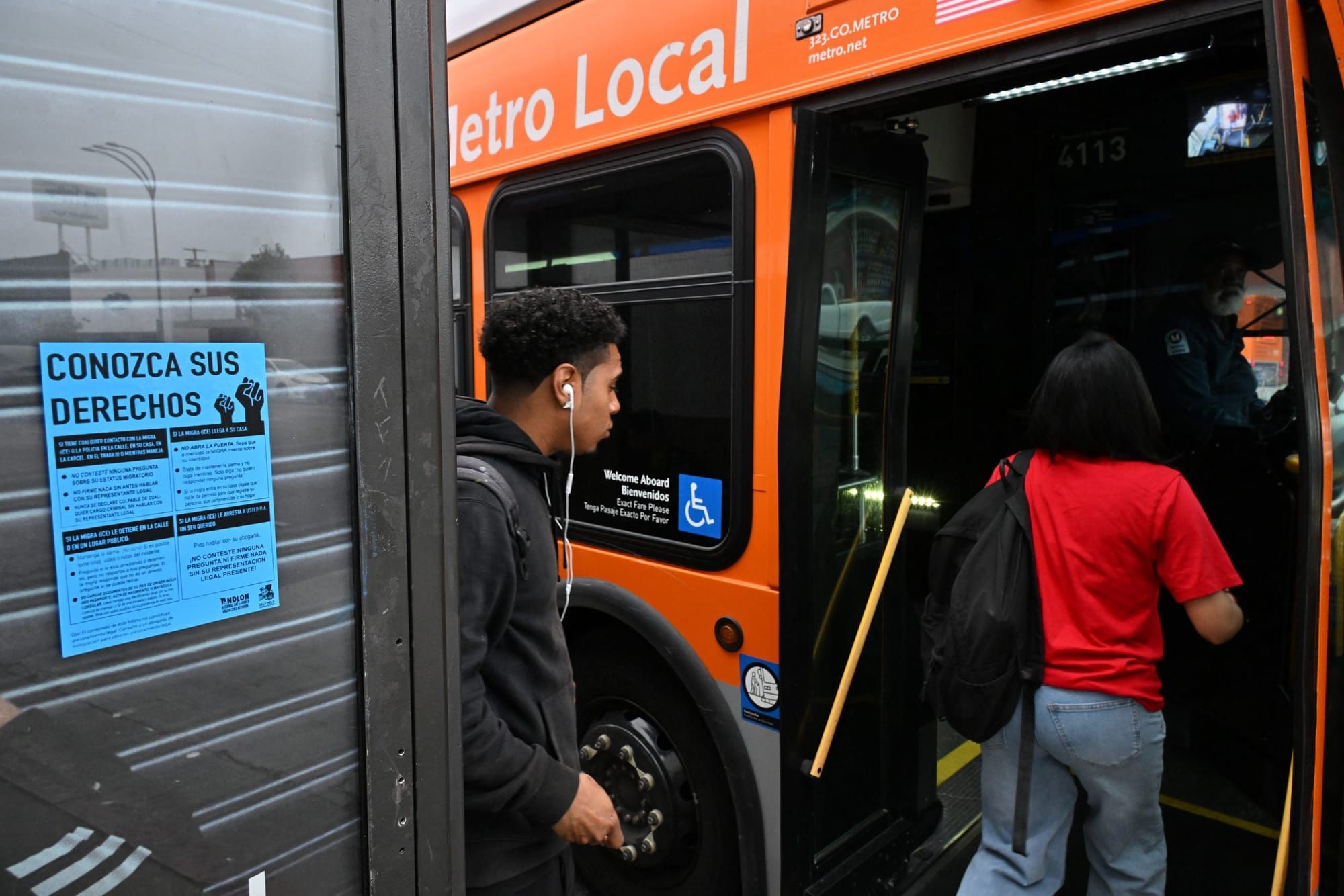
“Know your rights” presentations and materials have become a major focus of the outreach work of immigrants’ rights groups, with the “red card”—a wallet-sized list of basic rights to know for encounters with law enforcement—offered freely as a quick guide. Those materials, Soni said, usually focus on Fourth Amendment (don’t open the door, ask for a warrant signed by a judge) and Fifth Amendment rights (don’t answer any questions), but very little, if any, work has been done to inform individuals of their rights under federal anti-disability discrimination laws. Likewise, organizations providing services to Deaf and HOH communities are often not staffed with people knowledgeable about immigrant rights.
You’re asserting your right to remain silent, and similarly, you can assert your right to request an accommodation.
Munmeeth Soni, sikh coalition legal director
“I think disability rights advocates recognize what they don’t know and their limitations, and immigrant rights advocates recognize their limitations,” Soni said. But with immigrant rights groups overwhelmed beyond capacity right now, she suggested it’s the disability rights advocates who could step up and learn about the basic protections that exist during law enforcement encounters.
One useful tool she recommends is the “know your rights” page she helped develop at Disability Rights California, where she previously worked, which includes printable cards to fill out and carry alongside a red card, detailing the carrier’s required accommodations.
“You don’t need to disclose anything. That card should speak for itself,” Soni said. “You’re asserting your right to remain silent, and similarly, you can assert your right to request an accommodation.”
Showing up for each other
Just because Hemi Perez is a U.S. citizen doesn’t mean they aren’t worried. They wonder what would happen at the border as a Latinx person who is Deaf and nonbinary, even though they used to visit family in Mexico all the time when they were growing up. They worry about friends and colleagues who are undocumented and scared. One friend, whose family members were recently abducted by ICE and deported, has socially withdrawn and barely been heard from since.
In addition to seeing raid after raid play out over their social media feeds, Perez had to do something with the sadness, anger, and grief they were feeling. They started a series of weekly pláticas online, private video chats in ASL for Deaf and HOH immigrants or loved ones of immigrants to discuss how they’re feeling and offer support to each other amid the chaos. The groups started out small, though spirited, and came mostly from around LA County.
“I’m not a therapist,” they expressed in ASL. “But I want to be able to provide that same safe space.”
Perez also started raising funds for Deaf queer community members affected by the ICE raids, knowing that so many immigrants are staying home and missing out on pay for fear of being snatched by ICE.
This drive to help others reminds Perez of childhood trips to Mexico with their grandmother, and the bags full of clothes their parents would send with them to deliver to surprised relatives in their hometown.
“Part of my family values is doing the work and not expecting to be paid for it, not asking, ‘Where’s my money?’” Perez said. “This is volunteer work. I love doing this.”
Jennifer finds solace in Perez’s pláticas, where she’s processing her complicated feelings in a way that feels natural and comfortable, in ASL, offering her a safe space to express her worries that are not always understood by her U.S. citizen husband.
“My mom told me, if something happened to me, she would leave. She’d chase me and go back to Mexico to find me.
Jennifer, Los Angeles-area resident and DACA recipient
“I’ve told my husband, and he’s like, ‘Oh, you’ll be fine. Don’t worry about it, you’re fine,’” Jennifer said. “But he doesn’t get it. ICE doesn’t care.”
Meanwhile, Jennifer and her parents check in on each other every day, sending text messages like, Are you still here? Everything OK? “If I miss a text or a call from my mom, she freaks out, and I’m like, ‘I was working on a paper or busy doing something,’” Jennifer said.
Jennifer already knows what would happen if she went missing one day.
“My mom told me, if something happened to me, she would leave,” Jennifer said. “She’d chase me and go back to Mexico to find me.”
With any luck, that won’t be necessary. Her parents plan to return to Mexico on their own terms—just as soon as Jennifer has her green card, and they no longer have to worry about her.
Loren Gutierrez was the ASL interpreter for this story.
Editorial Team:
Tina Vasquez, Lead Editor
Carolyn Copeland, Top Editor
Rashmee Kumar, Copy Editor
Author
Andrea Gutierrez (she/her) is an award-winning writer and audio producer in Los Angeles. She’s drawn to stories at the intersection of culture, identity, and power. Her work has been featured in NPR,
Sign up for Prism newsletters.
Stay up to date with curated collection of our top stories.