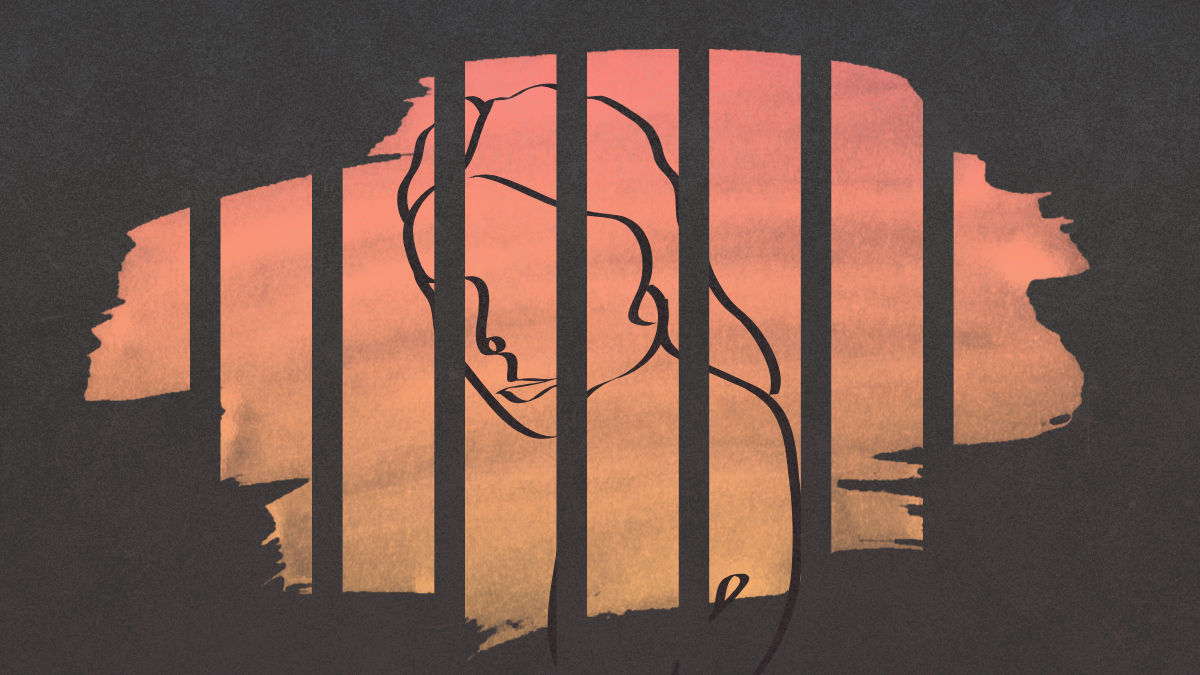
Long prison sentences function as involuntary sterilization of incarcerated people
By keeping me imprisoned through the years when I might have become a parent, the prison system reproduces the eugenicist logic that once sought to keep so-called undesirable people from having children
Real journalists wrote and edited this (not AI)—independent, community-driven journalism survives because you back it. Donate to sustain Prism’s mission and the humans behind it.
I don’t want children, much to my mother’s dismay. But as it happens, that is a good thing.
When I was 23 years old, I was sentenced to 20 years in prison for aiding and abetting capital murder. With time off for good behavior, I will be 40 years old when I’m released next year, and having a child after spending nearly my entire adult life in prison would be irresponsible for several reasons. Additionally, the commonwealth of Virginia, where I am incarcerated, has effectively rendered me unable to have children—not through surgery or medication, but by keeping me imprisoned through the years when I might have become a parent.
In no way am I avoiding responsibility for the mistakes that led me to prison; I have taken accountability for my actions and accepted the consequences for them. However, until recently, I hadn’t considered this aspect of my sentence.
Nevertheless, over the course of my imprisonment, I’ve found that not wanting kids makes me an exception, not the norm. What about all the women I’ve met who did or do want children?
For them, lengthy sentences function like involuntary sterilization, not through physical procedures but by isolating them during their reproductive years—a method used during the eugenics movement of the early 20th century. In practice, sequestering women from men, and vice versa, for the greater part of their reproductive years has the same effect: It prevents them from forming families and having children. In this way, the system echoes the same eugenicist logic that once sought to keep so-called undesirable people from reproducing.
The National Human Genome Research Institute (NHGRI) defines eugenics as “the scientifically erroneous and immoral theory of racial improvement and planned breeding.” Discriminatory legislation born from this movement resulted in the involuntary sterilization of at least 60,000 people through 30 states’ laws by the 1970s. In Virginia, this practice was codified through the Virginia Sterilization Act of 1924, which specifically targeted those “afflicted with hereditary forms of insanity that are recurrent idiocy, imbecility, feeblemindedness or epilepsy.” The act was upheld by the Supreme Court in Buck v. Bell in 1927.
Lutz Kaelber, an associate professor of sociology at the University of Vermont and author of several papers on eugenics, contends that Virginia had the longest active period of legal forced sterilization of any state. Though some scholars estimate the numbers to be higher, at least 7,325 people were eugenically sterilized under the Virginia Sterilization Act between 1924 and 1979. Most of these individuals were women confined to “state institutions that housed mentally defective or insane people.”
According to the NHGRI, those regarded as “unfit” to breed by eugenicists include “ethnic and religious minorities, people with [mental and physical] disabilities, the urban poor, and LGBT individuals”—many of the same groups that are disproportionately represented in prison populations.
“I don’t think [having children] even crossed my mind because I was so young,” said Erica, who was barely 14 when she was arrested 24 years ago. (Erica and the other women in this piece are going by their first names to protect their identities.) “I always said I wouldn’t have kids because I was selfish. I was a kid. I was like, ‘I want to live my life by myself.”‘
Then, around 30, Erica said the desire to become a mother “hit [her] like a ton of bricks.” One day, when studying for a psychology exam, she was struck by a vision of a little girl.
“She had to be around 2 years old. She was light-skinned with four sandy blonde pigtails. She had on a canary yellow dress and these cute little sandals. And she was running to me with her arms outstretched, and she was saying, ‘Mommy, Mommy!’” Erica said through tears. “When I went to pick her up, my eyes opened. It felt so real. I kept thinking, ‘I saw my baby. I heard her voice. I saw my baby.’”
Having almost two decades left to serve, Erica knew that few avenues to motherhood were open to her. After learning that trans men were sometimes given the option of freezing their eggs before beginning testosterone injections, she took the name Ethan and initiated the formal process of transitioning.
“I went through six weeks of therapy counseling sessions until I was told they couldn’t take me serious any longer, and my request was denied,” she said. “But I was so desperate, I would try anything.”
If she serves the entirety of her sentence, Erica will be 56 years old when she is released. Between menopause and her family history of conditions like breast cancer, it is highly unlikely that she would be capable of bearing a child.
“At this point, parole is my only hope,” Erica said.
Many of my peers told a similar story, and getting out is only the first barrier to parenthood. Throughout my almost 17 years of incarceration, I’ve known countless women who have foregone motherhood upon release, citing reasons such as financial challenges, domestic instability, and physical limitations like menopause and disability. Others also noted the effects of stigma and trauma associated with their criminal histories being passed to their children as strong deterrents.
“I don’t think I will be mentally ready [to have children] because I was so young when I got locked up,” said Julieth, now 20. She was 16 when she was arrested. “I wouldn’t know how to take care of a baby because I hadn’t seen what that looks like.”
Thirty-year-old Ashleigh, who was 17 at the time of her offense, also named additional factors contributing to her decision, including “being middle-aged as a parent, learning to be an adult at the same time, [lack of] parenting skills, [and] being unable to do activities like I normally would.”
After the revelation of the Nazis’ atrocities committed in the name of eugenics policies in World War II, state-sanctioned involuntary sterilizations fell out of favor with the American public and began to decline—though it would still be decades before such policies (ostensibly) ended.
Today, eugenics ideology persists in white supremacist rhetoric couched in conservative politics, and practices continue to disproportionately affect marginalized populations, especially those behind bars. In California, for example, forced sterilizations of incarcerated women were happening until at least 2013. The increased criminalization of mental health and substance abuse issues, and the increase of longer prison sentences, also create a new evolution of eugenics that continues unabated without the risk of incurring public backlash for performing physical sterilization operations.
“Although eugenics became a taboo concept after World War II, it did not disappear. It was merely repackaged,” wrote University of Auckland criminology professor James C. Oleson in an article on “new” eugenics. “Incarceration is no longer related to stated eugenic goals, yet incapacitation in prisons still exerts a prophylactic effect on human reproduction. Because minorities are incarcerated in disproportionately high numbers, the prophylactic effect of incarceration affects them most dramatically.”
In the Proclamation of Tehran in 1968, the International Conference on Human Rights declared that people “have a basic human right to determine freely and responsibly the number and spacing of their children.” Yet in Virginia’s justice system, rooted as it is in the repressive ideology that criminalizes Blackness, poverty, homosexuality, and mental health and substance use challenges as moral failings, draconian penal procedures routinely relegate people to decades in prison, which often encompass their entire childbearing years. Just like those who underwent sterilization under the unjust eugenic laws of the 20th century, incarcerated people continued to be denied this basic human right.
“All the things you don’t think about before you’re incarcerated are all you can think about in here,” Erica said. “Like this: My mom died without having grandkids. My grandma died without having great-grandkids. What if I do all this time, and then I get out and I can’t have kids? Then what is the point of living?”
The Right to Write (R2W) project is an editorial initiative where Prism works with incarcerated writers to share their reporting and perspectives across our verticals and coverage areas. Learn more about R2W and how to pitch here.
Editorial Team:
Rikki Li, Lead Editor
Carolyn Copeland, Top Editor
Stephanie Harris, Copy Editor
Author

After her arrest at 23, Mithrellas Curtis decided to use her incarceration to transform herself and her life. In her nearly 15 years in prison, she has accomplished many things, including earning an A
Sign up for Prism newsletters.
Stay up to date with curated collection of our top stories.