In a time of mass deportations, the literary community must end discriminatory practices
As the Trump administration makes good on its deportation promises, the literary community must take immediate action and ensure the protection of all our stories and writers
Delivering on his campaign promises to orchestrate “the largest deportation operation in American history,” President Donald Trump has ordered Immigration and Customs Enforcement (ICE) to conduct a staggering number of raids across the U.S., resulting in 32,809 arrests within the first 50 days of his administration. As this administration publishes multiple executive orders using dehumanizing language describing noncitizens as an “invasion,” it is imperative that poets, writers, and the organizations that support them take immediate action to protect the stories and authors caught in the crosshairs.
As a formerly undocumented immigrant who arrived in the U.S. at 8 years old, I know firsthand how the literary establishment has historically enacted exclusionary practices. In 2001, the year I graduated as a high school valedictorian, the first bipartisan introduction of the Development, Relief, and Education for Alien Minors (DREAM) Act failed in Congress. As a result, I had to turn down my college acceptances and scholarships. I committed myself to a life that I believed would enable me to tell my own story through writing poetry, which did not require proof of identification, work authorization, or confirmation of legal status. But when I went to apply to prestigious fellowships or submit my first manuscript to book contests, I encountered guidelines that barred entry for noncitizens. For the nearly two decades I lived undocumented and then with conditional status, my citizen peers published books and received grants and fellowships that gave them the time, networks, and other resources to devote themselves fully to advancing their craft and careers.
For months, immigration advocates across the country have held “know your rights” workshops and shared flyers, videos, and other materials on social media so that vulnerable populations know what to do when approached by immigration agents. As organizations like the Coalition for Humane Immigrant Rights (CHIRLA) have emboldened people to “prepare to stay,” we as a literary community must be similarly committed to the equal empowerment, publication, and championing of undocumented and formerly undocumented writers who are telling the story of this country firsthand. The guidebooks and models exist, and the precedents are set.
In the country of literature, editorial staff served as enforcement agents tasked to keep out people like me.
Since 2016, I have co-led Undocupoets, a nonprofit literary organization founded on the belief that writers shouldn’t have opportunities limited because of their immigration or citizenship status. Formed a decade ago by a triad of mixed-status poets, Undocupoets’ first call to action was a 2015 petition asking several of the most highly visible and renowned poetry contests to stop requiring U.S. citizenship for submission or publication. Such policies, we pointed out, were akin to passport checks within the literary community. In the country of literature, editorial staff served as enforcement agents tasked to keep out people like me.
The petition amassed over 400 signatures, leading poetry book contests and fellowships such as the Yale Series of Younger Poets and the Poetry Foundation’s Ruth Lilly and Dorothy Sargent Rosenberg Poetry Fellowships to begin allowing submissions from poets who simply “reside in” the U.S. The National Poetry Series and Academy of American Poets First Book Award also amended their eligibilities to include not only citizens, but also people who have been U.S. residents for 10 years prior to the submission deadline; poets with Deferred Action for Childhood Arrival (DACA) status, Temporary Protected Status (TPS), and Legal Permanent Resident (LPR); and noncitizens living in the U.S. with similarly “enhanced” statuses.
Progress, however, has been glacial. It wasn’t until September 2023, after months of pressure from writers, literary activists, and Undocupoets, that the Pulitzer Prize Board announced that it would expand its 2025 eligibility guidelines for Books, Drama, and Music to include not only U.S. citizens, but also permanent U.S. residents or people for whom the U.S. has been “a longtime primary home.” In spearheading the change, New York Times bestselling author and Undocupoets co-founder Javier Zamora explained his reasons for declining an invitation to judge the 2023 Pulitzer Prize, writing, “I cannot judge a prize that undocumented, previously undocumented, and green card holders cannot win because of an unjust policy.” Pulitzer Prize finalist Ingrid Rojas Contreras followed with an open letter urging, “We have a duty to ask what constitutes the literature of a nation, and in asking this question, we believe it is essential to veer away from the definitions the State provides as to what it thinks constitutes U.S. selfhood.” The open letter was signed by hundreds of award-winning poets and writers, including other Pulitzer recipients and finalists.
The National Book Foundation subsequently announced similar expansions to their eligibility criteria. Define American, a culture change organization founded by formerly undocumented Pulitzer Prize-winning journalist Jose Antonio Vargas, created an inclusive guide for fellowships, grants agencies, and residencies interested in supporting immigrant, migrant, and undocumented artists. Undocupoets has also aided other literary organizations in shaping their eligibility language.
But many publishers, fellowships, writing residencies, literary awards, and traveling scholarships continue to prohibit noncitizen writers from applying.
Certainly, there exist avenues to publishing, including self-publishing, that bypass immigration status-based guidelines and offer one radical way to opt out of gatekeeping and reject the literary establishment. But the people affected by such conditions should have as much right as citizens to decide whether to opt for alternatives over more traditional routes to publication. Moreover, there are real material benefits to the visibility afforded by renowned literary publishers and prizes, many of which make concrete arguments for university tenure cases and immigration applications (including the O-1 visa for individuals with extraordinary ability or achievement, which gained notoriety in 2018 when news reports revealed that Melania Trump had received the visa typically reserved for Nobel laureates, Olympians, and Pulitzer and Oscar winners). Such prizes have benefits that endure for generations. As Contreras noted, works honored by a prize and nomination become part of our literary canon, reflecting a dynamic American experience for future writers and readers.
As the Trump administration makes good on its deportation promises, the literary community must take immediate action. Any literary organization still upholding draconian immigration measures should revise its guidelines. Writers must refuse to submit work, serve as readers or judges, or donate money to institutions that do not prioritize the inclusion of all. We must name and support the inclusionary organizations, presses, and contests, including those that have revised their policies since Undocupoets first circulated its petition. Literature can be a sanctuary, and we must ensure the protection and preservation of all our stories and writers.
Editorial Team:
Lara Witt, Lead Editor
Carolyn Copeland, Top Editor
Rashmee Kumar, Copy Editor
Author
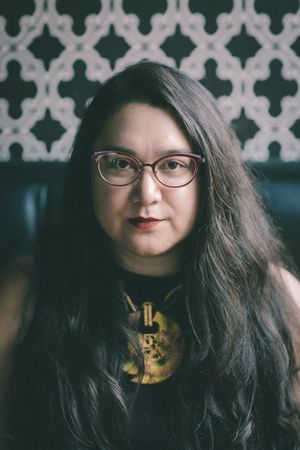
Janine Joseph is an associate professor of creative writing at Virginia Tech, a Paul and Daisy Soros Fellow, and a Public Voices Fellow of the OpEd Project. She is author of Driving without a License
Sign up for Prism newsletters.
Stay up to date with curated collection of our top stories.