Li’l Abner Mobile Home Park residents evicted after yearlong legal battle
Hundreds of residents were given 24 hours to leave their homes in October after a judge ruled against them in September
Real journalists wrote and edited this (not AI)—independent, community-driven journalism survives because you back it. Donate to sustain Prism’s mission and the humans behind it.
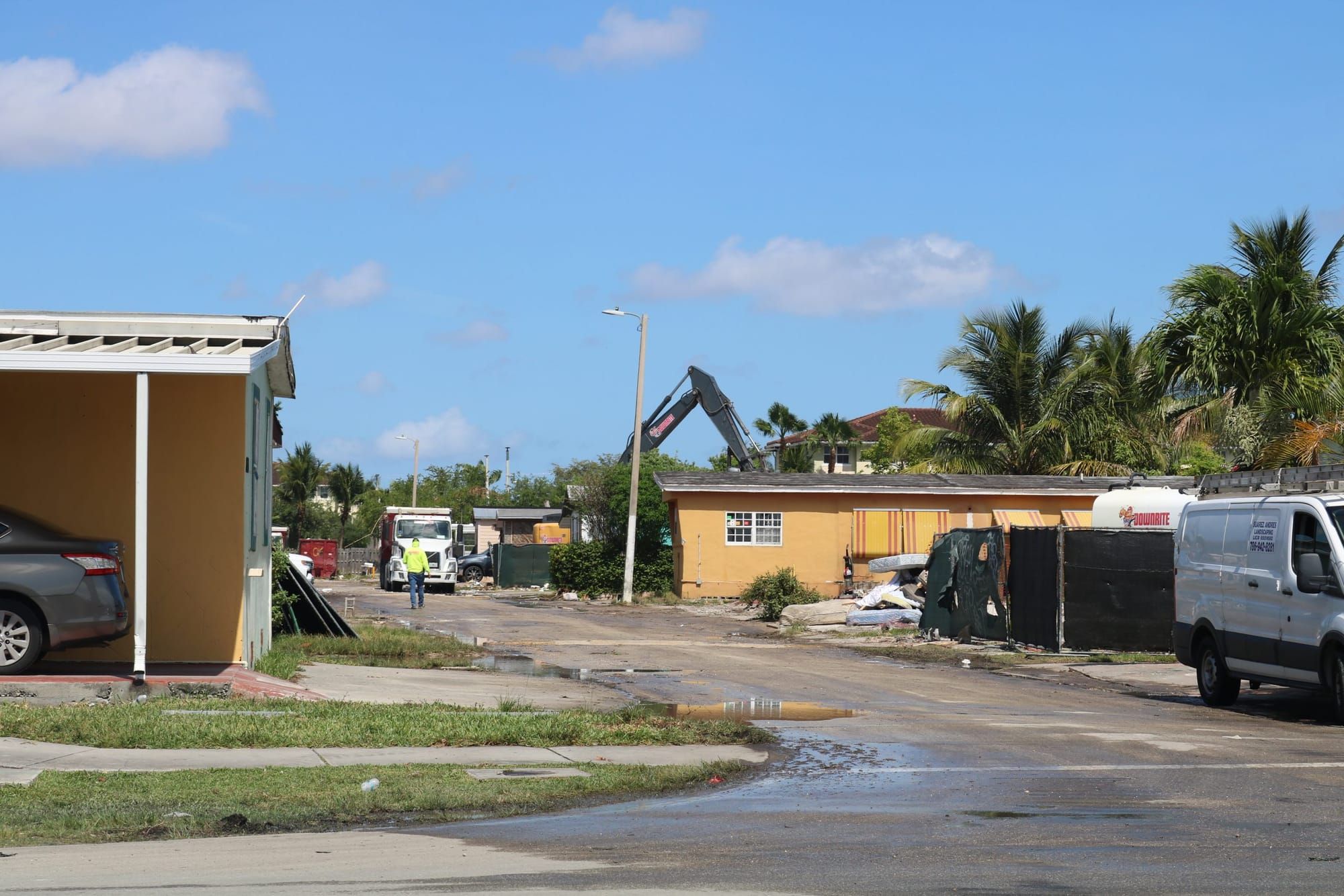
When sheriff’s deputies arrived at Li’l Abner Mobile Home Park in Sweetwater, Florida, on Oct. 21, Ligia Siles sat on the steps of the home she’d built over 35 years, feeling powerless as she watched deputies change the lock on her door.
“I made a video showing that I wasn’t abandoning my home, that they were kicking me out of my home,” Siles said. “They [said], ‘You can’t come in anymore. If you come in, you’ll be arrested.’”
Within hours, she and her husband were living apart because they could not find a place to accommodate them both. She stayed with a friend and he with their daughter, while former neighbors slept in cars or scrambled for storage.
The forced removal made her one of roughly 200 homeowners who refused to leave after the park’s owners, Consolidated Real Estate Investments (CREI), offered the 900 families living there $14,000 last November to vacate by January—a sum that was reduced in the following months. After tenants challenged the eviction in court, a judge ruled in September in favor of the developers, clearing the way for the mass removal. By Oct. 21, nearly 200 residents were removed with only 24 hours notice, even as they are appealing the ruling.
The mass eviction at Li’l Abner, once home to nearly 1,500 families, has become a flashpoint in Miami-Dade’s housing crisis. Residents and their attorney, David Winker, argue that the park owner’s push to redevelop the land into a large mixed-use project went forward without the legally required relocation protections and with flawed notice practices. They say the city of Sweetwater advanced rezoning steps even as appeals were pending and while some trailers had never been served with eviction notices. The outcome of the appeal process could determine whether local governments could be held responsible for ensuring real, feasible relocation before greenlighting redevelopment that displaces longtime mobile home communities.
CREI Holdings developers and Sweetwater City Commissioners did not respond to Prism’s request for comment. Developers and Sweetwater officials maintain that they followed all legal requirements.
During an Oct. 29 Sweetwater commissioners meeting in which the city advanced the rezoning process to permit more and denser housing, Winker pressed commissioners on the pending appeals process. City attorney Ralph Ventura argued that the city was within its rights because the courts did not issue any stay on the eviction orders as the appeal plays out.
Li’l Abner residents were renting plots of land from CREI Holdings, but many owned the mobile homes on those plots. Siles, a Nicaraguan immigrant turning 60 next month, said she and her construction-worker husband poured savings into their place—a new roof, granite kitchen, and driveway—spending more than $25,000 last year alone after years of reassurances from park owners that the park would not close. Siles said she wished she’d had at least two years’ notice that they would eventually be evicted.
“I don’t think we would have gone to a lawyer,” she said. “We wouldn’t have invested. We would have felt sad about having to leave, but we would have been aware that we were on land that didn’t belong to us.”
Siles described a desperate exodus as eviction notices went up: In residents’ group chats, people tried to trade appliances that wouldn’t fit in new apartments, give away plants, and find places for pets. Some, she said, had only hours to clear out.
According to a Florida Statute, local governments are barred from approving rezonings or other official actions that would remove or relocate mobile home owners “without first determining that adequate mobile home parks or other suitable facilities exist” for relocation.
Enrique Zelaya, 67, who bought his mobile home in July 2024, said the “relocation” touted by developers was effectively impossible. Many Li’l Abner homes date to the 1970s or 1980s; other parks, he said, would not accept them under age-limit rules. He said he paid $170,000 for his unit after being assured by park management in writing that zoning would not change, only to receive his first eviction notice in November 2024.
“The sheriff issued an order giving us 24 hours to leave the park,” Zelaya said. “They only give you an hour to get all your things out. So, imagine trying to get everything you supposedly owned or bought out in an hour.”
He’s now sleeping in his son’s living room while waiting on condo-association approval to rent an apartment, which can take up to 30 business days, he said.
“I bought that trailer,” Zelaya said. “Now I have nothing. I’m starting over at 67.”
The tenants’ lawyer, Winker, said that the sheriff’s department removed almost everyone in the park, but some trailers remained occupied by households that were never issued eviction notices directly on their homes. Even so, he said, Sweetwater officials pressed ahead during the Oct. 29 rezoning meeting, arguing that “everyone’s gone.”
Beyond the evictions, Winker’s separate lawsuit targets the upzoning, which allows for more and denser housing on the land, arguing that the city and county cannot take actions that result in displacement without a study showing that residents have somewhere to go.
Winker said that his request to expedite the appeal was denied. “Not a good sign,” he said, placing the timeline at roughly three months.
While acknowledging that “almost everyone” has been removed, Winker cautioned that the litigation could still materially affect families. If Winker and tenants win on appeal, families would be allowed to return to their trailers. But if rezoning is approved, the trailers won’t be able to remain there. Meanwhile, watching as families tried to locate pets and children were crying as police supervised removals “was traumatic,” Winker added.
“These are hardworking people paying their rent,” said Winker. “They didn’t do anything wrong.”
You know what it means to me to have my house, my roof, my decent place to live and suddenly receive a call that I can fill out a form as a homeless person … after working so hard in this country and doing the right things?
Ligia Siles
He called what happened “government-induced gentrification,” arguing that taxpayers would now fund both the social safety net to stabilize displaced families and subsidies for new “affordable” units.
“Why is the government making winners and losers here?” he said.
For Siles, the sharpest pain is the absence of compassion.
“In this country, if a cat falls in a drain, Miami stops to get it out—and four heroes appear,” she said. “But 900-odd families are left on the street. You know what it means to me to have my house, my roof, my decent place to live and suddenly receive a call that I can fill out a form as a homeless person … after working so hard in this country and doing the right things?”
She said the year of uncertainty left her 60 pounds lighter.
“I have the right to at least have the money to start over, from scratch, at the age of 60,” Siles said of what she expects from the developer. “When I arrived at that trailer, I was 25 years old.”
Asked whether he regrets refusing an early payout, Zelaya is blunt.
“If I had accepted the $14,000 at the beginning, it wouldn’t have solved anything,” Zelaya said. “But in the long run, unfortunately, through our sacrifice, what we hope is that those corrupt people will not be in the government because they do not deserve to represent a people they did not defend.”
The appeal remains pending, as does litigation over the rezoning and relocation-study requirement. For Florida’s remaining mobile home parks, the stakes are larger than one Sweetwater parcel. “Evict first, rezone later” cannot be the playbook, Winker argued, if the law means what it says about relocation and notice.
For Siles and Zelaya—both originally from Nicaragua—the fight is also about dignity. “What is justice?” Siles asked. “Is money power? How many lives were changed by these decisions?”
Zelaya said he still believes in accountability. “Sometimes the things we humans do are not useful in our lifetime, but they are useful for the future,” Zelaya said. “It’s like planting a tree. You plant it now and you say: You will never enjoy the shade of that tree, but society and humanity will enjoy that shade.”
Editorial Team:
Sahar Fatima, Lead Editor
Carolyn Copeland, Top Editor
Stephanie Harris, Copy Editor
Author

Alexandra is a Cuban-American writer based in Miami, with an interest in immigration, the economy, gender justice, and the environment. Her work has appeared in CNN, Vice, and Catapult Magazine, among
Sign up for Prism newsletters.
Stay up to date with curated collection of our top stories.