Why doesn’t the ‘right to life’ apply to climate change?
The political right argues that fetuses have constitutional rights, while advocating for policies that spew carbon dioxide and methane into the atmosphere, killing the Earth and harming humans
Real journalists wrote and edited this (not AI)—independent, community-driven journalism survives because you back it. Donate to sustain Prism’s mission and the humans behind it.
Twenty-two youth plaintiffs appealed a federal judge’s decision to prevent a different kind of “right to life” case from moving forward.
In Lighthiser v. Trump, the plaintiffs, ages 7 to 25 at the time of filing earlier this year, allege that the Trump administration’s slate of executive orders that support the production of fossil fuels and undercut renewable energy generation and climate science violate their Fifth Amendment right to life.
There has been a flurry of climate lawsuits filed in the last decade, some targeting local, state, and federal governments, others seeking damages from corporations, and a few by youth. A couple of the youth lawsuits have been successful: one in Montana that claimed the state’s constitution protected all people’s right to a healthful environment, and one in Hawai’i, which asserted that the state’s transportation system violated the public trust doctrine and the plaintiffs’ right to a clean and healthful environment.
However, the current legal strategy from the environmental justice movement hinges on arguments of constitutional rights to life, liberty, and property, as well as claims that the government is not protecting public trust resources.
Lighthiser utilizes a strategy that has proven successful for the political right, even as the Republican faction undercuts the policies designed to buttress the life support system, otherwise known as planet Earth. “A government’s deprivation of the fundamental right to life does not occur only at death,” lawyers for the plaintiffs claimed. Rather, “the right to life includes their ability to develop healthfully into their full adult living form.”
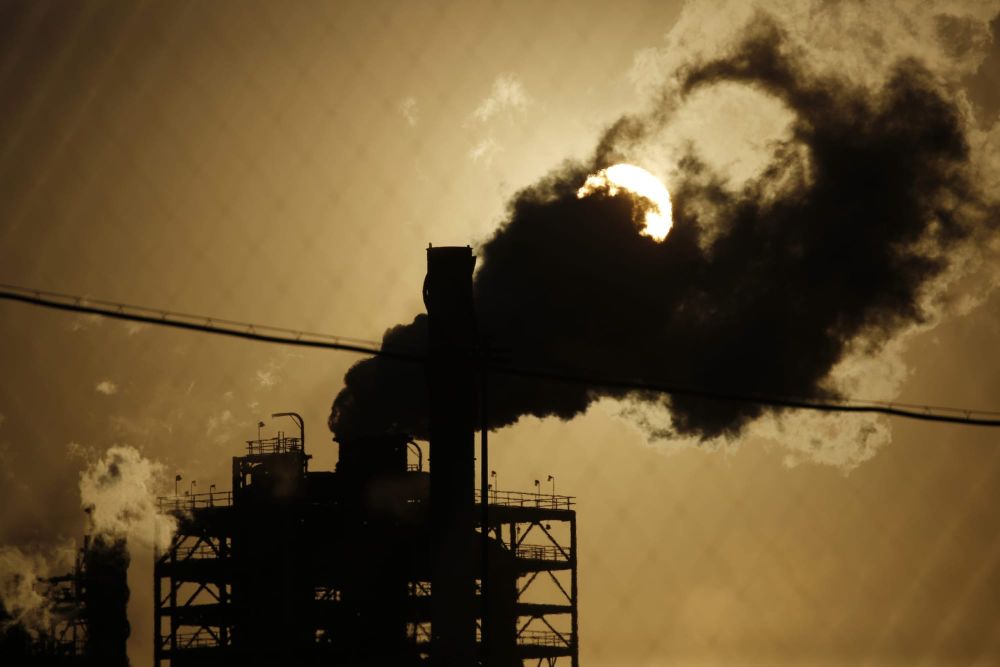
The executive orders at the center of the case, “unleashing” American energy, declaring a national energy “emergency,” and “reinvigorating America’s beautiful clean coal industry,” are policies designed to spew tons more carbon dioxide and methane into the atmosphere that will undoubtedly cause harm. The Trump administration’s efforts only add to the impacts wrought by pro-fossil fuel policies in place prior to, and lock-step with, President Donald Trump’s ascension. All told, the fossil fuel-based economy and the political status quo that privileges extraction have engendered environmental conditions that make it harder to breathe, maintain mental health, and access pollution-free public goods, such as water.
To be fair, federal Judge Dana Christensen’s decision in October to halt Lighthiser from moving forward didn’t negate the lawsuit’s claims against Trump and leaders of federal agencies such as the Environmental Protection Agency and the Departments of the Interior and Energy. The Obama appointee agreed with many of the claims made by the plaintiffs, including, according to a press release, that “climate change and the exposure from fossil fuels present a children’s health emergency.”
However, while Christensen may be “troubled by the very real harms presented by climate change and the challenged [executive orders’] effect on carbon dioxide emissions,” what the court lacks, he ruled, is an ability to provide redress for the harms caused by the executive orders. This is according to the standard set by Juliana v. United States, in which a federal judge ruled that it was Congress vested with the power to address climate concerns, not the judiciary. Broadly, the court system is a fairly conservative entity and often reluctant to create new precedent; it overwhelmingly defers to the past to seed the future. Three different presidents—two Democrats and one Republican—each directed their justice departments to prevent the kids of Juliana from receiving a fair trial.
What good is a constitutional provision if it can’t be upheld? And more importantly, where is the political right on the “right to life” when it comes to climate? Unlike the anti-abortion movement’s claim, those fighting climate change are not being metaphorical or figurative. Climate change is the single biggest threat to life humanity has ever collectively faced.
The political right’s emphasis on the so-called right to life created the legal and political impetus for state abortion bans and the end of Roe v. Wade. If this right to life is guaranteed for a zygote or fetus, then climate advocates argue that the right to life should also be guaranteed as protection against the ballooning consequences of climate change.
But, of course, what the right truly means by “right to life” is that anything with the eventual capacity for human life deserves to be born—not that anything already alive deserves to live with health and dignity. In fact, the conservative movement’s vilification of climate mitigation and downright denial of corporate-caused climate change only emphasizes its interest in control and chipping away at the bodily autonomy of the most marginalized groups, who—if allowed to form a coalition with one another—would comprise a political majority in this country.
The right’s rhetorical deployment of “right to life” as a strategy for amassing power rather than presenting a cogent political standpoint makes less and less sense when one looks at the data: Fifty-nine percent of adults believe that climate change is caused by human activities, and 66% believe that the country should transition from fossil fuels to 100% renewables by 2050. A similar percentage, about 63% of adults, believe that abortion should be legal in all or most cases, according to the Pew Research Center.
Those fighting for abortion access have long said that the anti-abortion movement wants to force people to have babies, but doesn’t care about the material conditions those babies will be raised in. That 41% of people who seek abortions live below the federal poverty level, and at least 60% of them are Black and brown is not irrelevant. And for all of the grandstanding about the fall of the American family, it’s also worth saying that a majority of those who seek abortions are already parents. For people of color, abortion makes possible the kind of class mobility that white America, especially in the age of Trump, fears. Abortion is economic justice, especially for Black and Latina women.
Like all young people in America, the plaintiffs in Lighthiser v. Trump will experience adult lives riddled with at least seven times more climate impacts than their parents, entering a world already realized for many adults of color across the country. Climate events are already disproportionately levied against people of color, from flooding and land loss to extreme heat.
The political right chases a certain praise for a forced-birth policy that they market as pro-child, but a better metric of morality would be how the U.S. treats its children.
The political right chases a certain praise for a forced-birth policy that they market as pro-child, but a better metric of morality would be how the U.S. treats its children. When actual children came to the front steps of the courthouse to say their lives were in danger, no one with political influence listened.
Another area where the political right’s logic of “right to life” fails to mete out a coherent philosophical ethic is by tracking the convergence of anti-environment and anti-abortion legislation. Not only have the two strategies gained steam on parallel tracks, but the eventual laws and policies refract off each other. In short, the party and political groups that deregulate environmental protections are the same forcing people to carry unwanted pregnancies that inevitably subject children to a lifetime of increased climate precarity and disaster.
The deregulation of public goods and services—both socially constructed, such as public education and naturally occurring such as clean air—occurs at the same time as the privatization of the family. According to the actions of the political right, whatever threatens the family—abortion, or the fallacious logic that there might not be a family at all—needs to be eliminated.
The political right has no good answer for its role in climate change and the Earth it leaves behind to future generations. However, the actions of the right demonstrate that they’re perfectly content with sacrificing young people to maintain political power.
It should come as no surprise that the so-called “pro-life” movement has struggled to maintain popularity in the court of public opinion, especially in the aftermath of Roe’s fall. The forced-birth faction needed Roe to galvanize its base and cement a claim of the political left’s supposed immorality. But as women die due to abortion bans and other health care horrors surface, so, too, do doubts about what “pro-life” actually means.
Maybe the same will one day be true for climate change: that increased frequency and intensity of already-severe weather events will sublimate a new response toward benefactors of pollution and watchdogs of the status quo.
Editorial Team:
Tina Vasquez, Lead Editor
Carolyn Copeland, Top Editor
Rashmee Kumar, Copy Editor
Author

ray levy uyeda is a staff reporter at Prism, focusing on environmental and climate justice.
Sign up for Prism newsletters.
Stay up to date with curated collection of our top stories.