Queer students left holding the line as universities bow to Trump
As colleges across the country shuttered LGBTQIA+ resource centers and other supports, students are stepping up to protect each other
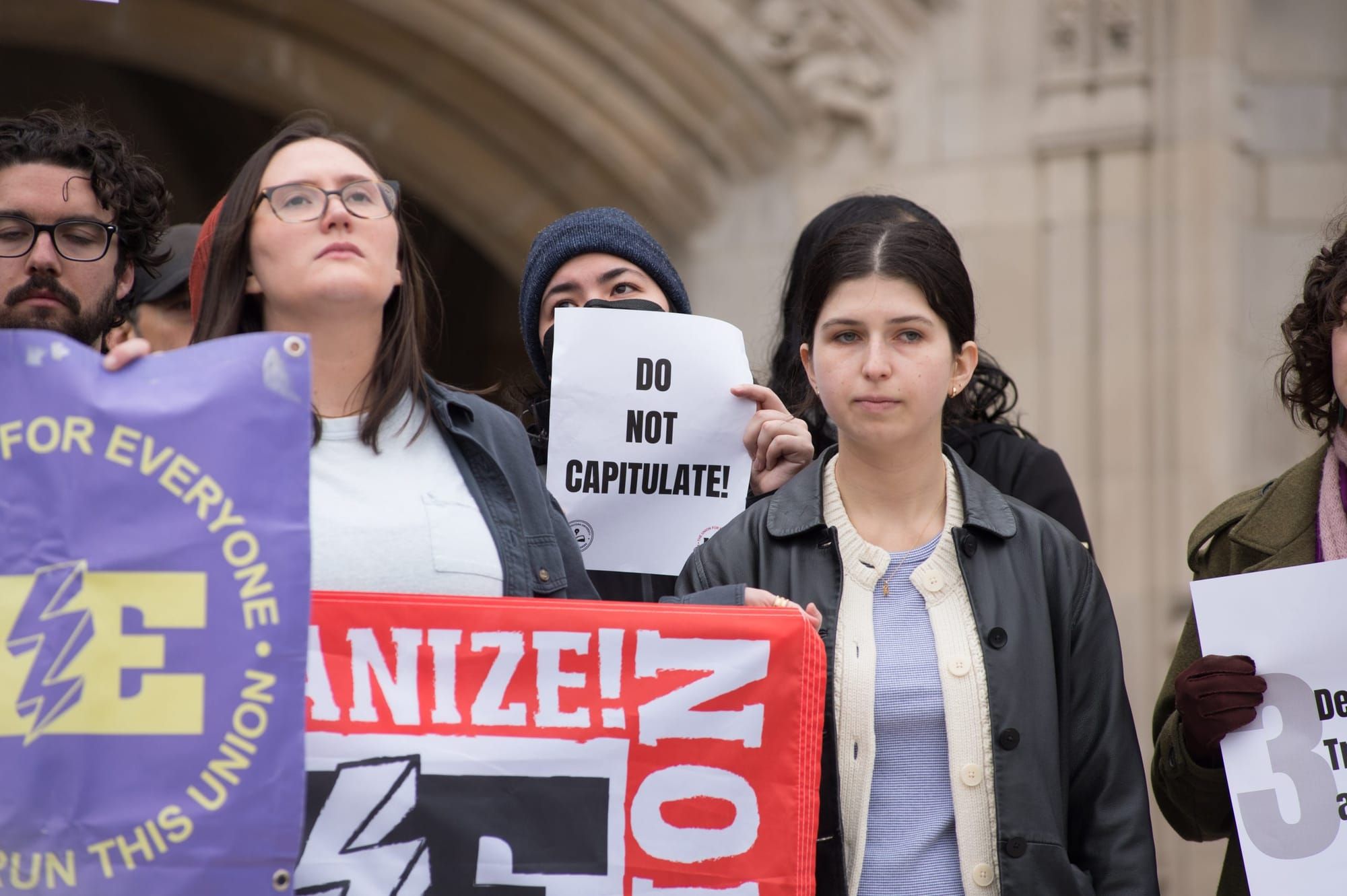
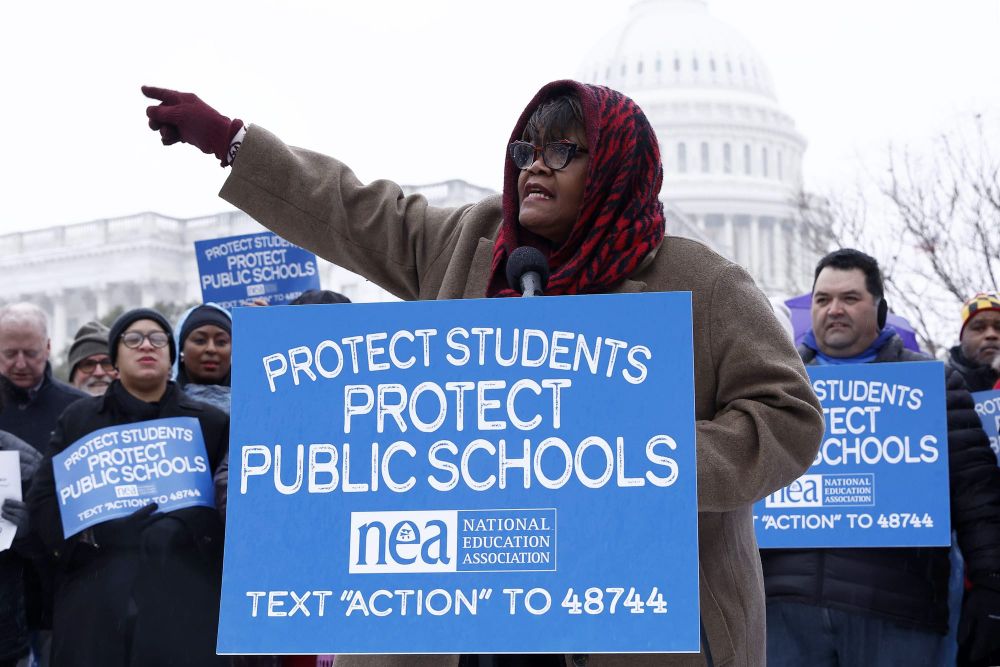
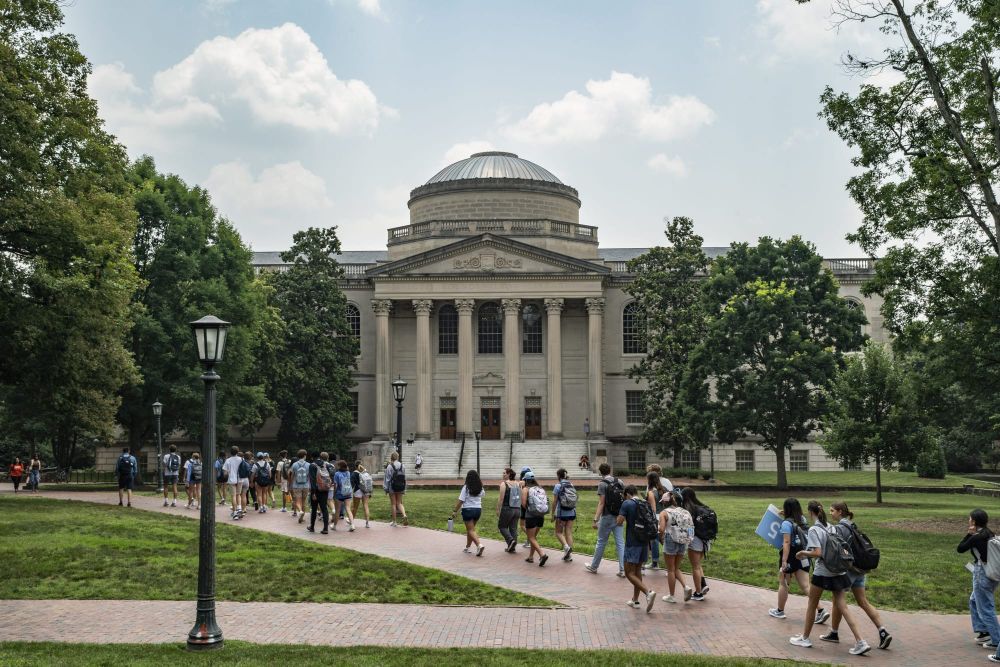
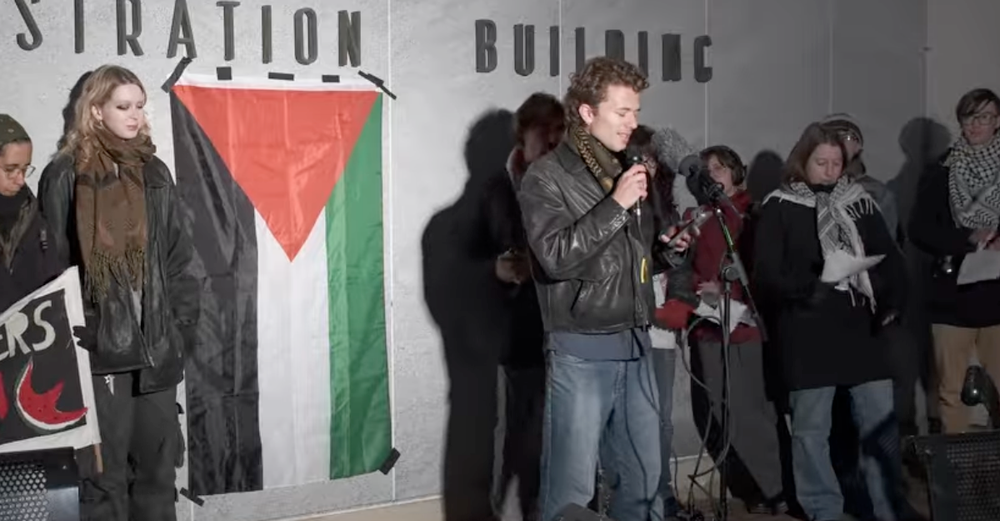
Dozens of LGBTQIA+ college resource centers have closed over the past 10 months following the Trump administration’s attacks on diversity, equity, and inclusion (DEI) efforts, particularly on college campuses. Universities have changed their public-facing language to exclude overt mentions of queer people. Funding for health care resources for transgender and gender-nonconforming students has been cut. President Donald Trump’s war on inclusion is being fought on college campuses across the country, with the greatest weight falling on the shoulders of queer undergraduates.
According to student leaders, faculty, and national organizers, that war is being fought on Trump’s terms and met with compliance from collegiate leadership—and resistance from queer student organizing.
“Everything feels too delicate,” said Shepherd Williams, president of the Society of Trans and Non-Binary Students at Northwestern University. “And when there’s so much pressure from the outside, it’s easier for things to collapse in on itself.”
Williams is one of many student leaders across the country who has shouldered the weight of their community’s pain in this moment.
“Seeing such a stark change in our political climate was definitely shocking to some and also caused a lot of the resources that trans students usually rely on to disappear,” Williams said. “Northwestern is not a haven for activists. It is pretty combative against activism, especially when it’s things like protest.”
Northwestern President Michael H. Schill recently resigned following the Trump administration’s $800 million in cuts to the institution’s research funding and Republican pressure to respond harshly to campus organizing against Israel’s genocide in Gaza. In May, the university’s Gender and Sexuality Resource Center was stripped of LGBTQIA+-affirming language, in compliance with the Trump administration’s federal directives.
At Northwestern, 1 in 4 students identify as LGBTQIA+. Across the country, colleges are home to millions of queer students who are now up against the greatest levels of pressure and surveillance they have faced in years while receiving the most limited levels of resources, according to student leaders.
“The atmosphere on campus and across student groups is definitely somewhat hopeless, somewhat tired. But we still want to keep moving forward and create opportunities for change,” said CJ Ackerman-Garvin, president of the Queer Student Union at the University of Virginia.
In June, the University of Virginia (UVA) received threats from the Trump administration to bar programs and initiatives that fell under a DEI umbrella. The White House’s threats to withhold funding resulted in UVA President James Ryan resigning from his post, citing that his fight with the Trump administration would cost the university countless jobs.
In both cases in which university systems failed to protect the well-being of their students from authoritarian pressure, students organized. Williams and Ackerman-Garvin cited increased engagement and community on their campuses, with students filling the gaps left by their universities.
While universities such as Northwestern and UVA have folded to anti-DEI directives, other institutions continue the drumbeat of care in the midst of chaos.
“Our approach has been to change nothing. Do not in any way pre-censor ourselves or become acclimated to an environment that we believe is detrimental to trans and LGBTQ people,” said Matt Brim, professor of queer studies at the College of Staten Island and executive director of CLAGS: The Center for LGBTQ Studies.
CLAGS, the first university-based LGBTQIA+ research center in the U.S., has underlined its commitment to queer students and its rejection of attacks from the White House—even while the administration continues to target funding that affirms queer identity at the university and across the country.
According to Brim, queer college students and recent graduates whose academic careers are connected to LGBTQIA+ identity also face an adversarial environment off campus. Brim described interactions with recent graduates requesting that their academic resumes be less explicitly connected to the queer programs and degree components they completed during college so they might be more marketable as they seek job opportunities.
“If the most well-resourced schools will not fight back, that sets a terrible precedent for everyone else. … And that is a commentary, I think, about the lack of vision and the lack of chutzpah that these elite colleges have in the face of incredible pressure. But they have a lot of leverage given the resources they have too,” Brim said. “And most of them have not used that leverage in a way that can become a model for the rest of us.”
In July, the University of Pennsylvania ended its long exchange with the Trump administration on a note of full compliance. The university reversed school records and titles set by trans student athlete Lia Thomas and barred trans women from competing on its athletic teams. Similarly, Columbia University agreed to pay $200 million in penalties and to crack down on student protests and DEI initiatives.
“Young people nowadays are exactly the people who can answer this question for the country of what happens after this constitutional crisis,” said Gia J. Loving, the co-executive director of the Genders & Sexualities Alliance Network. “The next generation is inheriting this; let’s get their viewpoint on what’s happening and how they want us to help shape it.”
As colleges and universities continue to make compromises at the expense of queer students, those students continue to show up in ways that redefine student activism.
“We’re just trying to move forward and create spaces for folks to feel comfortable. We recognize that things will be rough,” said Jackie Early, co-president of undergraduate student organization Georgetown University Pride. “GU Pride only has two major goals for this year: one, to prevent the university from backsliding on its commitments, and two, to continue to be visible.”
While Georgetown has not met the Trump administration with full compliance, student leaders remain persistent about institutional gaps in accessibility and inclusion. Student leaders describe the relationship between LGBTQIA+ inclusion and university administration as “reluctant” and “contentious.”
“Many students, like myself, came to Georgetown with the intent of being able to live as their true gender and sexual identities, and that is particularly difficult at a university where those kinds of resources and support can be hard to find,” said Allie Gaudion, director of advocacy at GU Pride.
The campus organization is advocating for increased access to gender-affirming clothing for students, creating spaces for transgender students to safely gather on campus, a permanent queer living-learning community, which will allow LGBTQIA+ students an inclusive housing option, and other initiatives to support queer students in ways that university faculty and staff won’t.
In response to the Trump administration’s executive orders aimed at deconstructing college DEI practices, universities, including Kent State University, the University of North Alabama, Ohio University, Iowa State University, Harvard, and several other institutions, have permanently shut down their LGBTQIA+ resource centers. Dozens more have changed website language to make resources less specific and tailored to queer students.
For colleges like UVA, which has a LGBTQIA+ resource center that remains open, the impact of the facility has been diluted, and educational programs have been fully shuttered, according to Ackerman-Garvin.
Whether silent or overt, this underresourcing is a tactic to avoid becoming a target of the White House’s war on LGBTQIA+ inclusion, advocates say.
“We see universities also bending the knee and preemptively trying to get out of the spotlight. And that means lowering their flags of inclusivity, of academic freedom, of commitment to their students, for the sake of not being targeted by the biggest bully,” Loving said.
The impact is felt most intensely by the students leading the front of resistance.
“A lot of the queer folks on campus have experienced personal tragedies and personal losses in the last year because of the underlying violence and surveillance that really has accompanied Trump’s second term,” Williams said.
But that same sense of loss has motivated student leaders to build wider coalitions, provide for one another, and show up in ways that university administration declines to do.
“Northwestern University has so much power and money to be able to support us. And sometimes they fall short. Students can pick up that slack, but it cannot be our full responsibility,” Williams said.
Editorial Team:
Sahar Fatima, Lead Editor
Carolyn Copeland, Top Editor
Stephanie Harris, Copy Editor
Author

Nick Fulton is a Queer freelance journalist covering social justice movement building, LGBTQIA+ organizing, and progressive political commentary. In his full-time capacity, Nick works in political med
Sign up for Prism newsletters.
Stay up to date with curated collection of our top stories.