As ‘free agents with no party loyalty,’ Latino voters are up for grabs
The Libre Initiative’s messaging on economic issues resonates with Latinos across the U.S., drawing support for conservative solutions that are ultimately harmful to their communities
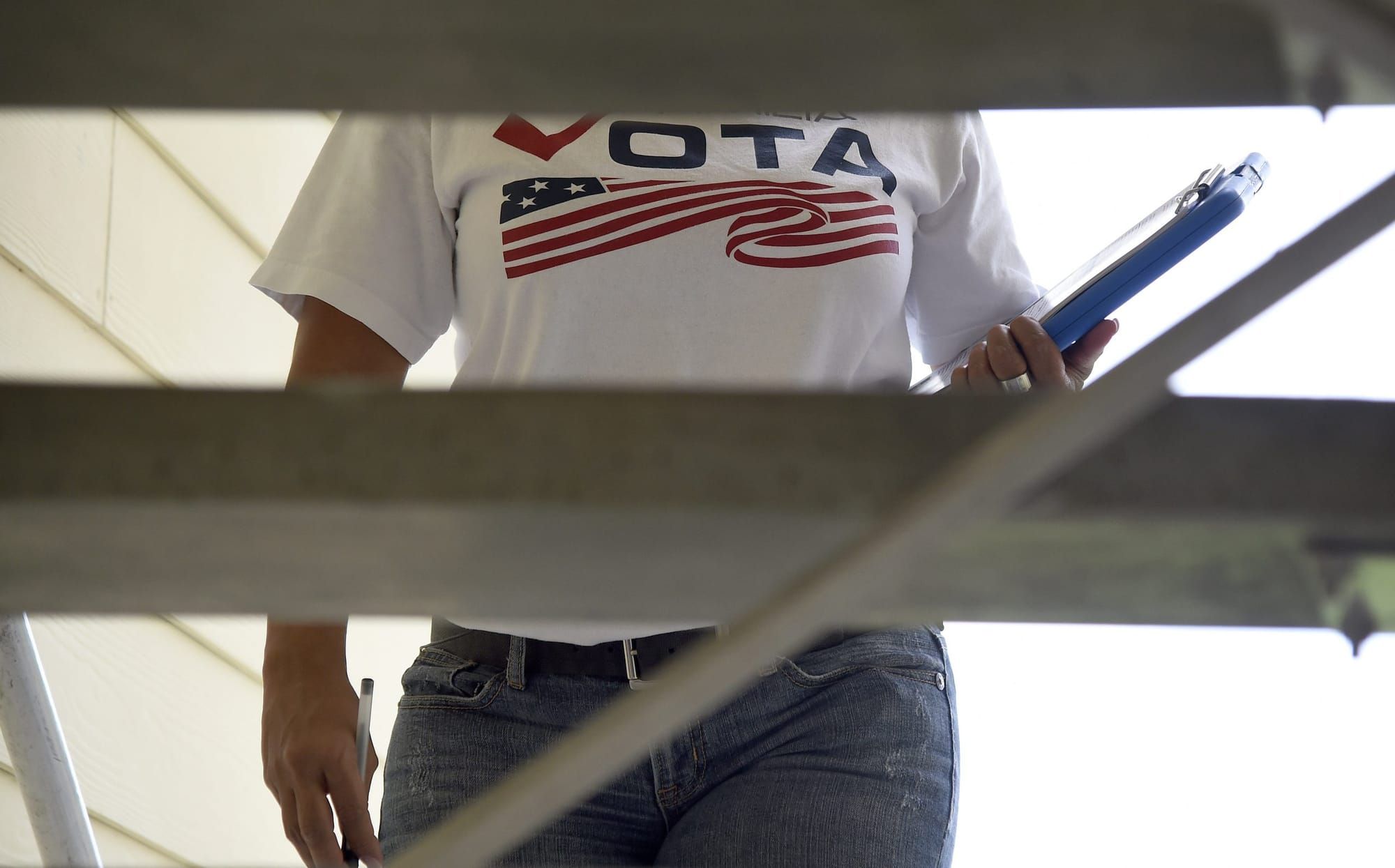
Though the majority of Latinos voted for Kamala Harris for president in the 2024 election, much has been made about the support that President Donald Trump gained among this particular demographic. Political organizers and experts who focus on the power of Latino voters had clues about the potential shift, especially when they noticed the organizations behind the canvassers in their neighborhoods.
“Last year was the first year where every other phone call I would get during the political season was about all of the organizing happening on the right in our communities,” said Ricky Hurtado, a former North Carolina state representative and chair of the state’s Governor’s Advisory Council on Hispanic and Latino Affairs. “People were very, very, very worried because they’d never seen anything like it.”
One organization in particular stood out: the Libre Initiative. “We saw them a lot in my backyard,” Hurtado said of the group’s canvassing efforts in North Carolina. He even got a call from his parents, who were excited about a great interaction they had with Latino canvassers who knocked on their door—they were from Libre.
Stefanie Zaenker, the strategic director for the Libre Initiative in Georgia, said she believes strongly in engaging Latino voters in conversations. “The trend when we’re talking to people is that no one has talked to them about the issues. No one has come and actually asked their opinions,” Zaenker told Prism.
Zaenker’s own interest in politics was sparked by a serendipitous invitation from a friend. She had spent nearly two decades as the drummer of a heavy metal band, touring the country and working in the service industry to make ends meet. One day in 2021, a friend invited her to participate in a campaign for Republican congressional candidate Mariela Roca.
“I honestly felt that it was a sign from God when my friend reached out and connected me to this Latina candidate,” said Zaenker, who has previously discussed feeling excluded from the music and service industries as a conservative. “And I had been growing frustrated with the direction I felt our country was headed in. And I had just felt like I didn’t really have a voice.”
She eventually found that voice with Libre, where in her current role she seeks to empower other Latino people to speak up about their values, talk to their legislators about their interests, and become active business and community leaders. Libre organizers like Zaenker gather signatures for conservative policies, organize Latinos to show up at city council meetings in Texas to advocate for limited government and “the rule of law,” lobby state legislators on issues such as removing health regulations in Colorado that prevent the sale of homemade meat tamales, and produce Spanish-language podcasts featuring Latino entrepreneurs explaining why the government gets in the way of business. This year, Zaenker took 10 Latina constituents to meet their state legislators in Atlanta.
“This group of ladies that I took were just absolutely awestruck at how easy it was to get involved in local government in a way they had no idea they could before,” Zaenker said. The trip catalyzed their involvement with Libre. “Many of them are still involved and have become some of our top volunteers,” she noted.
The Libre Initiative has spent years successfully building grassroots support by speaking directly to Latinos in several key states and has been particularly effective when it comes to economic issues. While the organization often presents itself as party agnostic, Libre’s goal is to mobilize conservative-minded Latinos around free-market economic principles. But now Libre has become a key messenger among Latinos advocating for Republican policies. Latinos enticed by Libre’s relatable complaints about the cost of living and positive messaging about entrepreneurship are also hearing arguments for deregulation, cutting the social safety net, and moving further to the right on immigration policy.
Mobilizing conservative Latinos
The Libre Initiative was founded in 2011 and funded by the billionaire Koch brothers, who have reshaped American politics by funneling hundreds of millions of dollars into right-wing causes and candidates. Daniel Garza, Libre’s founding president, is a longtime Hispanic Republican who served in the White House under George W. Bush. In 2019, Libre officially became part of Americans for Prosperity, the Koch’s libertarian advocacy organization that aims to “permanently weaken the organizations that support liberal candidates and causes—and above all, the labor movement,” the Guardian reported.
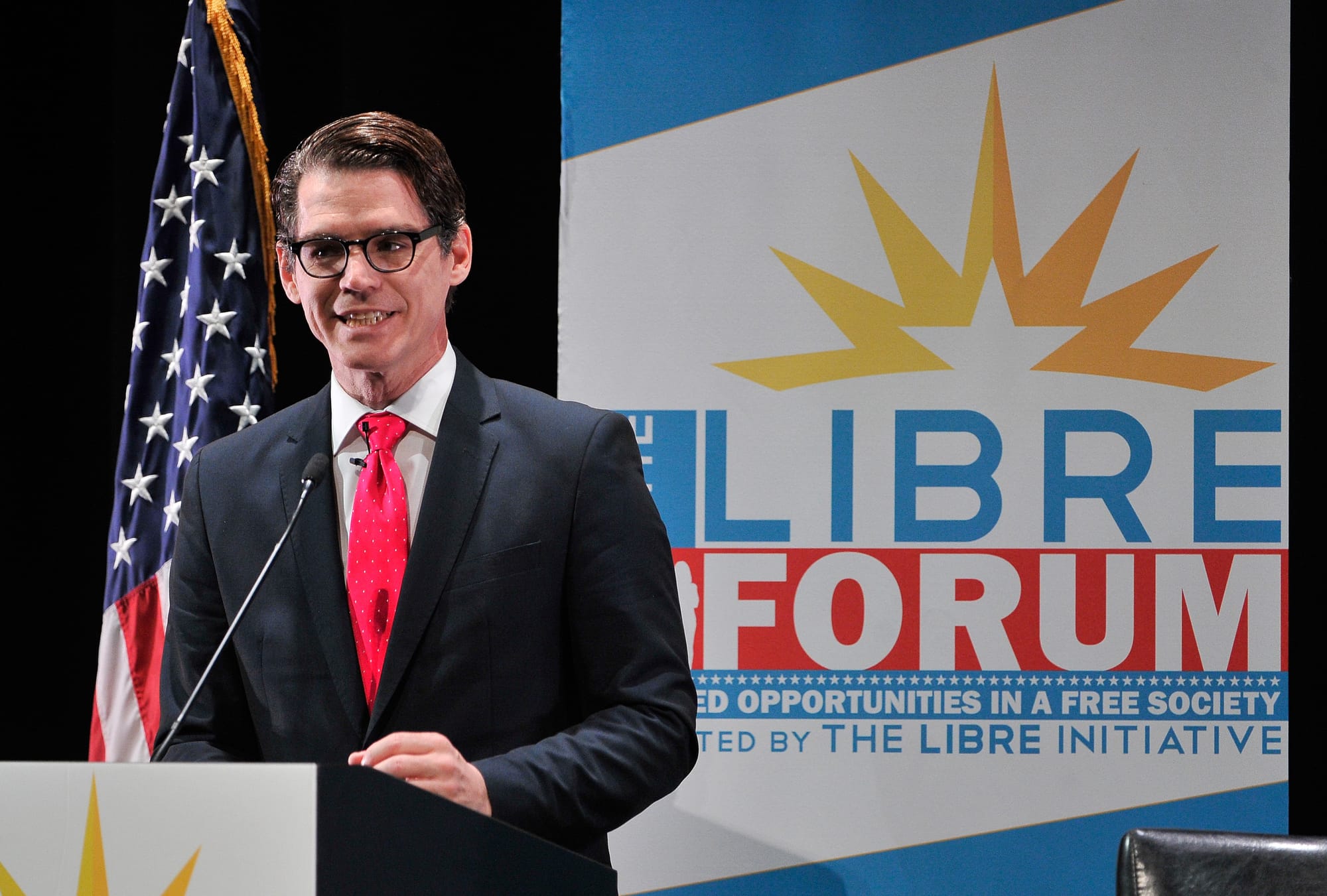
Libre engages with Latino communities in 12 states year-round, focusing on four key issues: economic opportunity, health care, immigration, and education.
Broadly, Libre advocates for the removal of occupational licensing and regulatory compliance barriers in order to empower individuals to achieve economic prosperity. The group believes that personal choice should be prioritized in both health care and education, with the government playing a limited role. Libre also supports border security measures and reforms for the “legal” immigration process, with the larger goal of helping immigrants assimilate and embrace the “American Dream.”
Hurtado said his parents in North Carolina were not aware that the canvassers they’d opened their door to were conservative. He described Libre’s messaging as “party agnostic” and “casting a wide net to everybody.”
Libre’s positions, however, are very well-defined, according to Laura Pulido, a qualitative social scientist who teaches at the University of Oregon. She has studied Libre’s messaging, primarily through its website and social media posts, for a chapter she co-wrote with University of Oregon graduate student Mariana Rivera in the forthcoming anthology “The Politics of the Multiracial Right.”
“They are very, very disciplined” about sticking to the libertarian principles of the Koch brothers and their political machine, Pulido told Prism. While Libre doesn’t use the word “libertarian,” Pulido and Rivera describe in their chapter for the anthology that Libre’s use of phrases like “removing barriers” and “empower everyone” as euphemisms for libertarianism, a political philosophy that endorses a free-market economic order and values property rights and freedom of contract over the redistribution of wealth and economic regulation by the state.
“What we focus on is giving Latinos the tools and the information and education that they need to be able to prosper on their own so that they can positively impact themselves, their families, their communities,” Zaenker told Prism. She described Libre’s organizing less like handouts and more like tools, including free English-language and citizenship classes. “It’s like that proverb … give a man a fish and you feed him for a day. Teach a man to fish, and you feed him for a lifetime,” she said.
Libre organizers still handed out “fish,” so to speak, during the 2024 election. As part of its campaign titled “Say No Bidenomics,” Libre gave out vouchers for groceries and gas, and highlighted the cost of inflation.
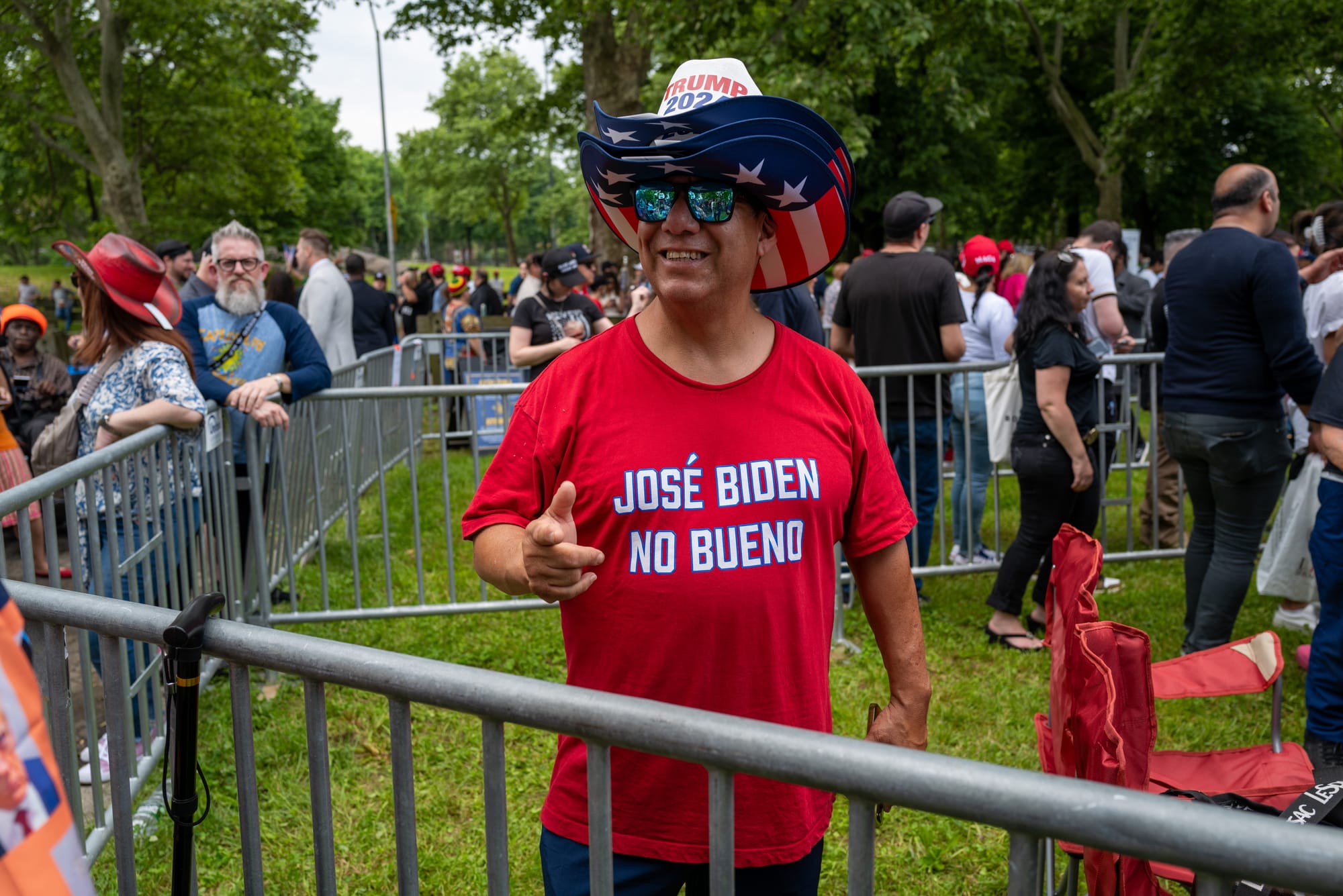
And yet, it’s likely not the organization’s painstakingly carved out libertarian principles that swayed Libre’s members to vote for the conservative ticket in 2024. Bernard L. Fraga is a political science professor at Emory University and faculty coordinator of the Latinx Studies Initiative. He said that Libre and the Republican Party’s focus on the economy was enough to sway the vote. “Trump made gains with working-class Latinos … who are struggling economically,” Fraga explained. “They want a change. Trump represents a change.”
The palpable frustration among Latinos about their economic prospects is not surprising. If U.S. Latinos were their own country, the gross domestic product they produce would be the fifth-largest in the world, after Japan and Germany. Yet poverty rates among Latinos persist at about 18%, compared to 13% of white, non-Hispanic Americans. Latinos are undeniable contributors to the U.S. economy, but Latino men earn $25,830 less than white, non-Hispanic men, and Latina women earn $16,570 less than white, non-Hispanic women.
While Trump’s promises may have appealed to struggling Latinos during election season, his actual policies in his second term have failed to deliver. Trump’s Republican-backed “One Big Beautiful Bill” will shred the social safety net many Latinos rely on. For example, the law will cut an estimated $911 billion from Medicaid. White, non-Hispanics make up the largest demographic group that uses Medicaid, but the demographic with the largest share using the program is Latinos, at 31%.
In a statement to Prism, Libre Initiative national spokesperson Israel Ortega claimed that the budget bill will save Medicaid by focusing resources on people who “truly need it and are being crowded out of the current system.” In a blog post explaining its position, Libre calls Medicaid “a safety net, not a free-for-all.”
Latino voters are taking notice of the administration’s many lies. Six months into the new administration, Latino support for Trump has plummeted. Only 38% of Latinos have a positive view of Trump’s handling of the economy, according to a June poll by Somos Votantes. More than half say the economy is getting worse under his administration.
Nonetheless, Libre continues to tout the economic policies passed under Trump. In a survey conducted in April by the Libre Institute, the nonprofit arm of the Libre Initiative, Latino voters rated “the economy and jobs” as their most pressing issue. Most age groups under 65 said this was their biggest concern. In a press release regarding another poll, the Libre Initiative claimed that Latinos support the “One Big Beautiful Bill” because those surveyed expressed concern about high taxes and utility bills and valued security at the border.
According to Fraga, a major problem with Libre Institute’s poll is that it ties these commonly understood problems to one solution.
For example, respondents of the April Libre Institute survey were asked if they agreed or disagreed with statements such as: “A free market is the best way to create an economy that works for ALL Americans” and “I have benefitted from the free market because it grows the economy and allows any individual to succeed.” Those responding they “strongly” and “somewhat” agreed became proof of widespread support for the “freedom-minded policy solutions” Libre’s messaging focuses on, Fraga explained.
“In short,” Pulido and Rivera write in her book chapter, “regardless of the actual policy and its impact, Libre insists that government regulations harm Latinas/os and prevent economic prosperity.”
Many polls across U.S. demographic groups reflect economic concerns, Fraga explained, and Libre isn’t the only organization targeting Latinos with proposed solutions, especially in Georgia.
GALEO, formerly known as the Georgia Association of Elected Officials, has organized Latino communities in the Peach State since 2003 to learn leadership skills and register to vote. They also conduct regular polls of Latinos in their state. In 2023, GALEO and its partners surveyed Georgia Latinos, for whom the top three concerns were rising cost of living and inflation, improving wages and creating more jobs, and lowering the costs of health care. The fourth concern was “protecting immigrant rights.” GALEO’s survey also reflected the lack of outreach to Latinos in their state: Two-thirds of respondents indicated that they’d never been contacted in any way by any party or organization to discuss voting.
Like Libre, GALEO’s nonprofit arm also mobilized voters in the 2024 election. Kyle Gomez-Leineweber, GALEO’s former director of public policy and advocacy, shared via email that last year GALEO and its partners knocked on 20,000 doors, made more than 50,000 calls, sent 200,000 texts, and helped register 50,000 naturalized citizens to vote.
Gomez-Leineweber, now at the left-of-center advocacy group Common Cause Georgia, knows that affording life in the U.S. is an immense burden on Latino families. “In a state like ours, the vast majority of Latinos are drawing in an income in some way, but a significant portion of our community continues to face poverty … despite the fact that they’re working. That’s something that needs to be resolved,” he told Prism.
Libre’s stance contradicts both the positive impact of government policies on the lives of Latinos across the country as well as the support many Latinos express for a social safety net and a regulated economy. Fraga said Libre is “operating in a world where they’re trying to combat the rise—or at least persistent share—of the Latino population that is open to stronger government intervention to make the lives of working-class Latinos better.”
The economic policies enacted during the COVID-19 pandemic offered a case study in how government support can improve the economic well-being of Latinos. Financial relief from the government lowered Hispanic unemployment rates. Child Tax Credit payments helped bring the poverty rate down from 24% for Black and Latino populations to 14% and 12%, respectively.
The social safety net, which expanded and then retracted, is an important resource for Latino households in the U.S. In 2022, Latinos were the largest group to participate in the supplemental nutrition program for Women, Infants, and Children, and almost a third of all children who ate reduced-price or free school lunches were Latino.
The majority of Latinos also support unions. Latino workers who belong to a union benefit from more stable employment and higher wages, compared to those who are not unionized. And 64% of Hispanic respondents to a 2021 Pew Research survey had positive views of labor unions, second only to Black respondents.
Beyond the economy, other issues have required conservative organizations like Libre to walk a finer line with Latino voters.
The immigration tightrope
Libre Initiative’s economic principles are well-defined, but the organization’s association with Trump’s reshaped Republican Party is less clear.
Angel Merlos, the strategic director for the Libre Initiative in Colorado, said his organization’s stances often face criticism from both Republicans and Democrats.
“For me, you get that we’re not conservative enough sometimes from [conservatives]. And then on the left, even when you’re trying to work with them, you’re not liberal enough,” said Merlos, adding that this lack of political alignment has become a point of pride for him in the eight years he’s worked for Libre. “But we’re not here to be on good terms with or to follow the agenda of any party.”
As one example, Merlos said Libre talked to legislators across the aisle to advocate for the extension of the 2017 “Trump tax cuts.” Libre’s parent organization, Americans for Prosperity, also endorsed Nikki Haley in the Republican primary. “So the president was not too fond of that,” Merlos said.
While Libre consistently supports Republican policies and criticizes Democratic legislation, the organization has also advocated for bipartisan immigration legislation that would provide a pathway to citizenship for some immigrants.
While Libre may have hesitated to express enthusiastic support for Trump in 2016 and 2024, its leadership seems to have turned a page by congratulating Trump for the first time on the day of his second inauguration. After analyzing Libre’s social media and blog posts for her article, Pulido and Rivera argue in their chapter that the organization’s critiques of Trump “are cordial and limited, at best.”
But the issue of immigration remains a point of contention between Libre’s disciplined libertarianism and today’s Republicans. However, there was a time when Republicans paved important paths for immigrants. Republican Presidents Ronald Reagan and George Bush once championed immigration reform and supported pathways to citizenship, with Reagan’s 1986 immigration bill granting amnesty to 2.7 million undocumented immigrants. At the same time, anti-immigrant positions in the Republican Party became more mainstream under Reagan, forcing conservative Latinos to walk a tightrope when it came to immigration.
Geraldo Cadava, a historian who profiled decades of conservative Latinos in his book “The Hispanic Republican,” writes that Hispanic Republicans under Reagan nonetheless decided they were not going to give up their hard-won loyalty to the party.
This refusal to be sidelined persists.
When Trump launched his 2016 presidential campaign with anti-immigrant, anti-Mexican vitriol, Cadava wrote about the founder of Libre: “As Daniel Garza put it, he wasn’t going to let one man—Trump—ruin the movement that he and others before him had built.”
The Republican ticket’s xenophobic stance against immigrants did not necessarily turn all Latinos off from voting for Trump in 2016 or 2024. This was especially true for Latinos who were generations removed from migration, and for Latino immigrants from specific countries who were more easily able to adjust their status.
Meanwhile, Democrats in 2024 bet on Trump’s anti-immigrant stance being enough to turn Latinos toward them. Fraga, the political scientist, said this was a losing rebuttal to Trump’s promise to address the cost of living.
The Democrats’ response wasn’t, ‘We have a better plan to solve this.’ It was, ‘You should be worried about immigration.’ And I think that that was no longer credible for many Latinos who said, ‘Where’s the Democrats’ plan to get immigration reform through?’
ernard L. Fraga, Emory University professor and Latinx Studies Initiative faculty coordinator
“The Democrats’ response wasn’t, ‘We have a better plan to solve this.’ It was, ‘You should be worried about immigration,’” Fraga said. “And I think that that was no longer credible for many Latinos who said, ‘Where’s the Democrats’ plan to get immigration reform through?’”
The economic message resonated more strongly with voters than pointing out how scary the other side was—and this may ring true once again in the 2026 midterms, Fraga said. “‘Let’s talk about improving economic conditions, let’s talk about the price of eggs,’ picks up a lot of people who are Latino and non-Latino, who feel really left behind with the Democrats’ Latino targeting strategy,” he explained.
As for Libre, the group has toed a careful line when it comes to immigration. In 2022, for example, Libre was part of a coalition that supported pathways to legal status for Deferred Action for Childhood Arrival recipients—a position that for Libre, reflects its stance that the free movement of labor fills needs in the job market, according to Pulido and Rivera.
Merlos of the Libre Colorado chapter reiterated that the organization’s stance on immigration has always been criticized. He said the organization is told it’s not liberal enough because it won’t denounce Immigration and Customs Enforcement (ICE), and that it’s not conservative enough because it advocates for a pathway to citizenship for some immigrants.
Zaenker of the Georgia Libre chapter said the Trump administration’s mass deportations are dampening spirits and even getting in the way of the organization’s outreach work.
“There has been a significant amount of fear of getting out and going to events, even sometimes going to church, going to school. … Fewer people are opening their doors,” Zaenker said. At the same time, she added, “A lot of Latinos actually support the Trump administration’s move to remove criminals and national security threats because they want safer communities just like everyone else.”
About seven months into the Trump administration, it is clear that immigration enforcement is not primarily targeting and arresting “criminals and national security threats.” According to data research from the Transactional Records Access Clearinghouse at Syracuse University, about 70% of people held in ICE custody as of late August have no criminal conviction. Even the Cato Institute, a libertarian think tank once linked to Koch, published data it obtained in June showing that more than 93% of people detained by ICE were never convicted of violent offenses.
Despite the Trump administration’s constant assertions that it’s making communities safer, recent ICE raids in California, for example, have been chaotic and deadly. Two immigrants recently died after being chased by ICE agents off a building in one raid and onto an Los Angeles freeway as part of another. Agents are also “terrorizing mostly Latino neighborhoods,” carrying out raids in Home Depot parking lots, car washes, swap meets, parks, and even churches. A recent lawsuit by four advocacy groups, including the United Farm Workers, argues that federal agents are targeting “individuals with brown skin” and forcibly interrogating them despite not having warrants. In August, 50 Democratic members of Congress requested information from the Trump administration about reports that ICE is arresting U.S. citizens.
In a response to a request for comment from Prism about the immigration crackdown across the country, Ortega said, “Much of what we are seeing today is downstream of our broken immigration system.” The national spokesperson also advocated for an updated immigration system that would secure U.S. borders, attract talent from abroad, encourage regular reporting from the Department of Homeland Security with respect to due process, and have clear and predictable rules that would benefit “honest people while holding dangerous and unscrupulous individuals accountable.”
The Libre Initiative’s tone and rhetoric, Pulido told Prism, is not as aggressive as that of the MAGA organizers and politicians who now form the base of Trump’s support. But she sees Libre’s position changing.
“The window had shifted so much that they had to move along,” she said, referring to the nationwide rightward shift on immigration. According to Pulido, there has also been a recent shift in tone and policy recommendations that indicate Libre doesn’t want to upset Trump or stray too far from the prevailing party line.
However, the Republican Party’s stance on immigration may be turning into more of a liability. The vast and violent sweeps, detentions, and deportations of immigrants and their families put Libre and other Latino conservatives in a tight spot.
A May poll by Equis Research, which focuses on Latinos in the U.S., found that approval of Trump’s immigration raids has plummeted, especially among Latinos who voted for him. “Even 36% of Latinos who voted for Trump in 2024 say he has gone too far,” the study found.
“The severity of these raids is making people say … this is not what they bought into when Trump said, ‘I’m going to deport criminals,’” Fraga said.
In the 2024 election, Libre’s messaging aligned comfortably with the winning ticket. But Fraga believes Libre might begin to feel like outsiders.
“I feel like they’re in a lot of trouble,” Fraga said. “They’re trying to appeal to and win over Latino voters with a message that is not resonating in the Democratic or Republican parties right now.”
Libre, however, appears unfazed by shifting public opinions toward Trump and the administration’s actions on immigration. The organization is currently celebrating a win with the extension of the 2017 tax cuts via Trump’s budget bill, and its organizers say they plan to continue reaching out to Latino voters.
“We definitely have a short-term and long-term vision and plan for how we’re going to continue seeing and engaging the community,” Merlos said.
Like all organizations focused on elections and voter outreach, how successful Libre is depends on how effectively it can reach young people. Latinos who can vote are only getting younger. Almost one-third of all Latino eligible voters right now are under 30. In Georgia, the majority of the Latino electorate is under 40. Or as Gomez-Leineweber, formerly of GALEO, explained: “Our community can’t be an afterthought.”
Front of mind for Zaenker is that the Latino electorate is driven by U.S.-born Latinos.
“Around 70% of Latinos in the United States were born here, and they’re going on second-, third-, fourth-generation, so they identify as Americans. By 2050, around 30% of the entire population of the United States will be Latino,” she said. “So our voice matters.”
According to Hurtado, the former North Carolina state representative, the only solid electoral strategy moving forward centers these young Latinos. “I view Latino voters as free agents with no party loyalty,” he said. “And I think that for the next decade, the party that invests more resources into reaching them and building trust with them is going to win them long-term.”
Editorial Team:
Tina Vasquez, Lead Editor
Carolyn Copelnad, Top Editor
Rashmee Kumar, Copy Editor
Author

Paulina Velasco is a multilingual journalist based in California with 10 years of experience in audio production, editing, feature writing, and investigative reporting. In her role at the Institute fo
Sign up for Prism newsletters.
Stay up to date with curated collection of our top stories.