The revolution is tired: There’s no room for utopias when people scroll on so quickly
Revolutionary ideals once captured the imagination of Latin Americans. But in an era of modern cruelty, nobody believes anymore
Real journalists wrote and edited this (not AI)—independent, community-driven journalism survives because you back it. Donate to sustain Prism’s mission and the humans behind it.
“The solemnities of the Peace Prize award ceremony in Oslo City Hall are followed by festivities. At the Nobel Banquet, some 250 guests are welcomed by the Nobel Committee, before finding their places at the round tables in the banqueting hall—laid for the occasion with the special Nobel dinner service—to enjoy a five-course gourmet meal.”
This is but an excerpt from a far-too-lengthy description put out by the group of Norwegians who, in 2025, carefully avoided—for the third year in a row—awarding the Nobel Peace Prize to the doctors, surgeons, and nurses who have valiantly tended to the mutilated Gazan population. Fearful of Israel, the U.S., and the well-heeled Jewish settler groups in Europe, attention was turned, instead, to a career opposition leader from distant Venezuela and her forgotten troubles. Rather than give the award directly to President Donald Trump, María Corina Machado—who served as a congresswoman between 2011 and 2014—was selected as a proxy.
It was her daughter who presided over the banquet (a proxy of the proxy). Slight, exceptionally well-dressed, and very pale—like many of those who hail from the old Venezuelan ruling class—she gave an English-language speech that could have been written by a computer or by a group of simple 20-year-old libertarians at a think tank. Delivered under a digitally altered portrait of the honoree, it was not memorable. It was of no consequence in a world that has been ravaged by the very same sinister individuals—including the highest-ranking members of the American and Israeli administrations—who gushed at the awarding of the prize to Machado, the mother.
The luxury dining in Oslo reminded me of the deposed Venezuelan strongman and former President Nicolás Maduro (even if the privately owned TV channels intend for us to see him as a hulking, bumbling Latin savage). A few years ago, he was fed strips of steak by Nusret Gökçe—popularly known as “Salt Bae”—at his restaurant in Istanbul. This warm interaction was recorded in 2018 when, according to every respectable human rights organization, the majority of the Venezuelan people were suffering from food, water, and electricity shortages. While the current ruling class of the oil-rich South American country enjoyed meat, cigars, and wine, millions were already beginning to flee from the territory.
Both then and now, there is a gaping disconnect between the tables of those who wish to rule and the meager scraps available to those who are at the mercy of the rulers.
New money and old
Over the course of Maduro’s nearly 13-year-long administration, many leftists have apologized for the conduct of the United Socialist Party of Venezuela (PSUV), blaming the country’s woes entirely on American and European sanctions. But this feels like a lazy justification. Since Hugo Chávez took power in 1999, Caracas has been propped up by sizable Russian and Chinese loans, oil tankers, as well as technical and military support. Despite similar sanctions, no Bolivians or Iranians have suffered like the Venezuelan population has under Maduro (unless, in the case of the Iranians, you count Israeli bombardments). The mere fact that the Venezuelan president was being feted in Turkey—an ally and economic powerhouse—during a humanitarian crisis back home is evidence enough that an abjectly neglected power grid and the precipitous decline of living standards are also due to countless squandered opportunities, not just American cruelty.
Today, with food supplies stabilized and nearly 8 million Venezuelans living in the diaspora—a refugee population that rivals the number of displaced Syrians or Palestinians—another kind of hunger now grips the country: the hunger for power. While thousands of Venezuelans sleep in the streets of the megacity where I write this from—Lima, the capital of Peru—the Machados and the Maduro-appointed generals are plotting, trying desperately to see who can offer more to Washington, D.C. The former wish to be rewarded; the latter wish to be spared.
The Machados belong to an elite that was ousted from political power more than a quarter-of-a-century ago. Of course, they still maintain financial power. The family patriarch was a steel baron. And they’re not the only fortunate ones. Despite high poverty rates, today there are thousands of multimillion-dollar listings in major Venezuelan cities. After years of crisis, the government succumbed to the inevitability of the U.S. dollar, letting it flow as freely as the oil. Local manufacturers and importers—even if they complain loudly about the government—have grown rich under protectionist policies.
During my university years, I met many carefree, wealthy young Venezuelans whose parents owned medium-sized businesses in sectors that have long since ceased to make you a fortune in high-income countries, or even in emerging economies: textiles, glass, clothing, domestic appliances, etc. In nearby Panama, many of the investment bankers—who manage the money of prominent exiles—had their travel plans to Caracas disrupted by U.S. President Donald Trump’s threats against Venezuelan airspace. Out of sanctions comes an entirely new economy: a black market where countless middlemen move cash around.
The Venezuelan business class and professional class alike—despite living with international sanctions, a bloated military establishment, and a crude-dependent economy—have found ways to do more than simply survive. They have made money, vast amounts of it, in a digital world of their own creation. It is the poor, the public servants, and the wage-earners who have done badly. They’ve been buffeted by a worthless currency, the bolívar, which has been losing value since the early 1990s.
An inflationary crisis gripped the country long before the socialists arrived. One often forgets that Venezuela was, in the last century, horribly managed by an array of Christian Democrats and conservatives. Their successive administrations took the dignity away from the more than 10 million people who were living in poverty when Chávez won the 1998 elections by a landslide. This is why the poor—along with many educated members of the middle classes—initially voted for the PSUV. They ousted the same white ruling class that wants to replace the Chavistas today.
There are whole generations of Venezuelans who were born or have grown up since the turn of the century. They saw Chávez pour money into social programs, public education, and health care; they saw American-backed factions attempt to overthrow his government the year before George W. Bush invaded Iraq. They then realized that, after foreign-owned drilling sites were seized, top members of the military and the ruling party had begun looting the coffers of the state oil company.
And then, Chávez died. Maduro—his hand-picked successor, in the Latin American tradition of the caudillo—took over. Several elections were questioned. Violent images—such as a protesting child being blinded by Venezuelan police in the street—and ghastly reports about the sexual abuse of political prisoners began to make the rounds. More sanctions and coup attempts followed, as the poverty rate climbed back up.
It became apparent long ago that things had gone badly for the socialist revolution. And today, American jets and ships are circling, drawn toward blood.
Bad hombres
There are two types of Venezuelans that exist in the official narrative. There are the good Venezuelans: white, moneyed, living in Miami or Madrid, speaking English, enthralled by right-wing politics, largely ignorant of other crises and causes, happy to align with sympathetic Republicans, Hungarians, or Israelis. And then, there are the bad Venezuelans, the bad hombres: the rapists, the dark and diseased, the refugees, who are filling up jails and Fox News evening broadcasts.
In Latin America, the news channels and talk radio stations—the latter of which still command power throughout the region, where we have difficult traffic jams in the cities and poor signal in the hinterlands—go back and forth between praising Machado and demanding that concentration camps be built for the migrants who come from her country. There’s no consistency: Anti-immigrant sentiment is very popular among viewers and listeners, while fearmongering about socialism is important to the interests behind the media outlets.
It’s almost as if Venezuela has ceased to be a country—it is now but a blank screen that receives projections of people’s anxieties.
It’s almost as if Venezuela has ceased to be a country—it is now but a blank screen that receives projections of people’s anxieties.
As Washington’s bluster about Venezuela morphed into air raids, nobody came to rescue Maduro. Nobody went into the streets for him, like they did when the American-backed opposition failed to depose the charismatic Chávez in 2002. Last year’s images of the president convoking his “militias” reminded me of old footage of Manuel Noriega, whose Dignity Battalions—elderly pensioners, reservists, and the children of party members—intelligently took off their uniforms and disappeared as America’s vicious carpet-bombing of Panama began.
Any rumblings about Vietnam- or Iraq-style guerrilla warfare are unserious. Both in Venezuela and in the wider region, people were tired of Maduro. And they hardly remember Chávez or his mentor, Fidel Castro. The youth are largely not ideological, and our military men are quick to make accommodations. Further American strikes may bring about more casualties and heighten the feeling of indignity, but there would be no real response. Latin America’s armies—once the birthplaces of political movements, as they’re among the few organized structures—are better equipped for roughing up civilians, rather than repelling foreign advances.
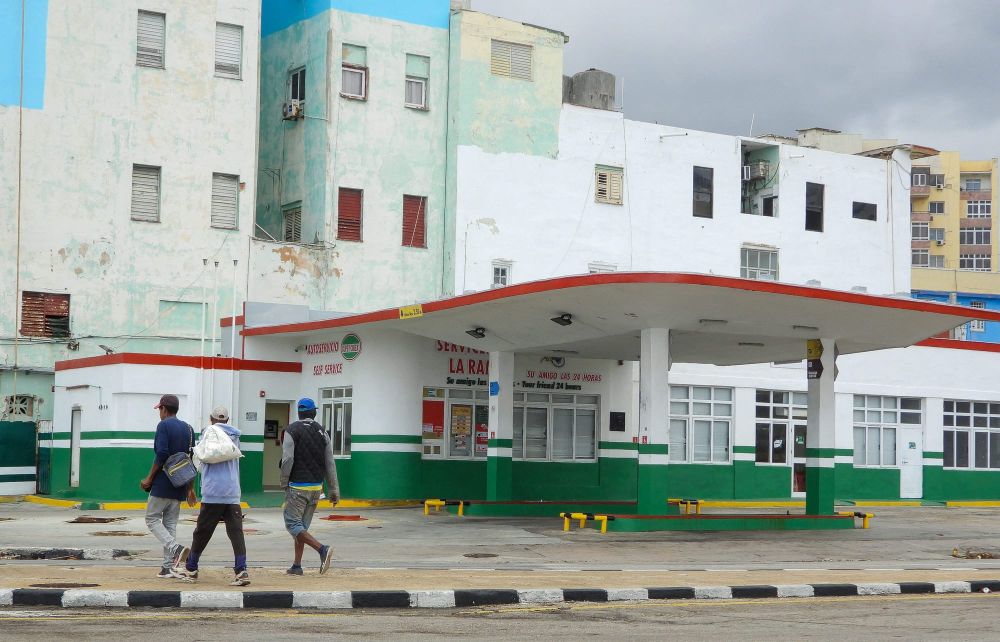
Cuba, the center of the revolutionary image—whose economy, throttled by American sanctions, is dominated by the Armed Forces Business Enterprises Group (GAESA)—has gone dark. The health care system has collapsed. Handfuls of foreign delegations—mostly students and activists—continue to visit the island, posing for pictures, pumping their fists, shouting some slogans: Hasta la victoria siempre. But there hasn’t been a victory for a long time. The medical cases in Cuba make your stomach churn. Doctors and teachers have fled the country’s miserable conditions en masse.
U.S. Secretary of State Marco Rubio and other warmongers haven’t yet been able to dislodge the Communist Party. But under both Trump administrations, the blockade has demonstrated how maintaining an anti-American policy can be fatal for ordinary people. It is not the rulers of Cuba who have suffered. It is the elderly, the poor, those living with disabilities, and the young people who have been denied basic medicines, internet access, and goods that progressives in the West take for granted. The same people that the revolution was supposed to protect have been crushed not only by American hegemony, but also by human nature—the nature of leaders to rob.
The contempt for Cuba’s reality was on full display a few months ago, when, amid a homelessness crisis, the now-dismissed labor minister quipped that there were no beggars on the island. Beyond the Communist Party, the government hardly has any support left among thought leaders. For instance, Leonardo Padura, Cuba’s best-known novelist and a veteran of the war in Angola, has long challenged the revolution’s dying narrative from his Havana neighborhood of Mantilla, lamenting how his nation’s young people continue to emigrate.
Unable to shake off the U.S., Cuba has become a tourist destination for non-American Westerners. In the 1990s, Castro invited the Spanish hotel industry to set up shop and turned a blind eye to sex tourism in order to prop up an ailing economy. Havana accepted subsidized crude oil from Venezuela for decades, but could still barely keep the lights on. And Cuba’s legacy of exporting revolution—be it by combating apartheid regimes in Africa, advocating for Palestinian liberation, or propping up impoverished social democratic experiments in Central and South America—has waned in recent decades, as domestic troubles persist.
The open veins of Latin America
A clear example of this lost unity is Bolivia, which, for most of the 21st century, was firmly aligned with Havana. In the country where Che Guevara was executed more than 50 years ago, the right has returned to power. It replaced a technocratic, Indigenous-led, left-wing government that, during two decades in office, did more for the country than any previous administration. But even in the Andean country, people grew tired of the theft, the autocracy, the same faces. Now, they have voted for the son of a former president, who hails from the criollo horse-riding class. His family members privatized water supplies and barbecued meat while the Indigenous majority of the country—working on plantations for miserable wages—chewed coca leaves to stave off hunger and drank from unclean wells.
Even with the scandals and bloat that inherently accompany many uninterrupted years in power, the collapse of the Movement for Socialism (MAS) is difficult to comprehend. During the Morales administration (2006-2019) and the Arce administration (2020-2025), the MAS implemented responsible land reform, reclaimed natural resources, and slashed poverty rates, only to now be replaced by a coalition of conservative parties. Bolivia, for many years, was a model for progressive movements around the world. But if this model is suddenly no longer viable, if a well-managed socialist economy isn’t appealing to the population anymore, then it feels, depressingly, as if our countries will always return to a kind of status quo.
The new Bolivian president has already reestablished relations with the murderous Israeli regime. And, 20 years after they were kicked out, he has invited Drug Enforcement Administration (DEA) agents to come back into the country, so that they may brutalize the coca leaf farmers once again.
Next door, in Peru, the left obliterated itself quite some time ago, perhaps foreshadowing what was to come throughout Latin America. In 1968, after organizing a coup d’etat, Gen. Juan Velasco Alvarado—one of the few left-wing military dictators to step out of the barracks, in the tradition of Egypt’s Col. Gamal Abdel Nasser—expropriated American-owned mines and, after breaking up large estates, distributed more than 23 million acres of land to the peasantry. His seven-year administration—the Revolutionary Government of the Armed Forces—created hundreds of inefficient state-owned companies and hindered economic growth. But it did something of lasting importance. For the first time, the Peruvian head of state recognized the Indigenous history of the land. Quechua was spoken by the authorities.
Velasco was eventually removed by right-wing generals. And, after the old conservatives fucked up the return to democracy, the Maoist Shining Path movement—one of the bloodiest insurgencies in the 20th century, led by middle-class academics—attempted to unleash massacres at the level of the Khmer Rouge in Cambodia. Many Indigenous people fled the countryside, escaping to the growing shantytowns around Lima, or joined the rondas campesinas, the rural peasant patrols that fought back against the terror. Urban Peru, meanwhile, became viscerally opposed to leftist dogma after Senderistas engaged in a campaign of placing car bombs in residential areas to randomly kill civilians.
The land reform, in the end, prevented a level of bloodshed that would have exceeded the 70,000 Peruvians killed in the war between the state and the Shining Path. The campesino population had been given a stake in the country and wasn’t willing to be dominated by fanatics. The agrarian reform proved to be essential, and it was also the last significant act of the left.
Since Alan García and his socialist APRA party rocked the country with hyperinflation during the young president’s first government (1985-1990), Peru, exhausted from tumultuous social change, has never seriously embraced the revolution again. The old socialist and communist parties have fallen into decay. Their headquarters—old mansions in the historic downtown of Lima—are crumbling. The bathrooms don’t work. The structures are unsellable, as the city sprawls and modernizes in different directions. And, in the shantytowns around the capital, the right-wing candidates usually triumph.
The resentment that, in the past, would have been directed toward the upper classes is now focused on immigrants.
In the impoverished pockets of the South, certainly, there are Indigenous uprisings and leftist candidates who arise from time to time, but they are unable to stop mining projects, and even less able to govern the country, as they can never gain a majority in Congress. The middle classes are sufficiently large enough now to make the construction of a welfare state completely implausible. The poor, meanwhile, are perhaps the most entrepreneurial of Peruvians, having no other alternative to survive. The resentment that, in the past, would have been directed toward the upper classes is now focused on immigrants.
This country is no longer yours
I remember, in the years before the COVID-19 pandemic, after teaching class, I would see lines around the blocks. Outside government buildings, Venezuelan refugees would wait for temporary residency cards or documents that would at least allow them to enroll their children in school. The racism was visceral in those early months of the exodus. Since I returned to Peru, I have observed the same prejudice, but it is far more muted. Today, many nurses, doctors, technicians, and university students are Venezuelan; they’re no longer just relegated to precarious delivery work. Peruvians have grudgingly accepted that there is nowhere to deport these people to. Foreign credentials have finally been recognized in response to the needs of the market.
This is a marginal country, where huge parts of the economy and infrastructure are owned by Brazilians, Chileans, or the Chinese (although they tend to operate through a class of Peruvian managers). Not much of a fuss is made about this; living conditions are, in fact, quite enviable in the region. Peruvians are generally better off than ordinary Cubans or Venezuelans. And there is a rift between the Indigenous protest movements in the South—which advocate for nationalizations, but also oppose abortion and LGBTQIA+ rights—and the “caviares,” the fashionable progressives of the capital.
In Barranco—the hippy district along the coast, now heavily-gentrified—you’ll see Palestinian flags in windowsills. San Marcos, the oldest university in the Western Hemisphere (and perhaps the last serious public university left in the country for the study of the Humanities) has murals of the Palestinian flag wrapped around Indigenous protesters, who have been gunned down in resource conflicts far from the capital. But these images and colors are viewed passively. Few people recognize them. Those who do may feel their day brightened, but in a peripheral country, in a country that doesn’t manufacture weapons, they are of little impact. Hardly anything unites the organic cafes and Pilates studios of the more affluent coastal districts with the mining towns where the water has become undrinkable.
Things are hardly more coherent in Brazil, the behemoth of South America, where President Luiz Inácio Lula da Silva, or Lula—the standard-bearer of the democratic left—decries the Gaza genocide in his foreign press conferences, but domestically advocates for the construction of billion-dollar TikTok data centers on tribal land.
Nobody wants their children to study literature, history, anthropology, or political science. They want them to study business, go to a polytechnic, or maybe even enroll in medical school. Wealthy high school graduates with poor grades study Communications. But neither prosperous nor impoverished Latin Americans want such a degree. Many young people want to leave the region entirely, to study in Europe or North America. The strongest desire that I observe in young people—who don’t believe in politics anymore—is the desire to be a foreigner. There’s no faith in revolution; there’s hardly even belief in the existence of a future. As for the Venezuelans I meet, they have no love for Maduro, nor do they have hope in the right-wing opposition.
When asked by the novelist Mario Vargas Llosa what he thought about politics, writer Jorge Luis Borges replied that politics is “una de las formas del tedio.”One of the forms of tedium. I don’t think we’ve ever lived in a time when so many people felt this. Long gone are the days of the Latin American rally, the balconazo, with the great orators—Peru’s former President Alan García, Panamanian military leader Omar Torrijos, and Chile’s former President Salvador Allende—leaning over the railings to implore the masses. As reading declines and the great speakers die out, political speech has become stale. We are flooded with content; nobody wants to listen anymore. Nobody truly believes.
Here, in Peru, the government has allowed citizens of all ages to empty their mandatory pension funds early, diffusing some minor youth protests and creating a sullen acceptance of the status quo. A humongous new airport has replaced the last, to welcome millions more tourists; the Chinese have built us a $2 billion port, and they would like the plentiful minerals to be sent to them in exchange.
Marx and Trump are irrelevances in this country; people care more about what the district mayors are doing for them. Are they planting trees, are they fixing the roads? Some projects are quite ambitious, quite nice. It’s refreshing to see the focus on the small steps. Also, perhaps subconsciously, it’s an acknowledgement of the inability to sway history. It’s the acceptance of peacetime. The triumph of lethargy.
Entertaining ourselves to death
A few years after he won the Nobel Prize for Literature, novelist V.S. Naipaul could already see that the socialist culture, the socialist ideal, was falling into ruin:
The early socialist writers and thinkers—great men, [like] William Morris, [George Bernard] Shaw, all these people, working at the end of the 19th century and the early 20th century—they had an idea that socialism would give a greater impetus to civilization, high civilization, and spread it out among the general population. [But] it’s worked the other way around. You don’t have to go to England to know that the level of [English-language] entertainment, the current of public thought, is at an extremely low level. And people want it like that. They want it to be ‘for the people,’ they want it to be plebeian … they want it very low.
One cannot help but share his bleak outlook when considering the Western Hemisphere. Just a few months ago, you could watch Maduro dancing with robots. On your phone, you can confirm how leftist American politicians seem to exist more on social media than in real life. U.S. Rep. Alexandria Ocasio-Cortez, in a recent interview, noted that the owners of X and Instagram are “corrupt.” Yet, as the farthest-left Democrat with a chance at the presidency, she relies heavily on these platforms to reach her voters. The structures of capitalism—now better defined as “technofeudalism,” a term used by the former Greek Finance Minister Yanis Varoufakis—have become so deeply entrenched that we consumers function more like addicts.
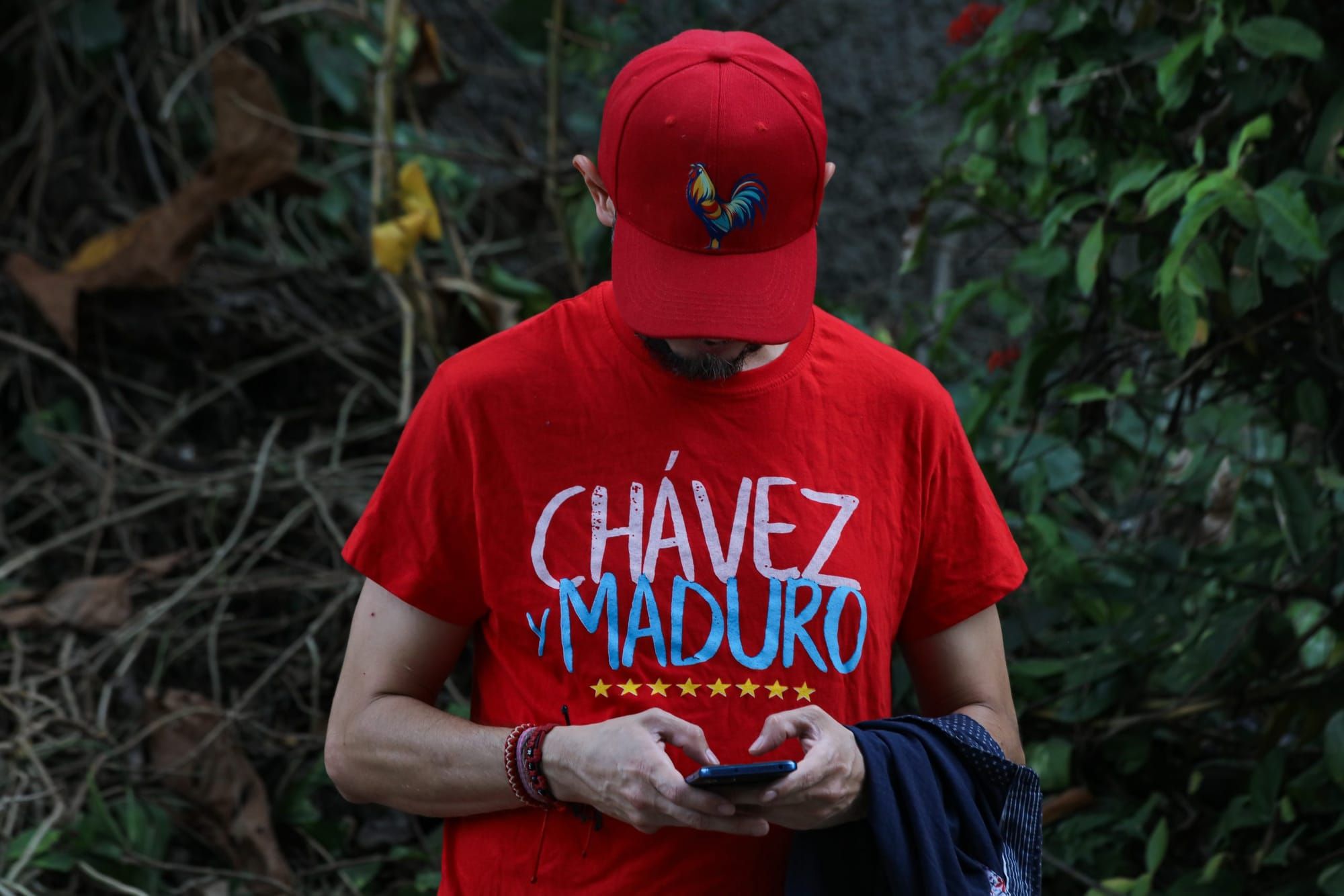
Chávez used to wave around books during his endless press conferences. But his performance and his singing and his ranting and his dressing down of a minister, or his criticism of the American president, became the highlights; nobody was there for public intellectuals like Noam Chomsky or Eduardo Galeano. And his supporters still missed the legendary Venezuelan soap operas that used to run on the TV channels that he nationalized.
What most people want (or maybe need) is to be entertained. We require leisure. And this urge goes hand in hand with a celebrity culture that, by definition, epitomizes classism and hierarchy.
There’s no room for a sustained revolution, for dogma, when people scroll on so quickly. Certainly, there are moments that galvanize an entire society around a progressive ideal, such as the 2023 protests that erupted in Panama, when the population took to the streets to reject a Canadian mine. But these moments are brief in an ephemeral world. The energy cannot be sustained. And within a hyperglobalized system, a large corporation can easily litigate a small nation to death, freezing it out of the banking system. Indeed, a couple of years after the protests, the Panamanian government quietly began the process of reopening the mine, despite the country already struggling with an inadequate clean water supply.
To offer his base a few more weeks of entertainment, Trump could certainly mimic his Israeli friends and keep littering Caracas with drone strikes. It was proven under the Biden administration that much of humanity and nearly all world leaders will accept any level of brutality. The Russians are busy with Ukraine, and the Chinese will wash their hands of South American oil. They have plenty of other options should an American puppet be installed in the Miraflores Palace. Surely, cheap goods will still have a market.
But rather than leave the palace in flames again, why not simply negotiate with the remaining Venezuelan socialists? They sold plenty of oil to the U.S. under Bush and Obama, and Maduro was palling around with John Kerry as recently as 2022. They, like the opposition, have no interest in the environment or in creating a viable welfare state. They can be dealt with.
Washington’s hegemony has nothing to worry about. The revolution has already withered away. It’s dying all on its own. At this point, any violence is for the pleasure of the American viewer, in an exhausted culture that has little else to offer.
Editorial Team:
Tina Vasquez, Lead Editor
Carolyn Copeland, Top Editor
Rashmee Kumar, Copy Editor
Author
A historian by training, Avik Jain Chatlani is the author of This Country is No Longer Yours. He has taught in schools and prisons in Latin America and the United States.
Sign up for Prism newsletters.
Stay up to date with curated collection of our top stories.