How the LA wildfires could exacerbate the region’s housing and homelessness crises
After the fires destroyed thousands of homes, displaced residents face rental price gouging and dire need for essential supplies
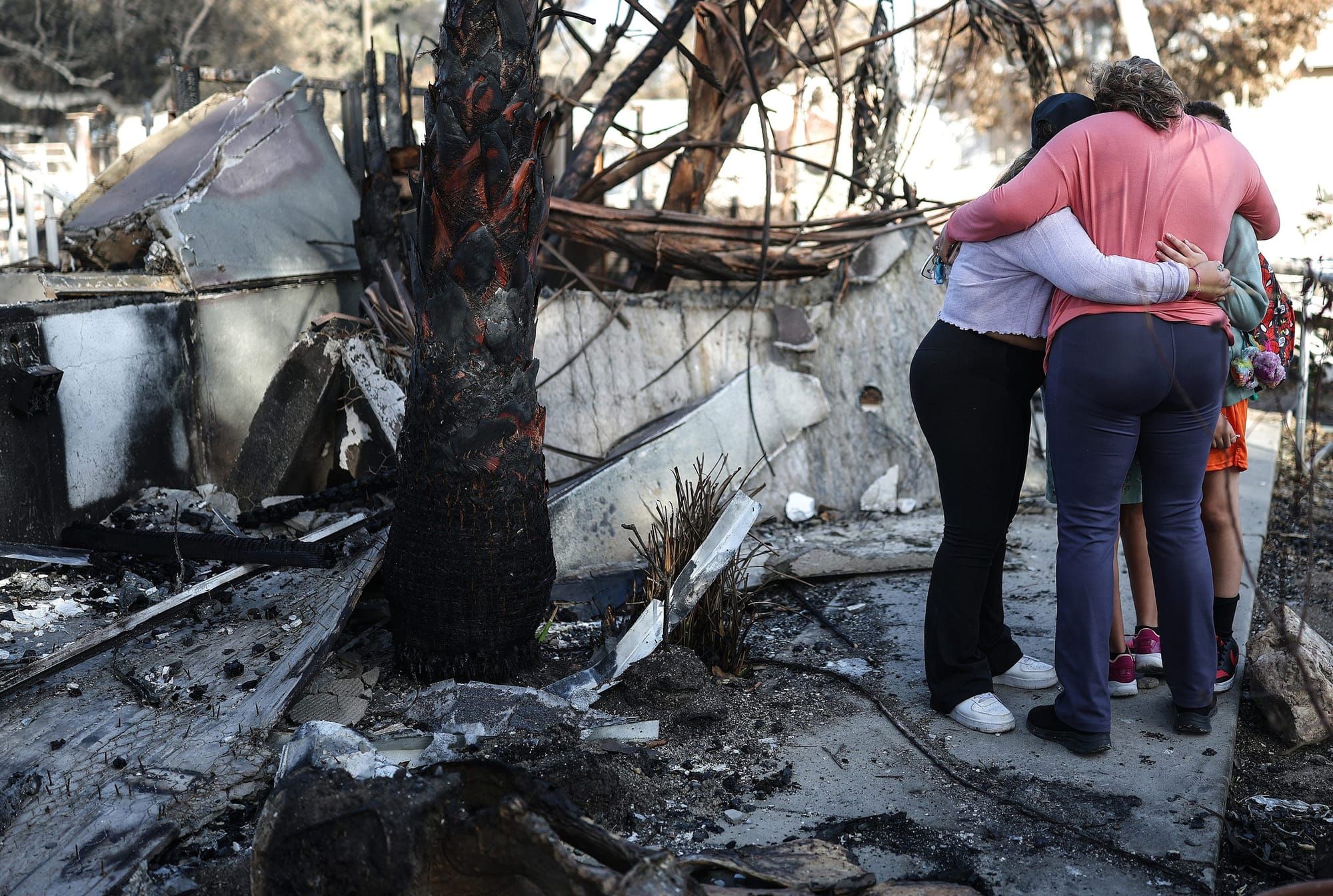
Leticia Espinoza had been renting a house in Altadena, California, with her husband, children, and grandchildren before the wildfires in January burned it to the ground.
“We are getting by, day by day,” Espinoza, whose story was featured on the YouTube series “Channel 5 with Andrew Callaghan,” told Prism in an email. “We are currently staying at my sister’s house, and my daughter is staying with her mother-in-law with her two little boys. We have been blessed by our family and community, bringing us clothes, shoes, and donations.”
After burning for weeks, multiple forest fires in the Los Angeles area were fully contained, officials announced Jan. 31. The fires destroyed more than 16,000 structures and killed at least 29 people. As a result of the devastation, LA County is expecting thousands of newly displaced people in need of shelter and housing. This is a large task for a county with a growing homelessness crisis. Even before the fires, 75,000 LA residents were unhoused, according to the recent 2024 point-in-time homeless count. That number could skyrocket in the coming weeks.
According to a report by the LA County Department of Public Health, low-income households are already housing-burdened, meaning that residents spend at least 30% of their income on housing. More than a quarter of those households are severely burdened, spending 50% or more of their income to stay in their homes. Low-wage earners, specifically those who worked as gardeners, nannies, and care providers for burned-down households, are also out of a job. The sudden loss of income will quickly mean they cannot pay rent.
Price gouging and its loopholes
Tenant rights groups are also concerned about landlords seeking to push out existing renters. Many have reported landlords re-listing apartments at massively inflated prices, also known as price gouging. During a press conference on Jan. 16, California Attorney General Rob Bonta warned landlords against the practice.
“It is illegal. You cannot do it. It is a crime punishable by up to a year in jail and fines,” he said.
However, landlords in the LA area did not appear to be swayed. By early February, nearly 1,500 rental properties were documented for price gouging in a crowdsourced spreadsheet launched by housing advocate Chelsea Kirk of the Los Angeles Tenants Union. The spreadsheet, which includes properties that range from modest homes to mansions in Bel Air, provides addresses, Zillow links, and dates of rent increases.
While California law prohibits price gouging, there is a loophole. These rules don’t apply to new renters, said Larry Gross, the executive director of local nonprofit Coalition for Economic Survival (CES). And while landlords can be fined up to $10,000 for price gouging, that amount may not deter them if they’re able to make half of that with a single rent payment.
At this point, no actions have been filed against landlords. “The city has no issue arresting looters for theft,” Gross said. “What landlords are doing is also theft.”
In response, CES and many other LA-based organizations are pushing the LA City Council to declare a rent freeze and placing a moratorium on evictions. So far, the City Council has delayed the proposal. “We can’t afford to wait,” Gross said.
Where to go for help
Gross urged residents to sign up for the group’s Tenants’ Rights Zoom Clinic, which runs every Saturday at 10 a.m. PST. CES also offers one-on-one counseling. Whether someone has lost their home or is being threatened with eviction, Gross said CES can help.
Christina Bragg, the senior director of marketing and communications for the YMCA of Metropolitan Los Angeles, also urged residents impacted by the fires to reach out to the YMCA for child care needs and informal case management. They have “free stores” with food, non-perishables, and a variety of baby goods, such as diapers, baby wipes, and formula.
Bragg shared a story of a family of 10, including several extended family members, whose households came together after they lost their homes and reached out to YMCA asking if they had a porta-potty. Although they didn’t have any on hand, YMCA staff were able to use their community connections to have an outdoor bathroom installed on their property, including a full shower.
“For any government support, we are posting as they happen, and we are informed,” Bragg said.
Those who wish to support affected families may donate to the Espinoza family through their GoFundMe.
Editorial Team:
Sahar Fatima, Lead Editor
Carolyn Copeland, Top Editor
Rashmee Kumar, Copy Editor
Author

Jocelyn Figueroa is a writer and journalist based out of New York City focusing on topics such as homelessness, housing, shelters, and criminalization. Formerly homeless, she wrote a book discussing s
Sign up for Prism newsletters.
Stay up to date with curated collection of our top stories.