Urban development ‘certainly a factor’ in the destruction caused by LA wildfires
Local residents cite climate and budgetary changes to explain why the Palisades and Eaton fires spread so ferociously, but the culprit is slightly more complex
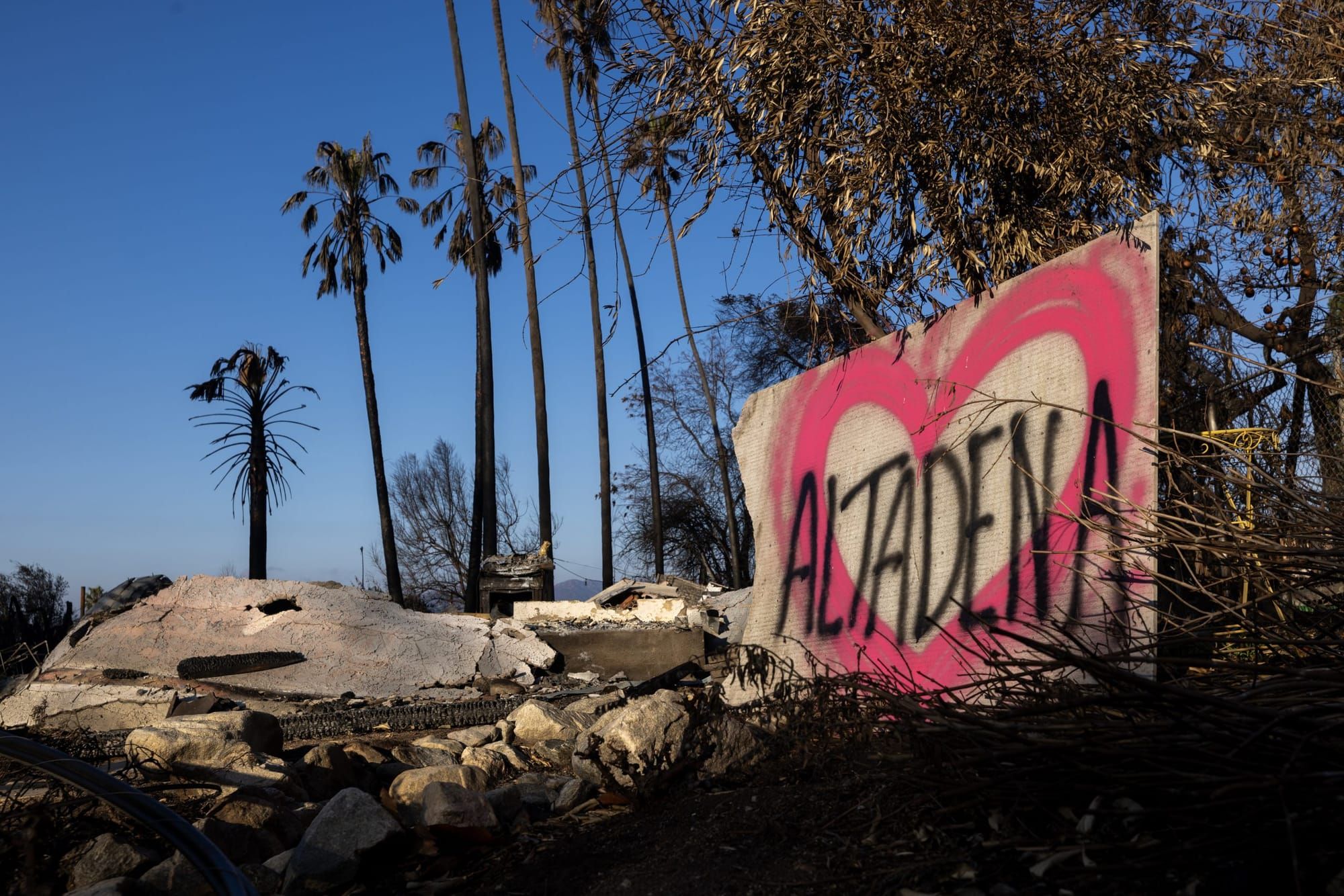
Firefighters spent weeks battling wildfires in southern California that destroyed tens of thousands of homes and killed at least 29 people, with another 31 remaining missing. The most destructive fires, the Palisades and Eaton, began on Jan. 7. The cause of the fires is still being investigated by the Bureau of Alcohol, Tobacco, and Firearms, while at least 20 lawsuits have been filed against utility provider Southern California Edison for its alleged role in the devastation.
Whatever the outcome of the investigation, University of California, Berkeley lecturer Steve Weissman told Prism that the disaster will likely renew conversations about transmission lines and power distribution systems.
“The one thing that’s clear is that all of us who are out here pontificating or trying to offer conclusions don’t have our arms around the whole system,” said Weissman, a former administrative law judge for the California Public Utilities Commission who established Berkley’s energy law program.
In attempts to explain why the fires spread so quickly and ferociously, many online have cited structural issues, such as climate change and Los Angeles County budgetary changes. Experts acknowledge that drier soil, plant roots, and a lack of rainfall contribute to how fire-prone the southern California region is, but the culprit is slightly more complex.
According to experts, one thing is sure: Officials must incorporate fire risk into urban planning.
Why did fires spread so quickly?
The main reason the fires took off was because of the Santa Ana winds, said Jon Keeley, a research scientist for the U.S. Geological Survey and an adjunct professor at UCLA. The Santa Ana winds usually occur almost every fall into early winter. Typically, the warm, dry winds blow between 30 to 40 miles per hour, but the winds that propelled the flames in the Palisades and Eaton fires clocked in around 100 miles per hour.
“We haven’t had Santa Ana wind-driven fires in January because usually it’s too wet,” Keeley said. But this year, conditions were extremely dry. While LA famously received more rain than Seattle, in the winter and early spring months of 2024, precipitation dropped off in May, leaving the region without more than a 10th of an inch of rain for seven months.
With ample time to dry out, the land caught fire easier, and the wind spread the fire quicker. While it’s unusual for fires to start in the winter, Keeley said that historically, some of the biggest fires in southern California have started in December, precisely because of the Santa Ana winds.
Why was there so much destruction?
Devastation has two main types of fuel: the natural landscape and built infrastructure. Altadena, the neighborhood scorched by the Eaton fire, is surrounded by chaparral, or short shrubs, and trees that can subsist in dry climates. This also makes them fire-prone. But, as Keeley told Prism, thousands of homes burned not because of chaparral, but rather the homes themselves catching fire.
“Once the fire got into the urban environment, there’s no more chaparral fuels around,” Keeley said. Homes are constructed out of dry, flammable materials that produce high-intensity fires. The Santa Ana winds blew sparks to multiple houses at a time, which resulted in the fire spreading faster than firefighters could contain it.
The way to stop a fire is to make sure that there’s no ignition source, Keeley said. As people move further away from city centers and into less populated and more undeveloped areas, fire risk increases. This is especially true in more developed areas that have more transmission lines. Many LA residents speculate that the fires started in part because of faulty power lines.
Keeley told Prism that researchers have records from the early 1900s of Santa Ana wind-driven fires in the Santa Monica Mountains, where the Pacific Palisades neighborhood sits today. A century ago, there was little infrastructure destruction precisely because there were so few people living there. In the past two decades, more than 6 million people moved into the state, Keeley said, creating more urban sprawl with “people living further out into watersheds of very dangerous fuels.”
“I would say there’s no question that population growth is certainly a factor in the amount of destruction that we’re seeing,” Keeley said.
What can we do?
It’s possible to plan communities that don’t develop into watersheds of dangerous fuels, Keeley said. The professor, who served as an adviser for the Los Angeles County Department of Regional Planning Environmental Review Board, said that while government agencies are concerned about growth and a rapidly changing climate, there needs to be far more collaboration between environmental and urban planning experts.
It’s also notable that the county has zoning restrictions related to earthquakes and flooding, “but to date, we don’t have good laws that restrict building into fire hazardous areas,” Keeley said.
As for any changes utility companies may want to make, there’s a lot that they’re empowered to do proactively and without state approval, said Weissman of UC Berkeley. One of the things that makes transmission lines so vulnerable during Santa Ana wind periods is that tree branches can break off and fall on power lines, often suspended dozens of feet in the air and with high voltages of electricity coursing through them. Weissman said that utility companies can insulate wires or bury transmission lines, both of which would absorb some of the risk.
The more salient point for Weissman is how and where homes and cities are built. There’s a lot that people can do to protect their homes or make them more “fire-defensible,” but individualized solutions targeted toward homeowners aren’t a silver bullet. Like Keeley, Weissman would like to see a statewide approach to fire management. He told Prism that LA County would benefit from a commission focused on fire defensibility that creates standards that are then imposed on local governments.
These questions also deserve consideration in the context of who will get to rebuild after the fires. With an insurance system in imminent collapse and payouts from federal emergency services slated to take many months or years—likely at under-appreciated values for the homes—those who rely most on the social safety net will more likely be thrust into precarity.
As of now, LA County has no commission or plan focused on fire defensibility in the works.
Editorial Team:
Tina Vasquez, Lead Editor
Carolyn Copeland, Top Editor
Rashmee Kumar, Copy Editor
Author

ray levy uyeda is a staff reporter at Prism, focusing on environmental and climate justice.
Sign up for Prism newsletters.
Stay up to date with curated collection of our top stories.