Activists say Kentucky’s new prison proposal is a step backward for environmental justice
The federal government says environmental justice communities deserve consideration. Does that apply to those incarcerated?
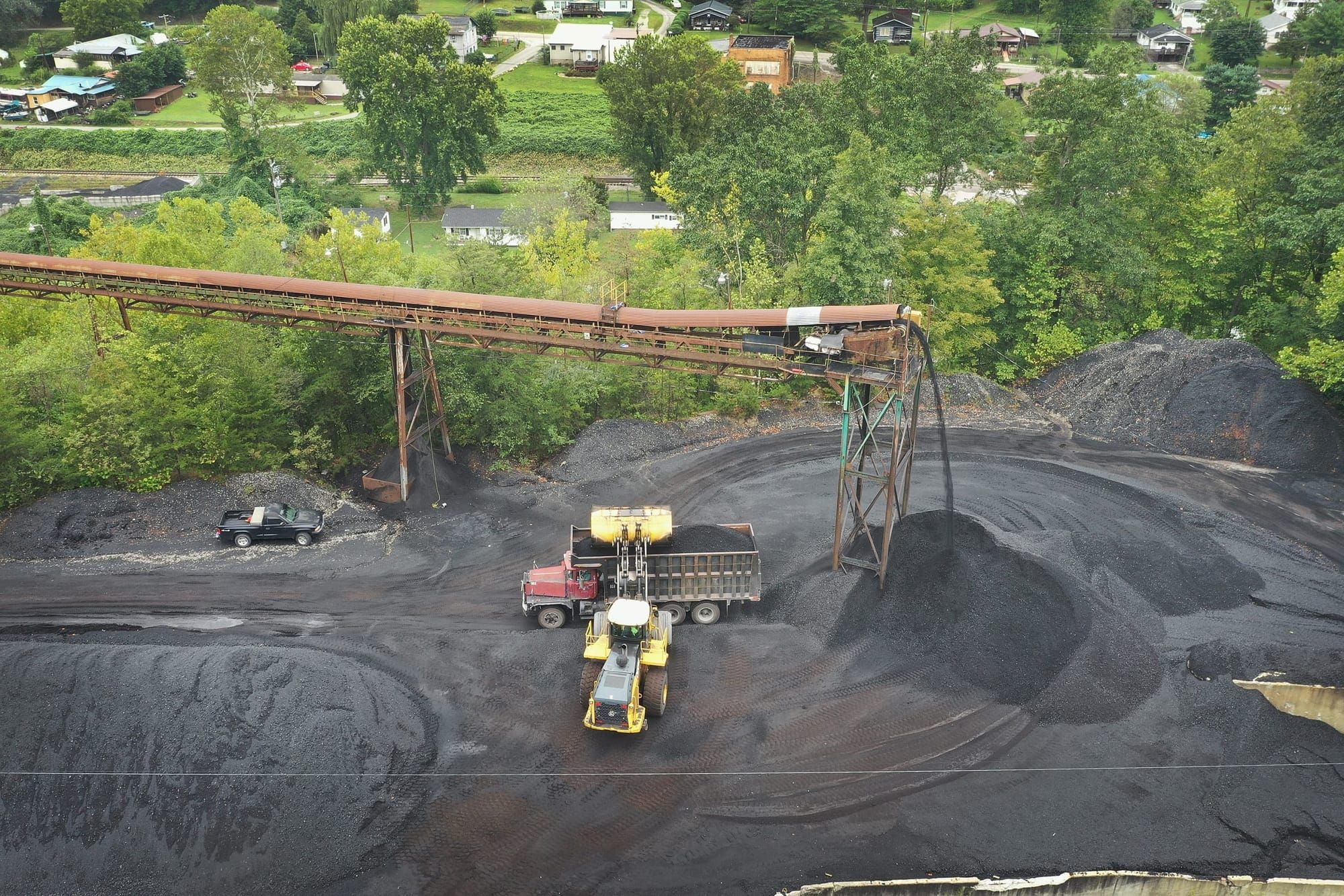
The Bureau of Prisons (BOP) is determined to build a new prison on top of a former mountaintop removal coal mining site in eastern Kentucky, going against widespread public disapproval of the project and mounting evidence of the proposal’s many environmental injustices.
On Oct. 28, the BOP released its final opinion regarding constructing a medium-security prison and prison camp in Roxana, Kentucky, a small, unincorporated town in rural Letcher County. The Record of Decision (ROD) doubled down on false claims the BOP and project proponent, Republican Congressman Hal Rogers, have made for nearly two decades: Prisons provide an economic boost to the local economy by way of jobs and income streams for local businesses. They also assert that ailing prison infrastructure nationwide necessitates the construction of new facilities.
Rogers first asked Congress in 2006 to earmark $5 million to study potential sites for new prisons in eastern Kentucky, later succeeding in drawing down agency approval for what was initially determined to be a $500 million project in initial costs alone. Much of that startup investment was earmarked for preparing the land, deforesting surrounding areas, and treating and removing soil. However, the Department of Justice (DOJ), which houses the BOP, requested rescission of funds for the project as part of its 2025 budget, consistent with a longstanding departmental belief that federal funds should be spent updating existing facilities rather than building new ones. In 2018, a small coalition of residents, organizers, and professors succeeded in shutting down plans to build the prison. However, to the dismay of organizers, in 2022, the BOP revived the plan.
The lack of thorough investigation into the environmental harms that the prison would pose to incarcerated people and the surrounding community puzzles advocates for decarceration who told Prism that the federal agency did not respond to requests for information about how environmental justice concerns were evaluated. Besides referring back to the ROD, the BOP did not respond to Prism’s request for comment. There is also a federal consensus that a new prison isn’t needed. The Record of Decision, based on findings from a Final Environmental Impact Statement, fails to answer basic questions of how a prison will impact those incarcerated inside. Evaluating environmental justice concerns is a mandated part of project scoping and evaluation, but organizers are wary that the BOP has not done its due diligence.
The Record of Decision states that the proposed prison “is also not expected to result in adverse impacts to Environmental Justice populations; therefore, mitigation measures for social, economic, and environmental justice are not warranted.” According to a 1994 executive order, federal agencies must consider the impacts on “minority and low-income populations” of programs and projects, including the construction of prisons.
According to federal definitions, a “minority” population is a community where half or a significant portion of the population is non-white, while “low-income” is defined as the region’s average household income falling below the federal poverty level. Letcher County is home to 21,000 people, 97% of whom are white. The county’s poverty rate is 29%—almost twice the state average and nearly three times the national average.
The Council on Environmental Quality provided additional guidance to agencies saying that impacts faced by “environmental justice communities” must not exceed those to which the general population is exposed, and that health impacts must not have “cumulative or multiple adverse exposures from environmental hazards.”
A 2023 executive order by the Biden administration sought to “revitalize” the federal government’s commitment to “environmental justice” by mandating that permitting, compliance, and laws—like the National Environmental Policy Act—review impacts and practice deference to so-called environmental justice communities. The order acknowledged that pollution is often the consequence of long-standing “entrenched disparities” that result from legal racial discrimination and segregation, redlining, exclusionary zoning, and other discriminatory land use.
“These decisions and patterns may include the placement of polluting industries, hazardous waste sites, and landfills in locations that cause cumulative impacts to the public health of communities,” the executive order reads. “These remnants of discrimination persist today.”
But the 1994 and 2023 environmental justice executive orders fail to explicitly account for other remnants of discrimination, like prisons and jails or those who face their cumulative impacts: those incarcerated inside. Not only are incarcerated populations excluded from definitions of those who stand to benefit from or even require environmental justice, but the facilities are not mentioned as environmental injustices themselves.
This is a dangerous oversight, argued Jordan E. Martinez-Mazurek, co-founder of the Campaign to Fight Toxic Prisons. Kentucky, with its higher incarceration rate than any independent democratic country on earth, including the U.S., disproportionately targets Black people—a demographic group that comprises 8% of the state’s residents and 21% of the state’s prison population. Nationally, 80% of incarcerated people are considered low-income prior to conviction and sentencing, with further research outlining how mass incarceration actually protracts impoverishment.
Incarceration can lead to exposure to toxins, chemicals, polluted water, and extreme heat, said Wanda Bertram, the communications strategist with the Prison Policy Initiative. According to the organization’s research, a prison built atop a coal waste deposit in western Pennsylvania caused gastrointestinal problems and cancer.
The BOP claim that the prison’s construction will not harm “environmental justice populations” left Martinez-Mazurek wondering why the most likely impacted populations—disproportionately BIPOC and low-income—were not considered by the BOP.
“Given that they’re just entirely ignoring people inside that are going to be impacted by this, do they consider people inside actual people?” Martinez-Mazurek wondered. “[The BOP] said no people will be affected, which tells me they don’t consider incarcerated people, people.”
For Lydia Pelot-Hobbs, a professor of geography and African American & Africana Studies at the University of Kentucky, BOP’s refusal to engage meaningfully with the framework of environmental justice signifies how its meaning has been co-opted.
“It’s great [the federal government is] thinking about environmental justice, but there’s been a real narrowing of it through the ways in which the Biden administration [and] even sectors of the [Environmental Protection Agency] are conceiving of it,” Pelot-Hobbs said.
That narrowing likely contributes to some pretty glaring gaps in BOP analysis of who and which communities will be impacted by prison construction on a former coal mine, where toxins like arsenic have leached into the ground, Pelot-Hobbs said. Environmental and climate ramifications “are getting completely sidelined” to the detriment of not only those who will likely be incarcerated but also more broadly to those living in Letcher County, she added.
Residents in Letcher County are still recovering from the catastrophic flooding that took place in 2022, a disaster with a $1.2 billion recovery price tag that destroyed over 100 bridges and roads and led to the deaths of 45 people. The Federal Emergency Management Agency provided some relief funds, but the county was cornered into taking out a loan for $6 million to jumpstart repairs of private bridges and municipal garages, among other necessary fixes. Ultimately, Letcher County residents were on the hook for this debt.
The flooding was invariably worsened by surface coal mining, adding as much as .3 billion gallons of water to rivers in Letcher County. Climate change will make these flood events more frequent and severe, yet the BOP’s considerations of climate change don’t include mounting evidence of a correlation between prison construction and increased greenhouse gas emissions, the latter of which is the main reason why heat gets trapped in the atmosphere. There’s no federal legislation demanding that prisons write or execute disaster evacuation plans, which leaves the safety of those incarcerated up to the very entities that so often trap people in cells in times of hurricane, storm, and wildfire.
Despite the Record of Decision marking the end of the approvals process for a federal project, organizers are resolute that the prison will not see the light of day, “especially if we have anything to say about it,” Martinez-Mazurek said.
Author

ray levy uyeda is a staff reporter at Prism, focusing on environmental and climate justice.
Sign up for Prism newsletters.
Stay up to date with curated collection of our top stories.