Analysis: How India’s actions in Kashmir mirror Israel’s occupation of Palestine
The Hindu nationalist response to the Pahalgam attack in April highlights similarities between how India and Israel dole out “collective punishment” against Kashmiris and Palestinians, Kashmiri scholars say

Indian authorities arrested at least 81 “anti-nationals” in the Indian state of Assam for sympathizing with Pakistan, Assam Chief Minister Himanta Biswa Sarma said on June 1.
“Our systems are constantly tracking anti-national posts on social media and taking actions,” Biswa posted on X.
The arrests were part of an intense crackdown by the Indian government following the April 22 attack near the town of Pahalgam in Indian-administered Kashmir. Gunmen claiming to be part of the Kashmiri militant group called the Resistance Front killed 26 civilians, mostly Indian tourists, though the group later denied involvement.
Thousands of Kashmiris have been arrested in response to the attack, intensifying fears of violence and displacement in the Himalayan territory that is split between India and Pakistan, but claimed in its entirety by both. For many, the crackdown is drawing attention to another crucial aspect of India’s operations in Kashmir: its similarities to Israel’s settler-colonial presence in Palestine.
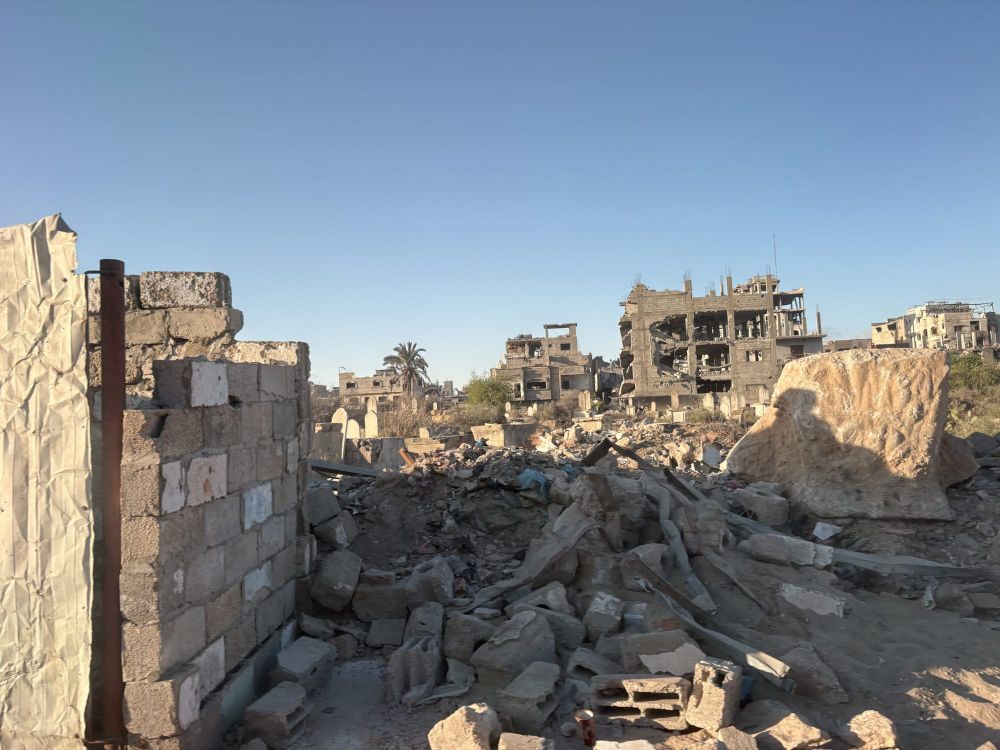
From bulldozing homes to mass detentions to segregated settlements and settler violence, Israel and India have come to closely resemble each other over the past three decades, scholars say. A stark way the similarities manifested immediately following the Pahalgam attack was in the calls from some Hindu nationalists for India to respond by following the example of Israel’s genocide in Gaza.
Unlike Israel, “India has tried assimilation as a settler-colonial technique in Kashmir for so long,” Hafsa Kanjwal, a Kashmiri historian and assistant professor at Lafayette College, told Prism in an interview. The overarching narrative pushed by India and many Hindu nationalists, she said, is that Kashmiris are, and want to be, a part of India, and any militants resisting that integration are just a few people badly influenced by Pakistan.
“But there’s this weird thing that happens when [Hindu nationalists] get riled up where you call for the total destruction of people who you say are not against you,” Kanjwal said. “They are contradicting themselves.”
As a result, she said, the “genocidal rhetoric” more closely mirrors Israel’s “eliminationist” approach to Palestinians.
Following the Pahalgam attack, Indian armed forces on May 7 launched punitive air attacks against Pakistan, which India claimed without evidence sponsored the attack in the contested territory. After a four-day conflict marking the most tense period of hostilities between the two nuclear powers in decades, active warfare has ceased, with more governments under pressure to maintain restraint. Kashmiris on both sides of the territory’s line of control emerged bearing the brunt of the casualties.
Though a ceasefire has held up, tensions remain high. Communities in both Indian-occupied Jammu and Kashmir and Pakistani-held Azad Kashmir remain fearful of renewed escalations. Some hardcore Hindu supremacists, on the other hand, are vocally proclaiming that escalation is precisely what they want.
Online rage
Just hours after the Pahalgam attack, Hindu nationalist calls for violence proliferated on social media in a rage that has since simmered down but not disappeared.
“Kashmir should be flattened like Gaza.. Both don’t deserve freedom,” Stop Hindu Hate Advocacy Network (SHHAN) posted on X. The group, which lists no board of directors or place of operation on its website, describes itself as reporting on the “hateful content and hate crimes by far-left, Islamic forces, Christian conversion mafias and anti-Hindu activists across the world.” SHHAN did not respond to Prism’s questions about its leadership or its response to the Pahalgam attack.
Several prominent Indian commentators expressed similar sentiments, according to reporting by Middle East Eye, following the Indian government’s lead of blaming Pakistan for the attack, without evidence.
For instance, Arnab Goswami, a massively popular TV anchor of the right-wing Indian news channel Republic TV, claimed on his show that India suffered the same attack as Israel did on Oct. 7, which he repeatedly incorrectly referred to as Oct. 17.
“This is a Hamas-style attack,” Goswami said, as a banner reading “#WeWantRevenge” appeared at the top of the screen, in a video of the segment posted on YouTube. “The 22nd of April is to India what Oct. 7, or 17th, was to the Israelis. The test is of how we respond now.”
A guest on the show then said, “We demand we convert Pakistan into Gaza.”
Nupur Sharma, editor-in-chief of the far-right news outlet OpIndia, also posted, “If Pakistan wants to live by the Hamas playbook, India must make sure they die by the Israel playbook. It’s time.”
Comparisons to Israel
Meanwhile, a very tangible campaign of hate and terror against Kashmiris and Muslims by both the Indian army and vigilante groups unfolded both within Indian states and in Indian-administered Kashmir, which includes the Kashmir Valley. The valley has a population of 7 million, 97% of whom are Muslim.
Kashmiri students living in states such as Punjab and Uttarakhand found themselves pursued by mobs wielding iron rods and knives, according to the independent news website The Wire.
Some of the fallout from the Pahalgam attack mirrored Israeli tactics, according to local residents and Kashmiri anthropologist Mohamad Junaid, who referred to India’s actions as “collective punishment” in an interview with Prism.
Racist and Islamophobic rage reached a fever pitch, with Indian landlords declaring that they would evict Kashmiri tenants and Indian authorities destroying the homes of at least 10 attack suspects in Kashmir. The Indian Supreme Court last November banned “bulldozer justice,” an increasingly common practice targeting Muslims, ruling that the government cannot demolish the homes of people accused of crimes. Critics have compared the practice to Israel’s bulldozing of entire villages to make way for illegal Jewish-only settlements in the West Bank.
“Demolitions of homes is a tactic that they have borrowed from Israel,” said Junaid, an associate professor at the Massachusetts College of Liberal Arts. “This is not new in Kashmir,” he added, referencing incidents in 1990 when Indian paramilitary forces set markets and homes ablaze while searching for insurgents, according to a 1993 New York Times report.
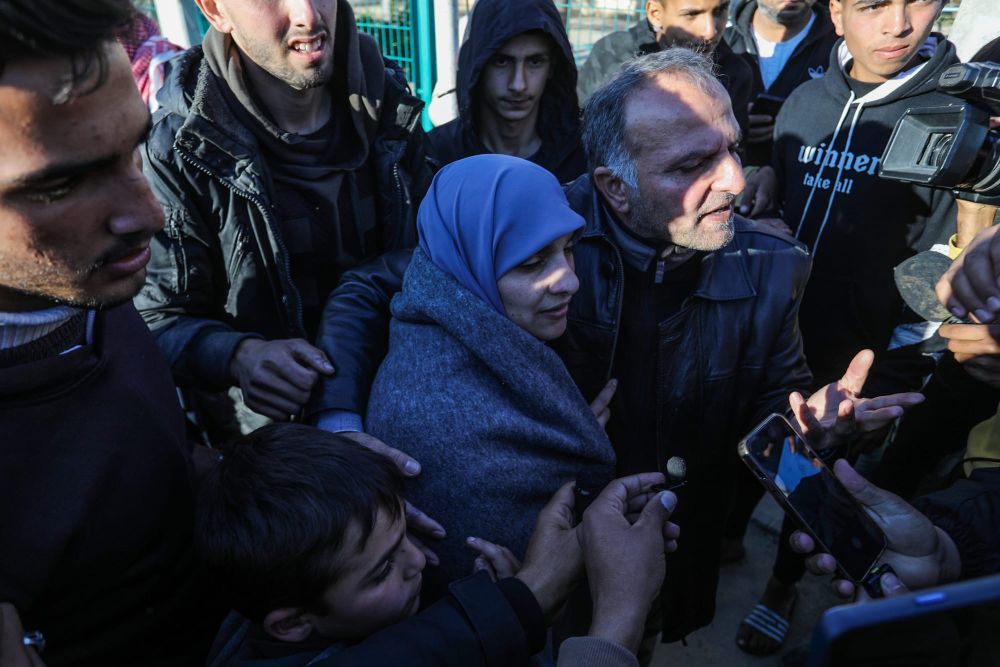
Also on the ground in India-held Jammu and Kashmir, nearly 3,000 Kashmiris were detained following the Pahalgam attack. The presence of the military has loomed heavily in the region since the 1990s, and arbitrary arrests, detentions, and killings with impunity by the armed forces have long been the norm.
Junaid said images of this crackdown spread widely online to satiate a “vengeance-seeking” ecosystem of Hindu nationalist voices and media outlets. “Revenge for what? None of these Kashmiris that have been picked up have any connection with anything. These are normal people,” Junaid said.
In its latest available Annual Human Rights Review from 2018, the Jammu and Kashmir Coalition of Civil Society lists around 8,000 Kashmiris subjected to “enforced disappearances” by Indian forces.
Israel, too, holds Palestinians indefinitely under the pretext of counterterrorism. B’tselem, the Israeli organization for Palestinian human rights, counted about 9,600 Palestinians held in Israeli custody at the close of 2024.
Indian officials have also pointed to Israeli settlements as a model to settle Kashmir with Hindus who were displaced from the region in the 1990s.
In 2019, Indian Prime Minister Narendra Modi’s government revived a plan to settle Hindus in highly secured townships in the Kashmir Valley, cut off from their Muslim neighbors. Kashmiri Hindu communities, who have shared the territory with Kashmiri Muslims for generations, were among the groups reported to be opposed to the scheme. The Indian government revoked Jammu and Kashmir’s autonomous status, in turn enabling non-Kashmiris to purchase land in the territory and sparking fears of displacement.
Indian Hindu nationalists have behaved violently toward the Indigenous Kashmiri population, not unlike Israeli settlers in the West Bank. In an infamous case, Hindu nationalists in 2018 kidnapped, raped, and murdered Asifa Bano, an 8-year-old girl from a Kashmiri herding community, in an apparent attempt to drive the community out of the area, according to police. Three men, including a retired government clerk and a police officer, were convicted of rape and murder and sentenced to life in prison. Three additional police officers were convicted of destroying evidence, receiving a five-year sentence and a fine.
Military alliance
Arms deals between Israel and India comprise some of the most concrete bridges between the two countries when it comes to the increasingly aggressive colonial power they impose on Palestine and Kashmir, respectively. The deals date back to 1992, but Modi’s Bharatiya Janata Party (BJP) has gone the furthest in solidifying this connection.
Turning away from Russia as its leading munitions supplier, India opened itself to Western nations to diversify its import portfolio. In April, the Stockholm International Peace Research Institute named India as the “largest single importer of Israeli arms,” taking up 34% of Israel’s arms exports. Reuters reported last year that India had imported “military hardware worth $2.9 billion from Israel over the last decade, including radars, surveillance and combat drones, and missiles.” Much of this—from drones to Israeli cyberintelligence company NSO Group’s infamous Pegasus spyware—is deployed against Kashmiris.
Experts say that bridging the gap between these two powers—once separated by Cold War politics and anti-colonial rhetoric—has also enabled ideological cross-pollination between Zionism and Hindutva, the far-right political philosophy devoted to extending the borders of India into a state that would loom over South Asia as a Hindu theocracy.
During Israeli Prime Minister Benjamin Netanyahu and Modi’s historic meeting in 2017, they declared the new closeness between India and Israel as an alliance between “ancient cultures.” Their common enemy? Terrorism. Social media posts claiming that the Pahalgam attack marked “India’s October 7” serve as a particularly poignant testament in this regard.
Hardliners and colonial policy
Another parallel between Israel and India takes the form of intensified nationalism. Both Israel’s right-wing Likud party and the BJP may have become victims of their own success as voices further to the right demand more violence.
In Israel, this has manifested as former Prime Minister Naftali Bennett haranguing Netanyahu for failing to deploy more occupying soldiers to Gaza. In India, Modi and Home Secretary Amit Shah, despite nullifying all remaining political autonomy Jammu and Kashmir once held in 2019, find themselves under pressure from those who will not settle for anything less than the “flattening” of Kashmir.
In 2022, the BBC released a report of Hindutva adherents called “Trads” increasing online. The coverage described the cohort brandishing incendiary memes in a manner cribbed from the Western alt-right as they called for an even more rigid adherence to Hindu strictures, caste distinctions, and demonization of Muslims compared to supporters of the right-wing BJP. Junaid told Prism that this section of the movement also explicitly proclaims an expansionist and colonial vision.
“The Hindutva groups are internally quite diverse,” Junaid observed. “What emerged over the last several years … are the new alt-right Hindutva.”
This new faction, Junaid said, is critical of Hindutva’s founding organization Rashtriya Swayamsevak Sangh, the BJP, and even Modi. They are more “uncompromising,” he said, “openly saying ‘we need to take this logic to its open and brazen end, to drive out Muslims, do to Kashmir what Israel is doing to Gaza, and go into Pakistan and break it up.’”
Junaid’s analysis rings true in the face of the tenor of voices across social media condemning the ceasefire between India and Pakistan and clamoring for more blood, which will most likely flow from Kashmiri veins.
As one X post reads, “No damn ceasefire! We bled, we burned, we lost lives who the hell pays for that? Start by reclaiming every inch of PoJK,” using an abbreviation for Pakistan-administered Kashmir.
“Let them feel the cost of messing with us. No mercy. No retreat. Only justice.”
Not everyone agrees. “Flattening Kashmir is useless. A bad, un-useful idea that I haven’t seen proposed by anyone in an actual position to do so,” said Mat McDermott, the senior director of communications for the Philadelphia-based Hindu American Foundation (HAF). The group, which has at times claimed to be progressive and focused on religion and culture, has visibly associated itself with prominent figures on the far right such as Modi and U.S. President Donald Trump. Prism previously covered a report that contended that HAF is tied to lobbying efforts on behalf of the Hindu right in India, which McDermott called “baseless” at the time.
As pressure mounts among Indians both at home and abroad, the Modi government has declared fighting with Pakistan to be “paused” rather than settled, leaving the present moment tense and the future uncertain.
In the wake of the Pahalgam attack, both India and Pakistan suspended cross-border trade, halted new visas, and recalled their top diplomats. These measures remain in place, deepening the economic and diplomatic risk despite the ceasefire.
Regardless of how the situation online and on the ground develops, Kashmiri scholars say it is clear that an incensed Hindu nationalist vanguard will continue to fan the flames that threaten to incinerate Kashmir.
Editorial Team:
Sahar Fatima, Lead Editor
Carolyn Copeland, Top Editor
Rashmee Kumar, Copy Editor
Author
Simi Kadirgamar is a New York City-based reporter and fact-checker. Her range of work has included covering Hindu nationalism in the U.S., the occupation of Kashmir, and far right politics in martial
Sign up for Prism newsletters.
Stay up to date with curated collection of our top stories.