A West Bank village’s fight against settler violence
Kafr Malik lost four residents in 48 hours to attacks by Israeli settlers and soldiers, but residents are committed to defending their land
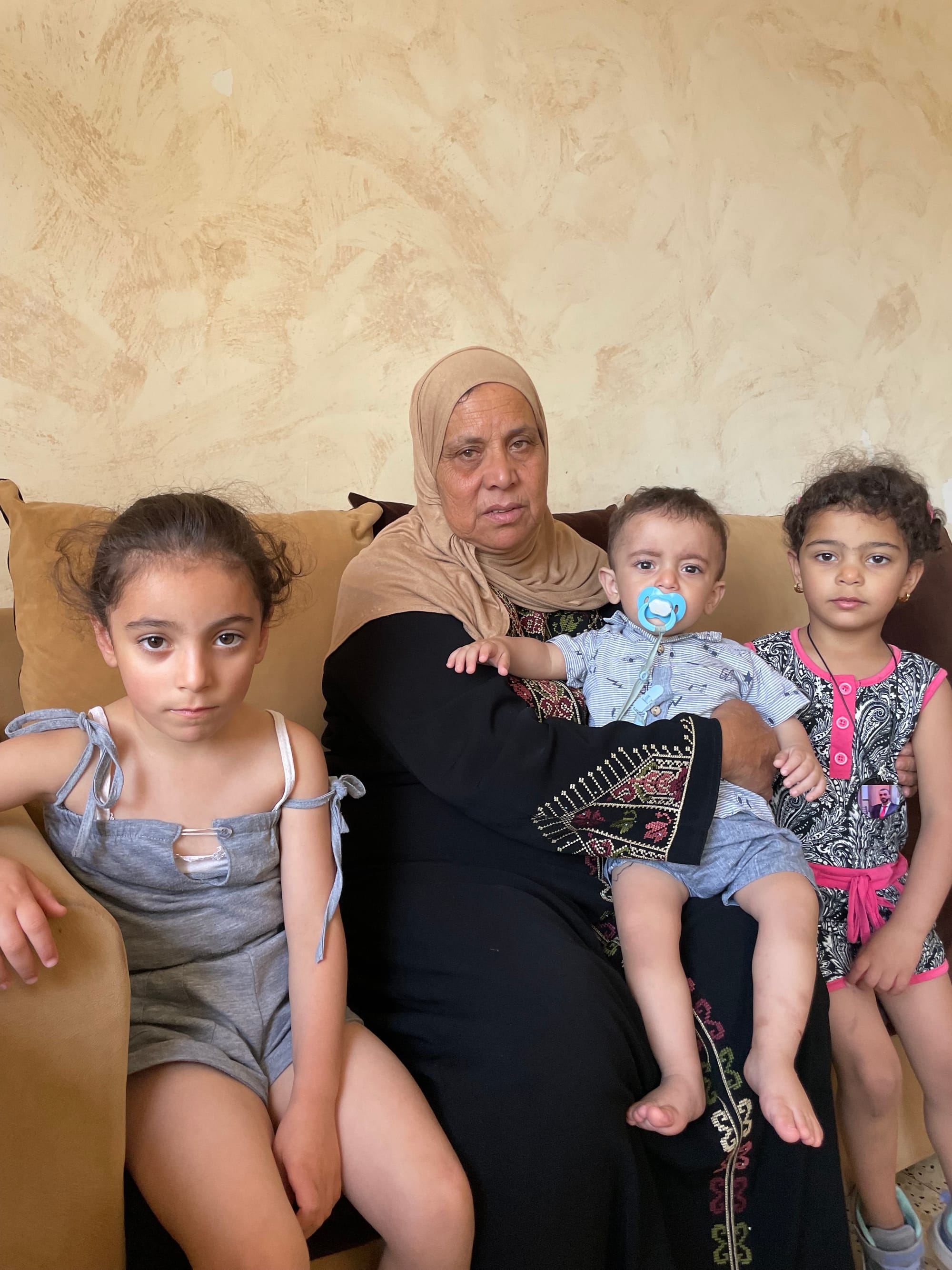
Basma Bassam Abu Hadid sat in her living room in the West Bank village of Kafr Malik in early July with her three young children running around her. Several people from the village were visiting, keeping the family company and showing respect during a difficult time.
Only nine days had passed since Abu Hadid’s husband, Murshid Nawwaf Hamayel, 32, was killed in a June 25 attack when more than 100 Israeli settlers stormed the village and shot at Palestinians. The settlers were backed by the Israeli military, who also fired live rounds at Palestinians. Also killed that day were 18-year-old Lutfi Sabri Bairat and Muhammad Qaher al-Naji, who was 20 years old, according to community members.
“Murshid was such a good guy, and he was young, not old,” Abu Hadid said. “He was very good with everyone, not just me and the people around me. Everyone was saying that about him.”.
About 2,940 Palestinians live in Kafr Malik, which is about 10 miles northeast of Ramallah. The family’s three-story house is on top of a hill in the village, just a few hundred feet from the site of the attack.
Over 1,000 Palestinians in the West Bank have been killed by Israel since Oct. 7, 2023. The evening of the Kafr Malik attack, most of the village had been attending the funeral of 13-year-old Ammar Mutaz Hamayel, who had been shot and killed by an Israeli soldier the day before.
Abu Hadid said that her husband, who was a relative of Ammar’s, was on his way home to shower and go to the funeral when he found out about the settlers storming the village. He and dozens of other men from Kafr Malik gathered and went to help a family whose home the settlers had set on fire.
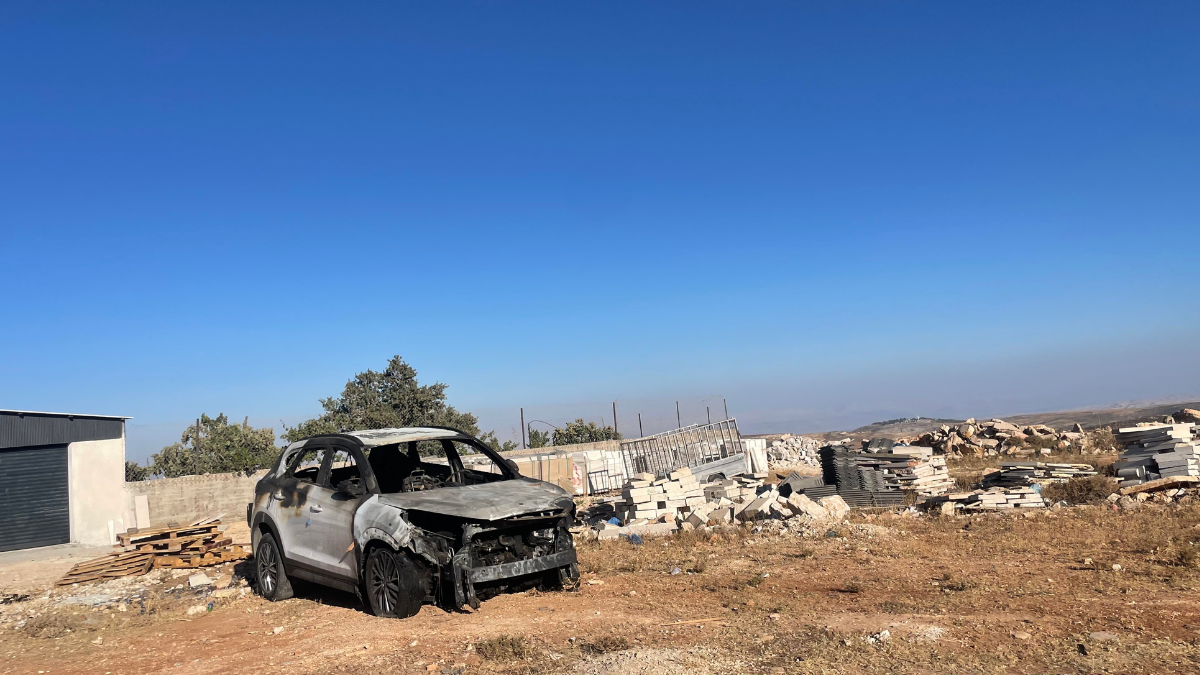
Later, he went back home to check if his family was there, but they had already evacuated. One of the soldiers fired a bullet at his head and killed him, Abu Hadid said.
“He was on his way to see if anyone was home, and when he was going down the stairs, they shot him here, by the stairs. He had not done anything to them, nothing at all. And after they shot him, they went into my house and broke all of my veranda,” Abu Hadid said.
Abu Hadid and her children were seeking refuge further down in the village when she learned that he had been shot.
“I was probably the last person in the village who got to know it. They kept telling me, ‘Good, good, he’s going to get surgery, he’s going to get surgery, his injury is light.’ My family-in-law told me he was hit in his head,” she said.
As Abu Hadid was on her way back to their home, her friend told her that her husband had died.
“She thought I knew, so she told me, ‘My love, congratulations, your husband is a groom in paradise.’ I was asking her, ‘What is happening? What happened?’ I did not understand what happened at all,” Abu Hadid said, holding her youngest son on her lap.
Rampant settler violence
Montaser al-Malki recalled the Kafr Malik attack from his living room, as the sun cast light through the window. He said that residents of all ages, men and women, went out to defend the village. Some evacuated people, others confronted the settlers.
While attending the funeral of Ammar Hamayel, al-Malki started receiving messages that the settlers had set fire to cars and homes.
“They tried to take advantage of the opportunity that most of the villagers were distracted in the house where the funeral of the martyr was,” he said.
He said the settlers set fire to a house near where they entered the village and ignited cars with firebombs.
“When the settlers saw the people, they started attacking in a way that left no room. You could say that the people were ready to die—that’s it, there was no turning back. We had to stop them, we had to deter them, because they had already violated our land and our honor,” al-Malki said.
When the settlers saw the villagers coming, they fled to the bypassing street where two army jeeps were waiting for them.
“As soon as the military saw the guys, who were standing bravely, they started shooting. The first one that got injured was martyred,” al-Malki said, referring to Bairat.
The military fired to kill, al-Malki said.
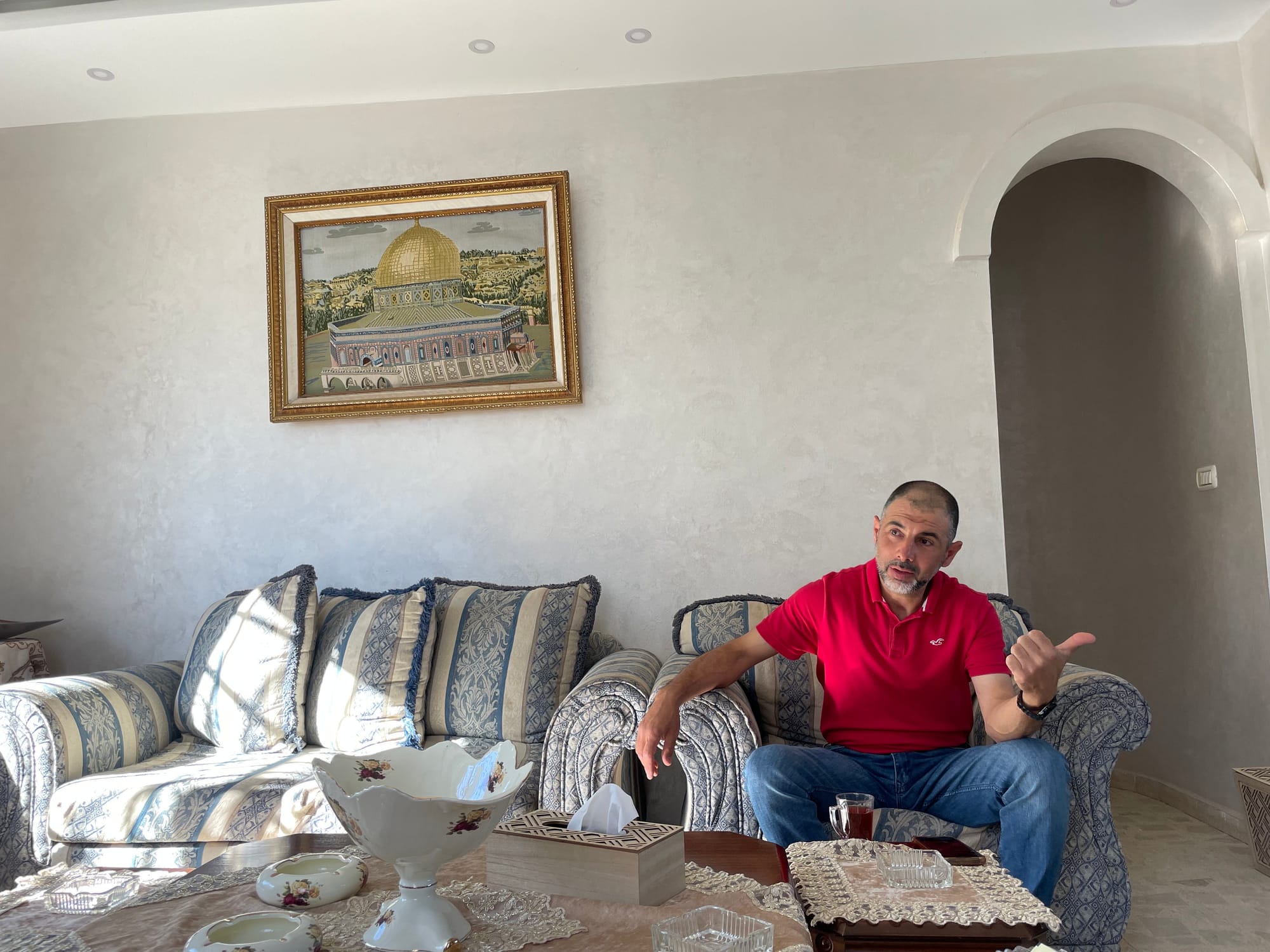
“Anything that moved, they would shoot. The settlers would point at someone and say this one tried to hit us, [and] they would directly shoot their foot. There were fatal injuries. They were not trying to differentiate between who they shot,” he said.
Al-Malki said he and a couple of the other men drove Bairat to a medical center in the village and then got him an ambulance to the hospital in Ramallah. But on the way, Bairat succumbed to his wounds.
According to the Colonization and Wall Resistance Commission, Israeli forces and settlers have carried out 11,280 attacks against Palestinian citizens and their properties in the first half of 2025.
On July 28, the village was attacked again by settlers. Ghassan Abd al-Maji, 19, was working on his family’s land when they came toward him and suddenly started shooting, hitting his arm.
“I have a bone fracture, a damaged nerve, so I cannot lift my arm. We do not know yet if it will heal completely,” he said over the phone.
“We are not going to leave”
Before Oct. 7, 2023, settlers were destroying and stealing land in Kafr Malik, al-Malki said, but Palestinians tried not to let it affect them. Now, Palestinians cannot enter parts of their village or else risk getting shot by Israeli soldiers who tell them it is an occupied “military area,” he said.
“This stage is extremely dangerous, but we are not going to leave, like the ones in 1948 and 1967. There is no opportunity for that,” al-Malki said, referring to the Nakba in 1948, when the settler colonial state of Israel was established through forced mass displacement and massacres of Palestinians, and the Six-Day War in 1967 when Israel took over even more Palestinian land.
“Where should we go? We see what happens to the ones who leave. Death is more honorable than humiliation. Death is better than humiliation,” al-Malki said. “Where will you go? To Jordan? You want to live in refugee camps? You want to live under oppression? I die in honor on my land and will be considered a martyr with Allah, and I will go to paradise. Here we are, in our country, in our homes, until the last breath.”
He said that Palestinians are not afraid, that they will keep protecting their country, land, children, and women “until the last child in this village.”
Correction, Monday, Aug. 18: This story was updated to correct the age of Murshid Nawwaf Hamayel. He was 32 when he was killed.
Editorial Team:
Sahar Fatima, Lead Editor
Carolyn Copeland, Top Editor
Rashmee Kumar, Copy Editor
Author
Synne Furnes Bjerkestrand is an independent journalist based in Amman, Jordan. She holds a bachelor's degree in Arabic and SWANA studies, and a master's degree in journalism. Her work has appeared in
Sign up for Prism newsletters.
Stay up to date with curated collection of our top stories.