Where diversity improves reliability
After litigating death penalty appeals for over 35 years, Equal Justice Initiative reveals a norm of Black exclusion from jury service
Alabama executed six people in 2024, more than any of the nine states to carry out executions that year, including Texas and Florida. Alabama’s commitment to the death penalty remains unshaken, though courts have reversed at least 170 Alabama death sentences since 1980; though at least nine people have been exonerated and released from Alabama’s death row since 1973; and though multiple executions carried out in Holman prison’s death chamber since 2018 have been botched and torturous.
In January 2024, Alabama became the first state in the country to execute a person using suffocation by nitrogen gas. As of February 2025, the state has used the method three more times. In this system of death, juries play a critical role. But which Alabamians are chosen to serve?
“Other than voting,” the U.S. Supreme Court explained in 2019, “serving on a jury is the most substantial opportunity that most citizens have to participate in the democratic process.”
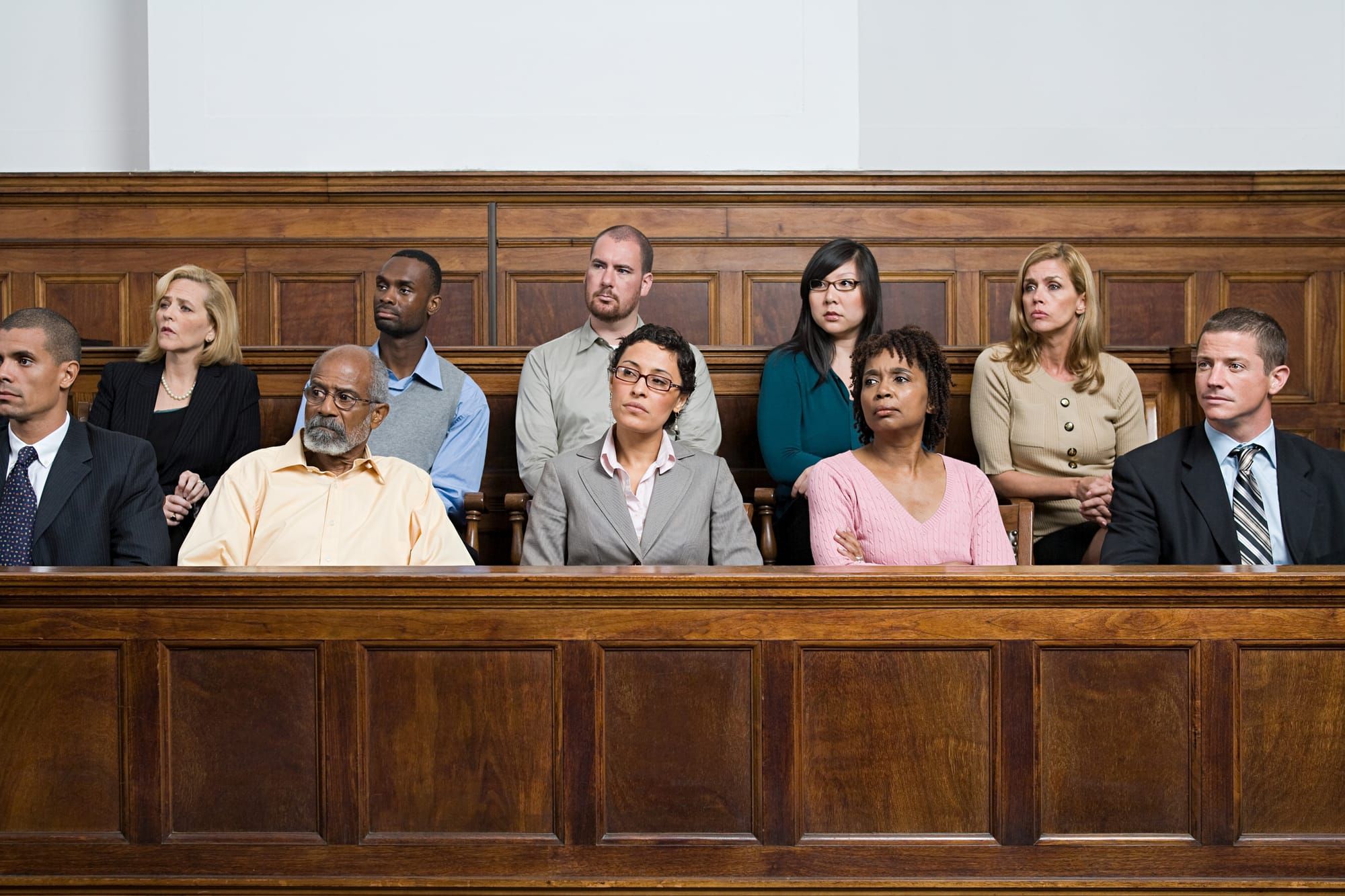
Jury service is a right of citizenship, and like voting and holding elected office, Americans’ ability to exercise that right has historically been shaped by discrimination. For all of the 19th and most of the 20th centuries, Black people were systematically excluded from serving as jurors in many communities. In 1986, the Supreme Court’s decision in Batson v. Kentucky established a procedure for courts to investigate and prevent racial bias from impacting jury selection. But today, jury discrimination remains widespread. Modern research endorses the value of diverse juries, but they remain rare and elusive, even in death penalty cases in which the consequence of error is greatest.
At a time when presidential executive orders are denouncing “DEI” as “illegal,” “immoral,” and “shameful,” it may be tempting to dismiss concerns about jury diversity too. Guilt is guilt, and innocence is innocence, regardless of who weighs the evidence, right? Growing research indicates that diverse juries deliberate better, reaching more accurate and less biased verdicts.
A 2012 review of a sample of Florida felony trials found that all-white juries convicted Black defendants at a significantly higher rate than white defendants, but that adding Black people to the jury pool largely eliminated that effect. Similarly, a 2001 study of 340 capital trials found that the greater the proportion of white jurors to Black jurors on a trial jury, the greater the likelihood that a Black defendant would be sentenced to death; this was particularly true in cases with white victims. On the other hand, studies indicate that racially diverse juries probe evidence more deeply and decide cases more fairly.
“Although equal access and the attempt to remedy historical injustices are important, and many would say noble considerations,” writes Samuel Sommers, a Tufts University professor who has studied race and jury decision-making, “the present findings provide evidence for another, often overlooked justification for promoting diversity: In many circumstances, racially diverse groups may be more thorough and competent than homogeneous ones.”
Court records frequently fail to document the racial makeup of trial juries, creating a major obstacle for jury researchers. The nonprofit Equal Justice Initiative (EJI) has litigated death penalty appeals in Alabama for more than 35 years. Drawing from its archives and case files, EJI has compiled jury composition data for 122 of the 162 individuals on Alabama’s death row, about 3 in 4. The data reveals a norm of Black exclusion from jury service.
In “Unreliable Verdicts: Racial Bias and Wrongful Convictions,” EJI reported that more than half of these 122 cases (64 cases, or 52.5%) were decided by juries with Black under-representation—meaning that the jury included fewer Black jurors than would be proportional to the county’s Black population at the time of trial. More than a third of these 122 cases (48, or 39.3%) were decided by juries with one or fewer Black jurors, 25 cases (20.5%) had juries with one Black member, and 23 cases (18.9%) were heard by all-white juries.
Under this system, the voices and influences of Black people are excluded from the decision-making process when applying the state’s harshest penalty.
Together, these and other figures discussed in the report reveal an Alabama death penalty that relies on jury decision-making, but regularly fails to empanel juries that accurately represent the racial makeup of the community. Under this system, the voices and influences of Black people are excluded from the decision-making process when applying the state’s harshest penalty. As a result, Black people constitute just over 1 in 4 people living in Alabama, and nearly half of the people awaiting execution on Alabama’s death row.
“If our legal system treats you better if you are rich and guilty than if you are poor and innocent,” said EJI Director Bryan Stevenson, “if we look the other way when convictions and sentences are imposed in clear violation of constitutional requirements and when we tolerate the kind of racial bigotry and exclusion that is found in Alabama’s system of jury selection, we cannot legitimately claim that we have the right to kill people to show that killing is wrong.”
Since federal courts rejected EJI’s 2011 attempt to sue an Alabama district attorney’s office for repeated jury discrimination, appealing criminal convictions remains the primary way to challenge racially biased jury selection. States like California and North Carolina have strengthened their courts’ tools for correcting racial bias in criminal cases, but a 2024 decision by the Alabama Court of Criminal Appeals did the opposite.
In most criminal cases, to raise an issue on appeal, the defendant must show that the issue was raised or brought up at trial so the trial judge had a chance to consider and correct it. Alabama’s “plain error” rule has long allowed individuals appealing a death sentence to raise issues even if they were not raised at trial. Appellate courts are required to review those claims and decide if they constitute “plain error,” a big enough mistake for the court to reverse the verdict and/or sentence to ensure that the death penalty is applied fairly and appropriately. This rule creates heightened review in death penalty cases and recognizes that, when imposing the state’s harshest and most permanent penalty, courts should minimize procedural barriers to achieving justice and accuracy.
On May 3, 2024, however, the criminal appeals court decided to close that path to relief for claims of racial discrimination in jury selection:
We now hold that, in an exercise of our discretion, this Court will
no longer review Batson claims under our plain-error standard
when those claims are raised for the first time on appeal. Instead,
for a defendant to obtain appellate review of a Batson claim before
this Court, even in a death-penalty case, he must raise the claim
in the trial court, thereby giving that court the first opportunity to
consider the claim and to issue a ruling that may be challenged as
erroneous on appeal. Thus, because [the defendant in this case]
did not raise a Batson claim at trial, we will not consider his Batson
claim on appeal.
Many Batson reversals in Alabama happen under the plain-error doctrine, in cases in which glaring instances of jury discrimination went completely unchallenged by trial attorneys and judges alike. The plain-error rule has repeatedly served as a safety valve and needed protection. If this appeals court decision stands, the widespread and ongoing discriminatory selection of non-diverse juries in Alabama capital cases will be even harder to challenge, and there will be even more reason to question the reliability of Alabama death sentences.
In 2013, Justice Ruth Bader Ginsburg dissented from the Supreme Court’s majority decision in Shelby County v. Holder, which struck down the Voting Rights Act’s provisions imposing heightened oversight (“preclearance”) upon counties with histories of voter discrimination.
“Throwing out preclearance when it has worked and is continuing to work to stop discriminatory changes [to voting laws],” Ginsburg wrote, “is like throwing away your umbrella in a rainstorm because you are not getting wet.”
Similarly, the decision to reduce the Alabama appellate court’s responsibility to review and protect against racial discrimination in jury selection—in a state where such discrimination is continually well-documented—is hard to reconcile with the goal of a fair and just death penalty. In Alabama, and nationwide, we desperately need to maintain and strengthen our proverbial umbrellas. Perhaps most importantly of all, we must reaffirm our collective commitment to the goal of “not getting wet.”
Too far from perfect
Alongside the ideological, moral, historical, and legal reasons to oppose racial discrimination in jury selection, social science research has revealed another compelling reason: Diverse juries are better at fulfilling the jury’s central duty to interrogate the evidence, probe the state’s case, and resist bias in its decision-making. Indeed, while some early arguments against jury discrimination seemed to envision a system of “balanced bias,” in which Black jurors’ alleged pro-Black bias can challenge or cancel out white jurors’ assumed pro-white bias, modern research suggests that diverse juries can be a path to the greater prize of increased reliability.
By requiring jurors to engage and discuss evidence with people different from themselves, diverse juries are less likely to presume agreement or take a shallower dive into the evidence, and that’s a benefit in all cases. While a “balanced bias” framing may suggest that an all-white jury only poses a risk to a nonwhite defendant, a system that values jury diversity for its increased reliability recognizes jury discrimination as a threat to all.
Community members can use this information to hold officials accountable for ensuring more accurate representation on the juries that decide trials. They can also advocate for better record-keeping to enable data collection and oversight to measure how well trials meet this standard. And, when able, we can all encourage ourselves and our friends, relatives, and neighbors to embrace the duty of jury service when called to do so.
These improvements can yield a system of criminal law that more reliably metes out justice. Alabama’s example cautions against the consequences of doing far less.
“It is better 100 guilty persons should escape,” Benjamin Franklin wrote in a 1785 letter, “than that one innocent person should suffer.” As of 2024, 23 states and the District of Columbia have embraced this call by abolishing the death penalty. In four more states, governors have imposed a hold on carrying out executions. Where the death penalty remains legal and active, increasing the diversity of juries is one tool that can increase reliability and help reduce the risk of wrongful conviction.
Diverse juries are not a guarantee of verdict reliability or a shield against wrongful conviction. Jury makeup is just one factor, but it’s an impactful factor, and one that we have the power to shape and control. In cases that turn on determinations of credibility and require weighing circumstantial evidence, wrongful conviction is a greater risk. That risk increases with non-diverse juries that are more likely to be biased in favor of conviction and less likely to forcefully hold the state to its burden to prove guilt beyond a reasonable doubt.
A system empowered to decide life and death should strive for perfection and shudder to imagine even one inaccuracy.
A system untroubled by the possibility of error should reexamine its humanity and reconsider its suitability to decide life and death
Editorial Team:
Lara Witt, Lead Editor
Carolyn Copeland, Top Editor
Rashmee Kumar, Copy Editor
Author

Jennifer Rae Taylor is senior attorney and senior writer at the Equal Justice Initiative in Montgomery, Alabama. In addition to contributing research and writing to EJI’s reports on racial history and
Sign up for Prism newsletters.
Stay up to date with curated collection of our top stories.