Documenting memories: Lessons from oral histories of Japanese American incarceration
Caitlin Oiye Coon, archives director at Densho, discusses how oral histories, photograph collection, and newspaper archives tell the story of Japanese American incarceration during World War II
Caitlin Oiye Coon is the archives director at Densho, a Japanese American archival organization based in Seattle. Through oral histories, photograph collections, newspaper archives, and more, Densho documents the legal race-based incarceration of Japanese Americans during World War II.
From 1942-1946, Oiye Coon’s family was incarcerated at Tule Lake, a War Relocation Authority camp in Northern California just south of Oregon. The archives director said she “always had this knowledge of the incarceration and what it meant to people growing up” and that she cannot remember a time when she didn’t know about it. Working in archives devoted to Japanese American incarceration experiences has impacted the way she thinks about memory, documentation, and how we become who we are.
Densho began in 1995, around the time when the second generation, known as the Niseigeneration, was aging, and local community members feared their stories might be lost. In the time since, Densho has launched an interactive tool to track incarceration sites, a podcast, an encyclopedia, tools for education, and more.
Oiye Coon told Prism that government records tend to whitewash history and that archives like Densho are critical to opening up history and offering a true account of what happened through the voices of those directly affected by government injustice.
Prism’s Climate Justice reporter Ray Levy Uyeda spoke with Oiye Coon by phone in June about the importance of collecting family history, the links between immigration and incarceration, and the legacy of what it means to be Japanese American.
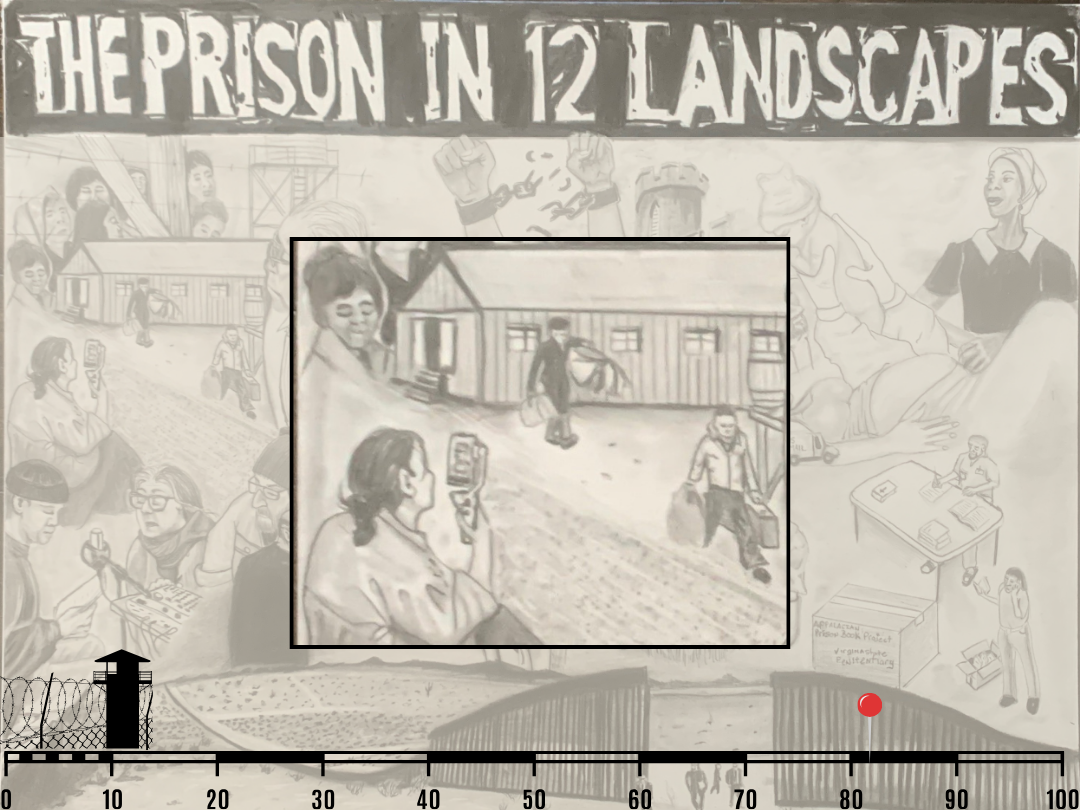
This Q&A is part of a series titled Prison in 12 Landscapes, featuring companion pieces from Ray Levy Uyeda and Tamar Sarai. The series runs through September and is organized to introduce readers to subjects beginning with the most—and easing into the least—proximate to prisons’ material form. You can read the full series here.
This interview has been edited for length and clarity.
Ray Levy Uyeda: You first learned about Japanese American incarceration from your family. How did your professional archival work with primary documents and oral histories add to the memories and accounting you collected growing up?
Caitlin Oiye Coon: My aunt who was incarcerated remembers certain things—family lore, traditions—and then combining those stories with actual records, I’ve come to see things that don’t line up. It’s interesting to see how the memory of an event is told differently than what the source records say.
For instance, my uncle was born at Tule Lake in late October of 1943, around the time the riots started. There’s a story that my uncle was born during the riots, and because of that the doctor was freaked out and my grandmother’s birth was very traumatic. Really, according to the records, the date of his birth is off by a week from the actual riots. I’m sure there was unrest happening in the week leading up to the official riots, but the records paint that story in a different light knowing the actual dates of when things were happening.
Levy Uyeda: Part of the work that Densho is doing is conducting oral histories with Sansei—the third generation of Japanese Americans—whose parents were incarcerated but they themselves were not. That must be interesting to speak with them because at that point I wonder if the work is tracking memories of memories—what Sansei remember of their parent’s stories.
Oiye Coon: I was talking with my coworker Virginia Yamada, who is the oral history program manager, and we were going to interview my aunt. Virginia was saying that what’s really interesting to her are interviews with people who were children after incarceration. She talked about how camp history is just as important to them in how it shaped who they became. Even if they can’t specifically remember it or didn’t live through it, they were still affected by it because of their parents or their siblings or their relatives’ experiences. With a lot of the Sansei, as they’re getting older, they’re really starting to dig into the history and analyze how it has affected them. The intergenerational documentation of incarceration is just as important.
Levy Uyeda: I’m curious about Densho’s focus on incarceration itself. How have you discussed or thought about the potential of identifying with the harm of incarceration?
Oiye Coon: Just by nature of immigration policies in the U.S., there was a wave of Japanese immigrants coming in at a certain time, which then, generationally, made people very similar. Post war, however, there was a new wave of Japanese immigrants coming in, and they don’t have that same experience as the other generations who experienced the incarceration. Sometimes I think the Japanese American community maybe does overemphasize the shared experience of the incarceration as a definer within the community. I work with someone who’s from Japan. They have children who don’t have a shared incarceration history. I’ve never asked them if they feel outside the community because they don’t have that shared point in history.
Levy Uyeda: It sounds like the question that may come up for you is: What does it mean to be Japanese American?
Oiye Coon: Yes—and do you have to have this shared incarceration history as a Japanese American? Obviously you don’t, but I think it’s hard for the Japanese American community to not focus on the incarceration because it did change so much for them.
I don’t speak Japanese. I don’t read it. I’ve never been to Japan. I feel very separate from Japan as a country and a culture. I see a lot of that lack of cultural connection coming directly from the war time period because there was a specific and concerted effort post-war to assimilate and to reject those things. My dad was born outside of the camps and he never spoke any Japanese. But my aunt, who was born pre-camp, spoke Japanese up until a certain point in her life when she was young.
Levy Uyeda: That’s so poignant. Language is the heart of culture. It’s not like camp newspapers were writing, “Japanese Americans are losing their language,” but from what you’re saying it sounds like those quieter changes are the ghosts that linger within the archives, always lurking in the background. As an archivist, you’re negotiating with and examining physical documents, but because of your family history, you’re able to superimpose the immaterial to create a fuller understanding.
Oiye Coon: It’s interesting with language because not many of us speak Japanese. When we come across people who have family letters written in Japanese, I’m like: I wish I could read this because it could tell me so much about what was happening at this time. Because I can’t read it, there’s a disconnect. I’m aware that because I can’t read certain things, like these letters, I’m getting a more narrow understanding of what happened.
Levy Uyeda: Has working at Densho taught you anything about solidarity with those who are currently incarcerated?
Oiye Coon: Yes. One of Densho’s goals is teaching people about what happened so that it won’t happen again. We are, in many ways, still doing to others what was done to Japanese Americans. Even when 9/11 happened or when the Muslim ban came out, Densho was actively involved in keeping track of what was happening and trying to help where we can.
The goal of Densho is to point out this happened in history, what the events and causes were leading up to it, and the result of actually incarcerating those people. The message is: Don’t just look at it as history.
Author
ray levy uyeda is a staff reporter at Prism, focusing on environmental and climate justice.
Sign up for Prism newsletters.
Stay up to date with curated collection of our top stories.