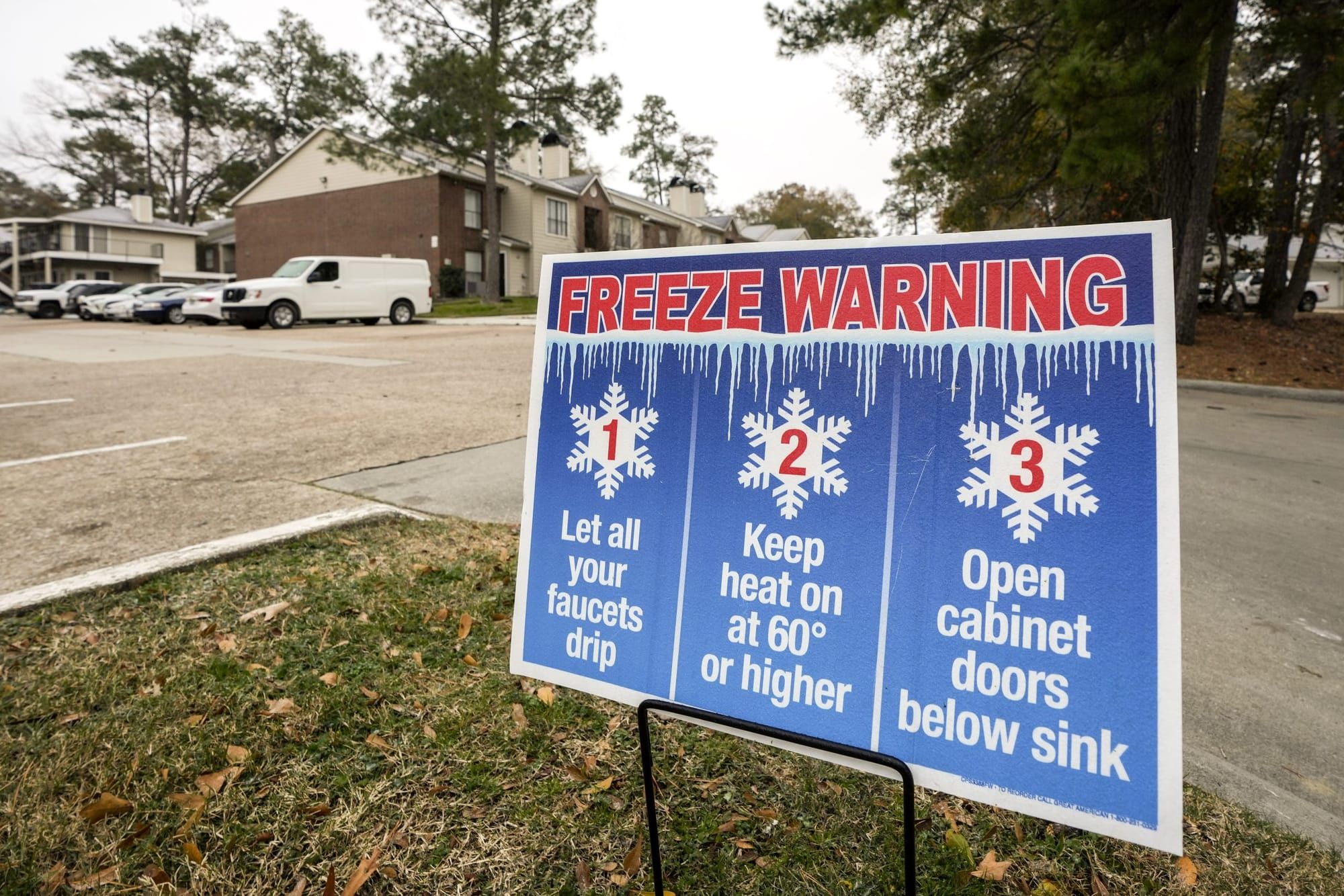
The brutal heat wave that swept Texas last summer posed extreme risks for many incarcerated people, garnering the attention of lawmakers, advocacy organizations, and everyday Texans.
This winter we faced a different extreme: cold.
For the past eight years I’ve lived in solitary confinement, the heat goes out every January or February. Every October, I begin collecting blankets. Whenever someone is transferred to the hospital, psych center, or another prison, I surreptitiously build my blanket collection. The newly arrived are young and dismiss my warnings to prepare for the winter freeze as “old lady worries.”
But I’m from the Midwest; I know how to survive outdoor snowy weather. I never thought the same outdoor emergency survival hacks would be useful indoors in Texas to stay warm.
The first week of the new year, we were actually sweating—the heat was blowing at full blast. Desperate for fresh air, some folks kicked out the screws nailing the windows shut. Unfazed, I continued obtaining blankets. By the end of the first week, the heating vents began blowing in cold outdoor air. NPR reported the Arctic front would hit mid-January, and temperatures reached as low as 20 degrees below zero with wind chill. Cities like Austin even released guides and emergency kit checklists to prepare for increased risk of hypothermia and frostbite.
Soon, my cell was like a walk-in freezer. I kept checking if I could see my breath. I taped cardboard across the vent using sanitary pads and propped my travel-sized blow dryer on the high setting in my toilet hole roll as a portable heater.
Texans, in particular, are at an increased risk of harm related to climate change. Other states share power demands on a centralized grid during extreme heat and cold to prevent lethal power outages. The Electrical Reliability Council of Texas (ERCOT) is our isolated power grid that provides 90% of the state’s electric load. In 2021, the grid failed to keep up with skyrocketing power demands for heat as the temperatures plunged into a deep freeze. This collapse left 4 million homes without power and caused more than 240 hypothermia-related deaths.
On the other end of the spectrum, last year, the hottest year on record, ERCOT issued daily warnings to prevent power outages by decreasing air conditioning usage. Texas’ non-air conditioned prisons became cauldrons, and, mirroring society, our heat-related deaths also climbed. This ping-ponging demonstrates how the prisons in Texas lack the preparation needed for climate extremes, thus guaranteeing climate-related deaths.
While placing cardboard over the windows, I noticed my peers outside quickly pushing food tray carts to us. The food is always very cold by the time we’re served.
Incarcerated folks who have to go outdoors cannot purchase winter protective gear from the Texas commissary. Instead, they tie state-issued socks around their ears and on their hands. Because Texas doesn’t pay its incarcerated people to work, only those who have outside financial support can purchase thermals and gardening-type gloves from the commissary.
With the chorus of several blow dryers blasting in the background, I created my sleeping bag. I laid one blanket directly on the thin, plastic lumpy mat for cushion; then I tied on a flat sheet (fitted sheets aren’t permitted in prison). Then I sandwiched nine folded blankets between the two sheets, tucked securely around the mat. I filled three empty water bottles with hot water and placed each one in a sock to warm the bed.
There are no pillows in prison, but a pack of commissary-purchased pads wrapped in a T-shirt serves as mine. As the bed warms, I get dressed.
Everything I wear I’ve purchased because the state doesn’t provide anything except a shirt, pants, socks, gown, and undergarments. Since we’re in the Hole, we aren’t assigned jackets. I layer a T-shirt, top and bottom thermals, a pair of shorts, two pairs of socks, and a bath towel (which is prohibited for solitary folks to have in our cell) wrapped around my head. The overwhelming majority of my neighbors lack outside financial support and are stuck freezing with a threadbare blanket and two flat sheets.
It was only when the staff—with their hats, gloves, and heavy coats—started complaining about the freezing temperatures that anything actually changed. They demanded a solution after being reminded that when we get sick, they often get sick, too. Soon after, a call to the warden yielded an additional blanket distributed to us.
We are not the only Texans vulnerable to the cold. Our crudely insulated, dilapidated prisons with outdated heating and poor ventilation resemble the homes of those living in rural and urban communities. With a $32 billion budget surplus, the Lone Star State can afford to enact life-saving policies for folks behind bars. Instead, Gov. Greg Abbott diverted $359.6 million from Texas crumbling prisons to fund a militarized response at the Southern border called Operation Lone Star, as reported in the Texas Tribune. The lack of care and cruel conditions accepted for the ultra-marginalized in solitary confinement sets the bar for how poor, working-class, BIPOC, and other vulnerable Texans can expect to be treated without access to reliable electrical power.
For now, I do what I’ve always done: survive. Maintenance workers who have been here since the freeze began issue the same annual instructions to let the vent air blow cold until it warms up. This is the lie we’re told every year. It never warms up.
The Right to Write (R2W) project is an editorial initiative where Prism works with incarcerated writers to share their reporting and perspectives across our verticals and coverage areas. Learn more about R2W and how to pitch here.
Author

Kwaneta Harris is a former nurse, business owner, and now incarcerated journalist from Detroit. Her writing has appeared in a wide range of publications including This American Life, Rolling Stone and
Sign up for Prism newsletters.
Stay up to date with curated collection of our top stories.