Rainbow genocide: How Israel uses ‘pinkwashing’ to terrorize Palestinians
Israel claims to be an LGBTQIA+ haven compared to Palestine. Some advocates see this simply as propaganda, but Palestinians say it leads to real harm against queer people in Palestine
Around the outset of the Gaza genocide in 2023, an Israeli soldier stood before the rubble of destroyed buildings and grinned as he held up a Pride flag. Across it read the words “In the Name of Love.” The Israeli government posted the photo to Instagram with the caption, “The first ever pride flag raised in Gaza 🏳️🌈.”
Over at least the past 20 years, Israel has presented itself as a champion of LGBTQIA+ communities in contrast to Palestinian society, which it portrays as being incurably blighted by homophobia.
It’s a phenomenon commonly known as “pinkwashing,” but social justice advocates disagree on its effects and utility for Israel. Some see it as propaganda and told Prism they believe it is no longer effective in helping Israel justify genocide. On the other hand, LGBTQIA+ Palestinian activists say this interpretation of pinkwashing is flawed because it centers Zionism rather than its impact on queer, gender-nonconforming, and transgender Palestinians.
Both of these critiques of pinkwashing, as propaganda and as colonial violence, deal with the impact of attempting to single out Palestinian queers as a demographic apart from the broader community living under Israel’s occupation and the rest of the Middle East.
“It’s not possible to pinkwash a genocide,” said Jasbir Puar, a professor at the Institute of Social Justice at the University of British Columbia. The image of the soldier unfurling a Pride flag amid rubble laid that bare, she said. “It did the opposite of what he meant it to signal. The rainbow flag had morphed into a tool of colonial conquest.”
Puar has authored several texts dissecting the attempt to align settler colonialism and imperialism with liberal discourses about rights and freedom, including “Terrorist Assemblages” and “The Right to Maim.” She argues that the state of Israel now has “little interest” in using pinkwashing as a messaging strategy due to counteraction by Palestinian organizations such as alQaws for Sexual and Gender Diversity in Palestinian Society and the international solidarity movement against Israel’s occupation. The only entities relying on this approach are Zionist LGBTQIA+ organizations, she said.
Pinkwashing still has applications within Israel’s colonial project, however, as a means of organizing its armed forces. An example is “including” gay and transgender Israelis in the abuse of Palestinians, according to Puar.
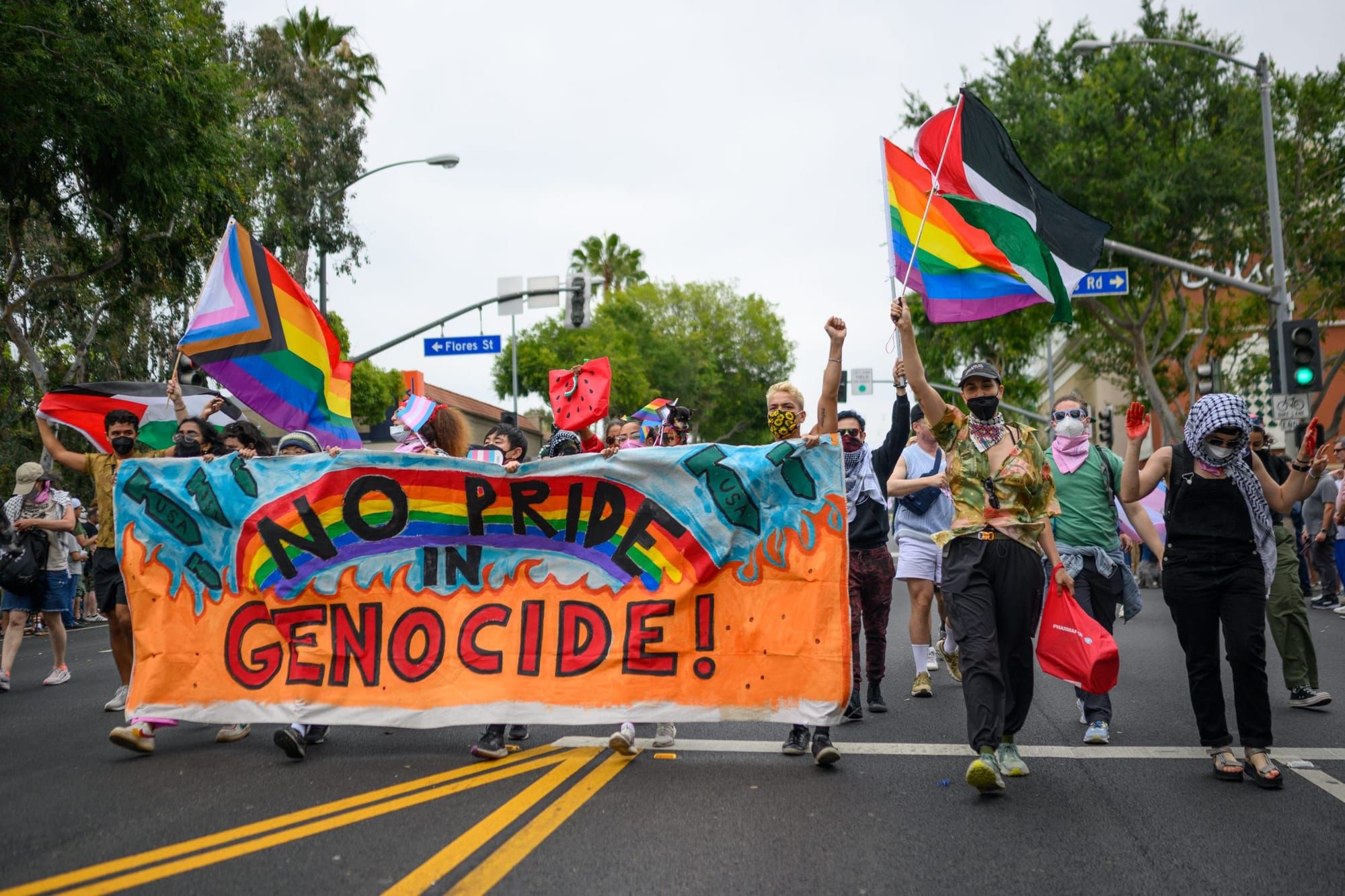
Over the years, dissent against Zionist supporters at Pride parades has become increasingly pronounced. In the wake of two years of genocide, this rejection of pinkwashing as propaganda has become even more intense.
Puar also called out its virulence as a means of isolating queer and trans Palestinians from Palestinian society overall.
Haneen Maikey, the founder and former director of alQaws, asserts that this is how pinkwashing ought to be understood. Israel uses it to its most devastating extent by psychologically bombarding the LGBTQIA+ community in Palestine with the notion that their society is so homophobic that they ought to identify with their supposedly progressive occupier, Maikey said.
Rather than focusing on whether queer people outside of Palestine buy into the notion that Israel is the “safest place for gay people in the Middle East,” Maikey said solidarity activists should recognize that Israel is using pinkwashing to inflict direct harm upon Palestinians by turning them against each other. She added that this makes it a form of colonial violence.
Maikey said that conditions under colonization can make movement-building, including for LGBTQIA+ rights, difficult. Palestinians who face sexuality- or gender-based violence sometimes start believing Israel’s assertions about their society.
“Queer Palestinians who are sensitive to this propaganda will disconnect more and more from who they are as queers and as Palestinians, and more and more from their own society,” Maikey said. “Palestinian queers start thinking about Tel Aviv and [that] queer Israelis that just finished the army and were probably just shooting at their family are their saviors.”
“Changing the minds of queer Palestinians so they see their colonizer as their savior is one of the most cruel [forms of] violence on earth,” Maikey said.
Israel’s armed forces and intelligence services have also weaponized Palestinians’ sexual or gender identities against themselves: Some Palestinians have been blackmailed, abducted, and threatened with being outed if they do not become informants.
Israel also abuses Palestinian queer people who manage to cross the separation wall into 1948 territories by trapping them in legal limbo and restricting access to work permits, banking, shelter, and health care, rendering them vulnerable to exploitation. They also become targets of Israelis who use this precariousness as a means of extorting them for sex.
Maikey said that viewing pinkwashing as merely a messaging strategy meant to legitimize Israel misses the fact that it is a weapon pointed at queer Palestinians. Pinkwashing pushes the idea that they are outsiders who, by simply being queer or trans, have betrayed the liberation struggles and their communities.
But there is no “pink door” for queer and trans Palestinians looking to go through Israeli apartheid walls, as Maikey and the group alQaws frequently point out. Queerness confers no immunity from being buried in the remains of bombed-out hospitals or from starvation from the famine Israel has manufactured in Gaza. Being transgender does not mitigate the hunger driving Palestinians to aid sites that Israeli soldiers transform into killing fields.
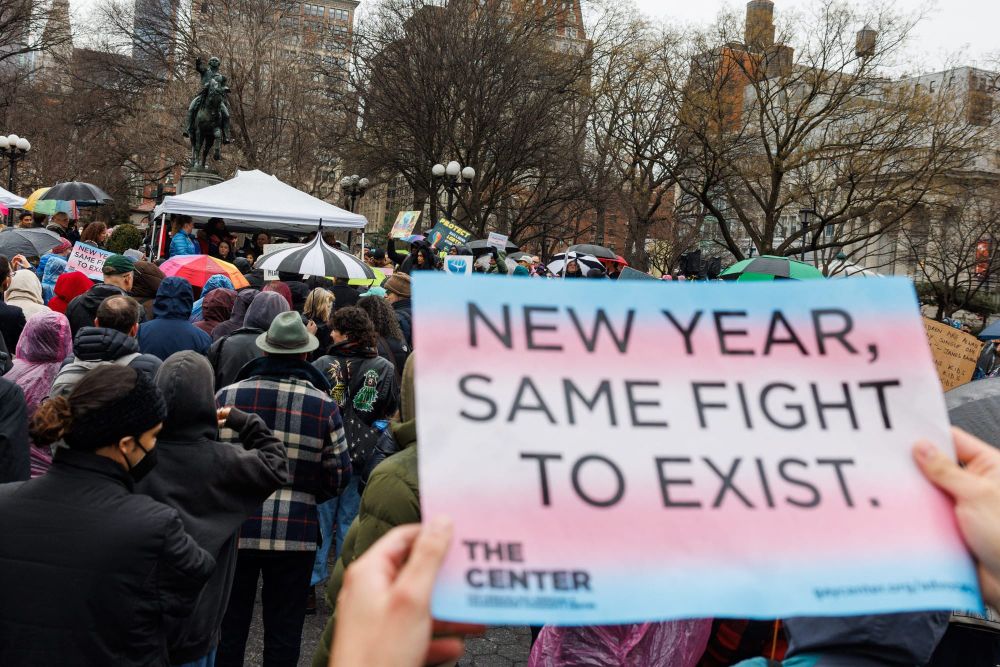
Signs of the decline of pinkwashing began to show at various Pride parades over the years. For instance, in 2017, a Zionist LGBTQIA+ organization in Chicago was told that it could not fly flags celebrating the idea of a queer-friendly Israel. That same year, activists at Berlin’s Christopher Street Day Parade demonstrated for a free Palestine. This rejection of pinkwashing has only deepened in the face of Israel’s genocidal violence in Gaza.
“No Pride in Genocide naturally became the global queer slogan,” said Stephanie Westbrook, coordinator of the Palestinian Campaign for the Academic and Cultural Boycott of Israel, in an email. “Thousands of queer artists have pledged not to perform in Israel. Pride organizations are adopting ethical policies excluding sponsors and participants complicit in Israel’s crimes against Palestinians. And the largest global queer and trans umbrella group, International Lesbian, Gay, Bisexual, Trans and Intersex Association, rejected Israel’s candidacy for its World Congress and suspended complicit Israeli pinkwashing organizations from its membership. This must and will continue to grow.”
Editorial Team:
Sahar Fatima, Lead Editor
Carolyn Copeland, Top Editor
Stephanie Harris, Copy Editor
Author
Simi Kadirgamar is a New York City-based reporter and fact-checker. Her range of work has included covering Hindu nationalism in the U.S., the occupation of Kashmir, and far right politics in martial
Sign up for Prism newsletters.
Stay up to date with curated collection of our top stories.