Hundreds of Iranian students and scholars are facing a visa backlog
Legal advocates say it’s a direct consequence of Section 306, a law that deems applicants from a “state sponsor of terror” ineligible for visa applications
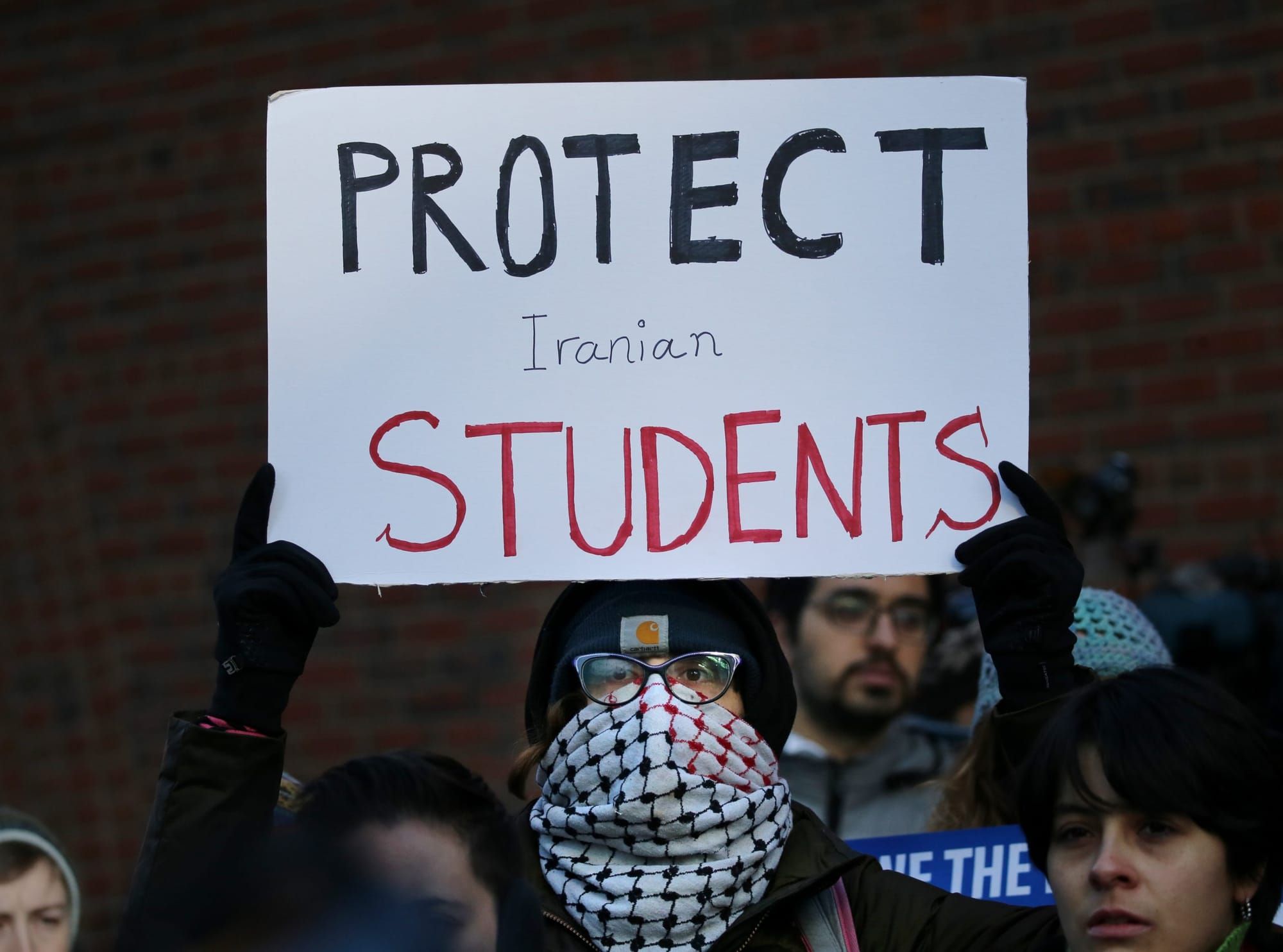
Hundreds of Iranian scholars have been waiting for more than a year for Immigration and Customs Enforcement’s (ICE) Student and Exchange Visitor Program office to approve their student visas after getting accepted to the institutions of their dreams. But for many, their time is running out and their acceptances will soon expire. Legal advocates say this is a direct consequence of Section 306, a law put into place following Sept. 11, 2001, which states that any visa applicant who is from a “state sponsor of terror” is presumed ineligible for a visa unless the government determines that they’re not a national security threat. These delays have only grown since former President Donald Trump enacted the Muslim travel ban in 2018, and Israel’s war on Gaza and occupied Palestinian territories and bombings on Lebanon and Syria have further complicated the process.
There is typically a six-month wait limit for student visas, after which a prospective student can pursue legal action under current advice of the State Department. Legal experts say the delays are attributed to increased security scrutiny for visa applications from citizens of nations categorized as “supporters of terrorism,” including Iran. Immigration attorney David Gluckman, who has represented Iranian students in the past, says most of his clients have been Iranian.
After six months, students can sue the government under the Administrative Procedure Act. Gluckman says the delays have gotten worse and his caseload has increased while the effectiveness of litigation has decreased.
“Iranians are disproportionately affected by the extended administrative processing delays that the government puts them through,” Gluckman said, adding that many people have had to put their lives on hold while waiting a “virtual eternity” for decisions on their applications, causing them to lose opportunities that they’d worked their entire lives for.
“It’s incredibly frustrating to such an extent that they have decided to litigate these cases, which is a pretty drastic step, which is in their minds necessary in order to preserve these once-in-a-lifetime opportunities,” Gluckman said.
The number of Iranian students in American universities has decreased by more than 2,000 since 2017. Around 11,000 Iranian students currently study in American universities, according to the Institute of International Education’s information resource Open Doors, which tracks data on international students in the U.S.
Dozens of Iranian students reached out to Prism about their experiences and requested to remain anonymous out of fear of impacting their chances of receiving their visa admittances. Their testimonies are similar to the almost 700 other students who form part of a Telegram group created by and for students sharing their visa experiences.
One chemical engineering student was accepted into their university one year ago, flew to Dubai for their consular interview in the middle of July, and has been waiting for over seven months without any updates from the U.S. embassy. They have already had to defer their admission twice.
“I spent all my savings for two years to go to Dubai to have this interview,” they said. “Iranian students are not terrorists, because out of our country, some people think we are terrorists … They don’t know the real culture of Iranian people. And we are oppressed by political gains between governments. But what we really want now is clarity, you know, and we deserve this clarity because we are really wasting our life because we cannot start another job.”
Because of the presumption in the law that deems “state sponsors of terror” ineligible, it’s almost unheard of for Iranians to be able to get decisions on their cases the same day as their interview. This requires the government to then put them through administrative processing—an additional series of checks across government databases before they’re finally able to get a decision on their case. The U.S. government has designated Iran as a state sponsor of terror since 1984.
“It’s going to take some significant advocacy efforts to get any type of change in the law,” Gluckman said. “But unfortunately, over the last few months, I think it’s pretty much politically impossible to do that, especially after the attacks that happened in October. All the fingerprints of the Iranian government, the Iranian regime, it’s going to be politically almost impossible for anybody to even propose a piece of legislation that’s going to walk back that Section 306. I just don’t think I see a political solution to that.”
This lack of solution is why students turn to the courts, but that isn’t always a financially viable option. Litigation costs can total thousands of dollars, including testing costs for students to be admitted to their dream schools and travel costs to be able to fly to consular posts. Because the U.S. does not have an embassy in Iran, students must fly as far as Dubai, Bangkok, or Yerevan.
In an emailed statement to Prism, a State Department spokesperson said, “Students should apply early for their visas. On a case-by-case basis, we may expedite appointments for students whose program start dates are quickly approaching. The Department of State is continuously working to refine our visa application, assessment, and security screening procedures. We continue to aim to reduce the time required for certain types of administrative processing.”
Gluckman speculates that the increase in recent delays could likely be due to a decrease in funding of the National Vetting Center, which is part of Customs and Border Protection. Resources that would otherwise be going to the center and vetting these cases may be directed elsewhere towards the border, leaving the vetting center understaffed and causing a backlog.
“We need to be able to get more answers from the government about the status of some of these cases,” Gluckman said. “Part of the reason why a lot of people turn to litigation is because it’s completely opaque and they get no answer … It’s only human nature to get very frustrated by what you perceive to be stonewalling.”
Correction Feb. 29: A previous version of this article incorrectly stated that the U.S. Citizenship and Immigration Services issued student visas; this is incorrect. Immigration and Customs Enforcement’s (ICE) Student and Exchange Visitor Program issues the visa and we have updated the article to reflect this. We also noted that we contacted USCIS for comment and did not hear back. We did, and they directed us to the correct office which responded on Feb. 29, and the article has been updated to reflect the change.
Author

Alexandra is a Cuban-American writer based in Miami, with an interest in immigration, the economy, gender justice, and the environment. Her work has appeared in CNN, Vice, and Catapult Magazine, among
Sign up for Prism newsletters.
Stay up to date with curated collection of our top stories.