Iranian Americans fear for loved ones as U.S. joins Israel’s war on Iran
Advocates see echoes of the Iraq War, paved by disinformation from the U.S. government about the country’s nuclear capabilities
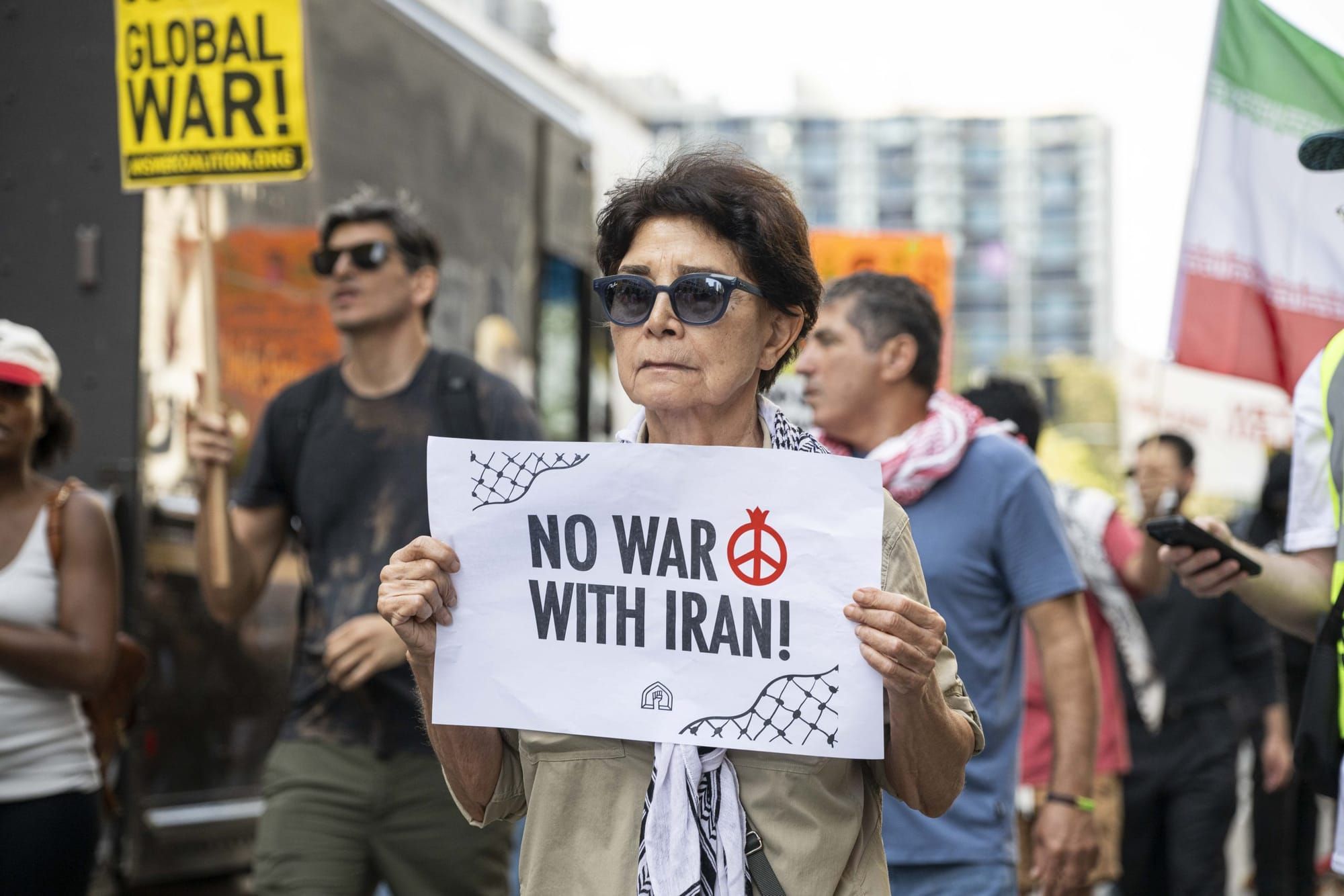
As the U.S. joined Israel’s war against Iran, with President Donald Trump announcing attacks on three areas in the Islamic Republic on June 21, Iranian civilians, including women, children, and health care workers, continue to face the brunt of the violence.
This aggression by Trump on the Fordow, Natanz, and Isfahan nuclear sites comes after Israel began striking Tehran and surrounding cities on June 12 with no prior warning. Iran retaliated by firing drones at several cities in Israel on June 13. On June 23, Iran launched a missile attack against a U.S. air base in Qatar, with no casualties reported.
Israeli Prime Minister Benjamin Netanyahu has claimed that his attacks were meant to destroy Iran’s “nuclear program.” However, residential areas; six airports; medical facilities, including a pediatric hospital; and Evin prison have been struck over the last 10 days. An internet blackout also surged through Iran, creating more chaos amid evacuation orders and ongoing bombardment. Over 950 Iranians have been killed, with more than 3,000 injured, and at least 24 have been killed in Israel.
“My grandmother woke up in the middle of the night hearing bombs, and my aunt just kept telling her it was thunder,” said Zoya Emami, an Iranian American living in California. Emami said her grandparents fled north from Tehran; she also has a lot of family in the city of Isfahan and has not been able to reach anyone in several days.
“My brain can’t process it very well, and that’s resulted in me compulsively checking the news and lots of really high emotions, like crying, probably like six times a day,” she said. “You can’t even communicate with your loved ones or know if they’re safe. You just have to wonder what’s happened.”
Emami said Trump’s statements on June 19, about deciding “within two weeks” whether the U.S. military would become involved, gave her false hopes.
She referred to the leadership in the U.S., Netanyahu, and Iran’s supreme leader, Ayatollah Ali Khamenei, as “deeply evil, corrupt men.”
Khamenei is a deeply divisive figure in Iranian politics: Some view him as an anti-imperialist hero, while others see him as a dictator. In 2022, Iranian authorities under his leadership cracked down violently on a series of protests held under the banner of women’s rights. The protests came after Kurdish woman Jina Mahsa Amini died in Iranian police custody after allegedly wearing her headscarf “improperly.” Iranian authorities denied being responsible for her death. However, the Islamic Republic continues to be the “top executioner in the world per capita,” with growing fears of a larger crackdown by Khamenei due to the war with Israel.
“ I think the regime is terrible and causes deep harm, but I also don’t want to see bombs on our people’s heads,” Emami said. “These oppressive dictators are not going to be a way to liberation and freedom.”
Netanyahu met with Trump in April and stated that a large part of their agenda was discussing “Iran’s nuclear program.” However, Iran does not have any nuclear weapons, while both the U.S. and Israel do. While U.S. Director of National Intelligence Tulsi Gabbard testified to Congress on March 25 that Iran was not building a nuclear weapon, Trump said this month that she was wrong.
“Our objective was the destruction of Iran’s nuclear enrichment capacity and a stop to the nuclear threat,” Trump said in an address from the White House on June 21. “Tonight, I can report to the world that the strikes were a spectacular military success. Iran’s key nuclear enrichment facilities have been completely and totally obliterated.”
While Trump also hinted in a Truth Social post about wanting “regime change” in Iran, Emami said she continues to see “buzzwords” and the recycling of propaganda manufactured by former President George W. Bush that Western media amplified at the start of the Iraq War in 2003. The Bush administration initially referred to the invasion as “Operation Iraqi Freedom,” but the war killed more than 600,000 Iraqis and led to ongoing birth defects among the population due to the amount of depleted uranium the U.S. dropped on the country.
“Just as President Bush started a disastrous war in Iraq pushed by war hawks, neoconservatives, and Israeli leaders like Netanyahu, President Trump has attacked Iran based on the same type of false information put forward by those who consistently seek to drag our nation into unnecessary and catastrophic wars,” Nihad Awad, executive director of the Council on American-Islamic Relations, said in a statement on June 21. “The extremist government of indicted war criminal Benjamin Netanyahu was desperate to make our nation even more complicit than it already is with its genocide in Gaza and its multiple attacks on nations in the region.”
The National Iranian American Council (NIAC) referred to the U.S. strikes as “the nightmare we’ve fought to prevent.”
“Trump took this fateful decision without Congressional or UN authorization, even though it will trigger serious reprisals from Iran and put American soldiers directly in the line of fire. It was done not in response to any imminent threat, but because Trump and other American leaders still haven’t figured out how to tell Netanyahu no,” NIAC President Jamal Abdi said in a statement. “If Netanyahu lit the negotiating table on fire, Trump just added kerosene to it. Diplomatic channels with Iran will be effectively ended.”
Elahe Amani, California-based president of the Women’s Intercultural Network, who was previously a social justice activist in Tehran, said that massive amounts of propaganda about “precision strikes” from Western media, Israel, and some news organizations in Iran have created severe polarization among the diaspora.
“ The loss of civilian life on Iran’s side is—same as Palestine—much greater than on the side of Israel,” Amani said, adding that it’s “fake news” to suggest only nuclear or military areas are being hit. “The same argument is being used when Netanyahu was bombing the hospitals in Gaza or bombing the schools in Gaza.”
Both Emami and Amani said they have been seeking out others in Iranian diaspora communities around them to “collectively grieve.”
“ My body’s always feeling the toll and the grief there, it doesn’t ever go away,” Emami said, adding that she just wants to hold her grandmother’s hand. “I’m kind of craving connection with [my family] and connection with culturally significant items and things like that. I just want to hold everything close to me so it doesn’t leave.”
Editorial Team:
Sahar Fatima, Lead Editor
Carolyn Copeland, Top Editor
Rashmee Kumar, Copy Editor
Author
Neha Madhira is an award-winning gender, health and politics reporter with a focus in South Asia and the Middle East. Previously, she was a breaking news reporter in Austin, Texas, where she broke the
Sign up for Prism newsletters.
Stay up to date with curated collection of our top stories.