Immigrants recovering from LA fires turn to local support organizations
Many Black and brown immigrants who worked as house cleaners, caregivers, and gardeners lost work after fires destroyed thousands of homes
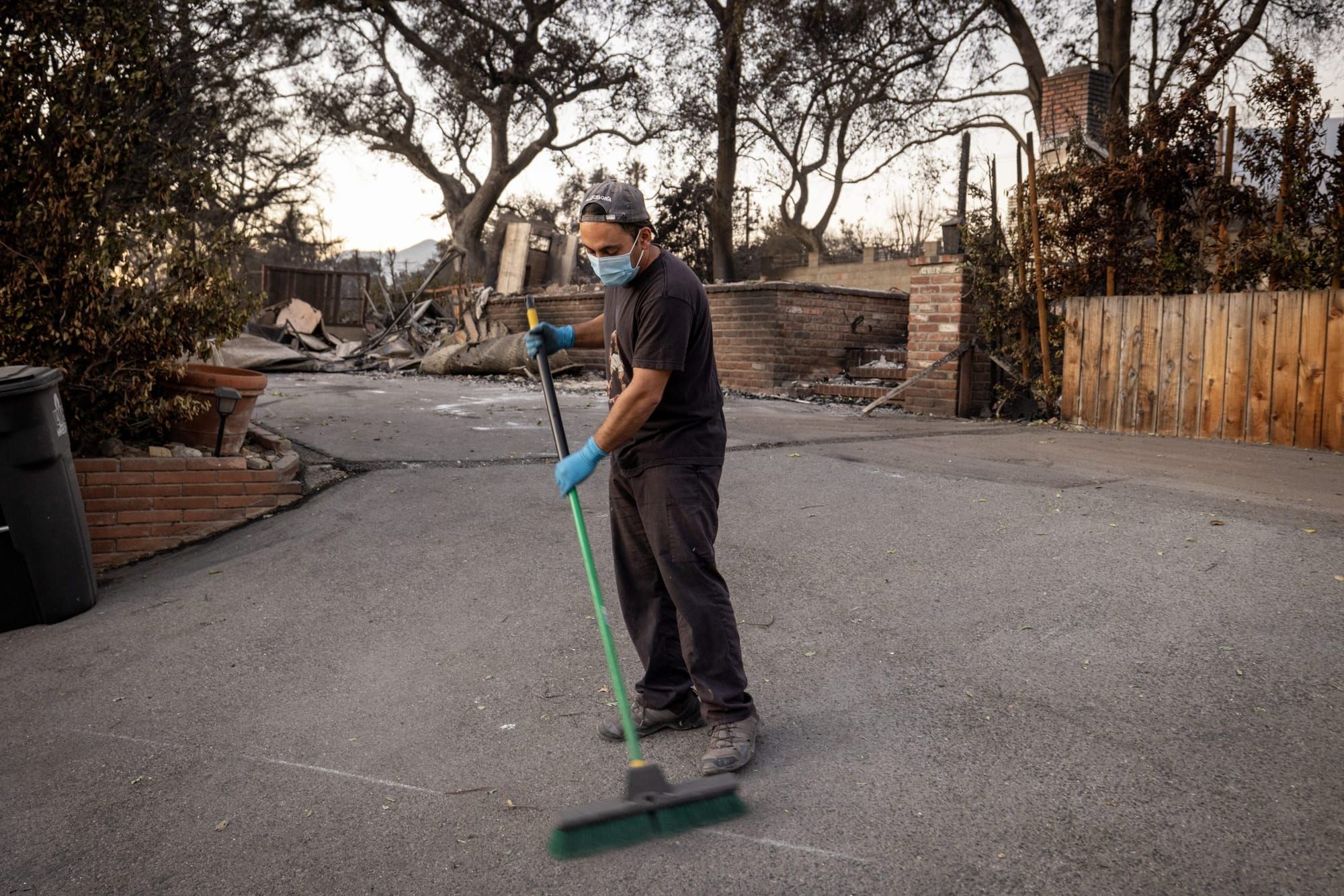
A local job center in Los Angeles County was a hub of activity in the aftermath of the devastating Eaton Fire, and Maria seemed to be its cruise director. Each person who entered made a beeline for the counter, where she did intake and answered phones. When they had questions, she had answers.
“Soy metiche,” she said with a laugh. Being nosy was not really her job, but it certainly helped. The immigrant workers who relied on the job center’s services were still picking up the pieces of their lives weeks after the fire was finally extinguished.
Now the second most destructive fire in California history, the Eaton Fire laid waste to people’s homes and the livelihoods of many Black and brown immigrants who cared for them—gardeners, house cleaners, painters, and more. And it couldn’t have come at a worse time, just as an emboldened President Donald Trump returned to the White House with an administration determined to carry out the mass deportations it promised its supporters.
This job center was a part of Maria’s way forward. Since arriving from Mexico eight years ago, she cleaned houses in the Pasadena and Altadena areas, but the fires destroyed most of her clients’ homes. Like many workers using the center’s services, Maria—who has asked to use a pseudonym for safety reasons—was not authorized to be in the U.S. and was left with few options for continuing her work or applying for relief.
With time on her hands, Maria came to the job center to help. Prism is not publishing the name of the job center to protect Maria and others.
The place was flooded with support and in-kind donations from immigrant workers and community volunteers alike. Maria started out lending a hand by answering phones and keeping track of people coming in.
She reflected on her life as an immigrant worker before getting involved with the job center.
“I didn’t know I had rights,” she said. “Now, I know.”
And for that, the job center is a crucial part of her life.
Networks born of crisis
Networks and programs established in times of crisis have found new life since the Eaton and Palisades fires. It’s not a moment too soon for immigrants who might not otherwise qualify for certain types of disaster aid or federal unemployment.
“There are people that have been here for 20, 30 years, and they have devoted their entire life to work,” said Anabella Bastida, the director of membership and member services at the Coalition for Humane Immigrant Rights (CHIRLA). “And now that they are in this situation, it’s very hard for them to get any support.”
CHIRLA recently revived an early-pandemic-era program called iRelief, which offers $500 one-time cash relief and grocery vouchers to people affected by the fires. So far, about 500 families have applied.
One recipient, Gloria, was grateful for the relief, even if it came nowhere close to covering her family’s needs. Gloria asked to use a pseudonym to avoid the risk of deportation for her or her husband. Her house-cleaning and dog-walking clients all had severe smoke damage in their homes, so her work has been dramatically reduced since the fires; her husband, a school lunch server, was also out of work while schools remained closed for a month.
Their only saving grace is that their landlord is out of the country and won’t be able to collect rent checks until he returns.
“I hope he comes back in another two months, and hopefully I can get my job back,” she said.
Knowing your rights
If community organizer Megan Foronda had it to do all over again, she would have mobilized even sooner to reach out to the caregivers in her network—who provide in-home assistance to elderly and disabled patients—when the fires started. Along with her other colleagues at the National Alliance for Filipino Concerns (NAFCON), Foronda spent days traveling around L.A. and checking in on caregivers to ask about their wellbeing as the wildfires burned.
“We would also ask them: With Trump in office, are there any concerns that you have around immigration? Or do you know anyone that does?” she said.
This strategy opened up a chance to gauge interest in a support network that would last beyond the fires, one they could easily tap into the next time a disaster or major emergency happened.
With lines of communication open, Foronda has been able to organize know-your-rights trainings so that people know how to respond if Immigration and Customs Enforcement (ICE) comes to their home or workplace.
“We want to inform our community to know that, let’s not wait until any one of us gets detained, deported, or hurt in any sort of way. Let’s be prepared because the attitude has sort of been, ‘Let’s just wait and see what happens’ or ‘This wouldn’t happen to me because I have papers.’ But the reality is it’s not that black and white,” she said.
Last month, Trump’s “border czar,” Tom Homan, complained on CNN that immigrants have “been educated on how to defy ICE, how to hide from ICE,” much to the delight of immigrant advocates across the country. While these trainings are popping up everywhere in person and information proliferates on social media, NAFCON’s network in Los Angeles has the added benefit of being a special bond forged in the aftermath of disaster.
Bracing for the future
“You have to sit on my left,” José, who wanted to use a pseudonym to avoid risk of deportation, said in Spanish. “I hear better in this ear.” He sat in the waiting area of the job center among other day laborers. Every so often, he opened the locked door to let someone in.
José is a gardener and painter, and his wife is a house cleaner. Both lost most of their clients to the fires, so he hopes to help with the fire zone cleanup when the time comes.
However, toxic materials associated with that work could have an impact on his health. Immigrants are so often the ones who clean up after disasters, and lax worker safety has led to many of them getting sick. José said he trusted the job center to protect him and his fellow workers and to ensure they knew their rights in the workplace and as humans living in the U.S.
He pulled out his phone and swiped to a photo. It showed a certificate for a recent Occupational Safety and Health Administration (OSHA) training on fire disaster zone cleanup sponsored by the job center.
“We’re prepared because we know it can be dangerous for your health,” he said.
Editorial Team:
Sahar Fatima, Lead Editor
Carolyn Copeland, Top Editor
Rikki Li, Copy Editor
Author
Andrea Gutierrez (she/her) is an award-winning writer and audio producer in Los Angeles. She’s drawn to stories at the intersection of culture, identity, and power. Her work has been featured in NPR,
Sign up for Prism newsletters.
Stay up to date with curated collection of our top stories.