Immigrants in western NC face a long road to recovery after Hurricane Helene
Immigrant and Latinx-serving organizations in the region have become a lifeline, offering information, language access, donations, and other crucial services

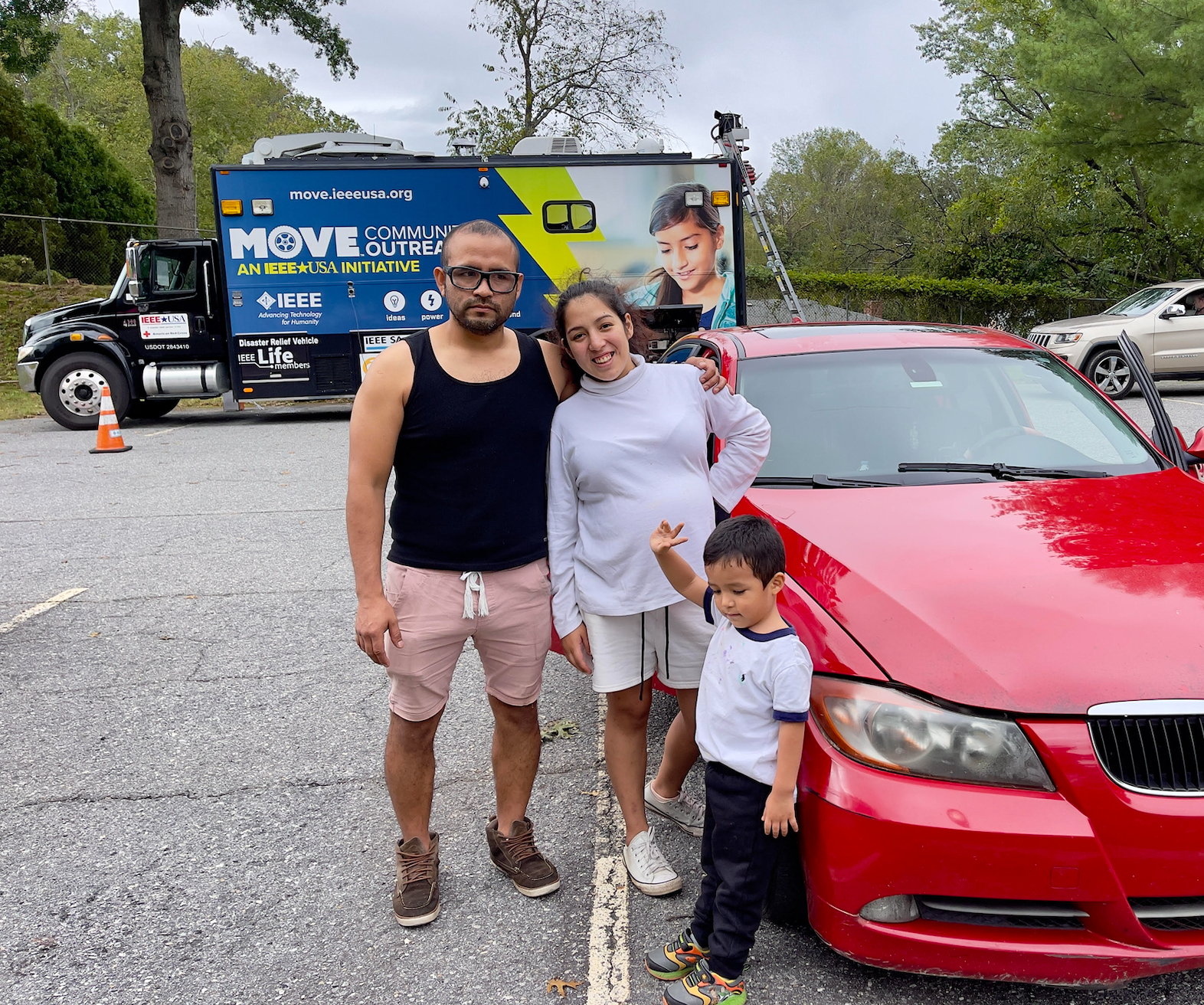
When Hurricane Helene slammed into western North Carolina late last month, causing historic flooding and catastrophic damage in rural mountain towns, Geny Hernández López knew that her collective had to jump into action to help one of the region’s most vulnerable and overlooked communities: undocumented immigrants.
“We started receiving donations from all over the country,” said Hernández López, the director of Colaborativa La Milpa, a collective of grassroots organizations based in Buncombe County, North Carolina, that serve the region’s Latinx and immigrant communities. “We went door by door, knocking on each door and making sure everybody was getting the help they needed. Because there’s people who said, ‘[N]obody has come here to help.’”
Hernández López spoke to Prism from a warehouse in Asheville, North Carolina, filled to the brim with water, diapers, and nonperishable food items. Usually packed with more than 100 volunteers sorting through donations, the warehouse was eerily quiet on Oct. 15. For the first time in days, the volunteers decided to take a break to tend to their families and their own ravaged homes. But Hernández López couldn’t bring herself to rest.
“We know that people all around the community lost everything,” she said. The idea that “they have nothing right now” was too much to bear.
In the weeks since Helene touched down in western North Carolina on Sept. 27, Colaborativa La Milpa has worked tirelessly with volunteers and other local organizations to reach the immigrant communities too often left behind in the wake of climate disasters while simultaneously tasked with their cleanup. More recently, volunteers and members of the collective formed a marketplace where members of the immigrant community and other locals in need can obtain donations and stock up on necessities. The director told Prism that Colaborativa La Milpa has reached more than 30,000 people in Western North Carolina, an overwhelming majority of whom are immigrants.
Organizations providing critical infrastructure
Much of the coverage of Hurricane Helene has focused on the recovery efforts in Asheville, an expensive enclave of western North Carolina that attracts tourists from all over the country. Latinx immigrants form the backbone of the tourism industry, and all across western North Carolina’s small, rural mountain towns, the Latinx population is both growing and undercounted, as many undocumented immigrants are fearful of participating in the census. According to official numbers in some of the hurricane’s hardest hit regions, Latinx residents account for 10% of the population in Henderson County and 7% of the population in Buncombe County, which includes Asheville and more rural areas where immigrants often work in agriculture and live in mobile homes that Helene wiped out.
The groups that form Colaborativa La Milpa tell a larger story about the needs of immigrants in western North Carolina and the gaps in information, resources, and services that existed for these communities well before Helene barreled through. PODER Emma fights displacement. Compañeros Inmigrantes de las Montañas en Acción (CiMA) fights for immigrant rights. Raíces Emma–Erwin supports the inclusion and recognition of Latinx immigrant families in the Erwin School District. The language preservation project Mä hñäkihu engages the many local residents who have roots in the Indigenous Hñähñú community originally from the Mezquital Valley of Hidalgo, Mexico. El Telar supports community-based educators and parents. These and other Latinx-serving groups now provide critical infrastructure for thousands of western North Carolina immigrants who face overwhelming barriers to recovery.
Hernández López said that some rural communities are still without power, cell service, and access to water, and that clean and safe drinking water will long remain an issue for those who rely on well water. Updated information about these conditions isn’t always made available in Spanish and other languages. As indefinite unemployment in the tourism industry looms for immigrant workers, some mixed-status families who lost their homes may not be aware they don’t need to show identification to access Red Cross disaster shelters or that they may be able to access aid through the Federal Emergency Management Agency (FEMA).
FEMA assistance is open to noncitizen nationals and “qualified aliens,” which encompass green card holders, refugees, and those who have been paroled into the U.S. for at least one year or have been granted withholding of removal, among other immigrant groups. While some immigrant and mixed-status families may be afraid of accessing aid, Hernández López encourages all who are eligible to apply, and this includes parents and guardians of American citizen children.
Yet another hurdle is the application process. Hernández López told Prism that for the first time earlier this month, she encountered bilingual FEMA workers in western North Carolina assisting immigrant families with applications. However, most FEMA workers thus far have only spoken English, which she says creates “an extra obstacle.”
Language barriers and lack of access to critical services have long been issues for the Latinx community in the region, according to an assessment published earlier this year based on survey responses from more than 500 Latinx locals. Only around one-third of these respondents thought “that local and state governments support Latinos.”
Hernández López said she wants to prioritize helping members of the community who will be left behind by FEMA and other forms of aid from local and state governments.
“We would also like to have resources for the people who are not receiving FEMA aid,” Hernández López said. “That’s something we need to call out, and [we need to] help those people who aren’t receiving help from FEMA. We need resources for them. There are lots of them.”
Keeping communities informed
Now that power and internet access are being restored, hyper-local Spanish language media and organizations focused on immigration are lifelines for members of the immigrant community in search of up-to-date information. The nonprofit newsroom Enlace Latino NC has published critical reporting for Latinx communities, much of which has been reported by Asheville-based staffer Patricia Serrano. A recent piece by staffer Patricia Ortiz outlined where donations can be made specifically to help Latinx communities impacted by Helene.
Some organizations have even expanded beyond their usual work to help immigrant communities in western North Carolina. Carolina Migrant Network (CMN) is the only nonprofit in the Carolinas that offers free legal representation to detained immigrants and those in removal proceedings. However, the group is now collecting winter clothing for western North Carolina residents as the weather turns snowy.
CMN’s co-founder, Stefanía Arteaga, told Prism that her organization started a Latinx Helene mutual aid fund because of the outsized focus on Asheville. Latinx communities in towns like Morganton, Marion, Black Mountain, Hendersonville, and Silva were not receiving the same level of attention or donations. In part, this is because of how hard it was to reach some regions in the immediate days after the hurricane, Arteaga said. Locals told Prism that, in some cases, mules and other animals were used to get supplies, medications, and donations to rural mountain communities.
“We want to make sure that immigrant communities are receiving the mutual aid that they need to be able to rebuild their lives,” Arteaga said. “Certainly, there is a lot of concern around perceived or real barriers to receiving aid. We know that that might limit people just even seeking or accepting support, so we are just trying to do our best to ensure that we also get money for those groups that are on the ground doing the real work.”
CMN has also used social media to inform the immigrant community about the presence of Immigration and Customs Enforcement (ICE) and Customs and Border Protection (CBP) in western North Carolina. Federal immigration agencies often provide emergency response and relief after natural disasters. A statement from the Department of Homeland Security noted that “to the fullest extent possible,” ICE and CBP would not carry out immigration enforcement in “protected areas,” which include evacuation routes, registration sites for disaster-related assistance or the reunification of families and loved ones, and sites used for sheltering, the distribution of emergency supplies, food, or water. CMN’s larger goal with their social media posts was to quell fears about immigration enforcement in the region and inform locals of their rights if they were questioned or denied aid based on their immigration status.
Another organization filling crucial information gaps is the grassroots media organization JMPRO Community Media, which produces videos in Spanish and Indigenous languages by reporters who are members of the Western North Carolina Latinx and immigrant communities they report on.
JMPRO community reporters have spent the last several weeks reporting live from food-distribution sites, highlighting locations where Spanish-speaking volunteers can assist with FEMA applications, and detailing eligibility for the Disaster Supplemental Nutrition Assistance Program (D-SNAP), which is currently open to Western North Carolina, including American citizen children and lawful permanent residents, refugees, asylees, and other immigrant groups.
Immediately after Hurricane Helene hit, JMPRO began reporting live across the region, highlighting the terrifying experiences of immigrants like Vikmer and Gloria, a couple only using their first names for reporting.
Gloria was pregnant and scheduled to be induced on Friday, Sept. 27, when Hurricane Helene hit. When she couldn’t reach her doctor, the couple and their small child went to the emergency room at Asheville’s Mission Hospital, hoping Gloria could give birth there. The family walked into an “apocalyptic scene.” According to news reports, about 1,000 people were crammed into the emergency room and lobby. Some were severely injured or in need of an oxygen tank or medication such as methadone. Others were frantically searching for missing loved ones. Ultimately, Gloria was turned away from the hospital because access to clean water was “wiped out,” according to nurse Hannah Drummond, who spoke to NBC News. The sewage system was so backed up after the storm Drummond said hospital workers couldn’t flush toilets and were forced to defecate into bags and buckets.
Vikmer and Gloria felt they had no other choice but to flee North Carolina so that Gloria could give birth near relatives in New Jersey, more than 10 hours away. On Sept. 29, the couple packed up their child and got on Interstate 26, the only route out of Asheville open at the time. But the family never made it out of North Carolina. Gloria went into labor and gave birth at a hospital in Concord, about 150 miles east of Asheville and far from friends and family.
Harrowing stories like Vikmer and Gloria’s are important to tell—not just as a record of the historic storm, but so that people have factual accounts of the aftermath from real locals.
Conspiracy theories, misinformation, and disinformation—spread mainly by former president Donald Trump and further pushed online by Republican lawmakers—continue to mire the Hurricane Helene response. The crux of Trump’s dangerous lies is that Republicans impacted by Helene were being denied aid and that Vice President Kamala Harris spent billions of dollars in FEMA aid on “housing for illegal migrants.” Trump’s rhetoric has led to threats on FEMA workers’ lives, including an incident in North Carolina where an armed man was arrested for threatening FEMA workers. He later said he was “motivated by social media reports claiming that FEMA was withholding supplies from hurricane victims,” the Washington Post reported.
Lend a hand
While the former president’s anti-immigrant rhetoric may have complicated FEMA’s efforts in western North Carolina, it’s had little impact on residents’ desire to help their immigrant neighbors who lost everything to Hurricane Helene. The experience of a beloved soccer coach in Swannanoa illustrates how close-knit community bonds are getting locals through catastrophic conditions.
Jose, who is only using his first name for this reporting, is a beloved community fixture in Swannanoa. For more than two decades, the coach has taught generations of young people in western North Carolina how to play soccer through the club he founded called Regeneración.
When Hurricane Helene hit, Jose’s mobile home near the Swannanoa River quickly flooded. If not for former soccer student and current Regeneración coach Isaias Maldonado-Figueroa, Jose may have lost his life along with his home.
“I called my coach to see if he was OK,” Maldonado-Figueroa explained. “He said that the water was already at the steps of his door, but we didn’t think much of it. This has never really happened here. We just thought [the water] wasn’t going to rise, but he noticed it was rising at a pretty rapid pace. He told me to call 911 to get someone to evacuate him from his home—and that’s what happened about 30 minutes after the call.”
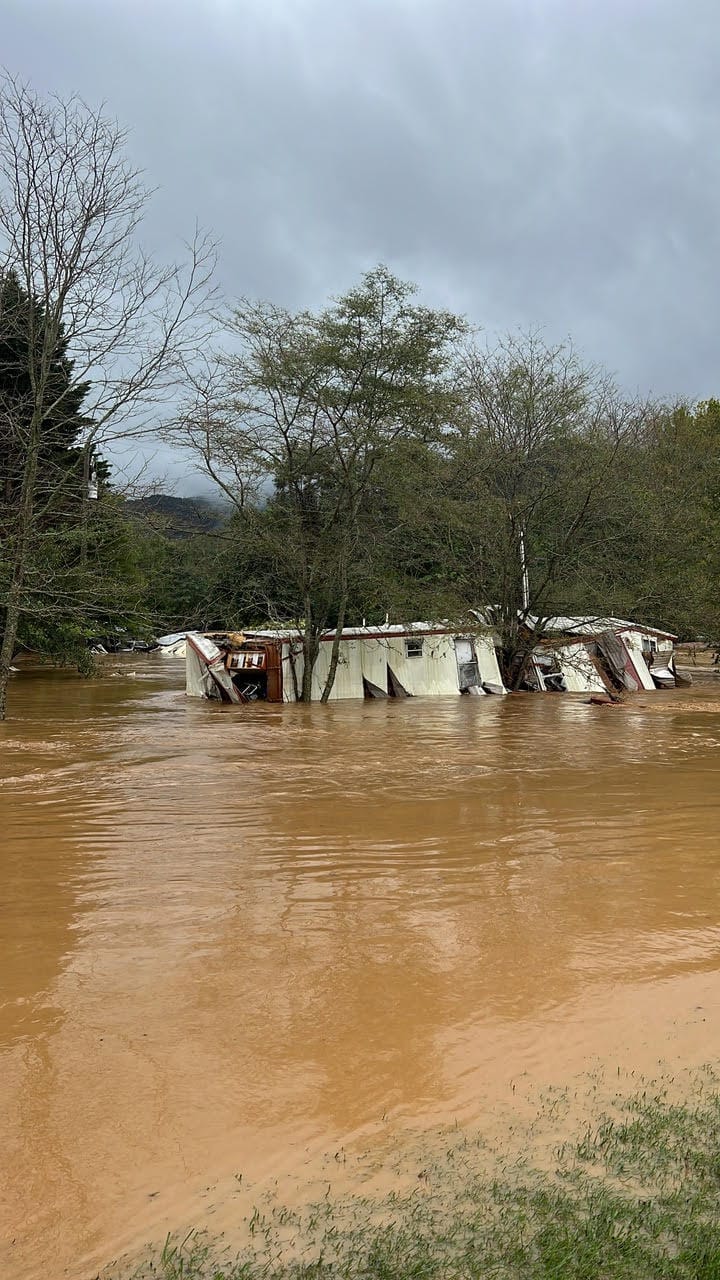
After being evacuated, Jose was taken to a local church, though Maldonado-Figueroa didn’t know that for another three hours because he lost cell service. Wanting to ensure that his coach was safe, Maldonado-Figueroa convinced a roommate to accompany him on a three-hour trek wading through Swannanoa until Jose was located. Jose is currently living with Maldonado-Figueroa as he figures out his next steps.
In the days immediately after the hurricane, Maldonado-Figueroa said he fielded calls from concerned parents, neighbors, and community members who wanted to ensure the coach was safe. Upon learning that Jose had lost his home and everything inside of it, food, clothing, and other donations came pouring in from local residents. So many donations came in that Maldonado-Figueroa and others involved in Regeneración have set up a donation station in Swannanoa so that other community members in need can access supplies. They estimate that they’ve assisted hundreds of people over the last few weeks.
Kevin Romero, another former student and current coach with Regeneración, is not surprised by the outpouring of love and support the coach has received. In one moving scene, Romero said a 10-year-old soccer student who lives more than an hour away in the unincorporated community of Leicester traveled to Swannanoa with his family to check in on the coach. Romero said the child cried upon seeing his coach, hugging him as Jose assured the 10-year-old he was OK.
Romero said the donation station is a small effort to create a sense of unity during a disastrous time, and in part, it comes from the leadership Jose has modeled for young people on and off the soccer field.
“This is definitely a learning experience for myself [and] a teaching experience for the next generation to give back,” Romero said. “If I’m okay and I’m doing well for myself, but I see that you’re not, why wouldn’t I lend you a hand?”
The future is uncertain for Jose, who is ineligible for FEMA and other forms of government aid. This is a situation that many immigrants find themselves in, said Colaborativa La Milpa’s director. And as recovery efforts continue in western North Carolina, Hernández López told Prism, “little by little, new problems are coming up.”
Asheville residents with uninhabitable homes may still face eviction, worsening the housing crisis in one of the most expensive housing regions in the state. Given the unemployment in the tourism industry and the inability of some immigrants to access FEMA aid, Hernández López is worried about undocumented immigrants who may turn to construction work and face “abuse, exploitation, and neglect.” She is also concerned about members of the immigrant community who “can’t begin again” because they can’t afford to relocate or there is nowhere for them to go.
“It’s actually difficult to be in a country that’s not your own country, speaking a different language that’s not yet your native language,” Hernández López said. “Starting from scratch will be a much bigger challenge.”
Those interested in helping immigrant communities in Western North Carolina can donate to Colaborativa La Milpa, where groups in the collective continue to distribute food and soon plan to help dig new well water systems and repair mobile homes.
Authors

Julio, a native of Peru, pursued studies in education, graphic design, photography, and journalism. He started teaching in a rural community near Lima in 2006 and worked there for four years before mo
Sign up for Prism newsletters.
Stay up to date with curated collection of our top stories.