Illinois police officer killed a preschooler 19 seconds after entering his home
Terrell Miller was just 4 years old in March 2024 when Macomb Police Department Lt. Nick Goc shot him and his mother’s partner while responding to a domestic violence call. Goc has faced no repercussions for his use of deadly force
Real journalists wrote and edited this (not AI)—independent, community-driven journalism survives because you back it. Donate to sustain Prism’s mission and the humans behind it.
If you are experiencing domestic violence, call the National Domestic Violence Hotline at 1-800-799-7233, or go to thehotline.org.
In October 2018, when Keianna Miller, then 32, became pregnant, it was a dream come true.
Her doctor had previously told her that she was unlikely to conceive. Upon receiving the good news, Miller moved back to her hometown of Macomb, Illinois, for a fresh start. A city of just 15,000—nearly a third of whom live under the poverty line—Macomb is far from the major cities of Springfield, Chicago, and St. Louis. However, it is home to Western Illinois University, which boasts one of the largest undergraduate law enforcement programs in the nation. One graduate of the program, Macomb Police Department (MPD) Officer Lindsey May, stopped Miller on her way to the store one day. Recognizing her from a previous arrest years earlier, Miller told Prism that May pointed at her stomach and said, “I can’t wait to arrest your son.”
It was no wonder that Miller shared the same fear that animates the hearts of countless Black mothers living in America: that their children will one day be victims of police violence. But for Miller, whose struggles with mental health following the loss of her brother in 2012 led to multiple encounters with the MPD and a stint in prison, the fear went deeper. Miller named her baby Terrell after her brother, and in July 2020, she brought him to a protest in response to the police murder of George Floyd.
“Ever since I’ve been arrested, before I even had my son, I’ve been having this recurring dream that the police runs into my house and kills me and my son,” she told the crowd that day.
Four years later, Miller’s horrific dream came true.
Terrell was a sweet boy who was intelligent beyond his years, according to Miller. He loved Spider-Man because he was a hero who helped people. His short life came to an end on March 16, 2024, when MPD Lt. Nick Goc killed the 4-year-old alongside Miller’s abusive boyfriend, 57-year-old Anthony George.
Goc first joined the MPD in 2007, and investigations into the shooting exonerated him on the basis that his use of deadly force was “justified,” meaning that the officer’s response to a threat was found to be reasonable and necessary. What constitutes a “justifiable use of force” varies wildly and is interpreted differently across states and even cities, often resulting in no repercussions for officers involved in shootings and no justice for the victims of police violence, who are disproportionately Black.
According to the city of Macomb, Terrell Miller and Anthony George’s deaths were justified. While Goc was cleared of any wrongdoing in their deaths, Keianna Miller is pursuing a civil rights lawsuit that alleges excessive use of force.
“I killed a baby”
The day her son was killed by police started off well, according to Miller.
She visited her grandmother for the 12th anniversary of her brother’s death. Miller’s mother was also in town, and although the two had a tumultuous relationship, Miller introduced her son to her for the first time. She returned home with Terrell in good spirits, imagining future outings with her family. But upon arriving at the apartment they shared, she found her boyfriend waiting for her, drunk and upset.
Over the course of their yearlong relationship, George was often quick to jealousy and violence, Miller told Prism. He hated that she worked late-night shifts at her job manufacturing windows. According to Miller and county court records, George spent a month in jail the previous autumn for punching her in the face.
That March night in 2024, George brandished a knife, Miller said. By the time Goc and his rookie partner, Officer Korri Cameron, arrived at the scene after receiving multiple domestic violence calls from concerned neighbors, Miller said George had already raped her at knifepoint and stabbed her multiple times.
According to records obtained through a Freedom of Information Act (FOIA) request, upon hearing Miller’s screams for help, Goc kicked down the door to the apartment and entered with his gun raised. “Let me see your fucking hands,” he yelled at George, who stood naked in the apartment hallway. While Goc yelled at a bloodied Miller to “get out,” she refused to leave her son, body cam footage shows. George then disappeared into Terrell’s room, returning with the 4-year-old boy. George held the child and put a knife to Terrell’s throat with another aimed at his stomach. Terrell wailed. Just 19 seconds after first entering the apartment, Goc fired one round, striking Terrell in the head and George in the neck, according to records.
Miller, suffering from 25 lacerations, faded in and out of consciousness while she was outside of her apartment building waiting for the ambulance, unaware that her son and boyfriend were dead, she told Prism. Soon, various law enforcement agencies descended on the scene: the additional MPD units, the police chief, the McDonough County deputy sheriffs, Illinois State Police officers, and even union representatives with the Fraternal Order of Police. Goc’s body camera footage, also obtained by Prism through FOIA requests, shows that Miller’s mother also rushed in, before officers told her to go to the hospital to tend to her daughter. Minutes later, Miller’s sister also arrived.
“I need my nephew, he’s in there,” she’s heard saying in body cam footage. She waited outside, surrounded by the growing number of officers at the scene. “I’m not leaving until I get my nephew,” she insisted. Upstairs, Cameron cradled Terrell’s dead body in her arms.
Goc’s footage captures the moment he reckons with what he’s done.
“I killed a baby,” Goc whispered shakily from the back of his chief’s patrol car.
“You’re alright, you’re OK,” Lieutenant Investigator Todd Tedrow said. “We’re gonna take care of this.”
Since 2020, the number of police killings in the U.S. has increased every year. According to data compiled by the Washington Post, between 2015 and 2024, police killed 191 children. Black children like Terrell are six times more likely to be killed by police than white children.
“Protect you and yours”
Terrell’s shooting was both internally and externally investigated by MPD and other agencies. The Illinois State Police reviewed police reports, audio and video recordings, training records, and witness interviews, forwarding all findings to the McDonough County State’s Attorney’s office in June. According to Miller’s attorney, she was only interviewed once during this process.
State’s Attorney Matthew Kwacala recused himself from the investigation and requested that the Special Prosecution Unit of the Illinois State’s Attorneys Appellate Prosecutor take over.
“The Macomb Police Department is involved in roughly 75% of all cases we prosecute,” Kwacala told Prism in an August 2025 email. “Given this, I felt that it was necessary to have an independent prosecutor to avoid a public perception that there was any bias one way or the other.”
According to a letter addressed to Kwacala and obtained through a records request, Jonathan Barnard, the assigned special prosecutor, additionally looked at statutes, case law, and use of force protocols, determining in July 2024 that there was “no basis for any criminal action or prosecution that is supportable under the facts of this case against any of the officers involved in this tragic incident.”
Meanwhile, according to MPD press releases, Police Chief Jeff Hamer oversaw his own two-pronged internal investigation. Hamer did not respond to emails or phone calls.
Records obtained through FOIA show MPD Operations Commander Tom Duvall also led an investigation into the use of force, resolving that Goc acted with reasonable and necessary force, according to MPD policy. The deadly force review board, chaired by Lieutenant Investigator Tedrow—the man who comforted and reassured Goc after the shooting—similarly determined the use of deadly force that killed Terrell Miller and Anthony George was within policy. He issued no further policy or training recommendations for Goc or the MPD.
Why was Goc’s use of deadly force justified?
“I was in fear for the safety of the child, anyone else that may have been in the apartment, and myself,” Goc wrote in his supplemental report of the incident. Goc’s statement was effectively repeated in Duvall’s investigative report exonerating him of wrongdoing: “Lt. Goc was in fear for the child’s safety, the safety of anyone else in the apartment, and himself.”
The evening Goc killed Terrell Miller and Anthony George, Deputy Sheriff Nicholas Ruggio put it to Goc more plainly in an exchange caught on body cam footage: “You made the right call to protect you and yours.”
“A better possibility for a better outcome”
Less than four months after Terrell’s shooting and just 86 miles away in Springfield, Illinois, Sonya Massey was murdered in her home by Sangamon County Deputy Sheriff Sean Grayson. Massey and Miller were the same age, and their families knew each other, according to Miller. That year in 2024, Massey, Terrell, and George became three of the 1,378 people killed by the police.
“We’re dealing with an issue that is systemic,” said Sam Sinyangwe, the founder of Mapping Police Violence, an organization that publishes data related to police killings.
“When you have a system of 18,000 different law enforcement agencies, each one has their own police chief or sheriff, its own leadership, its own policies, its own funding streams, and yet and still, you have remarkable consistency year-over-year in terms of the number of people who were killed,” Sinyangwe explained.
What is far more inconsistent is whether the officers involved in these shootings experience any repercussions.
While Massey’s killer was indicted, Goc was not. Less than 2% of police murders end with officers being prosecuted. Accountability is rare, as victims of police violence have to prove misconduct against the extensive legal protections in place for police. But the recent Supreme Court ruling in Barnes v. Felix might change future cases.
The conservative court surprisingly ruled 9-0 to reject the “moment-of-threat” rule, requiring that officers do more than merely assess the threat in the moment when using deadly force; they must also consider the totality of the circumstances and the entirety of the events leading up to their use of force.
Keianna Miller is now pursuing a civil rights lawsuit against the city of Macomb. Her lawyer, Marleen Menendez Suarez, hopes to use Barnes v. Felix in her case. Goc did not attempt to de-escalate the situation before using deadly force, according to Menendez Suarez, citing Goc’s failure to negotiate with George and the fact that the officer fired his weapon just 19 seconds after entering the apartment.
“[Goc] could have Tased him, he could have pepper-sprayed him,” Miller said. “He could have even shot him in the pinky toe to get my baby away from him.”
Sinyangwe said that scaling up alternative responses to 911 calls is one way to mitigate police killings. “Officers [are] routinely being involved in and deployed to situations that they’re not equipped to handle, and that they routinely escalate into situations that cause even more harm,” he said.
As one example of an alternative, Sinyangwe pointed to the Los Angeles County Sheriff Department’s Mental Evaluation Team (MET), which pairs specially trained sheriffs with licensed mental health clinicians to help de-escalate crises without the use of force. In 2022, MET clinicians helped the sheriff’s department avoid the use of force in 271 incidents.
If a trained mental health clinician accompanied the police to Miller’s apartment that evening in March 2024, Sinyangwe said, “There would have been a better possibility for a better outcome.”
“Bad for their reputation”
When Miller later woke up at the hospital on March 16, 2024, she told Prism that she found herself stitched and stapled up, surrounded by family and her minister.
“Terrell’s gone,” her older brother told her. Miller was confused. She thought her brother was referencing their long-gone brother Terrell. It was, after all, the 12th anniversary of his death.
“I know my brother’s gone,” she told him, not understanding.
“No,” her brother said softly. “Baby Terrell’s gone.”
Miller screamed and screamed. The nightmare of her son’s death only continues.
According to Miller, since her son’s shooting, she has faced unemployment, homelessness, and alcohol dependency. In June of this year, she was arrested again by the Macomb police, though it was no longer just the department that threatened her son; it was the one that killed him. She is currently being held in the neighboring Hancock County Jail and is facing up to four years in prison for aggravated domestic battery and aggravated battery.
Menendez Suarez is cautiously optimistic that the charges will be resolved, and the attorney plans to officially file her civil lawsuit against the MPD once Miller is released from jail. Her next hearing is Sept. 16.
“She has a very dangerous case that is facing the city, that is going to be bad for their reputation,” Menendez Suarez told Prism. The attorney said Miller’s arrest is “a way of perhaps controlling her, humiliating her, and degrading her name when it comes time for the lawsuit. How do I prosecute a lawsuit for a violation of her child’s civil rights when she’s sitting in prison?”
Hamer did not respond to requests for comment on the allegations that Miller’s arrest is retaliation for her forthcoming lawsuit.
More broadly, Menendez Suarez characterized Miller’s latest arrest as part of a larger pattern of intimidation from a prejudiced all-white police department in a small town where everybody knows one another. While Kwacala recused himself from the politically controversial investigation into the police shooting, he and his office are still actively pursuing the June charges against Miller—who he previously defended as part of felony cases in 2013 and 2015 before he became state’s attorney. Kwacala told Prism in an email that this is not a conflict of interest. And just this July, Miller’s nephew was arrested at school for allegedly assaulting the child of an MPD student resource officer, though the case was dismissed after Miller’s sister-in-law raised several civil rights and procedural complaints.
Miller’s case for her latest arrest and forthcoming civil suit has a long way to go. But she told Prism that she is committed to getting justice for Terrell. Before she was arrested, Miller said that more than wanting Goc fired or charged, more than any restitution for the loss of her child, she wants Terrell’s favorite park—Chandler Park—named after him.
“He had no problem making friends,” Miller laughed, recalling her favorite moments with him at the park. “He had a thing for older women. He would go straight up to them. ‘Hi, my name’s Terrell. Can you push me on the swing?’ And they’d just fall in love.”
In 2024 alone, police killed a total of 341 Black people. 4-year-old Terrell Miller is among the youngest victims.
Editorial Team:
Tina Vasquez, Lead Editor
Carolyn Copeland, Top Editor
Stephanie Harris, Copy Editor
Author
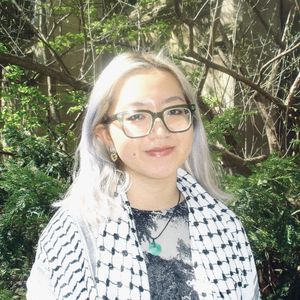
Kelly X. Hui is a fiction writer, journalist, and organizer living in Iowa City, where she is attending the Iowa Writers’ Workshop for her MFA.
Sign up for Prism newsletters.
Stay up to date with curated collection of our top stories.