St. Louis residents fight expansion of Israeli minerals company tied to Gaza genocide
ICL Group, whose North American headquarters are in St. Louis, is tied to the manufacturing of white phosphorus, which the Israeli military has reportedly used against Palestinians. Now, the company wants to expand into a historically Black neighborhood
A fight for the future of St. Louis, Missouri, is currently underway.
In one camp is the city leadership and appointed members of an industry development board, and in the other is a group of citizens who say the public deserves better than corporate false promises. At the center of the debate is the expansion of ICL Group, formerly known as Israel Chemicals Limited, an Israeli company that specializes in the extraction and refinement of minerals. ICL’s North American headquarters are in St. Louis, and the company struck a deal in November 2024 to build a second factory in the city, claiming that a new facility would bring job opportunities for the public, along with an $8.2 million tax abatement.
The facility stands to encompass more than 270,000 square feet of industrial area along the Mississippi River in the city’s north side. ICL plans to operationalize the factory by 2026, but St. Louis residents are angered by how the plan has been pushed forward without much public participation, transparency, or real engagement with the north side’s Black community, whose neighborhoods are treated as dumping grounds for toxic industries.
ICL said that the new factory will produce lithium iron phosphate batteries that can be used to power electric vehicles. But for residents, the company’s efforts to service the energy transition are nothing more than an attempt to paper over a long history of chemical production used to subjugate and harm Palestinians. Since Oct. 7, 2023, Israel has waged a full-scale assault on Palestinians in Gaza, carrying out what’s been widely acknowledged as a genocide. Israel’s torture of Palestinians runs the gamut of humanitarian crimes, from forced starvation and execution to the use of chemical weapons.
Shortly after ICL’s announcement of its expansion, residents came together to form ICL Out of STL, a grassroots effort to educate the public on the corporation’s history and the harmful effects of lithium iron phosphate production. Most of all, the group has sought to engage with public opinion and inform conversations among the community, something organizers say neither the Board of Aldermen nor the unelected Planned Industrial Expansion Authority (PIEA) did thoroughly ahead of offering the company public funds to put down roots in the more vulnerable parts of St. Louis. The board and the PIEA did not respond to requests for comment.
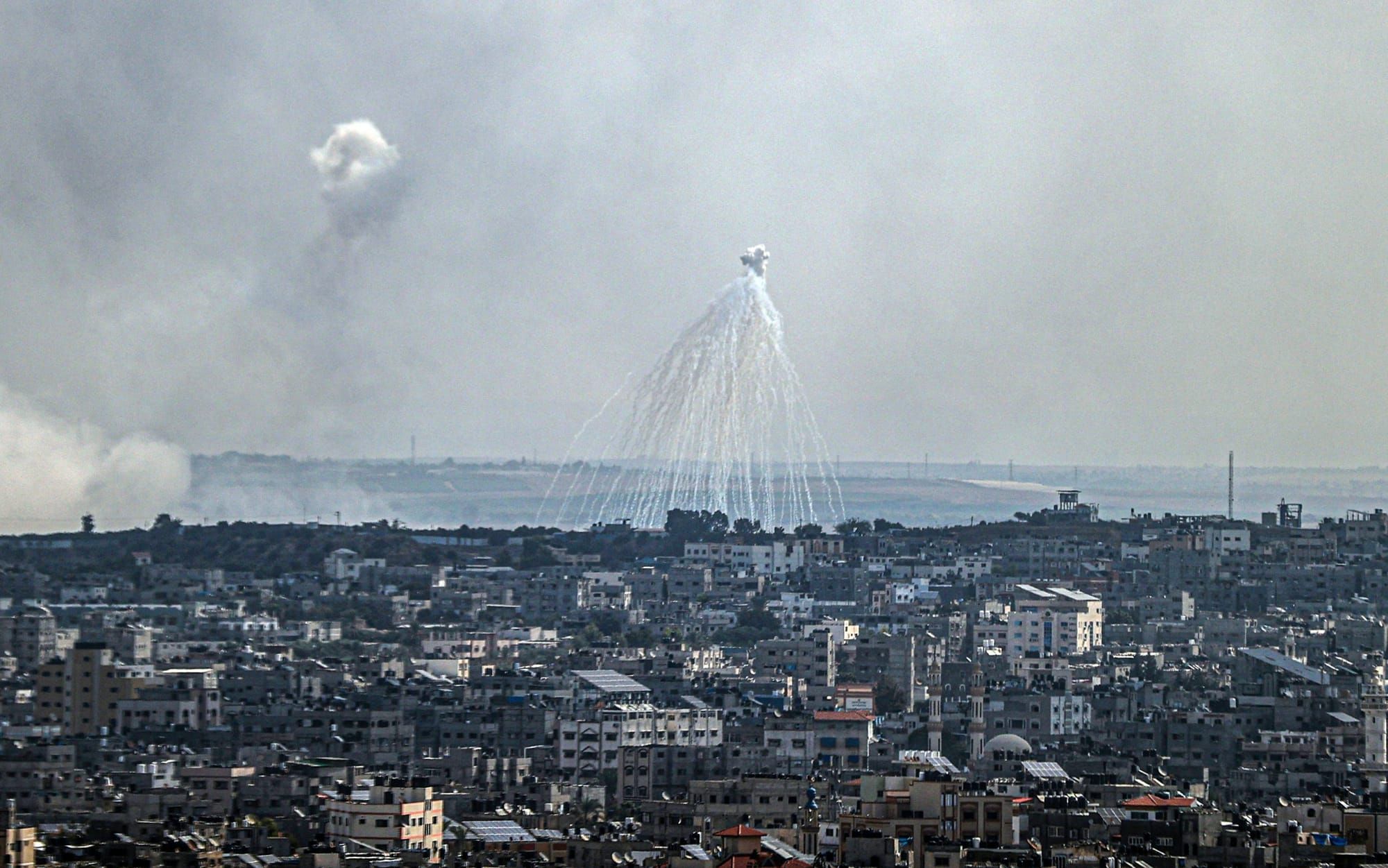
Most troubling of all to organizers is that ICL’s portfolio includes the production of white phosphorus, a chemical that can burn flesh off bone. Though white phosphorus can be legally used in war as a smokescreen, it’s a violation of international humanitarian law to intentionally use the chemical munition against civilians. Human Rights Watch, an international organization that investigates war crimes, reported that Israel dropped white phosphorus on Palestine and Lebanon in October and November 2023. Through publicly available federal databases found through the Federal Procurement Data System, the Government Accountability Office, and USA Spending, organizers believe they’ve found documents that tell a fuller story of ICL’s dealings, including a paper trail linking the sale of ICL’s products and white phosphorus to the U.S. military. Specifically, USA Spending lists $1.59 million in sales of white phosphorus in three years: 2020, 2022, and 2023.
The 2023 delivery order of white phosphorus was fulfilled in the first two weeks of December for “180,000 lbs in support of Pine Bluff Arsenal.” Amnesty International reported in October 2023 that the munitions the Israeli military dropped on Palestine and Lebanon originated in Pine Bluff, Arkansas. The Pine Bluff Arsenal is the only place in the Northern Hemisphere where white phosphorus munitions are made, and it’s believed that ICL provides phosphates to chemical company Monsanto to produce white phosphorus that makes its way to the military production site to fill munitions.
“They say that they’re just a lithium producer, but we know from the literal receipts from the government that they are … also in a production line for white phosphorus,” said Gracynn, a St. Louis resident who declined to give her last name for safety reasons.
Prism reached out to ICL for comment regarding its involvement in manufacturing white phosphorus. The company did not respond by the time of publication.
The U.S. is Israel’s largest supporter. From October 2023 through September 2024, more than $22 billion worth of weapons have traveled thousands of miles to the front lines of the genocide in Palestine. By some estimates, more than 70% of the weapons used against Palestinians have come from the U.S., an illustration of a strategic partnership that many decry as nothing more than an attempt to maintain a militaristic hold on the region.
This relationship turns St. Louis into the front door for this aspect of U.S. military production. State and local leaders have laid the groundwork for ICL’s expanded footprint in the last few years. In 2020, former Missouri Gov. Mike Parson signed a bill into law that prevents the state from contracting with businesses that engage with the Palestinian call to boycott, divest, and sanction Israeli business. The following year, Parson visited Israel and, during his tenure as governor, repeatedly offered the country unwavering support.
If ICL and the city’s leadership are hoping that the production of materials for electric vehicle batteries will distract from the history of support for Israeli-owned companies directly linked to genocide, organizers say it won’t work. Organizers are taking a transnational approach and encouraging residents across the city—especially in the majority-Black North Riverfront neighborhoood—to force public officials to see struggles for justice in St. Louis and Palestine as connected.
“This isn’t simply a local problem,” said David N. Pellow, professor and department chair of environmental studies at the University of California, Santa Barbara. “This is a part of an international problem of global environmental and climate injustice.” An impactful way to conceive of environmental racism is “to think of it as a form of warfare and an extension of the military industrial complex,” Pellow told Prism. “There’s really no human activity more ecologically harmful than warfare and militarization.”
Yet federal, state, and local agencies claim that the construction of ICL’s new facility will further St. Louis’ environmental justice goals.
In a December 2024 draft environmental assessment document, the U.S. Department of Energy claimed that ICL’s creation of jobs to help forestall the climate crisis is an act of environmental justice. This narrow, economic-based analysis of who stands to benefit from a new corporate neighbor ignores the manifold environmental concerns that preempt and follow chemical production.
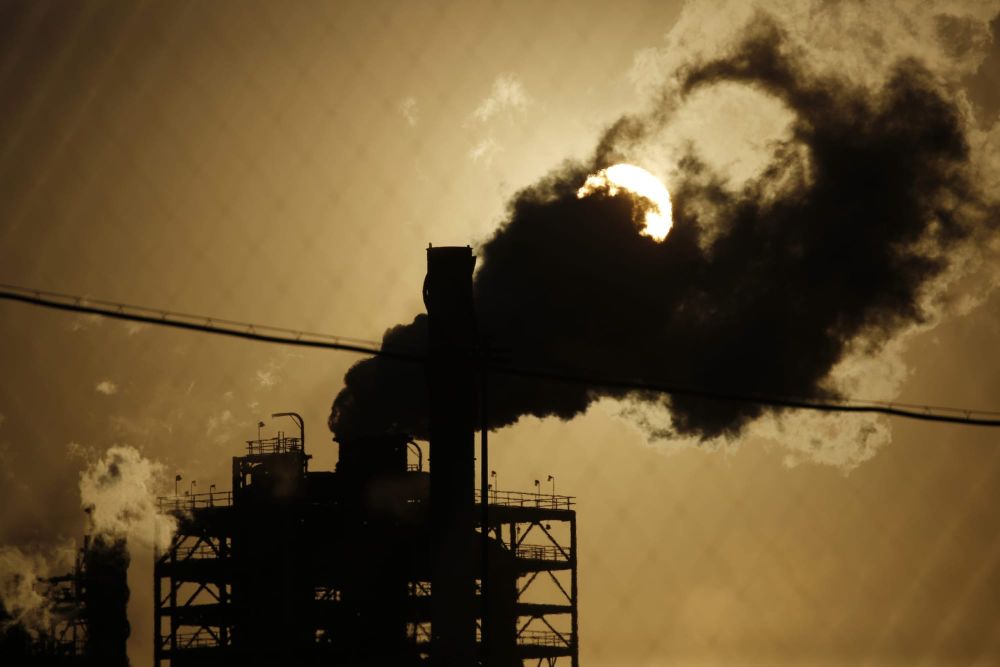
The production of lithium is extremely water-intensive, and organizers say that producing batteries at scale in the northside will release untold amounts of atmospheric pollutants, such as particulate matter, nitrogen oxides, carbon monoxide, sulfur dioxide, and volatile organic compounds. Nitrogen oxides and volatile organic compounds are the building blocks of smog, which contributes to respiratory problems such as asthma.
The air in St. Louis is extremely unhealthy, according to the National Ambient Air Quality Standards. According to the National Heart, Lung, and Blood Institute, Black people in the U.S. are 40% more likely to suffer from asthma than white people. The reason? Black people are disproportionately exposed to pollution. Race is the strongest predictor of where toxic facilities are located. On the other end of things, the very tax incentives that place facilities detrimental to public health in Black communities actually depress education outcomes for the neighborhood’s students because there’s less tax revenue to go around, according to a 2024 analysis of St. Louis public schools conducted by Good Jobs First.
This isn’t environmental justice, said Maxine Gill, a policy coordinator at the Missouri Coalition for the Environment. It’s a re-configuring of the status quo.
“We believe that that energy transition cannot follow the same tired patterns of the past of disproportionately burdening Black communities, brown communities, communities of color, and low-income communities,” Gill said. “We’re starting to see that pattern just emerge once again.”
Black neighborhoods are zoned for industrial facilities and treated broadly as sites of refuse. This also reflects the psychology of warfare, said Pellow. “What is warfare if not institutional violence against other humans and the ecosystems they depend upon? What is warfare, if not those forms of institutional violence that are driven by an ideology that suggests that certain people are less than human?”
Susan Armstrong, a St. Louis resident who is a retired engineer and organizer with ICL Out of STL, expressed a similar sentiment. She told Prism that Black residents are being treated as “disposable others” by city leadership, and that neighborhoods on the south side are offered services and business development that don’t hinge on the support of a corporation fueling genocide.
So often, economically disadvantaged communities of color aren’t given the opportunity to design their own vision for economic development. Instead, outside corporations come into town claiming that jobs—with requirements for employment that box out locals—are worth the price of admission in environmental degradation. Armstrong, who is also a member of the Missouri Safe Drinking Water Commission, said that when she heard about the proposal for a new facility along the region’s watershed, one of her first concerns was water quality, especially given the ongoing cleanup from previous corporate chemical disasters.
Armstrong said she wants answers about what pollutants will come from the facility’s operations and what the city considers an allowable level of contamination. So far, there’s been little information offered to the public. Armstrong said that local media have thus far parroted the city’s tone, suggesting that residents feel lucky for the development opportunity. But communities of color deserve better, Armstrong told Prism.
“What are our demands?” she asked. They are simple: “Clean air, good jobs, no poisonings.”
Editorial Team:
Tina Vasquez, Lead Editor
Carolyn Copeland, Top Editor
Rashmee Kumar, Copy Editor
Author

ray levy uyeda is a staff reporter at Prism, focusing on environmental and climate justice.
Sign up for Prism newsletters.
Stay up to date with curated collection of our top stories.