The International Court of Justice can name climate obligations. Why won’t it confirm genocide?
The court’s historic July ruling found that wealthy nations like the U.S. have a legal responsibility to address the climate crisis. But its silence on Israel’s ethnic cleansing of Palestinians reveals how international law fails the most vulnerable
The International Court of Justice (ICJ) made headlines in July with a historic climate ruling. In a long-awaited advisory opinion, the United Nations’ highest legal body confirmed what many in the Global South have long known: Wealthy nations such as the U.S. have a legal responsibility to address the climate crisis. For Small Island Developing States (SIDS), which have fought for decades to be heard in global negotiations, this ruling was hard-won and long overdue.
But in January 2024, the same court refused to name the situation in Gaza as a genocide, nor did it make an official legal determination on whether Israel’s actions constitute genocide or ethnic cleansing.
That contradiction gave many of us working in climate justice emotional whiplash. While the climate ruling was praised for its symbolic weight, the ICJ’s response to Gaza—where more than 61,00 have been killed and 154,000 injured since Oct. 7, 2024—has been marked by caution, legal hedging, and a lack of urgency. The disparity is impossible to ignore.
Yes, the ICJ concluded that Palestinians in Gaza have plausible rights to protection under the Genocide Convention and issued binding provisional measures. But the court stopped short of the one thing that could have shifted international response and obtained some semblance of accountability: a formal confirmation that Israel is committing genocide. The case remains open, but the annihilation is ongoing. For many of us, the ICJ’s refusal to call the genocide what it is and to act with the full power of the court is a profound betrayal, especially in the context of 77 years of state-backed dispossession and apartheid.
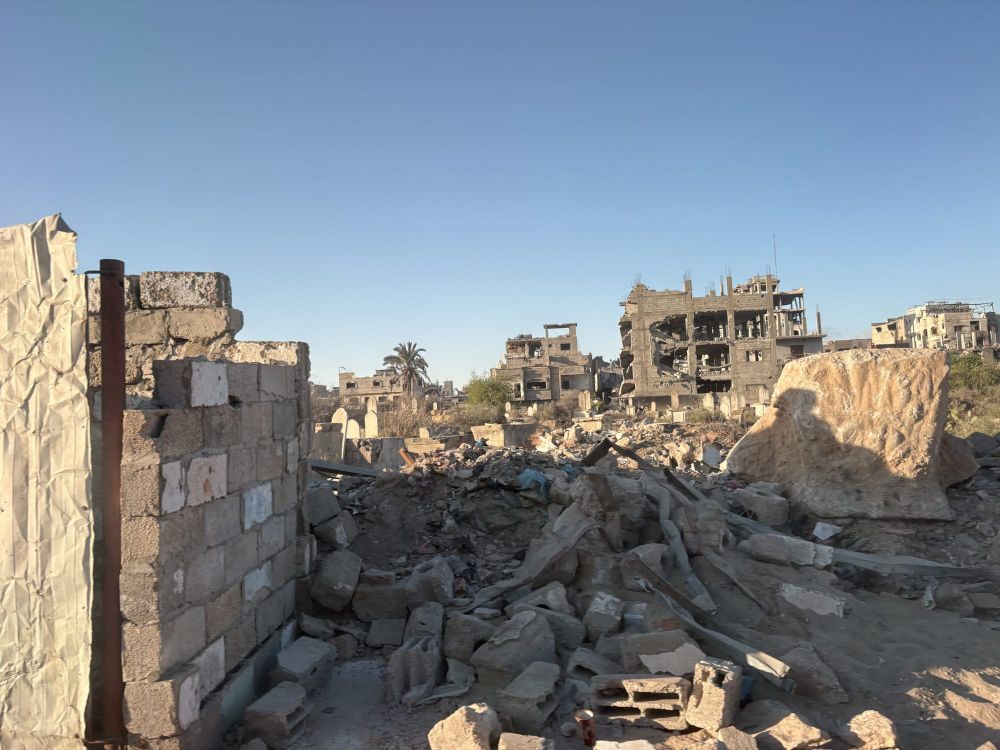
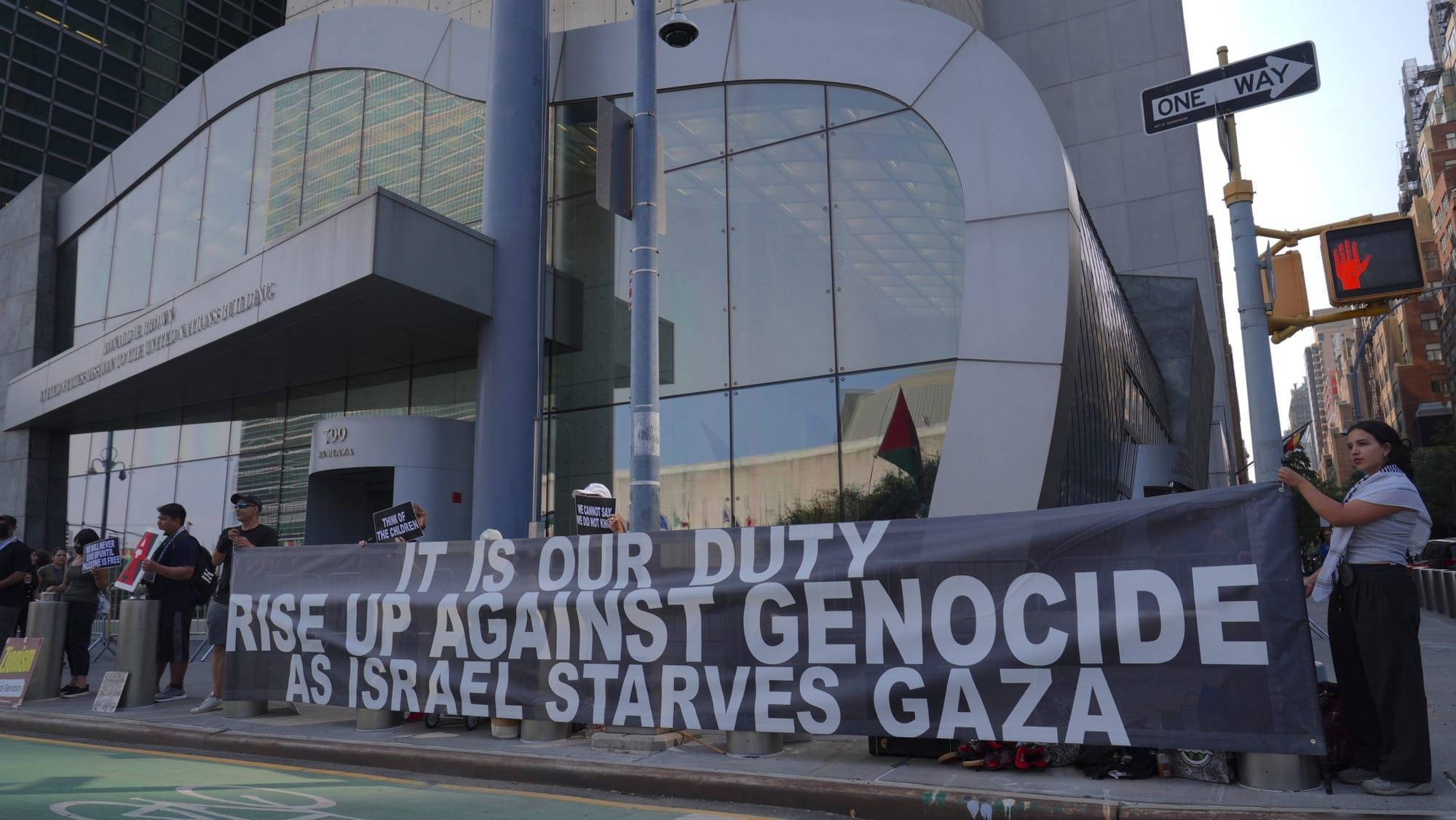
We are now witnesses to some of the most horrific images and videos of forced starvation in modern history. One of the glaring realities the ICJ avoids explicitly naming is that Israel is deliberately starving Palestinians in Gaza—on top of daily bombings; mass displacement; the systematic destruction of homes, hospitals, and vital infrastructure; and the targeting of journalists documenting these crimes. These are clear violations recognized under the 1948 Genocide Convention.
For more than 18 months, Palestinians have warned of deliberate starvation, describing empty markets, children and elderly people dying from hunger, and aid convoys blocked by Israel at the border. Their reports are clear: This is a campaign of extermination. U.N. agencies and humanitarian groups have echoed these alarms, warning since March 2024 that famine was imminent in northern Gaza. Yet the ICJ stopped short of naming these acts as part of Israel’s genocidal campaign.
The ICJ’s climate opinion, while historic, is merely advisory and nonbinding. This means it does not have to name specific violators, and it imposes no enforceable penalties. Countries like the U.S.—the largest historical emitter of carbon dioxide—are under no legal obligation to act. In fact, just days after the ICJ issued its opinion, the Trump administration took aim at the very foundation for limiting U.S. greenhouse gas emissions by proposing the repeal of the Environmental Protection Agency’s “endangerment finding,” gutting domestic climate policy.
The genocide case, on the other hand, is binding, meaning that Israel is legally obligated to comply with the court’s provisional measures to prevent irreparable harm covered by the Genocide Convention, even though no final judgement on genocide has been issued. Yet it continues to defy the court’s orders while top weapons providers, the U.S. and U.K. continue to supply Israel, even as Germany officially paused military exports to Israel this month.
Meanwhile, in Tuvalu, an island nation in the South Pacific, the first planned migration of an entire country is already underway. Rising seas are predicted to require that people on the island relocate to Australia within the next 25 years. That’s what climate injustice looks like in real time: displacement, loss, and cultural erasure—and it deserves more than just symbolism. Tuvalu’s Prime Minister Kausea Natano said in a 2021 speech at COP26 that “bold, alternative actions” are needed today to secure the future. “Even if all greenhouse gas emissions cease tomorrow, Tuvalu and other low-lying atoll nations are sinking,” Natano said.
We have to be honest about the ICJ’s structural limitations. The court was established in 1945 by the U.N. Charter, largely shaped by the Allied victors of World War II. Today, all 15 of its current judges are nominated by states and reflect a range of geopolitical interests, with glaring exclusions. Crucially, Palestine is not a U.N. member state, and while it has standing at the ICJ in limited cases, it lacks the full rights and representation afforded to sovereign nations. The court also has no direct enforcement mechanism; its decisions rely on states’ voluntary compliance.
This is why South Africa’s role has been so significant. While many Global North governments stand by or actively arm Israel, South Africa uses the tools of international law to defend Palestinian life. As Emilio Dabed wrote for +972 Magazine, “The international legal order was built to administer colonial violence, not to end wars—and that poses serious questions for the Palestinian struggle. By failing to stop the Gaza genocide, the ICJ is working exactly as intended.”
To be clear, I am celebrating the ICJ’s July climate ruling. For SIDS, front-line climate defenders, and communities who have screamed into the void for decades, this is a moment of recognition. However, this moment demands that we hold more than one truth at once.
When we cheer for climate justice while ignoring genocide, we are not practicing justice—we’re reinforcing its limits.
International law is not neutral. It reflects the interests of those who write and uphold it. When we cheer for climate justice while ignoring genocide, we are not practicing justice—we’re reinforcing its limits.
In a recent conversation with Caroline Mair-Toby, a legal adviser to SIDS and Indigenous peoples and former climate negotiator from Trinidad and Tobago, she affirmed this sentiment and added an urgent reminder: “We need to be mindful of other genocides, like those in Sudan, the Congo, Haiti, the Amazon, and other places. The backlash in Yemen. The Rohingya. Gaza affects every other genocide, because the standard against which a genocide is decided is determined, which is not that high a bar in the 1948 Genocide Convention, which defines genocide as the intentional destruction ‘in whole or in part’ of a national, ethnical, racial, or religious group.”
Mair-Toby underscores a troubling reality: The legal precedent set by Gaza will shape how future atrocities are judged—or ignored. When international law fails to name what’s happening in Gaza, it doesn’t just fail Palestinians; it fails the entire world.
Movements have always been the ones to push institutions further than they’re willing to go. And while international law may lag, our organizing power doesn’t have to. The ICJ’s latest climate ruling offers obligatory language, but it’s up to us to give it force. We must demand the same for Palestine, where the court’s failure has left its Indigenous population to endure Israel’s ongoing genocide and nearly eight decades of colonial oppression.
Editorial Team:
Tina Vasquez, Lead Editor
Carolyn Copeland, Top Editor
Rashmee Kumar, Copy Editor
CORRECTION (Aug. 21, 2025): This article has been updated to clarify that the ICJ’s January 2024 ruling found that Palestinians’ rights under the Genocide Convention are plausibly at risk and issued provisional measures. The court did not formally conclude that Israel is committing genocide.
Author

Shilpi Chhotray the Co-Founder and President of Counterstream Media and host of A People's Climate for The Nation. https://www.shilpichhotray.com/
Sign up for Prism newsletters.
Stay up to date with curated collection of our top stories.