Filed Under:
Detained Ukrainian man’s life remains at risk after ending 60-day hunger strike in ICE custody, advocates say
At one point, the government moved to force-feed Andriy Shepitsen at Krome detention center in Florida, his lawyers allege

Alexandra Martinez
Real journalists wrote and edited this (not AI). Independent, community-driven journalism survives because you back it. Donate to sustain Prism’s mission and the humans behind it.
Real journalists wrote and edited this (not AI)—independent, community-driven journalism survives because you back it. Donate to sustain Prism’s mission and the humans behind it.
A Ukrainian man detained by U.S. Immigration and Customs Enforcement (ICE) in South Florida remains at risk even after being hospitalized and ending a 60-day hunger strike, according to his attorney, who says he has been denied critical psychiatric care for months.
Sanctuary of the South, Amnesty International, and the American Civil Liberties Union of Florida recently filed a formal complaint with ICE and the Department of Homeland Security (DHS) demanding emergency medical intervention for Andriy Shepitsen, a 46-year-old Ukrainian man who has been in ICE custody since December. In the complaint, the organizations say Shepitsen, who has severe bipolar disorder, major depression, and ADHD, was denied essential medication and treatment while detained, pushing him to hold a prolonged hunger strike that left him unable to walk and suffering from dangerously low blood pressure.
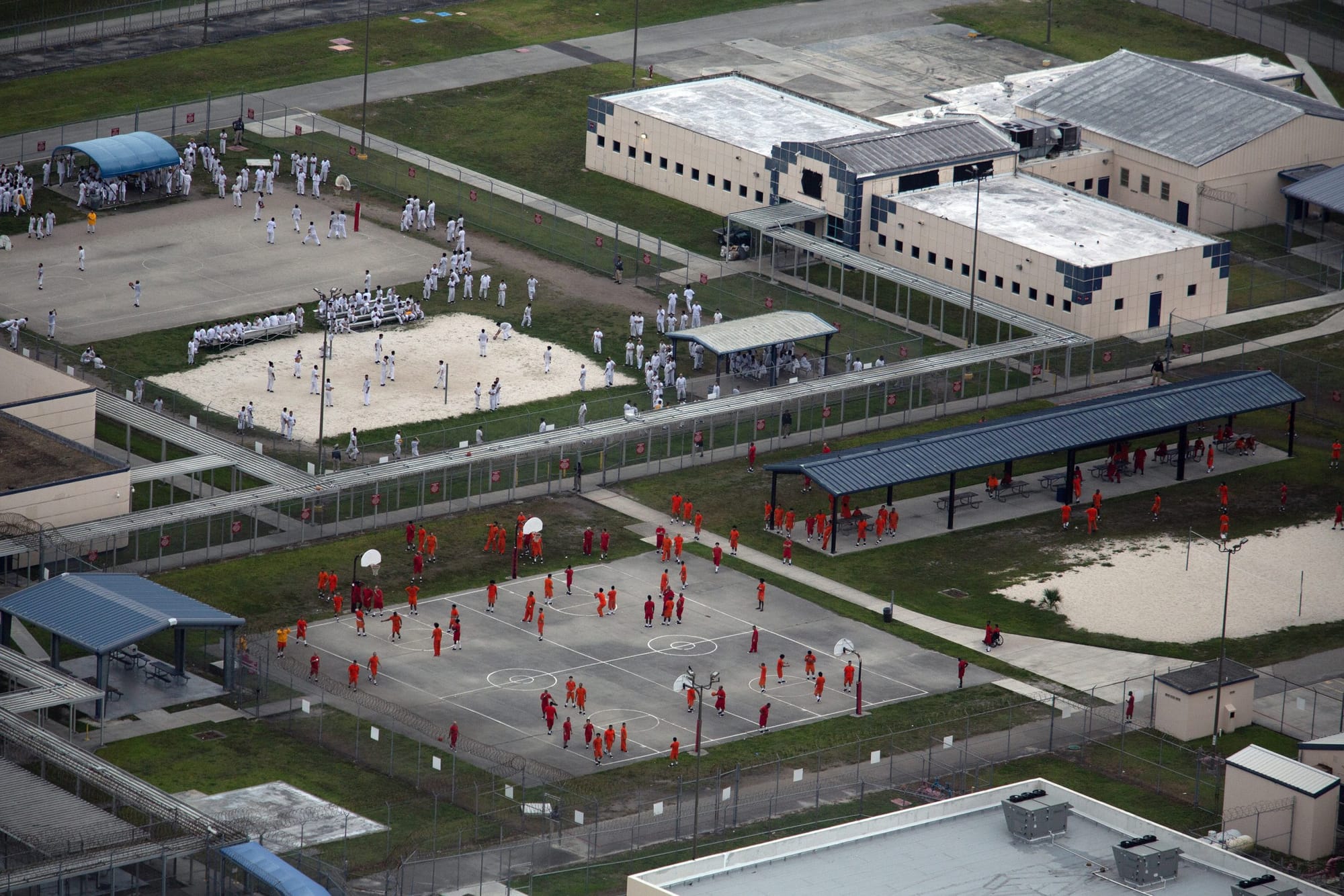
In a July report, Human Rights Watch found that by March 2025, the number of people in immigration detention at Krome North Service Processing Center in Florida had increased 249% from levels before President Donald Trump’s inauguration. At times, the facility held more than three times its operational capacity, the report said. The report also documented “dangerously substandard medical care,” overcrowding, and the denial of critical medication at Krome and two other Florida facilities.
Katie Blankenship, founding partner of Sanctuary of the South and one of Shepitsen’s attorneys, said the case illustrates the deadly consequences of medical neglect in immigration detention.
“I understood his situation was dire from the first time we spoke with him, because he was initially detained at the Everglades facility, transferred to Glades [County Detention Center], and then finally to Krome,” Blankenship said. “He has just not been provided his mental health treatment or medication. And his medication is critical.”
A DHS spokesperson denied allegations that ICE did not provide Shepitsen proper medical care, saying that Shepitsen refused his medications during his time in detention.
“It is a longstanding practice to provide comprehensive medical care from the moment an alien enters ICE custody,” the spokesperson said. “This includes medical, dental, and mental health services as available, and access to medical appointments and 24-hour emergency care. For many illegal aliens this is the best healthcare they have received their entire lives.”
The spokesperson also said that Shepitsen’s student visa had expired in 2011 and that he was convicted of crimes. They said he remains in ICE custody pending the outcome of his removal proceedings.
Blankenship said Shepitsen has two issues of criminal history, but in both of those instances, “all you have to do is read the police report to understand somebody is in a psychological break.”
In both instances Sheptisen was involuntarily detained and sent to receive psychiatric care. Blankenship says the issue was not a criminal matter, but a mental health crisis.
Blankenship said Shepitsen’s psychiatric conditions are severe and well-documented, and that they can lead to devastating consequences if left untreated.
“He has had documented periods of manic episodes that lead to hallucinations and an inability to understand and maintain reality. He has a very serious condition,” Blankenship said. “So I was really troubled to hear that just immediately out of the gate, he was being denied all medical treatment, and that has really just snowballed into where we are today.”
According to Blankenship, Shepitsen began his hunger strike on Feb. 10 to protest the denial of medical care. Over time, she said, his attorneys repeatedly warned ICE that his life was in danger. The legal team also obtained an independent psychological evaluation from the University of Miami Human Rights Clinic, which, according to Blankenship, found him to be highly suicidal.
“We have been alerting ICE of what’s going on, about how dangerous this is,” she said. “It’s just made absolutely no difference. It just falls on deaf ears.”
Blankenship said the case reached a breaking point when the government moved to force-feed Shepitsen instead of releasing him or providing the psychiatric care his lawyers had been requesting.
“That really terrified us,” she said. “We don’t have any faith in their medical abilities. This level of medical neglect [is] par for the course, and they grossly undershot his days on hunger strike.”
ICE and the doctor at Krome submitted sworn declarations stating he had only been on hunger strike for 44 days, when at that point, it was 59 days, Blankenship alleged.
“The idea of just putting a tube in him and pushing in Ensure [meal replacement shake], which is what they planned to do, could have killed him,” Blankenship said. “We were really worried about the refeeding syndrome.”
Instead, attorneys negotiated an agreement with the U.S. Attorney’s Office to have Shepitsen transferred to Larkin Hospital, where he began receiving treatment. Blankenship said he agreed to start eating there, ending his hunger strike at 60 days. But she argued that the underlying health danger has not passed.
By the time Shepitsen was transferred for treatment, Blankenship said, he had gone days without sleep, had at one point refused water, and had suffered weeks of hypotension. His legal team remains concerned about possible long-term kidney and heart damage from the strike.
“When your body doesn’t have these sorts of nutrients, you start shutting down in every way,” Blankenship said, adding that Shepitsen developed insomnia and went days without sleep.
For someone with a history of psychiatric breaks and hallucinations, Blankenship said, the impact on how their mind functions is “just an absolute recipe for disaster.”
A psychiatrist at the hospital deemed Shepitsen competent, but Blankenship disputed that assessment and argued that he is still not well enough to meaningfully participate in his immigration defense. She said he faces a competency hearing on April 17 and could be returned to Krome afterward.
“It’s just a really terrifying situation for him and his wife,” Blankenship said.
Andriy’s case is the living example of what happens when we have an immigration system that is based solely on anti-immigrant animus. There is no compassion for this man in the system. They simply do not care.
Katie Blankenship, Sanctuary of the South founding partner
Sanctuary of the South is seeking immediate medical and psychiatric intervention, and release.
“He’s got to be restabilized on his medication, and he needs consistent psychiatric support,” Blankenship said. “There is no need for him to be in a carceral system.”
The organization submitted a humanitarian parole request months ago, but it has gone unanswered. In December, DHS announced that it was terminating categorical family reunification parole programs for seven countries and said parole would return to a narrower case-by-case model for all countries.
In the Human Rights Watch report, the organization found that officers at Krome, Broward Transitional Center, and the Federal Detention Center in Miami denied detainees critical medications, returned some detainees from hospitals without follow-up care, and in some cases placed people in solitary confinement after they sought mental health support. The report also found that nearly 72% of people detained nationwide as of mid-June had no criminal history, even as detention numbers rose to record highs.
“Andriy’s case is the living example of what happens when we have an immigration system that is based really solely on anti-immigrant animus,” Blankenship said. “There is no compassion for this man in the system. They simply do not care. That level of prioritizing keeping human beings in cages for the profit that they get, always capitalizing on as much enforcement as you can, no matter the terror and harm it inflicts, is life-threatening.”
Editorial Team:
Sahar Fatima, Lead Editor
Lara Witt, Top Editor
Stephanie Harris, Copy Editor