Advocates warn of worsening conditions in ICE custody as detainees take extraordinary risks to be heard
Detainees risk retaliation to get out messages about what they’re experiencing, including inadequate medical care, prolonged isolation, poor nutrition, and limited communication
Real journalists wrote and edited this (not AI)—independent, community-driven journalism survives because you back it. Donate to sustain Prism’s mission and the humans behind it.
Detainees and advocates across the country say conditions inside U.S. immigration detention centers are deteriorating, with detained people taking extraordinary risks to be heard, organizing hunger strikes, writing public declarations, and even attempting to get messages out through improvised channels.
Detainees from New Jersey to Washington state have described inadequate medical care, prolonged isolation, poor nutrition, and limited communication alongside a rising national advocacy response demanding accountability.
In Newark, New Jersey, a handwritten statement titled “El Grito de Nosotros” (“Our Cry”) recently emerged from inside Delaney Hall, an Immigration and Customs Enforcement (ICE) detention facility. Written by detainee Leonardo Vilalba and signed by 24 more detained men, the letter, circulated by advocacy groups, describes what Vailalba characterized as inhumane conditions: indefinite detention, sleep deprivation, poor food, and denial of medical care.
“We feel vulnerable, in a way, kidnapped or detained without justification,” writes Vilalba, who has since been transferred. “In addition, families are being destroyed and separated. …Our American dream is safety and protection—with our families.”
“I’m hearing it directly from the people who are being subjected to these horrible conditions,” Kathy O’Leary, New Jersey regional coordinator and ambassador of peace for Catholic peace advocacy organization Pax Christi USA, told Prism. “Everything else has been through some other spokesperson, whether its advocates, legislators, attorneys, even family members. This is hearing it directly from the people who are suffering.”
“Any claim that there are subprime conditions at ICE facilities are FALSE,” an emailed statement attributed to a Department of Homeland Security (DHS) official said. “All detainees are provided with proper meals, water, medical treatment, and have opportunities to communicate with their family members and lawyers. All detainees receive full due process.” The statement added that Immigration and Customs Enforcement has higher detention standards than most U.S. prisons that hold “actual” U.S. citizens and that people in custody are given comprehensive medical care including medical, dental, and mental health services.
Advocates say detainees were initially hoping to hand the “Our Cry” declaration to Sen. Cory Booker, D-N.J., during a site visit. When that opportunity did not materialize (O’Leary said Booker met with other detainees instead), the letter was shared publicly. The decision to speak out carries enormous risk.
“They can be placed in solitary confinement. They can be transferred. Now we hear about being placed in the cold room … sleep deprivation, that’s a form of torture,” O’Leary said. “These were very brave individuals, they were willing and knew the risks … so that their voices could be heard.”
Sally Pillay, executive director of the Mami Chelo Foundation, a nonprofit that supports immigrants facing detention and deportation, said the letter reflects a broader sense of urgency.
“Detention has reached a breaking point,” Pillay said. “Writing this has compelled them because it’s one of the few forms of the power that they have. [They’re] making their invisible harm visible.”
Medical neglect and deteriorating health
Among the most serious concerns raised by advocates are reports of delayed or denied medical care. Pillay described receiving a message from a detained person who said he was losing his vision after repeated requests for treatment went unanswered.
“He said, ‘I am begging you, in the name of God, to help me file anything so I can get released from this facility to seek medical attention,’” Pillay said. “Breaks my heart.”
Organizers say access to medical care is often limited by delays, lack of appointments, or communication barriers. Some detainees, they say, enter facilities without receiving prescription medications for days or weeks. Advocates say the conditions can have lasting consequences.
“If they don’t receive the medical care that they need, there’s a good chance that either they will die,” O’Leary said, or that their quality of life will be forever impacted.
Hunger strike in Washington state
On the opposite side of the country, a detained immigrant in Tacoma, Washington, Steven Antonio Chavarria Portillo started a hunger strike two weeks ago after spending roughly 10 months in solitary confinement, according to La Resistencia, a grassroots organization led by undocumented people. Chavarria Portilla, who has been detained at the Northwest ICE Processing Center (NWPIC) since 2024, is demanding access to dental care, release from isolation, and an end to medical negligence inside the facility. According to social media posts, activists with LaResistencia have not been able to contact Chavarria Portillo for several days.
The DHS official told Prism, “There is no hunger strike at NWIPC,” and that ICE officials provide three meals a day and drinking water to detainees during hunger strikes.
Josefina Mora-Cheung, director of organizing at La Resistencia, said Chavarria Portillo has organized repeatedly around detention conditions and has staged multiple hunger strikes during his time in custody. This is his sixth, Mora-Cheung says.
“These detention centers should not exist, either federally operated or privately operated,” Mora-Cheung said. “No matter where they’re from, we see now that everyone is at risk of violence from ICE and from [private prison] companies.”
Last year, after he refused a transfer and declined to undergo certain medical testing, the private prison operator GEO Group classified Chavarria Portillo as a potential risk, according to La Resistencia. Advocates say that designation led to his placement in solitary confinement, where he has remained for months.
Now, as his hunger strike continues, Chavarria Portillo fears that he may be moved into medical isolation and force-fed, which would likely further restrict his ability to communicate with supporters on the outside.
“I refuse to throw in the towel,” he said in a message relayed through La Resistencia. “I’m doing this for my well-being and for the well-being of everyone else.”
Another NWIPC detainee, Uzi Otoniel Gonzalez Maria, recently ended a weeklong hunger strike after nearly a month in solitary confinement, according to a press release from La Resistencia.
Gonzalez Maria began the strike to demand urgent dental care, improved hygiene conditions, and information about his case at NWIPC. He ended the strike after being told he needed to eat in order to attend a dental appointment scheduled for Jan. 30. According to La Resistencia, he was never taken to the appointment, and his demands remained unmet as of Jan. 31.
The organization said communication with Gonzalez Maria was cut off for days during his time in solitary confinement, a common occurrence, advocates say, especially for people participating in hunger strikes.
NWIPC, previously known as the Northwest Detention Center, has long been criticized by advocates for its use of prolonged solitary confinement. The facility has reportedly seen multiple deaths linked to isolation in recent years and continues to call for its closure.
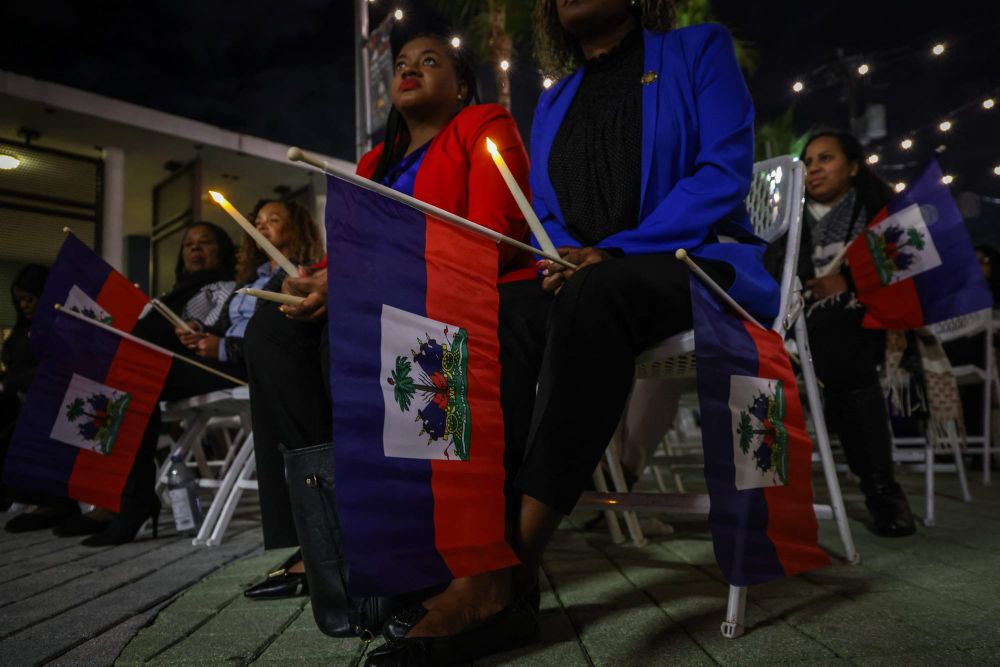
Vigils outside the facility have continued in solidarity with detainees, including those who may be unable to communicate due to retaliation.
A system under strain
Legal limits on prolonged immigration detention have existed for more than two decades. In 2001, the U.S. Supreme Court found that the government cannot detain immigrants indefinitely and identified six months as a reasonable benchmark for how long people should be held while their case moved forward.
Yet detention times appear to be lengthening as the system expands. With the number of people in ICE custody surpassing 70,000 for the first time, agency data from mid-January shows that at least 7,252 people had been detained for six months or longer. Seventy-nine had been held for more than two years. That figure has more than doubled from December 2024, when 2,849 people had been in custody for at least six months.
Even as enforcement increases, advocates say that release options remain inconsistent. The federal government has promoted voluntary departure programs that include paid airfare and financial assistance for those who agree to leave the country. But detainees and advocates report that many people are told that they cannot leave custody until they appear before an immigration judge, leaving some stuck in detention for months despite being willing to depart.
“The system is meant to break you down,” Pillay said. “Chaos and confusion are instilled in the system.”
Calls for oversight and action
Advocacy groups are calling for immediate improvements, including access to adequate medical care, more consistent oversight visits from lawmakers, and greater transparency from ICE and private contractors operating facilities.
They also urge the public to get involved by supporting legal aid, showing up to visitation support programs, and amplifying detainees’ voices.
“For them to speak out takes a tremendous amount of courage,” Pillay said. “Our responsibility is to match that courage with sustained action.”
Editorial Team:
Sahar Fatima, Lead Editor
Lara Witt, Top Editor
Rashmee Kumar, Copy Editor
Author

Alexandra is a Cuban-American writer based in Miami, with an interest in immigration, the economy, gender justice, and the environment. Her work has appeared in CNN, Vice, and Catapult Magazine, among
Sign up for Prism newsletters.
Stay up to date with curated collection of our top stories.