Hydrogen fuel isn’t so ‘clean,’ say opponents of California bill
Sponsored by oil and gas corporations, SB 419 seeks to exempt hydrogen fuel from certain taxes in a purported push toward clean energy
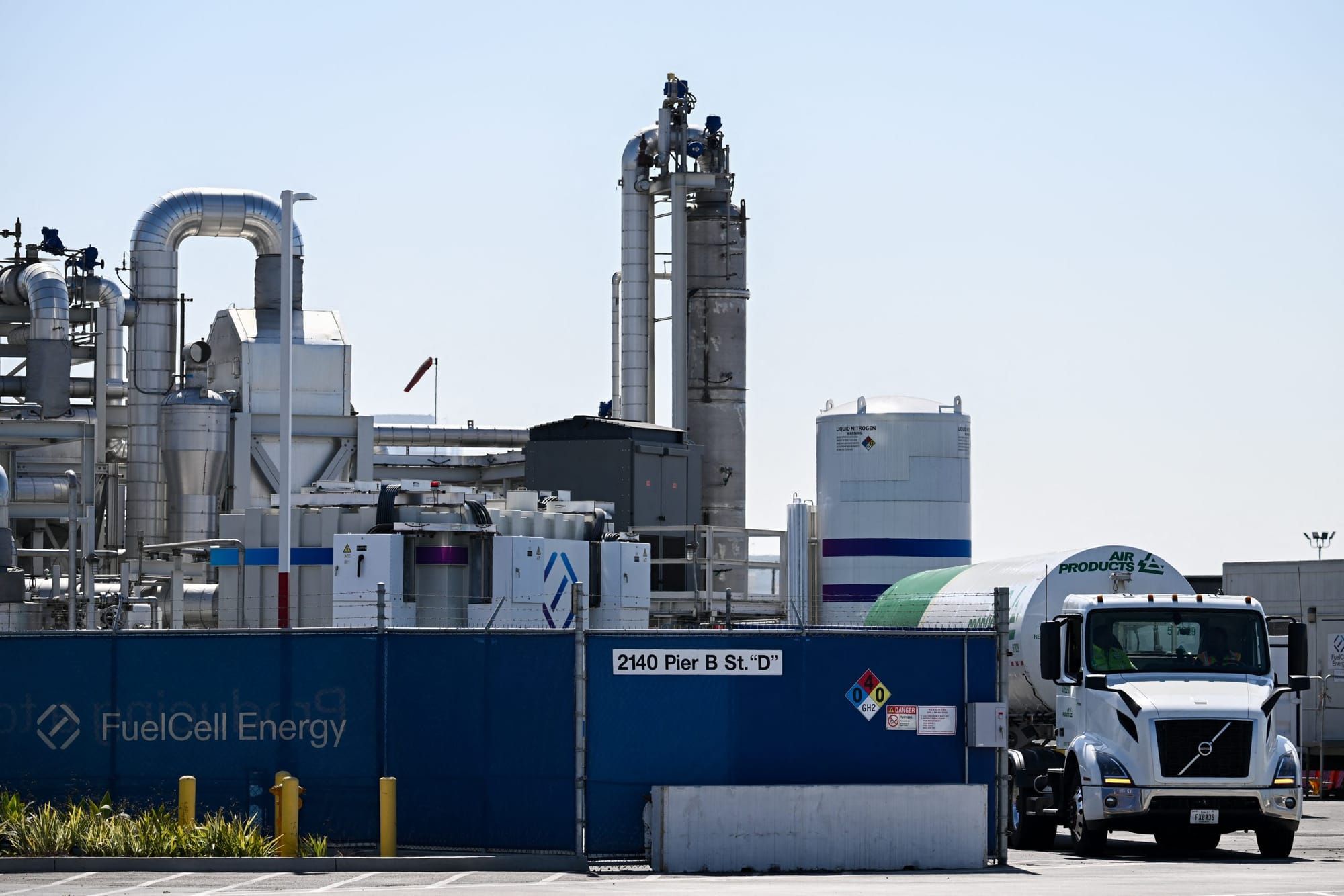
A controversial California bill aims to exempt hydrogen fuel from certain state taxes in a purported push for clean energy, despite critics’ claims that hydrogen isn’t as clean as advertised. A coalition of companies sponsoring SB 419 includes Shell, despite the oil and gas giant closing all of its hydrogen fueling stations for light-duty vehicles in California last year, citing a lack of demand.
The bill, which passed the state Senate and now sits in the Assembly, seeks to exempt hydrogen fuel from the taxes imposed by the Sales and Use Tax Law for the sale, storage, use, and other consumption of hydrogen fuel in California. Authored by state Sen. Anna Caballero and sponsored by the California Hydrogen Coalition (CHC), the bill is “one small and early step” in helping the industry scale renewable hydrogen fuel production so that it becomes cost-competitive with diesel, CHC Executive Director Teresa Cooke told Prism in an email. In addition to Shell, the CHC also includes Chevron, Air Liquide, Toyota, Hyundai, Linde, and FirstElement Fuel, according to financial filings. Caballero’s office did not respond to a request for comment.
SB 419 is pushing for the broader adoption of hydrogen fuel use in fuel-cell electric vehicles and internal combustion engine vehicles, both in everyday light-duty vehicles and heavy-duty transportation, but critics say it isn’t the right move. The Natural Resource Defense Council and Sierra Club California, along with several organizations, signed a letter in May opposing the bill and stating that battery electric vehicles make the most sense given their cost efficiency, climate impact, and widespread use.
The challenge is that “hydrogen is made with fossil fuels predominantly,” said Ethan Elkind, the director of the Climate Program at University of California, Berkeley’s Center for Law, Energy, and the Environment. Elkind explained in an email that by taking fossil fuels, converting them to hydrogen, and then converting that hydrogen into electricity to power hydrogen fuel-cell vehicles, about 50% of the energy has been lost from the original fossil fuel. So, it turns out that “hydrogen, right now, is twice the pollution of natural gas,” he said. “It’s a very inefficient way of powering really anything.”
If it’s produced from fossil fuels, you’re really defeating the purpose.
Ethan Elkind
Produced from fossil fuels
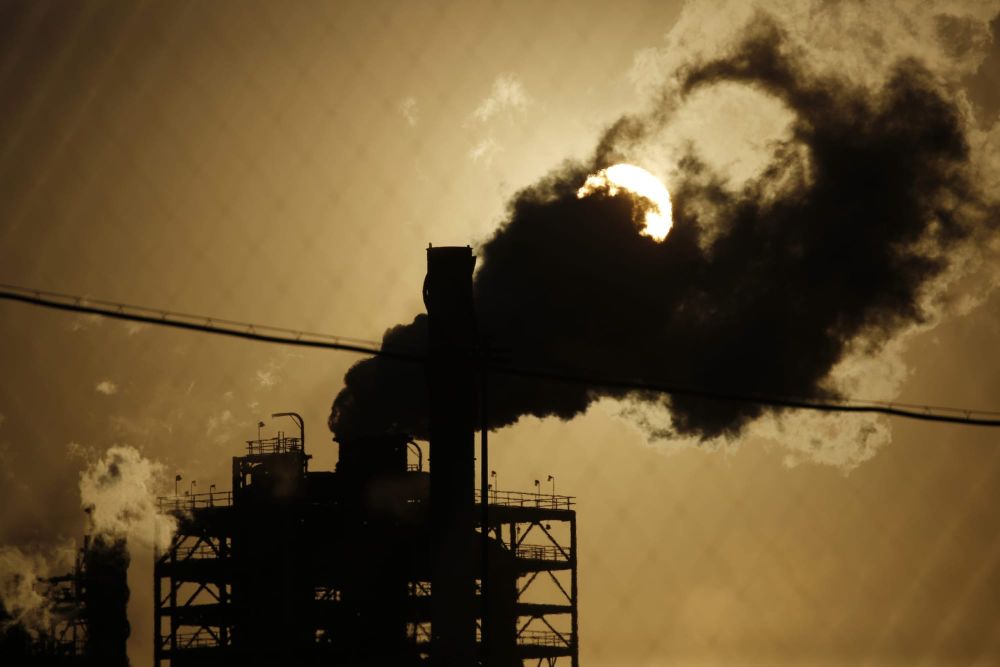
Fossil fuels are the primary feedstock for hydrogen production in the U.S. Hydrogen production is often categorized by colors such as gray, blue, and green.
Gray hydrogen is produced from fossil fuels such as natural gas through a process called steam methane reforming (SMR). SMR involves using high-temperature steam to produce hydrogen from a methane source such as natural gas, and it doesn’t require new infrastructure since it builds upon existing natural gas pipelines. The Department of Energy has stated that 95% of the hydrogen produced in the U.S. is gray.
Blue hydrogen is also produced from fossil fuels, but it involves carbon capture and storage, which is intended to reduce the emissions released from blue hydrogen production. However, researchers from Cornell and Stanford have found that while carbon dioxide emissions for blue hydrogen are less than for gray hydrogen, the increased use of natural gas to power carbon capture ends up resulting in higher methane emissions. These emissions end up being even higher than burning natural gas, diesel oil, or coal.
Green hydrogen is the ideal form of hydrogen, produced using surplus renewable energy such as solar and wind. It involves using electricity to power an electrolyzer, which splits water into hydrogen and oxygen. The main concern with green hydrogen production is cost, according to Elkind. Another concern is the availability of surplus renewable energy.
“There’s only going to be extra solar power for certain hours of the day. And it’s not very cost-effective to produce hydrogen just a few hours a day or … a few weeks a year,” he said.
But CHC’s Cooke pushed back against such criticism.
“Regardless of hydrogen’s feedstock, it is being used in a zero-emission vehicle which brings significant carbon and particulate matter reductions,” Cooke wrote in her statement to Prism, adding that the U.S. power grid, supporting battery electric vehicles, is mostly fossil-fuel based.
While the latter is true, hydrogen’s feedstock cannot be disregarded simply because it is used to power a zero-emission vehicle. Hydrogen’s feedstock and its overall production process make a significant difference in its life-cycle emissions, as stated in a 2021 white paper by the International Council on Clean Transportation. The paper states that gray hydrogen, which is the primary source of hydrogen in the U.S., is only slightly lower in emissions than gasoline-powered vehicles. Even hydrogen produced through renewable energy shows higher emissions than battery electric vehicles (BEVs) powered by the same renewable energy. This is because the electricity required to produce renewable hydrogen is three times as energy-intensive as the electricity used in BEVs.
Aviation and industrial emissions are the primary areas in which hydrogen use makes sense, Elkind said. But even then, the hydrogen would have to be produced from zero-emission sources.
“If it’s produced from fossil fuels, you’re really defeating the purpose,” he said. “I think it’s reasonable for California to invest in this. I just wouldn’t want to see that investment … come at the expense of other tried and true technologies like batteries or other renewable energy sources that we need to see scale up rapidly.”
Other dangers
While SB 419 focuses on hydrogen as a fuel, hydrogen’s other applications, most prominently hydrogen blending, have also faced backlash. Hydrogen blending involves blending hydrogen with natural gas, for use in residential and commercial buildings.
Public utilities in California, such as the Southern California Gas Company, have been trying to start experimental hydrogen blending on University of California (UC) campuses. At UC Irvine, the pipeline was proposed near child day care centers, which alarmed advocacy groups and pediatricians.
“You’re experimenting with these explosive gases under where children are playing,” said Dr. Vi Nguyen, pediatrician and co-chair of the Public Health Advisory Council of San Diego-based Climate Action Campaign. A resolution authored by Nguyen and Dr. Hilary Lin, opposing hydrogen blending, was recently adopted by the American Academy of Pediatrics.
For most of its proposed use cases, namely transportation and heating homes, the consensus is that hydrogen just doesn’t make sense, according to experts interviewed by Prism. But there continues to be fossil fuel interest in hydrogen, Elkind said.
“They see it as a way for them to continue to produce and sell fossil fuels.”
Editorial Team:
Sahar Fatima, Lead Editor
Carolyn Copeland, Top Editor
Stephanie Harris, Copy Editor
Author
Kena Shah is a freelance journalist covering Canada and the United States. She conducts accountability reporting using digital investigation tools and freedom of information laws, covering human right
Sign up for Prism newsletters.
Stay up to date with curated collection of our top stories.