Months after Hurricane Helene, immigrants struggle to find a path to recovery
Swannanoa has long been home to a thriving Latinx community that is now struggling to find housing and employment in Western North Carolina
This piece was published in partnership with Western North Carolina’s JMPRO Community Media.
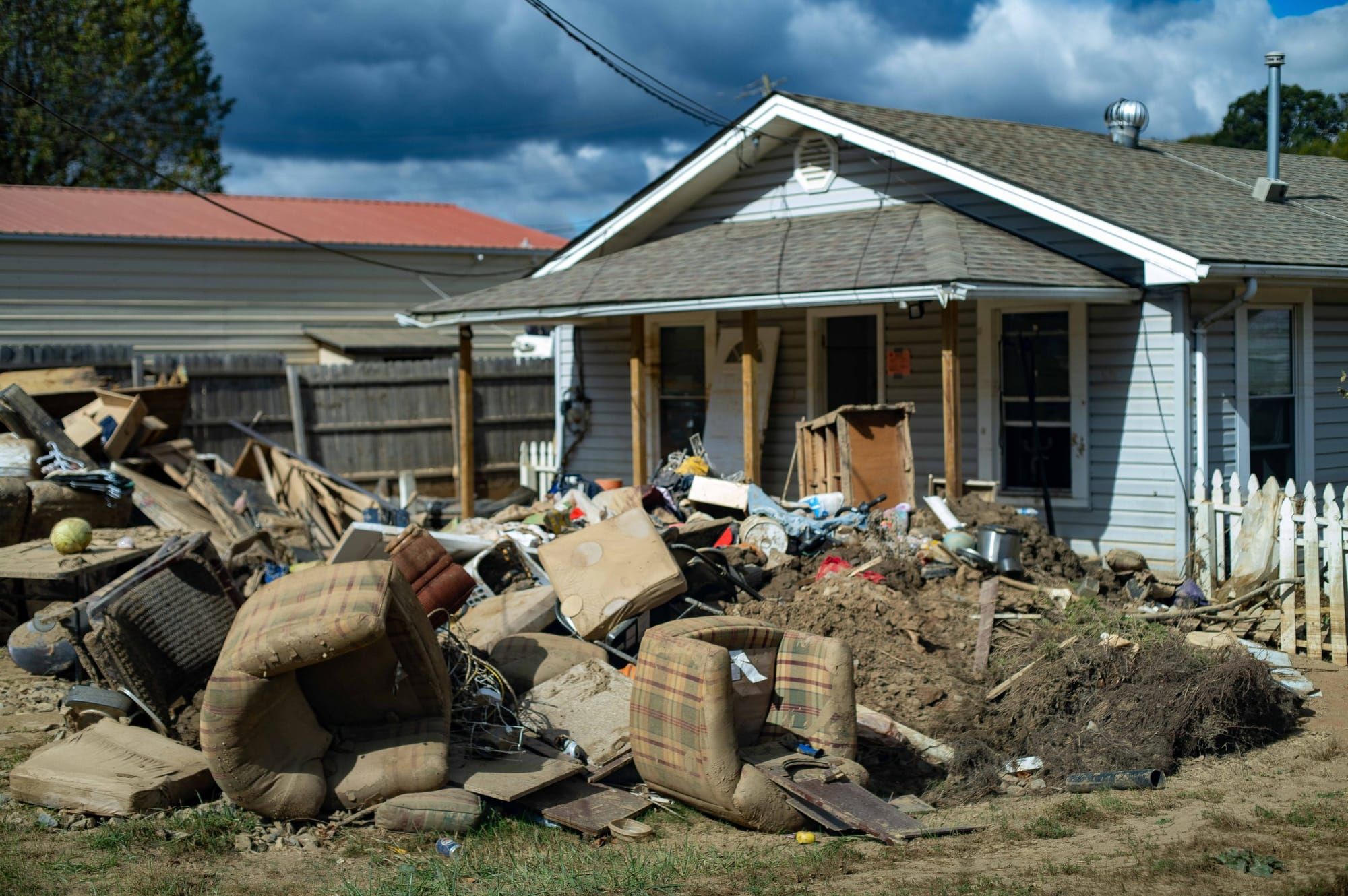
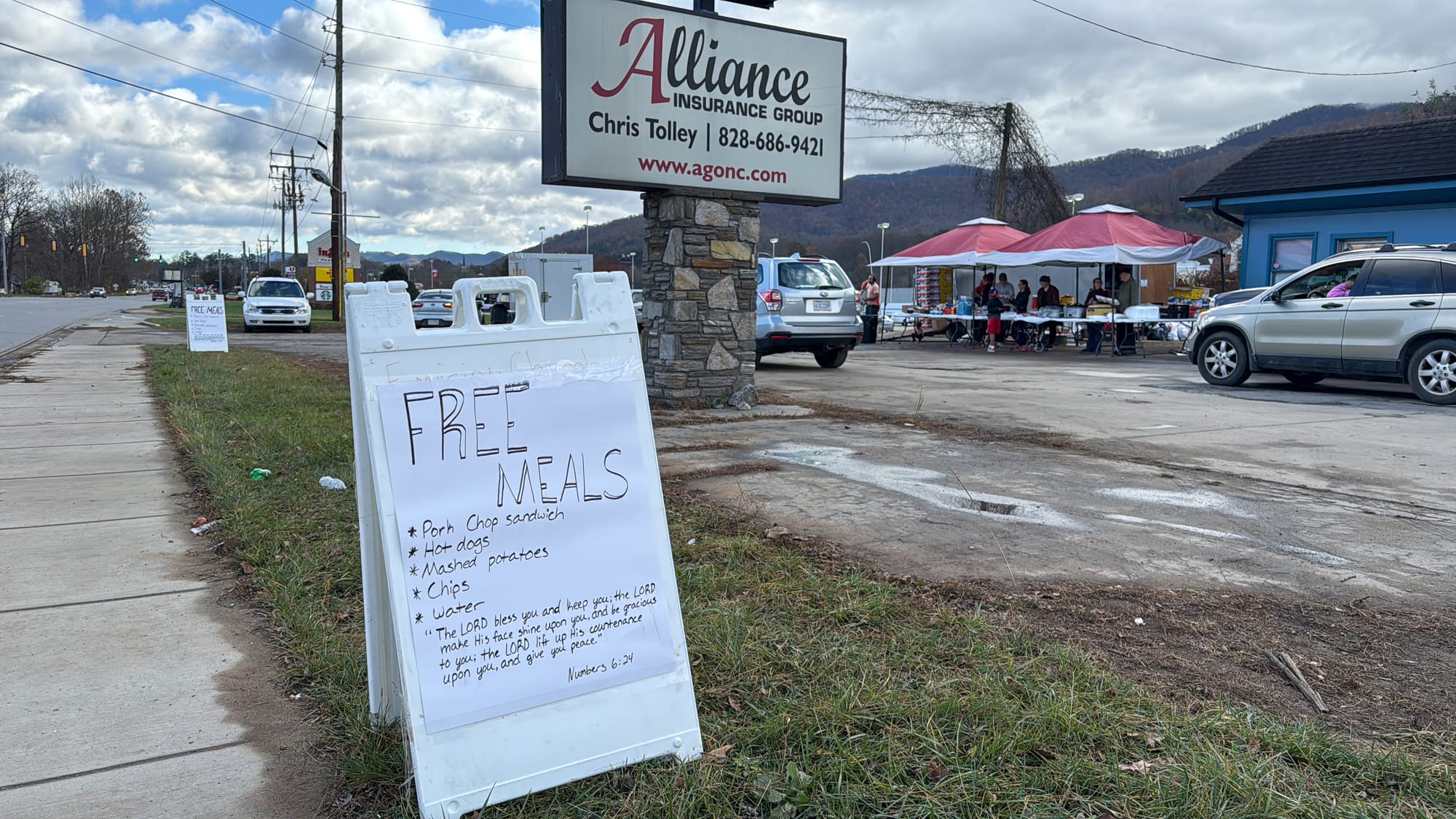
More than 100 days since Hurricane Helene barreled through Western North Carolina (WNC), devastation is still everywhere: in the damaged infrastructure, stunted tourism, and the severe economic impact shouldered by service industry workers. Many Appalachian residents are facing a range of challenges as they rebuild their lives.
This is especially true for the Latinx community.
In Buncombe County, one of the areas most affected by the hurricane was Swannanoa, a township located along the Swannanoa River and Beetree Creek, just east of Asheville. The area is home to a vibrant Latinx community, accounting for 10.6% of the population. Even though the real estate market is booming, housing remains more affordable than in towns near Asheville, making Swannanoa one of the few remaining options for working-class residents in the county.
According to Beth Trigg of Swannanoa Communities Together, a nonprofit formed after Helene, there are still thousands of displaced families in the region, as countless residential structures have been destroyed and rendered unsalvageable.
“So what that means is now the housing crisis is so far beyond what it ever was because we have less housing; because so many buildings were destroyed; so many homes, apartments, trailers were destroyed; and we have a huge number of families searching for housing because they have been displaced,” Trigg said. “From the top of the [Florina Valley] to the bottom, we had multifamily housing, we had trailer parks, we had apartments, we had duplexes. And many, many of those structures were destroyed, swept down the river, [and] can’t be rehabilitated. They’re gone. Something can be rebuilt, but that will take years.”
Broadly, WNC is on a long road to recovery, with approximately $58 billion in damages from the storm.
In the aftermath of Helene, locals are also contending with an employment crisis. The storm nearly shut down tourism during one of the busiest times of the year, causing many workers to lose income. The Buncombe County Tourism Development Authority estimated a 70% decrease in tourism in the last quarter of 2024.
“We know that many people did not work during the month of October or faced significant interruptions in their jobs,” said Vicki Meath, executive director of economic justice organization Just Economics. “We need to keep people housed. We need to protect these individuals. We need to implement a moratorium on evictions and allow them time to breathe, stay where they are, and access rental assistance and other forms of support that can truly help them.”
Local mutual aid groups, nonprofits, and religious communities have stepped up to support families facing ongoing financial challenges because of the storm. In one striking example, Grace Covenant Presbyterian Church collected funds to pay locals’ overdue rents, totaling more than $3.5 million. The church also paid $500,000 worth of energy bills for local residents. However, for many local groups that depend on donations, it’s been impossible to fully meet the needs of nearby communities.
“It is painful”
Often overlooked in local reporting are the challenges faced by immigrant communities, who, prior to Helene, already struggled with economic and health disparities. Community members have been navigating significant damage to their homes and small businesses months after Helene.
During the height of the storm, Joaquin Orellana’s property was flooded with eight feet of water, completely submerging his house. Only the basic structure remains; everything else he owned was lost to the mud. Thankfully, he found a nonprofit that, without asking about his immigration status or any other personal details, helped rebuild his home.
“They have helped me with the plumbing, with the electricity. Everything is new,” Orellana said.
Based on Orellana’s calculations, the cost of the damage would have been around $120,000. With the support he received, he said he finally feels hopeful about his family’s future. While the construction is still underway, he looks forward to returning to his home, hoping that a storm of this magnitude “won’t happen again for another 100 years.”
At Boyz Automotive, a Swannanoa mechanic shop that has been serving the community since 1960, the flooding moved the riverbank right up to the foundation, where it swallowed up a portion of the building.
“In addition to the damage caused by the hurricane, people also broke into and stole many tools and money, and we lost all our daily use tools, which is what we are struggling with,” said the shop’s office manager, Maria Elena Figueroa. Besides this heart-wrenching loss, the business also faces unforgiving utility companies. “I’ve gotten a little upset with Spectrum because they still want us to pay for our internet, even though we still don’t have power at the store.” Months after the storm, the shop’s doors are still closed and its GoFundMe has not raised the needed funds, putting the future of this local business at risk.
Nearby, a very different story has unfolded. The Orellana brothers managed to reopen their auto repair shop after cleaning out the mud and repairing their equipment—though it came at a tremendous cost to the brothers, some of whom also lost their homes in the hurricane. The shop had insurance, but coverage for flooding wasn’t included.
“You’re left high and dry,” said co-owner Alex Orellana. “I lost everything.” The brothers have reinvested $28,000 out-of-pocket to repair the shop.

Despite losing more than a dozen vehicles in their shop, Alex and his brothers continue to move forward, repairing cars for neighbors and local clients affected by the storm. The shop has already regained some of its clientele, allowing the brothers to begin slowly recovering the losses that started in September.
A salon in the region that has served local residents for over a decade also recently reopened after months of uncertainty. The owner, whose identity Prism is protecting, had to take out personal loans with her family members in order to rebuild and reopen her business.
“FEMA did not want to help us, nor did the government loans they provided. Nobody wanted to because they we are not American citizens,” the salon owner said. Assistance from the Federal Emergency Management Agency (FEMA) is open to noncitizen nationals and “qualified aliens,” which encompass green card holders, refugees, and those who have been paroled into the U.S. for at least one year or have been granted withholding of removal, among other immigrant groups.
The salon is now up and running again during the slowest time of the year, when WNC’s harsh weather makes it difficult to get around. The aftermath of Helene is also making it difficult to regain clientele, the salon owner said. Debris and waste from the hurricane in front of the salon make former customers and passersby think everything in Swannanoa is still shut down.
The challenges facing Latinx communities in the region are worsened by the high cost of living in WNC and unrelenting landlords.
Conchita, a local resident who only wanted to use her nickname, may have died in the storm if her friend hadn’t called to warn her of the rising river. Not long after the call, flood waters covered the roof of Conchita’s house. Now that the recovery period is underway, replacing her home is no easy task.
“While [philanthropic groups and individuals] are giving away small houses, and I have received one, but I can’t find a plot of land to put my little trailer,” Conchita told Prism and JMPRO Community Media.
Despite her hardships, Conchita said she is thankful that she has had a roof over her head throughout this post-hurricane period. Weeks after the tragedy, she is sleeping at a friend’s house or at her workplace. “The most important thing is life and health. Little by little, we will move forward,” she said.
Before the hurricane, Richard Leon worked at a hotel. Now he’s unemployed and behind on rent. Despite recent efforts in WNC to pause evictions, Leon’s landlord has threatened to have him removed from the apartment, where he pays $1,265 to occupy a single room.
Rent and housing have been the primary focus of WNC community organizations and mutual aid groups. However, in the months since Helene, donation-based financial assistance has largely dried up, leaving people like Leon vulnerable.
While there are many examples of community support post-Helene, locals argue it shouldn’t be on mutual aid and nonprofit groups to shoulder the burden alone. Local and federal agencies have shown significant weaknesses in their disaster response efforts, leading President Donald Trump to threaten “getting rid” of FEMA during a recent trip to the region.
Andrea Rubio is very familiar with the hodgepodge of imperfect services offered to locals. Before Helene, Rubio worked as a cook at a well-known hotel in Asheville. Like many in the service industry, she lost her job after Helene, forcing her to cobble together disaster response resources to keep a roof over her and her young daughter’s head.
Since the hurricane hit in September, Rubio and her child have constantly been on the move between hotels, cabins, and homes in uninhabitable conditions. “What can I do?” she wondered. Humiliated to have no money or source of income, she continues to look for work.
Despite news of tourism returning to WNC, immigrants are still struggling to get back on their feet.
“We are many people who have nothing in this country,” Rubio said. “[After Helene], we have no house, no home. The only thing that holds us up is our work. We do not own houses, cars, or businesses. I spent four days just trying to find water. … It is painful.”
Editorial Team:
Tina Vasquez, Lead Editor
Carolyn Copeland, Top Editor
Rashmee Kumar, Copy Editor
Author

Julio, a native of Peru, pursued studies in education, graphic design, photography, and journalism. He started teaching in a rural community near Lima in 2006 and worked there for four years before mo
Sign up for Prism newsletters.
Stay up to date with curated collection of our top stories.