In under a year, Trump administration has threatened decades of progress in global fight against HIV/AIDS
From defunding federal programs to slashing global aid, few have done as much damage to public health as Trump has

Real journalists wrote and edited this (not AI)—independent, community-driven journalism survives because you back it. Donate to sustain Prism’s mission and the humans behind it.
Nearly a year after the Trump administration’s drastic cuts to foreign aid threw the global fight against HIV/AIDS into chaos, health care experts and leaders say decades of progress remain at risk, especially as a breakthrough drug comes to market.
On the first day of his second term, President Donald Trump issued an executive order pausing foreign aid, resulting in a devastating blow to the U.S. President’s Emergency Plan for AIDS Relief, better known as PEPFAR. Launched in 2003 and overseen by the State Department’s Office of the U.S. Global AIDS Coordinator and Health Diplomacy, the program has helped prevent millions of HIV infections and supported several countries in managing the HIV epidemic. Since the Trump administration’s executive order, 71% of the U.S.’s PEPFAR partners reported the cancellation of at least one category of their work, and more than 60% detailed staff reductions.
Gregory Phillips II, associate professor of medical social sciences at Northwestern University, was in Nairobi, Kenya, when the cuts to PEPFAR were announced. He called the impacts “catastrophic.”
“There were people frantically calling around to figure out what expiration dates were of the antibiotics and test kits they had, how many more test kits they could place orders for,” Phillips said of PEPFAR partners, many of whom were also concerned about staff layoffs.
More broadly, the Trump administration’s actions have far-reaching, life-threatening consequences for vulnerable people in some of the world’s poorest countries. And despite Secretary of State Marco Rubio’s claims in May that no one had died of foreign aid cuts, experts say that hundreds of thousands of people, mostly children, have already died.
“An increased number of deaths”
The humanitarian organization Better World Campaign detailed how severe cuts to foreign aid has, among other consequences, forced organizations to pause or cut food aid in Kenya, Sudan, Nigeria, and Afghanistan; severely limited or outright eliminated sexual and reproductive health services in Turkey, Pakistan, and Bangladesh; and cut funding for programs that assisted migrants fleeing violence in Thailand, Indonesia, and Chad.
In March, Rubio announced that 83% of U.S. Agency for International Development (USAID) contracts would be canceled, systematically dismantling the agency. The move affected thousands of employees across the globe, and what remained was absorbed into the State Department under a new plan that reorganized the agency.
Among the tremendous impacts to foreign aid around the globe, cuts to HIV/AIDS-related services have been severe.
“I suspect we’re going to see the numbers of people on antiretroviral therapy and suppressing the virus likely decreasing,” said Mitchell Warren, executive director of the AIDS Vaccine Advocacy Coalition (AVAC). “I think we might begin to see an increased number of deaths due to HIV, when, in fact, that number has been declining steadily year on year because of antiretroviral treatment.”
By the end of September, the Trump administration had only distributed roughly half of the $6 billion Congress appropriated to PEPFAR. The program—touted as one of the most successful global public health programs in history—is credited with saving tens of millions of lives in dozens of countries around the globe.
The program is also credited with what experts at the health policy nonprofit KFF call “spillover” effects, including increases in childhood immunizations and retention in schools. But KFF has estimated that the administration’s cuts to PEPFAR could have far-reaching consequences. This includes more than 565,000 new HIV infections in sub-Saharan Africa over the next 10 years, and the anticipated loss of a quarter of the workforce of the largest network of people living with HIV in Ukraine.
Experts at Physicians for Human Rights (PHR) say that, in addition to the limited access to global HIV treatment and prevention services, once free services now come with cost, and community-based services have had to limit their focus on marginalized populations.
Emily Bass, the author of “To End a Plague: America’s Fight to Defeat AIDS in Africa,” told Prism that these marginalized groups aren’t just sitting idly by while the Trump administration’s cuts dismantle and destroy their health care systems. In many cases, locals are going to extremes to ensure that their communities maintain as much access to programs as possible.
“Community-based and led responses are what’s making a difference, and that’s true within marginalized communities as well,” said Bass, who also co-authored a September PHR report on the impacts of the foreign aid cuts in Uganda and Tanzania. “It’s just not sufficient. And people are suffering and dying, but they are also taking action.”
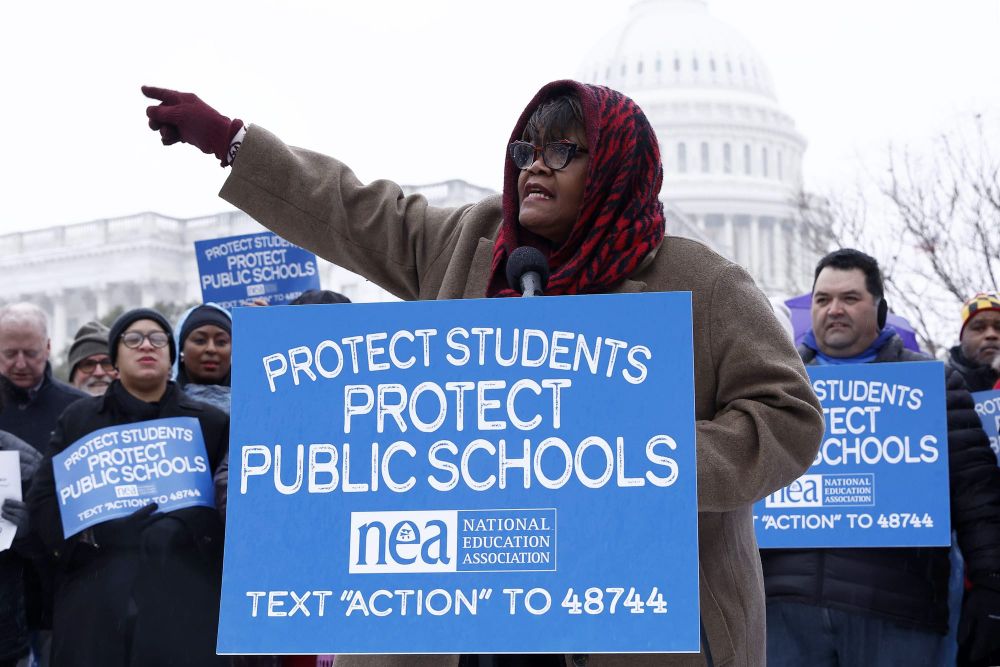
To that end, activists and lawmakers met in September and protested the almost $3 billion in cuts to PEPFAR. Efforts to withhold PEPFAR funds came after Republican legislators in July rebuked a Trump request to cut $400 million from the program. Also in July, The New York Times reported that the Trump administration planned to significantly scale back the program to shift countries away from U.S. assistance.
According to KFF, under the new “America First Global Health Strategy,” the U.S. will negotiate multiyear, bilateral agreements with countries that receive assistance through PEPFAR with the goal of making countries more self-reliant.
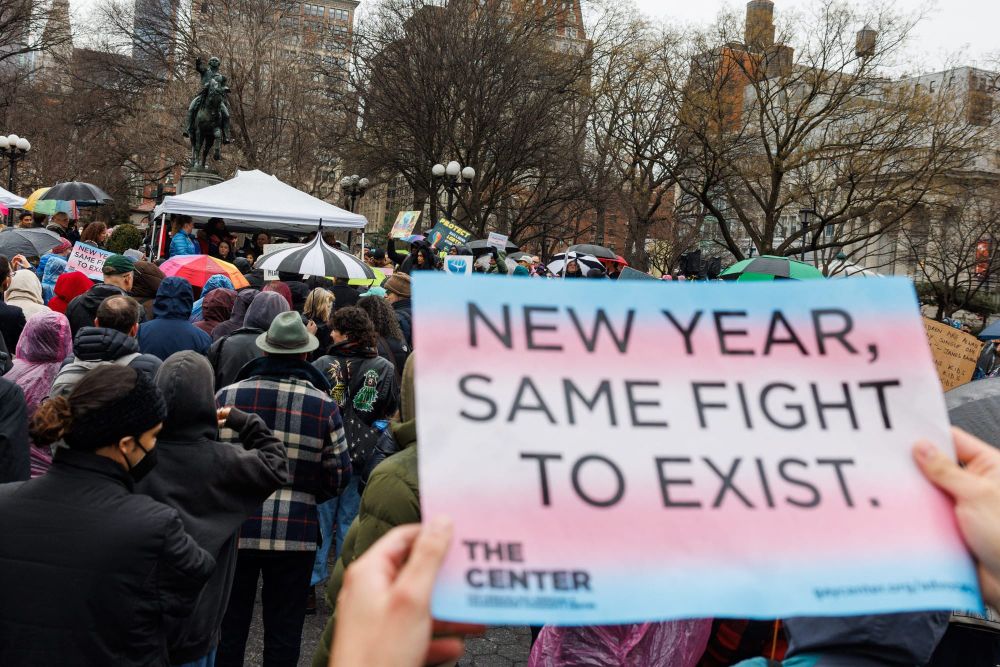
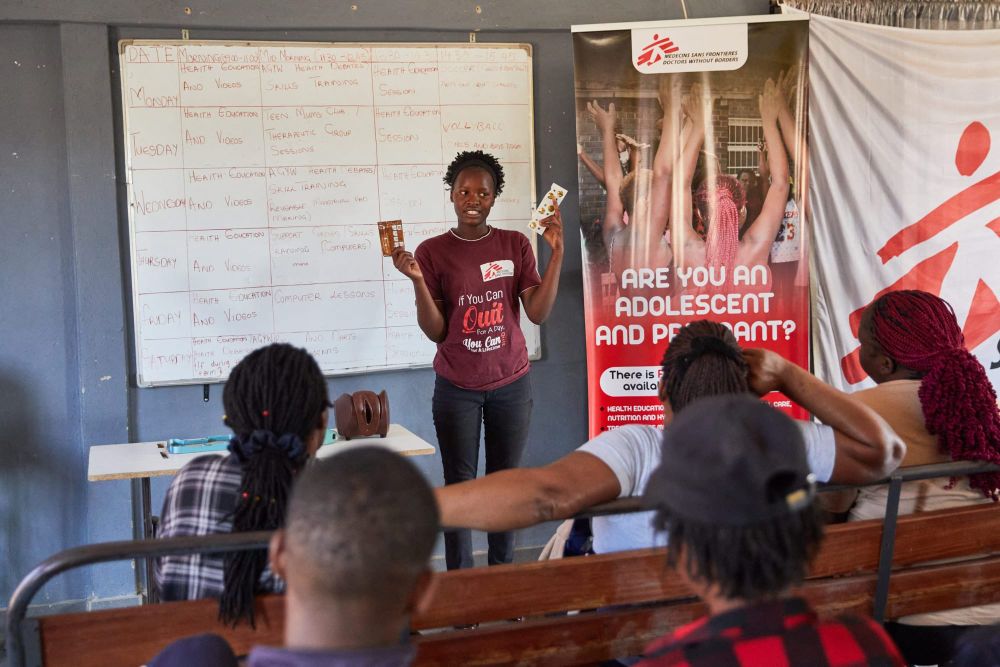
HIV treatment efforts are still underway, though new prevention requirements only provide medications such as pre-exposure prophylaxis, or PrEP, to pregnant women and women who are breastfeeding. PrEP significantly reduces a person’s chances of getting HIV, and experts say the prevention requirements’ narrowed language and focus are especially troubling given the administration’s attacks on trans people, who can also become pregnant and breastfeed.
The new restrictions glaringly leave out a number of populations who also bear the brunt of the virus. This includes men who have sex with men, trans people, sex workers, and people who use drugs. Experts at PHR say that the Trump administration’s intentional exclusion of certain populations for prevention services foments discrimination. PHR experts also noted that in some cases, the Trump administration’s exclusion of many marginalized groups from services also tacitly green-lights discrimination in other areas of the globe.
“The cuts to aid … services, and treatments for these key populations is actually providing communities and, in some cases, governments with permission to further marginalize and to be violent towards and to allow violence towards these communities,” said Karen Naimer, attorney and director of programs at PHR.
“The cruelest irony”
In response to efforts to dismantle USAID, AVAC and the Organized Crime and Corruption Reporting Project, one of the largest investigative journalism organizations in the world, sued the federal government in February, seeking an emergency order blocking the Trump administration from freezing foreign aid. A federal appeals court ruled in the pair’s favor in September. However, the Supreme Court just weeks later paused a lower federal court’s order requiring the government to disperse billions in foreign aid funds before they were set to expire at the end of the month, including roughly $4 billion as part of a recent recession package. The order came just days before the funds were set to expire, and the funds went unspent.
But this isn’t just bureaucratic back-and-forth, according to experts. Trump’s manufactured funding crisis has incalculable consequences for health systems, decades-old infrastructure, and—most critically—people living with HIV across the globe who are now scrambling to find medication, treatment, and other necessary wraparound services.
“This is not like turning on the light in the room,” said Warren of AVAC. “Once you turn it off, it is debilitating, and it will take months, if not years, to bring things back, just to catch up with where we were. So there’s a lot of lost momentum.”
And in an even more cruel twist, Warren noted that the Trump administration’s cuts are happening alongside breakthroughs in HIV prevention science, including an injectable medication that could completely transform HIV prevention efforts around the globe.
In June, the Food and Drug Administration (FDA) approved lenacapavir, an injectable version of PrEP that shows 99.9% effectiveness at protecting against the HIV virus for six months. The landmark medication represents decades of research and a history-making possibility of meaningfully addressing the global epidemic.
“It is the cruelest irony that we would have our greatest opportunity in the history of the epidemic scientifically, coming at the absolute worst moment, politically and economically,” Warren said.
Scientists also tout lenacapavir as a game-changer for the fight against HIV. Instead of a daily pill, the injection provides protection for months at a time—effectively making PrEP as onerous as a flu shot.
The World Health Organization, Centers for Disease Control and Prevention, and the United Nations are all celebrating lenacapavir, but without the ability to get the medication into the hands of the people who need it the most, the promise of the drug is still in doubt.
I just lament the fact that we are now scaling this amazing, lifesaving approach to preventing HIV with one hand tied behind our back.
Thomas McHale, Physicians for Human Rights public health director
“I wonder what the impact would have been if we were scaling this two or three years ago, when we had the full public health toolbox at our disposal to actually reach the communities that need this … and to really show what scaling new innovation through PEPFAR could look like,” said PHR’s Public Health Director Thomas McHale. “And I just lament the fact that we are now scaling this amazing, lifesaving approach to preventing HIV with one hand tied behind our back.”
The breakthrough drug is especially important for communities without easy access to prevention services and those historically hard for health systems to reach. In light of efforts by the Trump administration, experts are concerned that this novel science could only exacerbate existing inequities that are endemic to the global fight to end HIV/AIDS.
Maxx Boykin, the campaign manager for the public health advocacy group Prep4ALL’s Save HIV Funding campaign, told Prism that lenacapavir presents “a wonderful new opportunity” for PrEP access, but one that “does not work with the continued cuts to PEPFAR.”
While the U.S. government recently committed to supplying 2 million doses of lenacapavir to low-income countries by 2028, advocates told Prism that it’s a drop in the bucket for what’s really needed. Warren told Prism that the U.S.’s meager efforts echo the early days of the AIDS crisis, when gay men had to take extreme measures to force the U.S. government to finally pay attention to the deadly virus—at the expense of thousands of lives.
“It’s amazing how a lesson has to be re-learned, and we’re seeing that on steroids right now,” Warren said. “It is hugely frustrating, and that’s why I keep going back to this cruel irony.”
“Where rhetoric meets reality”
But billions in funding cuts aren’t the only barrier to landmark HIV drugs reaching the people who need them.
Advocates are also criticizing Gilead, the U.S. pharmaceutical company that makes lenacapavir. According to Prep4All, Gilead’s plan in the U.S. is to charge more than $28,000 a year for the landmark drug. A recent study found that lenacapavir could be mass-produced for as low as $25 per patient per year.
This isn’t the first time Gilead has come under fire for its exorbitant costs. Truvada, the company’s blockbuster drug that was the first PrEP drug approved by the FDA in 2012, has made the company billions. At one time, consumer advocacy group Public Citizen said Truvada cost more than $2,000 a month but cost less than $10 to make.
Further proving that the company’s prices are unnecessarily high, Gilead in October 2024 inked landmark deals with six generic drugmakers to provide lenacapavir to more than 100 low- and middle-income countries. And since then, additional deals have been reached to provide generics for $40 a year in some of the world’s poorest nations.
“The pharmaceutical companies are charging too much for these drugs, both here in the United States and globally,” Boykin said. “And it makes it harder for regular everyday folks to be able to get access.”
During the first Trump administration, the federal government sued Gilead, alleging that it owned patents to the blockbuster drugs Truvada and Descovy, another form of oral PrEP manufactured by the company. But after a handful of court rulings in the pharmaceutical company’s favor, the government in January settled the case.
As the Trump administration guts global HIV prevention efforts, experts also note that funding for research is halted. This, too, has far-reaching and long-lasting consequences in the fight against HIV/AIDS.
“It’s not just, how do we deliver PrEP today and antiretroviral treatment today, but [also] research in other long-acting PrEP options, research into an HIV vaccine, research into an HIV cure,” Warren said. “Research has taken huge, debilitating hits and HIV is not over, and it’s not going to be over in a year or two or three.”
Trump’s funding cuts also betray promises made during the president’s first term to end the HIV epidemic in the U.S. by 2030. As Warren said, “This is where rhetoric meets reality.”
“You can’t end this epidemic if you don’t focus on diversity and equity and inclusion. That’s the heart of the AIDS response,” Warren said. “You can’t end the epidemic if you destroy the [National Institutes of Health] HIV research enterprise, because we need that research for next generation PrEP, next generation treatment, and a vaccine and a cure.”
On the first day of his second term, Trump attacked DEI initiatives across the federal government, which experts say has impacted health programs and initiatives serving marginalized communities, including people of color, LGBTQ+ people, and people with disabilities
Experts who spoke to Prism noted that one of the hardest consequences of the Trump administration’s cuts is the severe distrust in the U.S. now sown across the globe—particularly in places where USAID-funded programs were the only culturally competent programs of their kind. This is also true in the U.S., where the nation’s sprawling public health system is now at the mercy of Robert F. Kennedy Jr., a Trump appointee committed to spreading medical misinformation about HIV, vaccines, and other health-related issues.
But in the face of these catastrophic cuts and the many real threats they pose, Warren said a chief lesson is that now is the time to make transformational change to the global public health regime.
“We’ve been through a seismic shift in global health, so we can’t fill the gap,” Warren said. “We can’t build back to what we had before. We have to build ahead for something very different.”
Editorial Team:
Tina Vasquez, Lead Editor
Carolyn Copeland, Top Editor
Rashmee Kumar, Copy Editor
Author

Adam Rhodes is an investigative journalist whose work primarily focuses on queer people and the criminal legal system. They currently work as a training director at Investigative Reporters and Editors
Sign up for Prism newsletters.
Stay up to date with curated collection of our top stories.