Fighting the rising tide of fascism requires ‘cracking grief open’
In this Q&A with Prism, members of EqualHealth’s Campaign Against Racism discuss their strategies for surviving authoritarianism while working to sustain the well-being of their communities across the globe
Real journalists wrote and edited this (not AI)—independent, community-driven journalism survives because you back it. Donate to sustain Prism’s mission and the humans behind it.
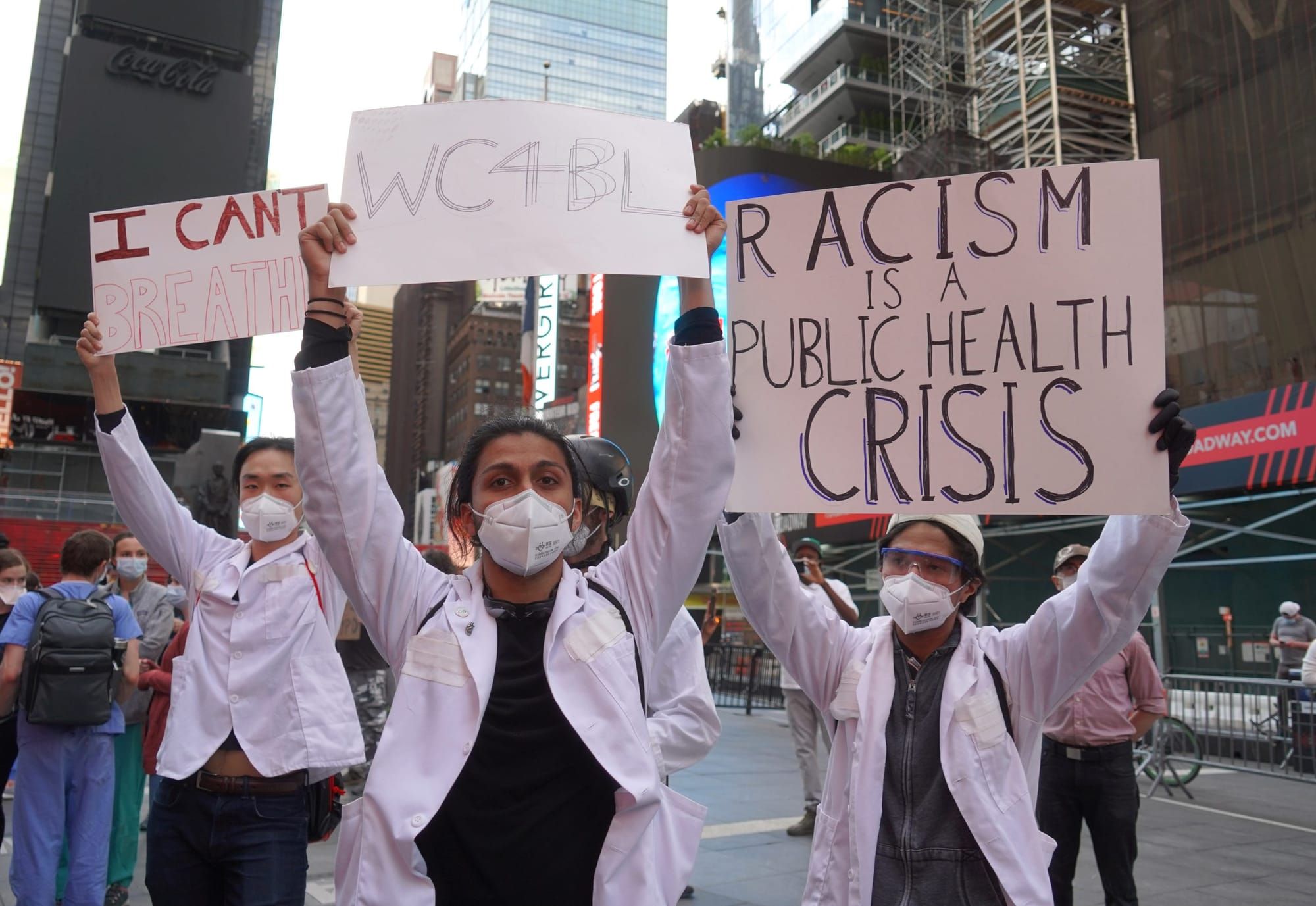
EqualHealth is a global community of health professionals, educators, and activists dedicated to achieving health justice. In part, this work is done through political education that enables health professionals to better recognize the social determinants of health so that they can engage in activism and other advocacy to address inequity.
The organization’s global Campaign Against Racism (CAR) organizes across 17 chapters and nine countries to address the historical connections between racism and capitalism. After the re-election of President Donald Trump, CAR began strategizing with its members internationally to identify their shared struggles as far-right authoritarianism takes hold across the globe.
In April, members gathered for a global dialogue centered on Nicaragua, Brazil, and the U.S., with the goal of learning how CAR members are fighting fascism, while also sustaining the spiritual and physical well-being of their communities. As part of the conversation, CAR members discussed resistance in the age of AI and increased surveillance, planting seeds for radical progressive changes, and how best to center the agency of children and the legacy of elders during this time of political unrest, among other topics.
As CAR’s coordinator, Anne Marie Collins gathered some of the participants from the global dialogue to share their insights with Prism. This includes Brazil-based Federal University of Rio Grande do Sul associate professor Alan Alves-Brito; Spain-based Nicaraguan decolonial and anti-racist feminist activist, educator, and researcher Eveling Carrazco López; and Deborah Dauda, a U.S.-based Black feminist researcher, scholar-activist, and Ph.D. candidate at University of Massachusetts Boston.
The conversation has been edited for length and clarity.
Anne Marie Collins: What does “memory of resistance” mean to you? Talk to me about the historical and present ways communities have resisted.
Deborah Dauda: Radical healing is a necessary political strategy for our movements. However, we need to grieve to heal. Patty Krawec reminds us in her book “Becoming Kin” that “grief is the persistence of love.” Naming our pain, mourning in community, and cracking grief open without shame or guilt helps us find radical hope to co-create the systems and conditions under which we can all flourish.
Hegemony teaches us that we don’t have time for these “simple practices.” However, it is crucial to our resistance, survival, and flourishing. Our cultural memory of grief is a way to honor our ancestors and guide them safely to their resting place through the rituals we conduct by grieving. This way, our ancestors can show up for us when we need them to. Without grief, our ability to dream and actualize a radically different world is compromised. When we grieve, we practice radical love and radical hope.
Eveling Carrazco López: As Venezuelan teacher José Ángel Quintero from the Añú people says, it is fundamental to return to ourselves. From an Indigenous and loving pedagogy, he invites us to decolonize our mind, our memory, and our ways of relating, which is a profoundly healing action. This involves reviewing our history, recognizing our place of power, and assuming it with responsibility.
Migrant and diasporic memories have always allowed me to interweave my lived experience with my territory of origin. I have learned this through dialogue with friends, collectives, and spaces in Spain, where I weave complicities to resist racism, white patriarchy, and fascism. Building community is fundamental in this time when migrant and racialized populations are pointed out as enemies, such as Latin American communities in the U.S., Europe, and other places.
Alan Alves-Brito: The “memory of resistance” is translated through the struggles that Black and Indigenous peoples have been mobilizing since the arrival of the European invaders. It is also in the body and in the voice, and preserved in ancestral knowledge. Resistance consists of recovering and remembering the past so as not to forget that the present is still impregnated with the past. And, in this sense, the main strategy used throughout the history of Black and Indigenous social movements in Brazil to re-exist is aquilombamento and aldeamento. It is in the collective that Black and Indigenous humans resist and remember the ancestral commitment to living well. There is no way to dismantle oppressive structures without collective struggle. Resistance is in the collective and in the memory.
Collins: For you, what is a powerful example of historical and present ways communities have resisted?
Dauda: Los Angeles is rooted in and embodies a long legacy of resistance and collective care. The intersectional and strategic organizing of the Black Panther Party movement across the U.S. laid the foundation for the development of government programs such as SNAP and Medicare. In 1940s Los Angeles, Mexican Americans wore Zoot suits to resist racial oppression and economic insecurity. The Van Troi Anti-Imperialist Youth Brigade, formed by predominantly Asian American high school students in Los Angeles, organized against the Vietnam War. After the LA fires, the historically Black Altadena community was heavily policed and militarized. In response, the people created alternatives to what a collective future could look like through mutual aid, community policing to protect people and properties, and abolitionist practices to reclaim the memories of families, histories, and artifacts lost in the fire.
Mutual aid is social medicine; it is how we resist, survive, and thrive against the empire’s worst fears: our survival against all odds.
Deborah Dauda, Black feminist researcher, scholar-activist, and Ph.D. candidate at University of Massachusetts Boston
Today, our communities organize rapid response teams to track and report Immigration and Customs Enforcement (ICE) activity. We have groups providing wraparound services to families affected by ICE abductions. We learn from the anthology curated by Gloria Anzaldúa and Cherríe Moraga—“The Bridge Called My Back”—that we channel our grief through collective action. Then also, from the “Black Radical Imagination,” Robyn D.G. Kelley teaches us collective care through mutual aid. We have to integrate these multiple strategies. Mutual aid is Black feminist theorizing and intersectionality in practice; it is our generational practice; our cultural memory. Mutual aid is social medicine; it is how we resist, survive, and thrive against the empire’s worst fears: our survival against all odds.
Collins: How can we resist reinforcing binary categories that reproduce the same colonial systems we are resisting?
Dauda: We must create rituals for ourselves to become “right within,” as singer-songwriter Lauryn Hill suggests, so that we don’t fall prey to binary thinking. This way, we can practice undoing the colonialism that’s in our psyche that makes these labels attractive in the first place.
Carrazco López: From my experience living in the Kingdom of Spain—at two different moments in my life—I have noticed that anti-immigrant policies and racist attitudes are not exclusive to the right. They also manifest in the left and in other groups that consider themselves “progressive.” In fact, it’s quite clear how certain sectors of the Spanish left, along with some from the left in the Americas, promote projects, programs, and public policies from a developmentalist perspective that perpetuates and worsens dispossession, extractivism, and violence. Although they call themselves anti-racist or anti-colonial, they often end up reinforcing practices of internal colonialism. We cannot continue interpreting our realities, contexts, and historical events only from the dichotomous logic of right against left.
Alves-Brito: The intersections of gender, for example, both on the right and on the left of the political spectrum, continue to be neglected. On the right, we are accused of proliferating “gender ideology,” and on the left, we are accused of vociferating “identitarianism.” The Brazilian right and left remain, for the most part, rooted in the idea of class, without yet racializing the discussion. Identitarians are mainly male, white, heterosexual, cisgender, well-born, and of Christian spirituality.
There is an ongoing “narcissistic pact of whiteness,” to quote the psychologist Cida Bento, in which privilege and white supremacy with colonial, capitalist, and patriarchal roots do not accept their place as oppressors in the world. At this moment in Brazil, maximum attention is needed in historical recovery and political consciousness, recovering the memory and providing anti-racist political education. Evolution, in general, is committed to the status quo, in slow and continuous processes; revolution is abrupt, radical, based on Black and Indigenous ancestral epistemologies and pedagogies. Without fostering hope, it is impossible to sustain the revolution.
We need other languages and ways of writing and telling our stories. Reimagining other revolutions is reworking the narratives and fabricating them from an idea of a future that can no longer be full of neocolonial, neocapitalist, and patriarchal exclusion.
Collins: How do you understand health as a relational process? And how do we move away from health rooted in racial capitalism and systems of domination?
Carrazco López: We need to rebel, escape, and create policies that distance themselves from both orthodox Marxism and the liberal state model, which involves reimagining, dreaming, creating, and advancing from political practices that emerge from other logics and worldviews: worlds in relation, as Indigenous and Black peoples tell us.
These worldviews were conceived neither by classical Marxism nor by the modern left and its revolutionary project. In this sense, there exists a profound historical and epistemological debt. Faced with progressive and developmentalist left-wing sectors, it is urgent to ask ourselves: What type of revolution do we want? What social transformation do we really need? How do we decolonize even the revolutionary narratives we have learned?
Alves-Brito: To turn to other logics of care, understanding healing in a visceral relationship between humans and non-humans. Healing through the full exercise of spirituality and in a visceral relationship with nature, seeing oneself as part of it. Through deep sky-earth-sea relationships. Healing through the archives of ancestral memory.
Editorial Team:
Tina Vasquez, Lead Editor
Carolyn Copeland, Top Editor
Rashmee Kumar, Copy Editor
Author
Anne Marie Collins (she/her) was born and raised in Glasgow, rooted in generations of displaced people resulting from the British occupation in Ireland who have continually resisted British and all e
Sign up for Prism newsletters.
Stay up to date with curated collection of our top stories.