What a Kamala Harris presidency could mean for the fight for abortion rights
Advocates hope Harris’ stronger position on reproductive rights will make the issue a greater priority for Democrats, in contrast to Trump
Throughout President Joe Biden’s time in the Oval Office, reproductive rights leaders and activists hoped he would use the word abortion more often to show his commitment toward reproductive rights, especially after the U.S. Supreme Court overturned Roe v. Wade in 2022, leading to the loss of a constitutional right to abortion.
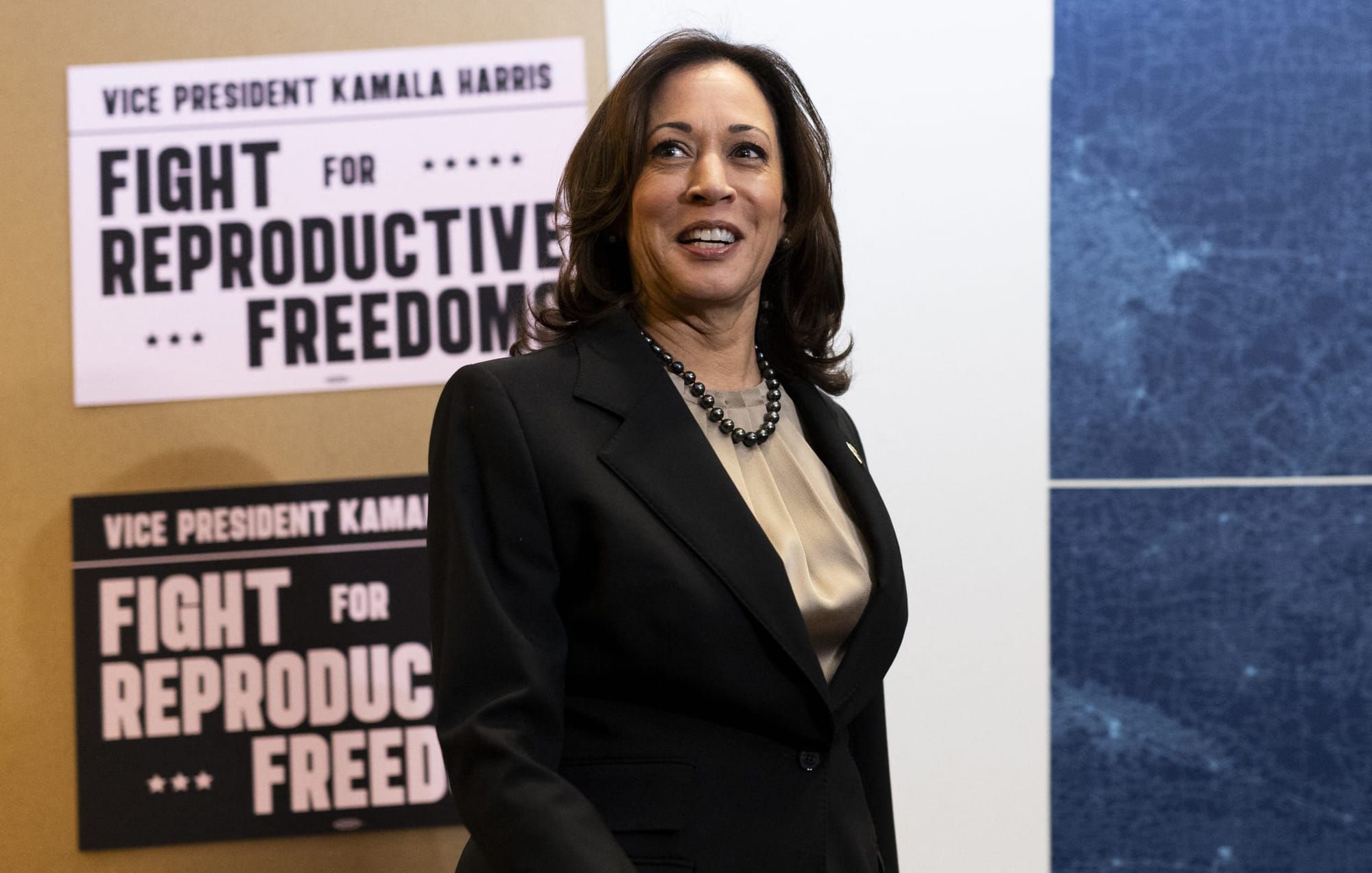
But that hope never came to fruition. Vice President Kamala Harris, however, has always been the forceful voice on abortion in the Biden-Harris administration, with Biden delegating Harris to be the face of reproductive rights. Now, with Harris as the official Democratic presidential nominee, abortion rights advocates hope the issue will be a greater priority on the party’s agenda. In the Democratic National Committee’s policy platform, which was written while Biden was still the candidate, the party vows to pass national legislation to codify Roe “with a Democratic Congress.”
“Harris is very much of a different generation than Biden that thinks of abortion as part of a more comprehensive reproductive justice framework,” said law professor Mary Ziegler, a professor at University of California, Davis School of Law and one of the world’s leading historians of the U.S. abortion debate.
This week, the Harris-Walz campaign kicked off the “Fighting for Reproductive Freedom” bus tour in Palm Beach, Florida. The tour will stop in “every single battleground state,” according to Harris-Walz Senior Spokesperson Lauren Hitt, including Georgia, Arizona, and Nevada.
“We are reminding Trump of the fact that by pulling our reproductive freedom and putting it on the ballot, he is going to have an incredible amount of energy and organizing that he is going to have to contend with,” campaign manager Julie Chavez Rodriguez wrote in an email statement.
A track record of advocating for reproductive rights
In January, Harris launched the Reproductive Freedom Tour on the 51st anniversary of Roe v. Wade, traveling to battleground states such as Wisconsin, and was the first vice president to tour an abortion clinic in Minnesota.
Harris’ track record for prioritizing reproductive health care and justice started before she reached the White House. As a U.S. senator, she advocated for maternal health legislation by sponsoring the Maternal CARE Act in 2019, which called for grants addressing implicit bias in maternal health care.
In 2020, she introduced a law aimed at addressing maternal health outcomes with a focus on Black maternal health. As California’s attorney general, Harris sued an anti-abortion group that secretly recorded videos of abortion providers. As a 2020 presidential candidate in the Democratic primaries, Harris committed to working with Congress to pass a federal bill to codify abortion rights and promised to end the Hyde Amendment, which places restrictions on Medicaid coverage for abortion.
Harris’ running mate, Minnesota Gov. Tim Walz, has also made efforts to solidify reproductive rights. After the Supreme Court’s ruling opened the door for states to ban abortion, Walz quickly signed into law a bill enshrining abortion access and other forms of reproductive healthcare in Minnesota.
“Governor Walz and Mrs. Walz struggled with years of fertility challenges and had their daughter, Hope, through reproductive health care like IVF—further cementing his commitment to ensuring all Americans have access to this care,” the Harris campaign said in a statement. (While Tim and Gwen Walz say they did not use in vitro fertilization to conceive, they did turn to other fertility procedures.) Some conservatives who argue life begins at conception have targeted IVF. The Democratic Party platform promises to protect IVF access, and also repeal the Hyde Amendment, and continue to support access to FDA-approved medication abortion.
True policy changes necessary for abortion access to be protected
In 2022, The Supreme Court’s decision to overturn Roe v. Wade set off a wave of new attacks on abortion, with 14 states banning abortion completely and several others severely limiting access to abortion. According to the ACLU, in 2023 alone, more than 171,000 people were forced to travel outside of their home state to secure abortion access.
That this ruling came under Trump was no surprise as he appointed three conservative Supreme Court justices who were part of the majority opinion that overturned the 50-year-old decision and took away the constitutional right to abortion. According to the ACLU, politicians have even threatened to put doctors in prison for providing emergency abortion care to pregnant patients facing complications.
But according to Ziegler, the transformation of the Supreme Court makeup is where a Harris presidency could change the game for abortion rights.
“Biden is already on pace to nominate more judges than Trump did, and if Harris has four more years of judges, that could include Supreme Court judges, which can mean the reversal of Dobbs and the reinstatement of some sort of federal protection since the kind of judges that Harris would nominate would be quite progressive,” Ziegler explained.
Ziegler also explained that to make true changes to abortion rights, Harris must be willing to take risks and use her executive powers to codify a federal right to abortion. A majority progressive Supreme Court would work in her favor when conservatives push back with lawsuits that would inevitably end up in the Supreme Court.
“I think Harris has a strong message on protecting patients and access to reproductive healthcare,” said 28-year-old Navjot Kaur, who has worked in politics for more than a decade. “But the Harris campaign needs to drive home the fact that voters in reproductive rights battleground states are not just voting for president, they are also voting for state legislatures that will directly impact access to reproductive health care.”
For example, Harris would do well to appeal to voters in Arizona who are voting on a ballot initiative to establish a right to abortion in the state constitution this November. Voters in six other states will also be voting on abortion this fall, but Arizona is a crucial battleground state for the presidential election and key to the Democrats controlling the Senate.
Harris also needs to highlight the heightened threats against reproductive rights thinly veiled in Project 2025—the conservative agenda for Trump’s second term in office, Zeigler said.
Voters recognize the stakes
Project 2025 outlines immediate plans to reverse approval for abortion medication; require enforcement of the Comstock Act, which criminalizes mailing abortion medications; restrict access to birth control; and end the Affordable Care Act’s mandatory insurance coverage for birth control.
“Harris has to point out all the things that Trump could do that would override ballot initiatives and protections in the state constitution,” Ziegler said.
According to a recent CBS poll, 71% of voters already believe that Harris will make abortion legal across the country. The first day of the Democratic National Convention in Chicago reinforced the importance of reproductive rights as a campaign issue when Amanda Zurawski, Kaitlyn Joshua, and Hadley Duvall—women who faced extenuating circumstances due to being denied abortion care after Roe was overturned—shared their stories on stage.
“Kamala Harris will sign a national law to restore the right to an abortion,” Duvall said. “She will fight for every woman and every girl.”
Author

Jennifer Chowdhury is a journalist and writer dedicated to human rights reporting with a special focus on women of color around the world whose voices are stifled by patriarchy, systematic racism, and
Sign up for Prism newsletters.
Stay up to date with curated collection of our top stories.