‘This is a “for now” decision’: Advocates plan ahead after judge temporarily blocks termination of Haitian TPS
The Trump administration is expected to appeal the Feb. 2 ruling that averted mass job losses and deportations by halting the end of Temporary Protected Status for more than 350,000 Haitians
Real journalists wrote and edited this (not AI)—independent, community-driven journalism survives because you back it. Donate to sustain Prism’s mission and the humans behind it.
Haitians and immigrant rights advocates welcomed a Feb. 2 federal ruling that restores Temporary Protected Status (TPS) for Haitians, but cautioned that the relief was temporary.
A federal judge issued a temporary stay blocking the Trump administration from ending TPS for Haitian immigrants, preventing more than 350,000 people from losing legal status, work authorization, and protection from deportation just hours before the policy was set to take effect.
The ruling, issued by Judge Ana C. Reyes of the U.S. District Court for the District of Columbia, stops the Department of Homeland Security (DHS) from canceling Haitian TPS while litigation continues. Without the stay, Haitian TPS holders would have lost their status at midnight Tuesday.
For now, Haitian TPS holders retain their work permits and protection from deportation, but the court did not set an expiration date or long-term protections.
“This is a ‘for now’ decision,” said Tessa Petit, the executive director of the Haitian Bridge Alliance. “We don’t know yet what the next steps are going to be.”
Still, the ruling was a reason to celebrate for many.
Todd Schulte, president of immigration and criminal justice policy organization FWD.us, said in a statement that the court’s decision provided “much-needed temporary relief to hundreds of thousands of Haitian TPS holders—and their families and communities—who were going to lose their protections and ability to continue building their lives in the U.S. this week.”
Petit said, “They would have definitely lost their employment and become low-hanging fruit for [Immigration and Customs Enforcement], to be detained and deported and separated from their children.” Additionally, potentially thousands of U.S.-born children of Haitian TPS holders would face separation from their families or be deported with them, Petti said.
Ending the program would have placed many families at immediate risk of separation, job loss, and homelessness. While the ruling restores TPS protections for now, Petit emphasized that it doesn’t mark the finish line.
“[The protection] is extremely fragile because the judge does not have the power to designate TPS or to extend [it],” Petit said. “She just pointed out that there were some administrative irregularities in [DHS] Secretary [Kristi] Noem’s decision to cancel TPS for Haitians. … It is fragile because the Department of Homeland Security can appeal that decision.”
In a statement, 32BJ SEIU President Manny Pastreich said, “Although we fully expect the Trump administration to appeal the ruling, we are relieved by this reprieve and renewed in our determination to continue fighting against all unjust TPS terminations.”
Pastreich said the union, which represents more than 185,000 property service workers across the U.S., was among the plaintiffs that successfully stopped DHS from ending Haitian TPS in August, “when we argued that a clear racial animus towards Black immigrants motivates this administration’s improper if not illegal actions.”
Congressional pressure builds
Meanwhile, advocates are urging Congress to act. A discharge petition filed by Rep. Ayanna Pressley, D-Mass., on Jan. 22 would force a House vote on legislation redesignating TPS for Haiti through at least 2029.
A discharge petition allows lawmakers to bypass congressional leadership if the majority of the 435 members sign. If successful, the bill must be brought to the floor for a vote.
“Congress has the power to designate TPS,” Petit said. “We should be focusing on getting the members of Congress throughout the country to sign on to [the discharge petition] to secure TPS for Haitians.”
Schulte echoed that call, urging the administration to abandon further legal challenges.
Conditions in Haiti remain dire
The Trump administration has argued that conditions in Haiti no longer justify TPS. Petit, who is Haitian and has family in the country, strongly disputed that claim. According to a report by UNICEF, there has been a 1,000% increase in sexual violence against children in the country.
“Gangs have taken over the majority of political violence,” Petiti said. “We know that there’s over 1.4 million people who’ve been displaced, who have had to leave their homes and are now living in tents. We know that women are being raped in those tents.”
Guerline Jozef, executive director of the Haitian Bridge Alliance, said in a statement that the U.S. should not “force people to return to a burning home.”
“Ending TPS would force families into impossible choices, push U.S. citizen children into poverty and without parents, and send people back to conditions that clearly violate both the law and basic human dignity,” Jozef said.
Haiti, which suffered a devastating U.S. occupation for nearly two decades, followed by ongoing interference, remains under a U.S. State Department Level 4 “Do Not Travel” advisory due to kidnapping, civil unrest, and widespread violence.
Fear rippling through communities
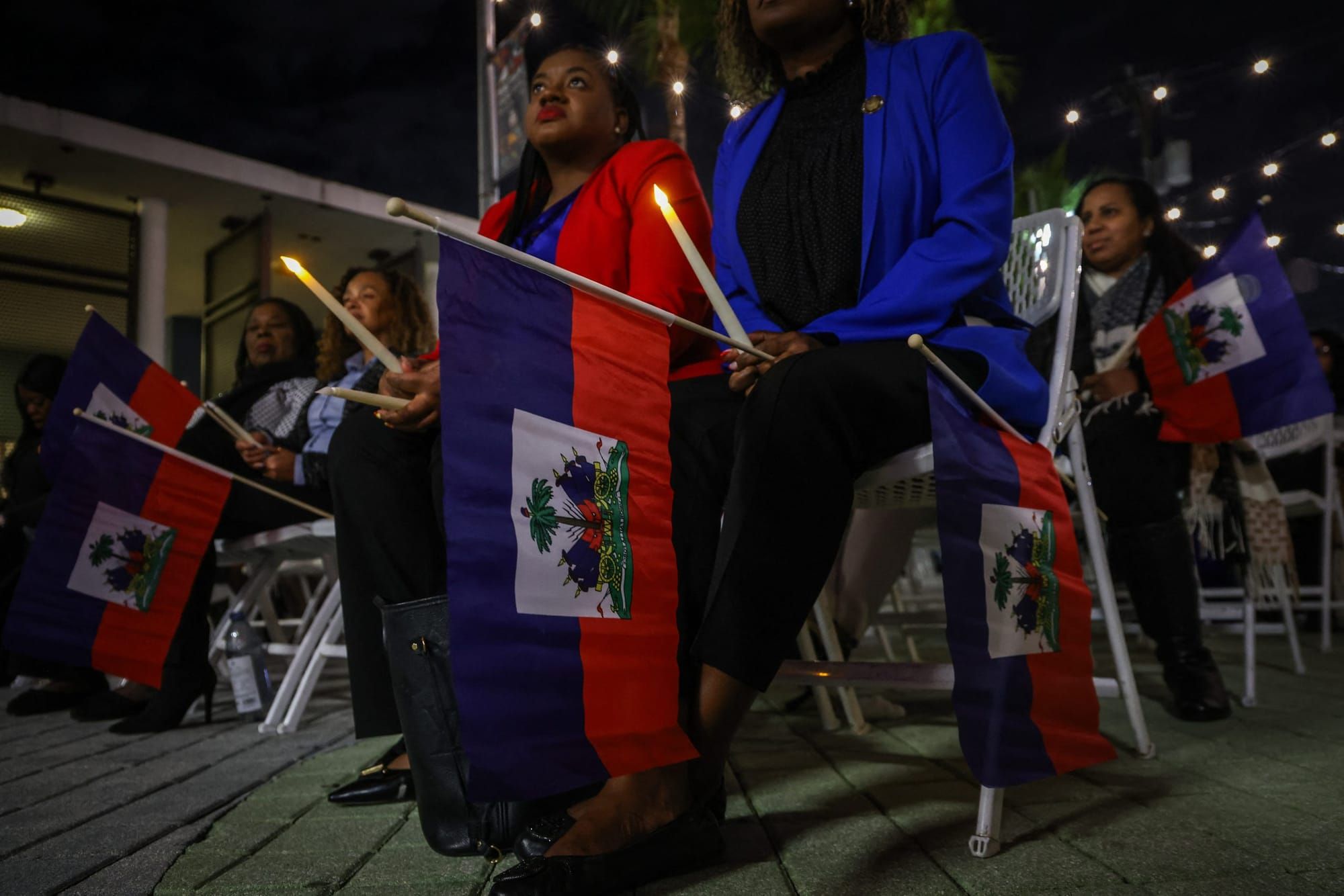
In the days leading up to the Feb. 3 deadline to renew TPS status, fear and uncertainty were already reshaping daily life in Haitian communities across the U.S., particularly in Florida, which is home to the largest Haitian TPS population in the country.
“The pews in the churches became empty,” Petit said. “People were not going to the stores. Children were being taken out of schools. They were not showing up in schools because parents were getting more and more afraid to go to work.”
Petit added that some people had already been terminated by their employers. Community organizations reported an increase in requests for emergency assistance and mental health services as families prepared for possible deportation.
Florida is home to about 158,000 Haitian TPS holders, many of whom work in health care, hospitality, agriculture, construction, and elder care.
“That is a huge gap coming,” Petit said.
Labor unions, including 32BJ SEIU, SEIU 1199, and UNITE HERE, have warned that ending TPS would destabilize regional economies and weaken labor standards.
“Ending Haitian TPS would also cause calamity in the U.S.,” Pastreich said. “In Florida, Massachusetts, New York, and elsewhere, our Haitian TPS members load luggage at airports, keep downtown buildings safe, and perform many other essential jobs every day.”
Preparing for uncertainty
While litigation continues, Petit urged TPS holders to use the temporary reprieve to plan.
“They need to think about legal guardianship for their children,” Petit said. “They need to think about what are the legal steps that they can take to protect the assets that they built here? What does going to another country look like? If you’re a parent with a child, you have to think about who, other than myself, can pick up my child at school if I get sick or something happens?”
She also called on non-TPS holders to take action by contacting their members of Congress in support of the discharge petition.
“Above everything else, before everything else, we’re human beings,” Petit said. “We can talk about the economic impact that we have, but before everything else, these are lives that we’re putting at risk. These are lives that we’re putting on pause.”
Editorial Team:
Sahar Fatima, Lead Editor
Carolyn Copeland, Top Editor
Rashmee Kumar, Copy Editor
Author

Alexandra is a Cuban-American writer based in Miami, with an interest in immigration, the economy, gender justice, and the environment. Her work has appeared in CNN, Vice, and Catapult Magazine, among
Sign up for Prism newsletters.
Stay up to date with curated collection of our top stories.