Trump’s H-2 visa overhaul legislates indentured servitude, critics say
Low-wage migrant workers employed in agriculture, landscaping, construction, and other dangerous industries are more vulnerable than ever as Congress and lawmakers push to further erode workers’ rights
Real journalists wrote and edited this (not AI)—independent, community-driven journalism survives because you back it. Donate to sustain Prism’s mission and the humans behind it.
The Trump administration has introduced changes to H-2 visa programs that critics say worsen the already dismal working conditions for low-wage foreign workers. At the same time, Congress has aimed to drastically expand these programs and further strip laborers from the Global South of their rights.
Designed to provide seasonal, short-term foreign labor to American employers in agricultural (H-2A) and nonagricultural (H-2B) industries, these visa programs operate as state-sanctioned pipelines for low-wage laborers who are tied to a single employer. This limits their mobility and ability to leave exploitative working conditions, which often enables wage theft and discourages workers from reporting abuse for fear of being blacklisted. While these programs offer employers labor flexibility, they systematically constrain the rights, bargaining power, and long-term security of workers deemed “unskilled,” who, in fact, perform highly specialized tasks.
In July, the Trump administration rescinded a new rule implemented under the Biden administration that allowed farmworkers to organize for mutual aid and receive visitors at their labor camps. The move hinders farmworkers’ ability to connect with advocates for support. The rule also included protections against recruitment fraud, retaliation, and human trafficking. This included banning employers from withholding workers’ passports and other legal documents, which is a sign of labor trafficking.
The Trump administration is also cutting wages for H-2A workers by nearly one-third, depending on the state.
“This creates a domino effect,” said Erica Lomeli Corcoran, the CEO of the United Farm Workers (UFW) Foundation, a branch of the storied union serving rural farmworker communities. “It puts pressure on U.S. workers’ wages because they either have to accept lower-paying jobs or face displacement by seasonal workers.”
The administration’s actions come as the Department of Labor’s (DOL) discretionary budget was slashed from $13.5 billion to $9 billion, while staff was also reduced by roughly 25%, drastically affecting the agency’s enforcement abilities and exposing more workers to unsafe workplace conditions.
Congress is also planning to weaken H-2 workers’ rights. Led by Maryland Rep. Andy Harris, Republican representatives introduced a rider in the Department of Homeland Security (DHS) Appropriations Act to block the implementation and enforcement of a rule that seeks to modernize H-2 program requirements, oversight, and worker protections. In part, the rule allows workers to leave exploitative jobs and hinders employers who have repeatedly violated labor laws from being able to continue recruiting guest workers.
The rider was introduced after intense lobbying by industry groups that greatly benefit from exploiting migrant workers, including the American Farm Bureau Federation, the National Council of Agricultural Employers, the National Association of Landscape Professionals, the National Fisheries Institute, and MásLabor, a leading recruiter of H-2A agricultural workers. Several of these groups are also contesting these workers’ rights protections in a lawsuit filed in Texas in February, claiming that enforcing the proposed farmworker protections is “arbitrary and capricious.”
According to OpenSecrets, which tracks and publishes data on campaign finance and lobbying, in the 2024 election cycle, agribusiness contributions to congressional campaigns totaled about $211 million, the most in history. The largest percentage—66%—went to Republicans.
Human rights crisis
The coordinated actions by the Trump administration, Republican lawmakers, and industry groups increase employers’ near-total control over agricultural H-2A and nonagricultural H-2B temporary workers, effectively creating a large, racialized servitude system of laborers with no legal avenue to remain in the U.S. long-term or adjust their status.
This represents a major labor and human rights crisis for all low-wage workers, advocates warn.
“We’ll be seeing a lot more deterioration not just of wages but working conditions for all workers, including U.S.-based workers,” said Carmen Martinez, the deputy policy director at Centro de los Derechos del Migrante (CDM), a transnational organization promoting the rights of low-wage migrants.
This is especially concerning, Martinez added, “under an administration that’s taking away resources from the Department of Labor (DOL) for inspections and oversight.”
Martinez said employers already “control everything” in the program, including the recruitment process, housing and transportation, and the ability to blacklist workers from future employment in the region. Still, she added, the industry lobby asks for additional deregulation to make the recruitment “easier, streamlined, and less costly” so that employers can further participate.
The agricultural industry also has some Democrats as allies.
Rep. Chellie Pingree (D-Maine) supported another amendment to the DHS funding bill that would dramatically expand H-2 programs, even though these programs are often compared with modern-day slavery and indentured servitude. Workers frequently go into debt to obtain their work permit and pay for their travel expenses to the U.S., costs American employers are legally responsible for covering but often fail to reimburse. H-2 workers’ visas are also tied to a single employer, who oversees their housing, transportation, and access to food, leaving workers waylaid in the U.S. if they attempt to leave an exploitative or abusive employer.
Instances of forced labor, human trafficking, and sexual exploitation have been amply documented. In September, Prism revealed that women who obtain H-2A agricultural visas are routinely funneled into nonagricultural labor where they face sexual violence and trafficking.
About 370,000 migrant workers are currently in the U.S. through the H-2A program for agriculture—roughly 17% of the agricultural workforce. If the H-2 appropriations rider becomes law, the program is projected to grow to around 900,000 workers in 2034, accounting for 42% of agricultural jobs, according to estimates from the Economic Policy Institute (EPI), a nonpartisan think tank. The H-2B program—for landscaping, hospitality, construction, seafood processing, forestry, recreation, and, increasingly, poultry and meat processing—has a formal cap of 66,000 workers, although 170,000 worked in the U.S. in 2024. This program would have an estimated 252,000 visas in 2026, said Daniel Costa, director of immigration law and policy research at EPI.
The vast majority of H-2 laborers come from Mexico, a country with nationals in the U.S. who are overwhelmingly targeted in the Trump administration’s recent immigration raids, followed by people from Guatemala, Honduras, El Salvador, Jamaica, and South Africa. As the Trump administration intensifies its campaign of terror against these immigrants—deporting undocumented workers, stripping noncitizens of valid work permits, and canceling temporary immigration protections—the pool of low-wage laborers already in the country is shrinking.
“Unless the Trump administration changes course on immigration policies, the most logical choice for employers—and really, one of their only options—is to recruit more temporary guest workers,” Costa said.
The issue is that H-2 workers may “have some rights on paper, but they don’t have them in practice,” Costa added. And what rights these workers do have are being quickly stripped away by the Trump administration and Congress.
A slave-labor program
In early October, the Trump administration lowered the Adverse Effect Wage Rate, which is used to calculate H-2A workers’ wages. The way the rate is calculated is intended to ensure foreign workers’ wages don’t decrease the wages of American workers. Depending on the state, some H-2A workers will now be making anywhere from $5 to $7 less for performing difficult and sometimes deadly agricultural work.
The impact on U.S.-based workers’ wages seems unavoidable. Lowering wages for guest workers, Lomeli Corcoran argued, “is really a win for corporate greed as it also depresses the wages and working conditions of U.S. workers.” As a result, according to the UFW Foundation, all farm workers in the United States will lose $2.46 billion in annual wages.
“The farmers who feed us every day deserve much more: fair working conditions, a decent wage, dignity, and respect. Instead, what we’ve seen is that, to a certain extent, this [the H2-A program] is modern-day slavery,” said Lomeli Corcoran.
The wage-cut rule from the DOL acknowledges that the reduction will likely “result in wage transfers to employers.” For instance, in Georgia, which has one of the largest H-2A workforces, the wage will dip from $16.08 to $12.27, plus a housing deduction of $1.75, resulting in an hourly wage of $10.52.
Critics say that worsens the brutal conditions faced by workers—especially amid the climate crisis. According to government data, immigrants are far more likely than American workers to hold outdoor jobs where they experience up to 35 times the risk of dying from heat exposure than the general population. The denial of shade and water breaks during working hours contributes to wage theft and workdays that are much longer than eight hours.
The redistribution of wealth from workers to employers is a hallmark of the Trump administration. In 2026, the Trump’s signature domestic policy legislation is projected to give the richest 1% a total of $117 billion in net tax cuts, while the bottom 60% of taxpayers will receive about $77 billion, according to the Institute for Taxation and Economic Policy, a nonpartisan tax policy organization.
The beneficiaries of the wage transfer from “the have-nots to the haves” are the corporations at the top of the supply chain, said Baldemar Velasquez, founder of the Farm Labor Organizing Committee (FLOC), which has farmworker members in Ohio, North Carolina, and South Carolina. The organization was the first to represent H-2A visa workers under a labor agreement.
“You need to distinguish between small family farmers and corporate farmers,” Velasquez said. “Family farmers are also at risk because the corporations, manufacturers, and retailers continue to squeeze the suppliers for cheaper and cheaper products.”
The Trump administration is decidedly on the side of corporations.
To make the recruitment of H-2A workers “more efficient” for agricultural producers, DHS announced a rule in October allowing earlier processing of visa petitions by the DOL.
Under such industry pressure and without the basic protections provided during the Biden administration, H-2A workers will likely be exposed to even more severe exploitation.
Take the case of Luis Gómez-Echeverría, who was made to pay $2,500 in illegal recruitment fees and, on some days, was forced to work from 2 a.m. to 10 p.m. without compensation. Moreover, he was often paid less than the federal minimum wage of $7.25 per hour.
According to a 2022 complaint filed on his behalf in the Western District of Michigan, Gómez-Echeverría’s employer had complete control over him and at least 70 other workers, who also had their passports and Social Security cards confiscated to hinder them from escaping, traveling, or seeking other employment.
Last June, a jury found Gómez-Echeverría’s employer, Purpose Point Harvesting, and two of its operators, Emilto Moreno Gomez and Lucille Jean Moreno, liable and required them to pay $582,924 in damages.
The plight of Gómez-Echeverría and his co-workers is far from unusual. A 2020 report based on in-depth interviews with 100 H-2A workers found widespread “discrimination, sexual harassment, wage theft, and health and safety violations.” All the interviewees reported at least one serious violation of rights, while 94% reported three or more. According to the report, the lack of recourse for workers was “startling.”
Under the Trump administration’s second term, advocates expect violations of H-2A workers’ rights to increase and mostly go uninvestigated.
The enforcement of the H-2A regulations is sporadic because there are not enough inspectors, and inspections are usually complaint-driven. Any farm worker who complains can very easily be detected and not protected from retaliation.
Baldemar Velasquez, founder of the Farm Labor Organizing Committee
“The enforcement of the H-2A regulations is sporadic because there are not enough inspectors, and inspections are usually complaint-driven,” said Velasquez. “Any farm worker who complains can very easily be detected and not protected from retaliation.”
Velasquez said that FLOC, which represents about 9,000 H-2A workers, handles more than 1,000 complaints each year. Although any worker has the right to file a complaint, they often fear retaliation—especially if they are not covered by a union agreement, he explained. FLOC, however, has contract clauses that explicitly bar retaliation.
By removing its limited protections and lowering wages, the H-2A visas are turning into “a slave-labor program,” Velasquez said. “That’s what Trump wants: a cheap labor supply to benefit his constituents in the red states, which is mostly agribusiness.”
Limited consequences
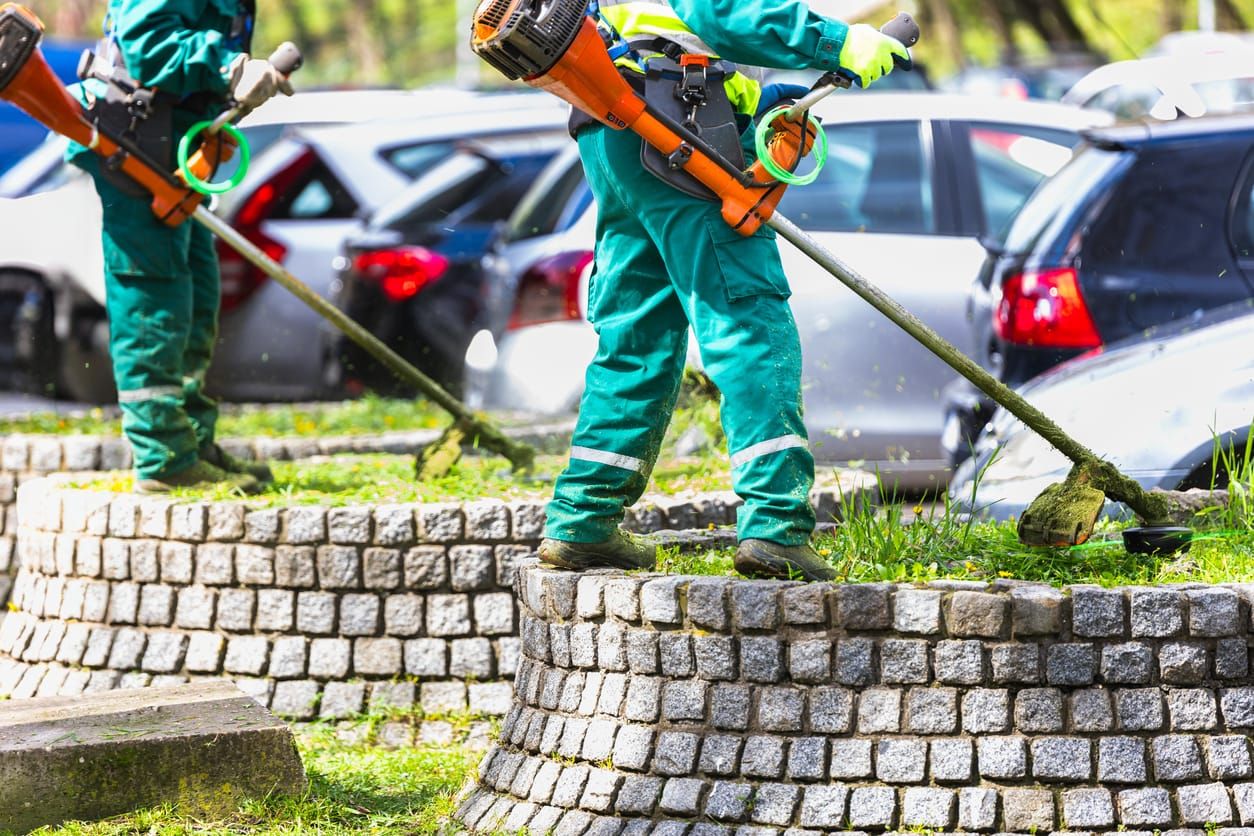
Industries are “lobbying furiously” to expand the nonagricultural H-2B program and change its purpose by making it year-round instead of nine months long, according to an EPI report from September. Currently, landscaping accounts for around 40% of all H-2B visas, followed by construction, forestry, seafood processing, traveling carnivals, restaurants, and hospitality.
However, the nonseasonal meat and poultry processing industry is seeking to expand or replace part of its workforce with H-2B workers, said Costa, causing a significant impact on U.S. labor standards. The average hourly wage for H-2B workers is nearly 25% lower than the national average for all workers in the same occupations, EPI’s report found.
If the program expands, abuses are also likely to rise, given that wage theft is already a major issue for H-2B workers, recruited mostly in Texas, Florida, and North Carolina. According to EPI, from 2000 to 2024, employers stole over $2.2 billion in wages from citizen and noncitizen workers in the top seven H-2B industries.
The traveling fair and carnival industry, a heavy user of H-2B workers, will clearly benefit from amendments to the DHS funding bill, as their guest laborers who are athletes, artists, and entertainers would now receive P visas. These visas are regulated by DHS instead of DOL.
“People in the fair industry face so much exploitation due to the nature of their work. There’s also a lot of health and safety concerns,” said Martinez. “We would be extremely worried about the well-being of these workers if they lose the few protections they currently have under the [H-2B] program.”
Since workers cannot realistically complain about their working conditions, and federal agencies do not have the inspectors or resources to adequately respond to complaints, it is statistically unlikely that the federal government learns about safety issues and mandates employers to prevent them. Workers often fear retaliation from employers, which includes being fired and losing their legal status or being blacklisted, preventing them from being hired in the future by employers in the U.S. Many workers arrive in the U.S. already in debt, and many are Indigenous and do not speak English or Spanish, making conditions in the U.S. even more difficult.
According to the 2025 AFL-CIO report “Death on the Job: The Toll of Neglect,” there are a total of 1,802 investigators (768 federal and 1,034 state) to inspect the 11.8 million workplaces that fall under the Occupational Safety and Health Act’s (OSHA) jurisdiction. Federal OSHA now has 85 fewer inspectors than in fiscal year 2023—only enough to inspect workplaces once every 185 years, according to the report.
When employers are found liable for seriously violating workers’ rights, the consequences are limited. Employers may be temporarily barred by DOL from participating in the H-2 programs, but such cases are rare, and some repeat offenders continue to hire laborers anyway, Costa said. There is also no comprehensive registry to screen and prevent employers with a history of labor and wage violations from hiring H-2 workers.
Even in the rare cases when local or federal agencies pursue criminal charges, the penalties are often very light. For example, the federal investigation called “Operation Blooming Onion” revealed in 2021 that dozens of Mexican and Central American workers were “victims of modern-day slavery,” according to federal prosecutors. These workers were forced to endure “brutal conditions in South Georgia,” stated the government’s indictment. At least two workers died as a result of the abuse, and at least one woman was held captive and repeatedly raped by her employer. Yet, the main defendant and leader of the trafficking ring, María Patricio, was only sentenced to 12 months in prison.
Pushing back
Advocates are pushing back against the bleak outlook for low-wage workers in the U.S. In November, the UFW and 18 workers filed a lawsuit to reverse the Trump administration’s wage cut rule, as they successfully did in 2020 during the first Trump administration. Advocates are also planning to challenge the rescission of the rule recognizing H-2A workers’ basic rights, and are considering intervening to defend the protections that the House Appropriations Committee is attempting to defund, Martinez told Prism.
As workers’ rights continue to be eroded in favor of deregulation efforts, organizations and unions such as CDM, FLOC, and UFW say they will continue educating H-2 laborers about filing complaints and defending their existing rights.
Consider the case of Elpidia, who is only using her first name to avoid retaliation. The laborer on an H-2B visa is from Hidalgo, Mexico, and she has spent over 30 years working in Maryland’s seafood processing industry, mostly at crab-picking factories. After working at three different facilities along the East Coast, Elpidia has both faced and heard countless stories of wage theft, sexual abuse, inhumane housing conditions, and medical neglect.
However, Elpidia told Prism that she knows how to respond when faced with injustice. CDM advocates have “shown us what our rights are and to have the courage to speak out against abuse, whatever it may be,” she said. Since workers are wary of being fired or blacklisted for future employment, “many people are afraid to speak up,” she added. “But I’m not.”
As agribusinesses and industry groups constantly lobby for total deregulation of the H-2 programs and the dismantling of any semblance of protections for foreign low-wage workers, laborers are left to defend themselves against abuse and exploitation by American employers who have unprecedented power over their lives in the U.S.
“The employers control the entire system,” said Martinez. “These programs are supposed to have these safeguards in place for workers, but we’re seeing a pretty significant erosion of these protections.”
Editorial Team:
Tina Vasquez, Lead Editor
Carolyn Copeland, Top Editor
Stephanie Harris, Copy Editor
Author

Maurizio Guerrero is a journalist based in New York City who covers immigration, social justice issues, Latin America, and the United Nations. Follow him on Bluesky at @mauriziogro.bsky.social and on
Sign up for Prism newsletters.
Stay up to date with curated collection of our top stories.